A second brand with a clear job
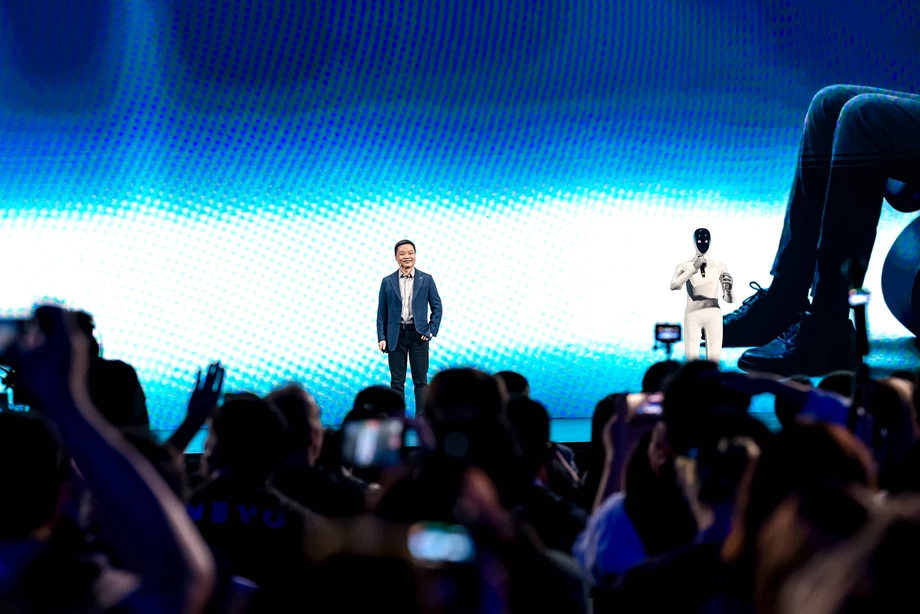
Huawei's smart car unit Yinwang used the 2026 Huawei Qiankun Ecosystem Conference in Guangzhou on the evening of November 26 to introduce Xingchi, a driver assistance brand aimed at mainstream cars. Jin Yuzhi, a Huawei senior vice president and Yinwang's chief executive, said more than 10 new models carrying the system are expected to enter mass production and go on sale in 2027. The brands named for the first batch are Changan's Deepal, SAIC-GM-Wuling, GAC Trumpchi, BAIC Arcfox and Dongfeng eπ. The figure is a launch target covering partner models, not a forecast of deliveries or sales.
Contents
- A second brand with a clear job
- One technical base, two product paths
- The price bands reveal the commercial target
- A market moving beyond two dominant suppliers
- New rules sharpen the divide between assistance and automation
- The scale behind the launch
- Battery swapping and everyday services join the ecosystem
- What buyers should watch during the rollout
- Key Points
The announcement creates two distinct lanes for Huawei's automotive software. Qiankun ADS, which has passed through five generations, will increasingly pursue automated driving. Xingchi will concentrate on Level 2 assistance, commonly called L2. At this level, the software can help with tasks such as steering, speed and following a navigation route, but the driver must continuously watch the road and remain ready to take control.
Yinwang supplies vehicle makers with hardware and software rather than building all the cars itself. Its portfolio also includes HarmonySpace cockpit technology. The name Xingchi is intended to evoke starlight reaching countless homes and vehicles travelling great distances, matching Huawei's ambition to put assistance software into a much larger number of ordinary family cars.
One technical base, two product paths
Yinwang, the Huawei controlled company that took over much of Huawei's former Intelligent Automotive Solution Business Unit, explained why it wanted another brand instead of simply adding another Qiankun package. In comments translated from Chinese, the company described a lasting market for technology that assists rather than replaces the driver.
Why launch a new brand? We believe that demand for L2 assisted driving will exist for a long time. In the future, Qiankun ADS will gradually evolve toward autonomous driving, while Xingchi assisted driving will focus on assisted driving. Both brands will use high quality solutions to meet the needs of different consumers.
Xingchi is not being developed as an isolated, cut down engineering project. It shares Qiankun ADS's WEWA architecture, which Huawei describes as a World Engine paired with a World Action Model. The two brands also share cloud computing capacity, training data gathered from driving, the same IPD development process and the same automotive grade quality management system. IPD stands for integrated product development, a structured way of coordinating engineering work from design through validation.
Huawei says the core safety algorithms, system stability and reliability will remain consistent across the two brands. Their functions and user experiences will differ, however, and each will have its own software version sequence and over the air update schedule. Such updates, known as OTA updates, allow vehicle software to change after a car has been sold. Separate schedules give Yinwang room to develop mass market assistance and more advanced automation without forcing every model onto an identical release cycle.
The price bands reveal the commercial target
The existing Qiankun ADS range already covers a wide spread of vehicle prices. Its four packages show why the arrival of Xingchi should not be read as a simple division between inexpensive and premium cars.
- ADS SE, the basic version, is associated with cars priced from 100,000 to 150,000 yuan.
- ADS Pro, the enhanced version, covers the 150,000 to 200,000 yuan band.
- ADS Max is intended for vehicles costing 200,000 to 300,000 yuan.
- ADS Ultra is the flagship package for vehicles priced above 300,000 yuan.
These are vehicle price bands, not standalone prices for the software. ADS SE has already appeared on the Deepal L07, which starts at 135,900 yuan. Yinwang has not announced Xingchi pricing. Its commercial opportunity instead lies in offering carmakers a product with its own functions and update path while drawing on the same technical resources as the more expensive packages.
China's 100,000 to 200,000 yuan segment is the clearest reason to pursue that strategy. Figures from the China Automobile Dealers Association show that this price band has consistently accounted for more than 40% of passenger vehicle sales in recent years, the largest share of any band. Sales totalled 9.87 million vehicles in 2023, 10.03 million in 2024 and 10.32 million in 2025. The increase from 2023 to 2025 was about 4.6%. Another 6.32 million vehicles in the segment were sold during the first 10 months of 2026, a period that cannot be directly compared with the earlier full year totals.
A market moving beyond two dominant suppliers
Competition is particularly intense in urban navigation assistance. This technology, often called NOA or Navigation on Autopilot, can guide a vehicle along a route and through selected city driving situations. It still requires driver supervision when implemented as an L2 system. Winning a place on a popular family car can therefore produce far greater volume than supplying a small number of premium vehicles.
Huawei's Hi and Hi Plus arrangements expanded rapidly during 2024 as city NOA reached models including the Avatr 12, 11 and 07, along with the Fangchengbao Bao 8. Huawei's share of the third party urban NOA algorithm market reached 32.0%, while Momenta held 57.3%. Together they controlled 89.3%, leaving limited room for suppliers without large deliveries through partner manufacturers.
The market became less concentrated during 2025. QCraft reached an 11.8% share and Horizon Robotics reached 1.6% under a measure that counted both standard installations and vehicles carrying hardware prepared for later activation. Zhuoyu Technology and DeepRoute.ai also gained ground as the combined position of the two leaders narrowed. By the time of the Xingchi launch, industry figures put L2 penetration at 70.5% and NOA penetration in passenger cars above 30%. Yinwang is consequently entering a market where assistance is becoming common, but where suppliers must compete on cost, functions and their ability to support many vehicle programmes.
New rules sharpen the divide between assistance and automation
China's first mandatory national standard covering the safety of L3 and L4 automated driving systems will take effect on July 1, 2027. Its title translates as Intelligent Connected Vehicles: Safety Requirements for Automated Driving Systems. L3, or conditional automation, can handle driving within defined conditions but may ask a person to take over. L4 can operate without human intervention inside its approved operating domain, such as a defined area or set of road conditions.
A second batch of pilot admission work for conditional L3 automation is also underway. Separating Xingchi from Qiankun ADS gives Huawei a clearer way to identify which products remain driver assistance and which are being developed for the more demanding automated driving category. The launch also came one day after XPeng said it would offer driver assistance through subscriptions to new buyers from the second quarter of 2027. Chinese suppliers are still testing whether customers and manufacturers prefer bundled equipment, separate software packages or recurring payments.
The scale behind the launch
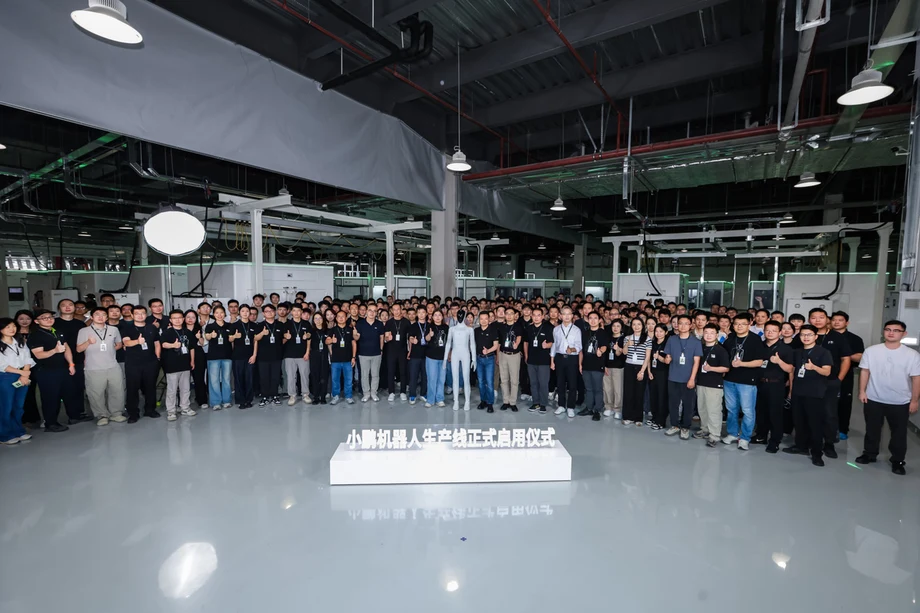
Yinwang enters this contest with a large installed base. As of November 25, Huawei Qiankun technology had partnerships covering 62 models from 26 brands. More than 2 million vehicles carried Qiankun ADS and had accumulated over 18.3 billion km of assisted driving, equivalent to about 11.37 billion miles. Shipments of Huawei's broader range of intelligent automotive components, a category extending well beyond driving software, had passed 100 million units. Data from the China Association of Automobile Manufacturers also showed more than 500,000 new cars equipped with Qiankun ADS sold in the first three quarters of 2026.
The company expects its 2026 research and development spending on assisted driving to approach 20 billion yuan, approximately $2.98 billion, while its cloud computing capacity is expected to expand to 60 EFLOPS. EFLOPS is a measure of very large scale computing performance. Those resources matter because driving systems require extensive development, simulation and processing of fleet data.
Huawei owns 80% of Yinwang, while automakers Seres and Avatr each hold 10%. That structure gives vehicle manufacturers a financial interest in a supplier whose technology is also offered across the industry. Huawei additionally presented a company safety comparison current to November 25, saying the average distance between serious collisions was 6.02 times the national average when ADS was active and 3.21 times that average during manual driving. These figures concern the existing fleet rather than Xingchi vehicles, which have not yet reached customers.
Battery swapping and everyday services join the ecosystem
The Guangzhou conference also connected Huawei's driving software with CATL's Choco-Swap battery network. Jin announced a smart energy system linking Qiankun ADS with compatible swapping stations, building on an agreement that Yinwang signed with CATL and its swapping operator CAES in Ningde on October 19. The plan is for a compatible car to locate a station and complete an automatic swap lasting 99 seconds. Yang Jun, CATL's co-president for markets, said cars capable of driving themselves could eventually travel to exchange their own batteries.
CATL used the event to introduce its 30# Choco battery. The first version stores 100 kWh, is rated for 700 km under China's CLTC test cycle and can deliver peak discharge power of 600 kW. CATL says it can be exchanged in 99 seconds or fast charged to add 400 km of range in 10 minutes. Its network had more than 2,520 swapping stations across 200 cities as of September 29. Wang Junjun, chairman of Huawei partner brand Yijing, said the first smart swapping model from the three parties would be a Yijing car, but he did not identify the model or confirm that it would use the 30# battery.
Other announcements addressed routine ownership tasks. By the end of 2026, Huawei expects 400,000 parking facilities to support payment through the vehicle, 10,000 car washes to accept online bookings and 2.3 million charging points to appear in navigation maps. Its October figures were 300,000 parking facilities and 2 million charging points, so the targets represent planned additions of 100,000 and 300,000 respectively. Parking to parking navigation 3.0 is also intended to cover more than 1.5 million campuses and allow drivers to locate their parked car through a phone app.
Xiaohongshu and Alipay joined the Huawei Qiankun application ecosystem at the conference. The Xiaohongshu arrangement will allow travel notes to be sent to a car so that its software can identify route information and prepare navigation after confirmation. Alipay's in-car assistant is designed to handle services such as parking, refuelling, charging, food orders and tickets through conversation with the cockpit system.
What buyers should watch during the rollout
Several practical details remain undisclosed. Huawei has not published Xingchi's function list, vehicle prices, sensor specifications or whether individual cars will carry lidar. It also has not identified every model within the promised group of more than 10, provided their exact launch dates or said which capabilities will differ from Qiankun ADS. The first production cars in 2027 should provide the clearest basis for comparing performance, equipment and cost.
The main dates surrounding the launch are:
- October 19, 2026: Yinwang, CATL and CAES signed their battery swapping agreement in Ningde.
- November 25, 2026: XPeng announced subscriptions for new buyers beginning in the second quarter of 2027.
- November 26, 2026: Jin Yuzhi unveiled Xingchi at the Huawei Qiankun Ecosystem Conference in Guangzhou.
- During 2027: More than 10 Xingchi equipped partner models are targeted for mass production and sale.
- July 1, 2027: China's mandatory safety standard for L3 and L4 automated driving systems takes effect.
Key Points
- Yinwang launched Xingchi in Guangzhou on November 26, 2026, with more than 10 partner models targeted for 2027.
- Deepal, SAIC-GM-Wuling, GAC Trumpchi, BAIC Arcfox and Dongfeng eπ were named for the first batch.
- Xingchi focuses on L2 driver assistance, while Qiankun ADS will increasingly pursue automated driving.
- The brands share the WEWA architecture, cloud resources, training data, development processes and quality systems, but will have different functions and update schedules.
- The 100,000 to 200,000 yuan segment has consistently represented more than 40% of China's passenger vehicle sales.
- Huawei has not yet released Xingchi prices, detailed functions, sensor specifications or launch dates for individual models.