Samsung's lightest Fold also changes shape
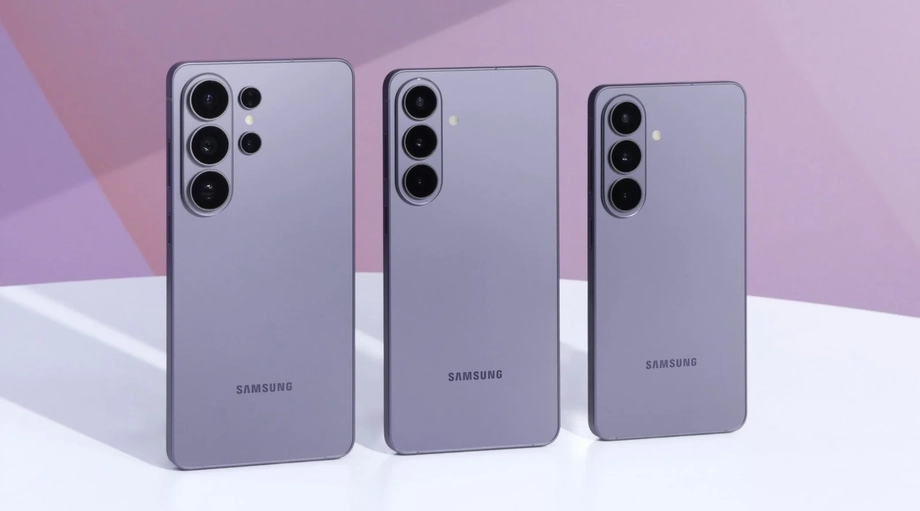
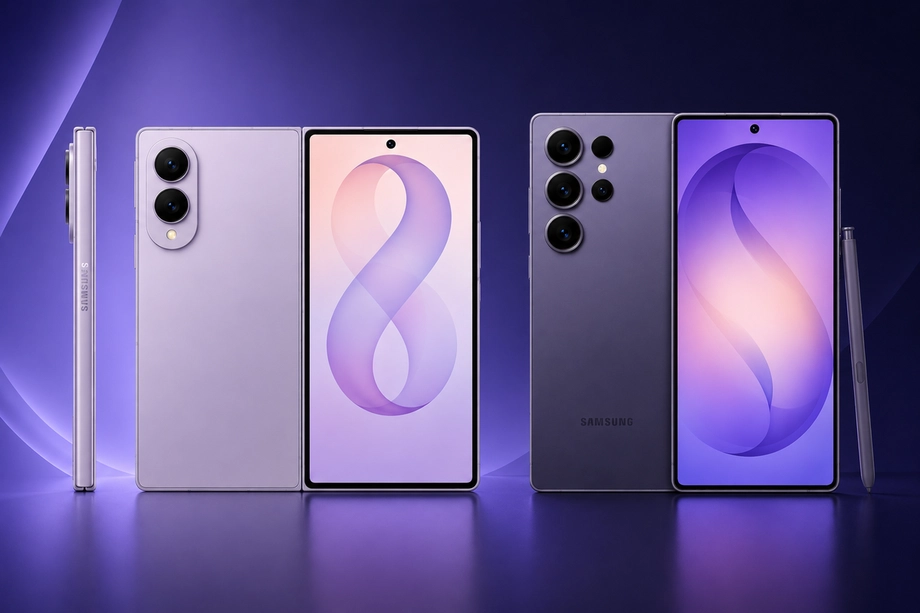
Samsung's Galaxy Z Fold8 weighs 201 grams, 14 grams less than the Galaxy Z Fold7, yet it is not simply a smaller version of the company's familiar Fold. Unveiled at Galaxy Unpacked on 22 July 2026, it combines a cover screen measuring 5.5 inches with an inner display measuring 7.6 inches in a wider, shorter shape. Samsung Indonesia says preorders opened on Samsung.com that day, accompanied by launch offers and an exclusive color.
Contents
- Samsung's lightest Fold also changes shape
- Why a screen measuring 7.6 inches can feel different
- What several weeks of use reveal
- How Samsung hardened the lighter body
- Memory choices are tied to storage
- Two cameras, 8K video and no telephoto lens
- Battery life, software and workstation features
- Fold8 versus Fold7 and Fold8 Ultra
- Indonesian prices, colors and launch offers
- The iPhone Duo comparison highlights different priorities
- Key Points
The weight reduction is about 6.5 percent from the Fold7, which weighs 215 grams. The Fold8 is also around 14 grams lighter than the Fold8 Ultra. The saving comes with a trade: the standard model is approximately 9.7 mm thick when folded, compared with 8.9 mm for both the Fold7 and Fold8 Ultra. Lightness, rather than the thinnest possible profile, is its main ergonomic claim.
- 22 July 2026: Samsung unveiled the phone at Galaxy Unpacked and opened advance orders.
- 22 August 2026: A detailed Indonesian review lists this as the release date.
- 24 and 25 November 2026: Extended evaluations, comparisons with Apple's iPhone Duo and a substantial Black Friday discount appeared.
The official feature guide presents the Fold8 as a new form beside the Ultra, not as a direct camera upgrade over the Fold7. Its intended audience is someone who wants a ordinary phone when closed and a compact space for reading, entertainment and several apps when opened.
Why a screen measuring 7.6 inches can feel different
The passport comparison concerns the device's footprint. Detailed measurements list the folded phone at 123.9 mm tall, 81.9 mm wide and 9.7 mm thick. A standard international passport is approximately 125 by 88 mm. Opened, the Fold8 measures 161.4 by 123.9 mm and is 4.5 mm thick. It should therefore fit some shirt pockets more readily than earlier Folds, although its width may be noticeable in narrow trouser pockets.
The inner screen has a diagonal of about 19.3 cm and a 4:3 aspect ratio. That means it is closer to a square than the tall display on a conventional phone. A document can occupy more of the screen, while a message panel, notes or a presentation can sit beside it without making every item extremely narrow. The cover screen uses a 10:16 ratio for typing, scrolling and quick replies. Samsung expects some owners to complete more routine tasks without opening the phone.
Both displays use Dynamic AMOLED 2X technology and adaptive refresh rates of up to 120 Hz, meaning the image can be redrawn as many as 120 times each second for smoother movement. Samsung's official comparison page rates both at 3,000 nits, says they are 15 percent brighter than the Fold7 displays and lists treatment to reduce reflections. Its feature guide separately gives a peak of 2,600 nits, without explaining the different figures. Nits measure light output, which matters outdoors, but they do not by themselves describe color accuracy or reflections.
What several weeks of use reveal
Prasetyo Herfianto, an editor and technology reviewer who used the phone for several weeks, found that the wider cover display made typing considerably more comfortable. He could answer messages, check email and browse without routinely opening the main screen. Instagram remained comfortable in his use, while TikTok's vertical videos sometimes made him wish for a taller display. This is the practical consequence of the new proportions: quick phone tasks improve, while some vertical content receives less height.
The opened display changed his habits again. He found it comfortable for games and digital books, including reading with one hand while standing on a train. YouTube and Netflix videos in landscape orientation had smaller black borders and lost less of the picture when enlarged than he expected from a taller folding screen. He also placed the device in a tent position and used the outer screen for video or navigation on a vehicle dashboard. The panel could become very bright, although he observed it dimming when the phone became warm.
The hinge behaves differently from the Ultra's mechanism. When opened slightly or moved beyond roughly 90 degrees, it tends to continue towards a fully open position. Prasetyo found that opening required less effort and that the central crease looked and felt shallower. Flex Mode, which rearranges supported apps when a screen is held partly open, is absent. Samsung has consequently geared this model towards use either closed or fully opened, rather than treating every intermediate angle as a workstation position.
How Samsung hardened the lighter body
Flex Titanium is the main structural addition beneath the folding screen. Samsung describes titanium layers within the material that absorbs shock, increasing stiffness and making the crease less visible than on earlier Folds. The Armor FlexHinge supports the opening mechanism, while a wider inner bezel helps owners start opening the device. Corning Gorilla Glass Ceramic 3 protects the cover screen, advancing from Ceramic 2 on the Fold7, and the frame uses Armor Aluminum.
An IP48 rating covers resistance to dust and water under specified test conditions. The first digit concerns protection against solid objects, while the second concerns water; it does not match the IP68 rating claimed for Apple's rival. Samsung also says the Fold8 series underwent more than 100 reliability checks involving drops, repeated folding, pressure, humidity and exposure to particles. Those tests address common sources of damage, while daily longevity will still depend on impacts, debris and care.
Memory choices are tied to storage
Every version uses the Snapdragon 8 Elite Gen 5 for Galaxy processor. Samsung says its CPU, graphics unit and neural processing unit are tuned for faster applications, graphics and Galaxy AI. A neural processing unit is hardware intended to run artificial intelligence tasks efficiently. Keeping the same processor across the range means a buyer choosing less storage does not receive a different chip.
- The version with 256 GB of storage comes with 12 GB of RAM.
- The version with 512 GB of storage also comes with 12 GB of RAM.
- The version with 1 TB of storage is the only model with 16 GB of RAM.
RAM holds the apps and data currently in use, while storage keeps photographs, videos, documents and application files. A creator editing video while keeping a gallery, browser, music player and social apps active is more likely to benefit from 16 GB, because apps may need to reload less often. The 12 GB versions remain intended for messaging, browsing, video and ordinary office work. Actual responsiveness also depends on One UI and each app's behavior. Samsung suggests 256 GB for people who mostly stream content, 512 GB for larger photo and app collections, and 1 TB for frequent video recording or large games.
Two cameras, 8K video and no telephoto lens
The rear system contains a 50 MP Wide camera and a 50 MP Ultra Wide camera. The main camera uses an ISOCELL GN3 sensor measuring 1/1.56 inches, with optical image stabilization to compensate for small hand movements. The Ultra Wide camera uses a Sony IMX858 sensor measuring 1/2.51 inches and supports autofocus, allowing it to take close macro photographs. Video recording reaches 8K at 30 frames per second. Front cameras on both displays support self portraits, video calls and recording whether the phone is open or closed.
Software adds Super Steady Video with Horizontal Lock, which keeps footage level during movement, and My FanCam, which reframes a recording around a chosen subject. The large inner display can serve as a viewfinder and provide more room for editing. After his testing period, Prasetyo praised color reproduction, consistency between the sensors and dynamic range in difficult lighting. He also found the shutter quick and results in dim conditions useful for a foldable in this class.
The omission is a dedicated telephoto camera. Owners do not receive the optical reach available on the Fold7 or Fold8 Ultra, so distant subjects rely more heavily on cropping and digital processing. Samsung has reserved its broadest camera hardware for the Ultra, while giving the standard Fold8 a simpler arrangement aimed at everyday photographs and social video.
Battery life, software and workstation features
The battery has a capacity of 4,800 mAh, compared with 4,400 mAh in the Fold7. That is an additional 400 mAh, or about 9.1 percent. Samsung rates the Fold8 for as much as 26 hours of continuous video playback and supports wired charging at 45 W, described in retail material as Super Fast Charging 2.0. A comparison with the iPhone Duo lists wireless charging at 20 W, and the Samsung can also share power wirelessly with compatible accessories. Real battery life will vary with brightness, applications, network conditions and how often the large screen is used.
Android 17 and One UI 9 supply the software. The Indonesian review lists a promise of operating system updates for seven years. Galaxy AI can summarize material, translate conversations, edit images, draft messages and assist with tasks. Now Nudge suggests a next action and carries useful context between the cover and main displays. These functions gain practical value when a document and its summary or translation can remain visible together.
One UI also provides a persistent taskbar, layouts that divide the screen among three apps and floating windows. Samsung DeX can present an interface resembling a desktop computer on a suitable external display, and DisplayPort support handles video output. Connections include 5G, Wi-Fi 7, Bluetooth 6.0, NFC, ultra wideband and satellite connectivity. Unlike Apple's device, the Samsung accommodates a physical SIM as well as an eSIM.
Fold8 versus Fold7 and Fold8 Ultra
The Fold7 remains thinner and has a larger inner display measuring 8.0 inches. It opens to 4.2 mm and folds to 8.9 mm, against 4.5 mm and approximately 9.7 mm for the Fold8. Its triple camera system includes a 200 MP main camera, optical zoom at three times and digital zoom reaching 30 times. The Fold8 answers with a newer processor, a larger battery, less weight and its wider screen proportions. Samsung therefore treats portability and media viewing as reasons to choose it, rather than claiming superiority in every specification.
The Fold8 Ultra is closer to the Fold7's design. It weighs about 215 grams, measures 4.1 mm when open and 8.9 mm when folded, and has a cover screen measuring 6.5 inches plus an inner display measuring 8.0 inches. Its cameras include 200 MP Wide, 50 MP Ultra Wide and 10 MP Telephoto units, with optical zoom at three times. A 5,000 mAh battery supports a claimed 27 hours of video playback.
The choice is consequently concrete. The standard Fold8 is 14 grams lighter than the Ultra and has the more compact footprint. The Ultra is thinner, has larger displays, a bigger battery and greater camera reach. Fold7 owners who principally want better zoom have less reason to regard the standard Fold8 as a replacement than owners seeking a lighter device for reading and multitasking.
Indonesian prices, colors and launch offers
Samsung Indonesia lists the Fold8 with 256 GB of storage at Rp32,499,000, or Rp30,499,000 after an immediate preorder discount of Rp2 million. Versions with 512 GB and 1 TB cost more, while the Fold8 Ultra starts at Rp36,499,000. The detailed Indonesian review instead gives a range from Rp28,499,000 to Rp36,499,000 according to memory and storage. Samsung directs buyers to Samsung Online or the Samsung Shop app for the current price of a particular capacity and color.
Lavender, Graphite and Cream are the standard colors. Pistachio is sold online through Samsung.com in selected regions. Launch benefits can include device exchange savings ranging from Rp2 million to Rp19.75 million, Samsung Care+, instalment plans, digital wallet payment options, accessory bundles and free delivery in selected locations. Terms apply, and the preorder discount and exchange values should not be treated as permanent prices.
The commercial backdrop is demanding. Samsung's mobile unit previously combined strong foldable sales with an operating loss of KRW3.6 trillion on revenue of KRW34.1 trillion in the third quarter of 2025. Average purchasing prices for mobile memory used by its Device eXperience division were reported as 263 percent above the previous annual average, while Samsung smartphone selling prices rose by only 13 percent over the comparison period. Those figures show how sales growth and profitability can move in different directions.
The iPhone Duo comparison highlights different priorities
At US list prices, the Fold8 starts at $1,899 with 256 GB of storage, $100 below the iPhone Duo at $1,999. Samsung's versions with 512 GB and 1 TB are listed at $2,099 and $2,499, with the latter including 16 GB of RAM. Apple reaches $3,199 with 2 TB. On Black Friday, Amazon offered an unlocked Fold8 with 256 GB for $1,549, a reduction of $350 from Samsung's list price and $450 below Apple's starting price.
Apple's phone weighs 254 grams and is 11.3 mm thick when folded, making it 53 grams heavier and 1.6 mm thicker than the Samsung. It offers IP68 protection, a nano texture inner screen that diffuses reflections, MagSafe and support for Apple Pencil with USB-C. Its processor is the 2 nm A20 Pro, and it accepts only eSIMs. The Fold8 has an IP48 rating, no S Pen support and a glossier screen finish that the comparison describes as more reflective but richer in perceived contrast indoors.
Both devices have inner OLED displays measuring 7.6 inches, refresh rates of 120 Hz and claimed peak brightness of 3,000 nits in the comparison. Neither includes a dedicated telephoto camera. Apple combines two 48 MP cameras and supplies a 4,883 mAh battery with wired charging at 60 W and MagSafe charging at 25 W. Samsung counters with its two 50 MP cameras, 8K30 video, reverse wireless charging and more extensive window controls. Its transfer tools can also move photographs, contacts, alarms and passwords from an iPhone.
Florian Gray, a technology writer who tracked the Black Friday offer, described the resulting price contest this way:
Samsung's lightest Fold yet now undercuts Apple's first foldable by a wide margin.
For a buyer, the distinction is unusually clear. Apple prioritizes stylus input, water and dust protection, glare control and integration with its other products. Samsung prioritizes lower weight, a physical SIM option, several simultaneous app windows and DeX. The Fold8's Indonesian price and configuration remain the details to verify before purchase, particularly because launch discounts and exchange values can change.
Key Points
- The Galaxy Z Fold8 weighs 201 grams, about 6.5 percent less than the 215 gram Fold7.
- It was unveiled on 22 July 2026; an Indonesian review lists 22 August as its release date.
- Its folded footprint resembles a passport, and its inner screen measures 7.6 inches with a 4:3 ratio.
- Both screens refresh at up to 120 Hz, but Samsung pages give different peak brightness figures of 3,000 and 2,600 nits.
- Every version uses Snapdragon 8 Elite Gen 5 for Galaxy; 16 GB of RAM comes only with 1 TB of storage.
- Two 50 MP rear cameras support 8K30 video, but there is no dedicated telephoto lens or S Pen support.
- The 4,800 mAh battery supports charging at 45 W and a claimed 26 hours of video playback.
- Samsung Indonesia lists a starting price of Rp32,499,000, reduced to Rp30,499,000 under its preorder offer.
- The Fold8 is lighter than the Fold8 Ultra, while the Ultra is thinner and has larger screens, a bigger battery and more camera reach.
- Against the iPhone Duo, Samsung offers lower weight and broader multitasking, while Apple offers IP68 protection and Apple Pencil support.