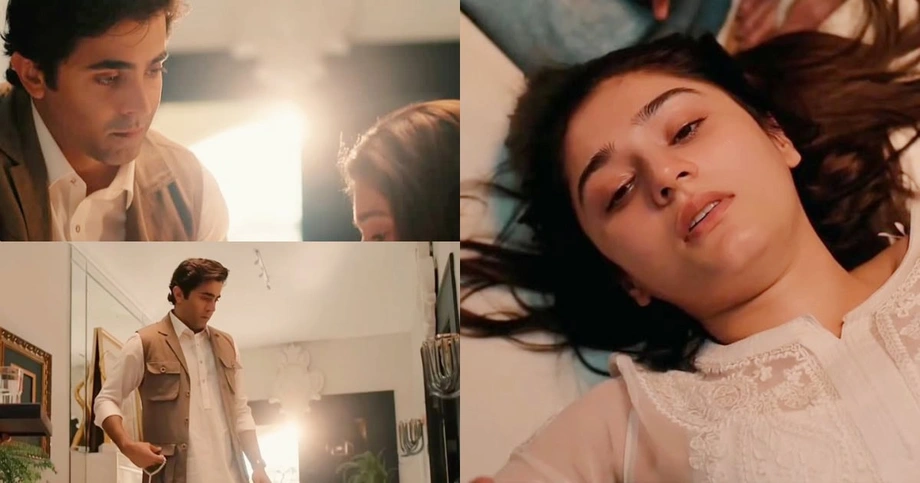
A Romance That Reached People Late
Eleven years after its theatrical release on 27 November 2015, Tamasha is being discussed as both a commercial disappointment and a film that found a deeper audience later. The Hindi drama starred Ranbir Kapoor and Deepika Padukone, was written and directed by Imtiaz Ali, produced by Sajid Nadiadwala, scored by A.R. Rahman and distributed by UTV Motion Pictures. Its detailed box office ledger lists a budget of ₹87 crore, first day collections of ₹10,91,00,000, a first weekend of ₹38,08,00,000, India net of ₹68,55,50,000, India gross of ₹94,92,00,000, overseas gross of $6,250,000 and worldwide gross of ₹1,36,63,87,500. The verdict in that ledger is flop.
Contents
- A Romance That Reached People Late
- What the Money Trail Shows
- Where India's Collections Came From
- What Overseas Audiences Paid
- The Story in Plain Language
- Why the Film Found a Second Life
- The Craft Behind the Drama
- Imtiaz Ali Owns the Result
- What Changed in Ali's Next Work
- A Short Timeline of the Film's Journey
- Key Points
Later career summaries put the same run at around ₹67 crore net in India and a little over ₹130 crore worldwide. The difference is small in crore terms and reflects the way trade figures are rounded and presented, but the detailed ledger gives a fuller picture: opening interest was strong, then daily collections fell.
On 27 November 2026, Ali marked the film's 11th anniversary by saying he is glad viewers now connect with Ved and Tara's story and even refer to it when thinking about life choices. That shift has turned a film once labelled a flop into a regular point of discussion among young viewers who see their own working lives, relationships and search for identity in it.
What the Money Trail Shows
Indian box office language can confuse first time readers. Net collection means ticket money after tax deductions, gross means the full ticket value before such deductions, and share is the portion that reaches distributors. Tamasha earned ₹32,92,00,000 as its all India share, against its ₹68,55,50,000 net collection. Footfalls stood at 67,43,000, a trade term for the number of tickets sold.
The ledger also lists an adjusted net gross of ₹1,30,13,99,000. Adjusted figures recalculate older earnings at later price levels, so this number is a comparison tool rather than cash collected in 2015. The same record gives the film an all time rank of 1098 and an audience rating of 72.22 percent from 18 ratings.
Practical details also vary by record. The release ledger lists 2,050 screens and a runtime of 151 minutes, while a widely used film description gives about 2,100 screens in India, 571 overseas and a runtime of 139 minutes. The release date, 27 November 2015, is consistent across both.
Where India's Collections Came From
Mumbai led India with ₹22,21,50,000 net and ₹10,70,00,000 share. The full territory breakdown shows where the film drew crowds and where it stayed limited.
- Mumbai: net ₹22,21,50,000, share ₹10,70,00,000.
- Delhi UP: net ₹13,78,00,000, share ₹6,56,00,000.
- East Punjab: net ₹6,87,50,000, share ₹3,28,00,000.
- Rajasthan: net ₹3,07,25,000, share ₹1,49,00,000.
- CP Berar: net ₹2,69,25,000, share ₹1,31,00,000.
- CI: net ₹2,39,25,000, share ₹1,16,00,000.
- Nizam Andhra: net ₹4,00,25,000, share ₹1,92,00,000.
- Mysore: net ₹5,98,00,000, share ₹2,86,00,000.
- Tamil N Kerala: net ₹1,47,25,000, share ₹71,00,000.
- Bihar: net ₹1,15,25,000, share ₹58,00,000.
- West Bengal: net ₹3,75,50,000, share ₹1,79,00,000.
- Assam: net ₹60,25,000, share ₹29,00,000.
- Odisha: net ₹56,25,000, share ₹27,00,000.
The spread shows how dependent the film was on the biggest urban markets. Mumbai alone accounted for about 32.4 percent of India net, with ₹22,21,50,000 out of ₹68,55,50,000. Mumbai and Delhi UP together supplied ₹35,99,50,000, about 52.5 percent of the India net figure.
What Overseas Audiences Paid
Overseas audiences contributed $6,250,000 in total. The biggest early market was the United States and Canada, which opened at $1,006,059 and finished at $2,275,000.
- United Kingdom: first weekend £254,751, total gross £520,000.
- USA and Canada: first weekend $1,006,059, total gross $2,275,000.
- Gulf: first weekend $930,000, total gross $1,870,000.
- Australia: first weekend $187,324, total gross $346,000.
In rupee terms, the overseas territory figures listed USA and Canada at ₹14.88 crore, the United Kingdom at ₹5.13 crore and the UAE and Gulf at ₹10.84 crore. No rupee figure was listed for Australia in the same overseas breakdown.
Certification came before release. The film received a U/A certificate on 7 November 2015, and the British Board of Film Classification gave it a PG rating for an uncut version on 17 November 2015. A PG rating means content is suitable for general viewing, though children may need guidance in some settings.
The Story in Plain Language
Ved Vardhan Sahni grows up in Shimla among stories. As a child played by Yash Sehgal, he collects money and even steals money so the roadside storyteller played by Piyush Mishra will tell him tales from the Ramayan, Helen of Troy, Laila Majnu, Heer Ranjha, Aladin, Romeo and Juliet. The storyteller keeps mixing the characters and says all stories are the same. Ved wants a story of his own.
In Corsica, adult Ved meets Tara Maheshwari, played by Deepika Padukone. They pretend to be movie characters, with Ved as Don and Tara as Mona Darling, and make a playful pact not to reveal their real identities or fall in love. Tara leaves the island after realising she is falling in love. Back in India, Tara takes charge of her father's tea business, played by Nikhil Bhagat as Mr. Maheshwari, and expands it with tea boutiques. Four years later in Delhi, she meets Ved again, now working as a product manager.
Delhi changes the rhythm. Ved wakes on time, completes chores, wipes the car, ignores the hijra on the way, a member of a traditional South Asian gender community, helps an elderly woman at his office, gives presentations and meets Tara in the evening. He proposes with a ring on his birthday, but she refuses because the reserved man in front of her is not the carefree person she met in Corsica. A driver played by Ishteyaq Khan tells Ved how his dream of becoming a singer was crushed by the need to earn a living, and Ved remembers a tense conversation with his father, Brij Mohan Sahni, played by Javed Sheikh.
Ved upsets his boss, loses his job, returns to Shimla and argues with his father. Looking into a mirror, he decides to find the old storyteller. The storyteller pushes him to finish his own story. Ved then tells his family's history with theatre and metaphor, his father accepts his choice, and the film returns to the stage show where Ved and Tara first appeared.
Why the Film Found a Second Life
Review scores were split. One review gave 2.5 out of 5, another 2 out of 5 and a third 4 out of 5. Critics praised Kapoor and Padukone's performances while faulting the plot for being hard to follow. The opening was strong, but collections dropped in the days after release, and trade trackers called the film a flop.
Viewers later took the film in a different direction. It became a cult favourite, especially among young audiences, because it put work, performance and emotional confusion into a story that felt personal. Ved's office routine speaks to people who feel they must act one way at work and another way with friends or family.
Mental health became another reason viewers connected with it. Ved's loss of direction, panic and search for a stable sense of self have been discussed through the idea of borderline personality disorder, a condition that can involve shifting moods, unstable relationships and an uncertain sense of identity. For general readers, the useful idea is simple: Ved is trying to reclaim a self he buried.
Ali said viewers told him they used the film for life choices. He also spoke about hearing from fans who left steady jobs after watching Ved's rebellion, and said he felt terribly guilty. That reaction explains why the film's afterlife is both affectionate and complicated.
The Craft Behind the Drama
In 2013, Ali announced the project under the working title Window Seat with Kapoor and Padukone in the leads. Anushka Sharma was the first choice for the female lead before Padukone took the role. Filming took place in Shimla, Delhi, Gurgaon and Kolkata, with additional shooting in Tokyo and Corsica.
The crew included cinematographer Ravi Varman and editor Aarti Bajaj. A.R. Rahman composed the score and songs, and Irshad Kamil wrote the lyrics. At the 61st Filmfare Awards, the film received four nominations, including Best Actor for Kapoor and Best Music Director for Rahman. Kamil won Best Lyricist for Agar Tum Saath Ho. At the 2016 Stardust Awards, Padukone won Best Actress.
Writer and director Imtiaz Ali has said the idea began with a question about how people behave in public. The director explained that the film came from watching people perform roles in front of others, a theme that the story turns into a literal stage show. He said:
This thought played in my mind for very long, basically who are we? Sometimes people have to pretend what they have to be, than what they actually are. In front of people, we all have to behave in a certain way, we are in some character. We can't be who we are. I think it's coming from there.
That idea links the film's title to its structure. Tamasha means scene or drama, and the characters keep acting even when they claim to be honest. The stage at the beginning and end gives the audience a clear picture of daily life as performance.
Imtiaz Ali Owns the Result
Ali, the film's writer and director, said the box office outcome was not a mystery to him. He was speaking about why the film took years to gain affection and why viewers now cite it in their own lives. His view was direct.
I feel a movie gets exactly what it deserves. I come from that school. I feel Tamasha might have been a bit complicated. In the attempt of making it sophisticated I might have made it a bit inaccessible and it took a bit of time to reveal itself completely. I am happy about the fact that people are giving it love and associating with it, and even referring to it for life choices.
Ali, the writer and director whose follow up was Main Vaapas Aaunga, also said the response taught him how to build a film that keeps depth while being easier to enter. He was describing the creative target for his next theatrical release, and he framed clarity as a lesson rather than a retreat from serious themes.
For me, I take it as a lesson to try to make my next film simpler, to make it accessible. That was my target for Main Vaapas Aaunga. Let me make a film that has sophistication yet is accessible to the audience at a glance.
The director did not place the blame on marketing, release timing or star power. He pointed to the screenplay's difficulty and accepted that some viewers may have needed more time than a theatrical weekend allowed. That matters because it turns the film's financial record into a working lesson for his next project.
What Changed in Ali's Next Work
Main Vaapas Aaunga arrived in cinemas on 12 June with Diljit Dosanjh, Vedang Raina, Sharvari and Naseeruddin Shah. It began slowly, then picked up through positive word of mouth and became a commercial success. Ali's stated aim was to make a film with sophistication that audiences could access from the beginning.
The shift is practical. A theatrical film has one chance to hold a large audience in the first days, while a cult film can grow through repeats, discussion and streaming. Ali's new approach keeps the emotional questions, but makes the route through them clearer for a viewer who arrives without background reading.
Ali is now preparing O Saathi Re, his first series, starring Aditi Rao Hydari, Avinash Tiwary and Arjun Rampal. The series is set to premiere on Netflix on 4 December. It is a collaboration with his brother Arif Ali, who directs the project. Plot details for O Saathi Re were not part of the anniversary remarks.
A Short Timeline of the Film's Journey
The story moved from a working title to a theatrical flop and then to a delayed form of recognition. The main dates help explain that path.
- 2013: Ali announced the film with Kapoor and Padukone under the working title Window Seat, before the title became Tamasha.
- 7 November 2015: The film received a U/A certificate.
- 17 November 2015: The British Board of Film Classification gave the uncut version a PG rating.
- 27 November 2015: Tamasha was released in theatres.
- 2015: The film opened strongly, then saw collections fall and was labelled a flop by trade trackers.
- 2016: Kamil won the Filmfare Best Lyricist award, and Padukone won the Stardust Best Actress award.
- 12 June 2026: Main Vaapas Aaunga was released and later became a hit after a slow start.
- 27 November 2026: Ali spoke about the film's 11th anniversary and its continued connection with viewers.
- 4 December 2026: O Saathi Re is scheduled to premiere on Netflix.
The timeline shows how the meaning of the film changed. In 2015, the headline was the gap between a ₹87 crore budget and a flop verdict. By 2026, the headline was a director accepting the result and a new generation quoting the film back to him.
Key Points
- Tamasha was released on 27 November 2015 and starred Ranbir Kapoor and Deepika Padukone.
- The detailed box office ledger lists ₹87 crore budget, ₹68,55,50,000 India net and ₹1,36,63,87,500 worldwide gross, with a flop verdict.
- Later summaries round the run to around ₹67 crore net in India and a little over ₹130 crore worldwide.
- Imtiaz Ali said the film was complicated and perhaps inaccessible, and that he is happy viewers now connect with it.
- The director used that lesson for Main Vaapas Aaunga, which released on 12 June and became a hit after a slow start.
- O Saathi Re, Ali's first series, is set for a 4 December premiere on Netflix.