A filing in Austin and a ceremony in Phoenix
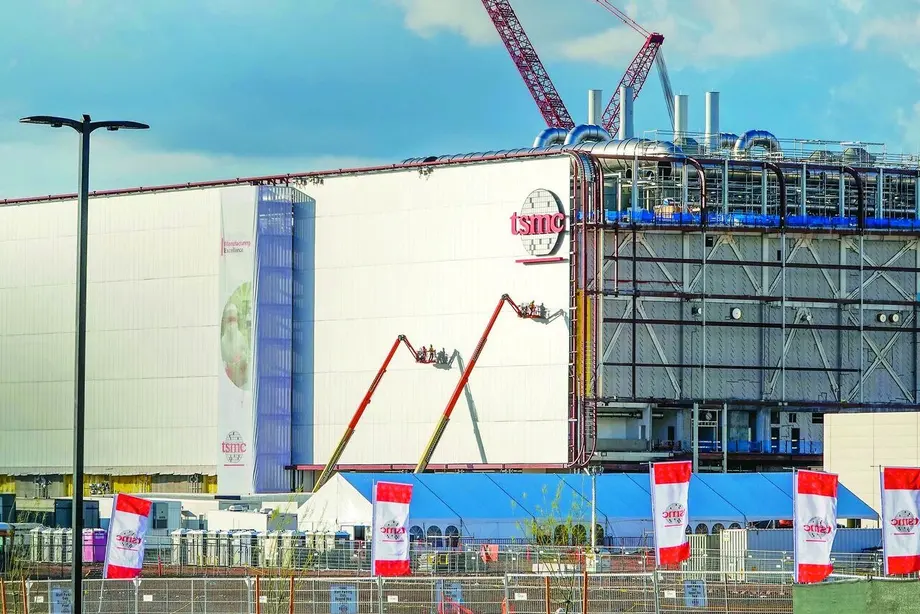
Taiwan Semiconductor Manufacturing Co. is seeking a school district property tax break for a proposed $22.62 billion chip plant in Brazos County, Texas, a campus designed to make 2nm and more advanced logic chips. TSMC Arizona Corporation, the company's US subsidiary, filed the request on Nov. 23 with the Texas Comptroller of Public Accounts under a state program called Jobs, Energy, Technology and Innovation, or JETI. The application describes at least one fabrication plant, the factories the industry calls fabs, on 3,232 acres, about 13 square kilometers, in the southern part of the county.
Contents
- A filing in Austin and a ceremony in Phoenix
- What sits on the 3,232 acres
- Why a school district holds the decision
- The word TSMC used: decisive
- Trump, Wei and Huang in one room
- The federal credit that expires first
- Why customers wait until 2032
- Sherman, Phoenix and a $45 billion question mark
- What changes for Brazos County
- Key Points
Eleven days later the company will stand on a very different stage. President Donald Trump is scheduled to speak on Dec. 4 at a groundbreaking for the fifth phase of TSMC's expansion in Phoenix, Arizona, according to a White House official who spoke on condition of anonymity before the announcement. It would be Trump's first visit to the Arizona site since he became president, and TSMC executives, suppliers, customers and business partners are expected to join him.
The two events pull in opposite directions. Arizona is a set of commitments worth $265 billion that is already rising out of the desert. Brazos County is a site evaluation that TSMC has not signed off on, and the company presented its tax application as a way of keeping local officials informed while it keeps studying the state.
What sits on the 3,232 acres
The land lies in Precinct 1, generally north of Koppe Bridge Road and west of I&GN Road, inside College Station ISD and a short drive from Texas A&M University's engineering programs. Brazos County sits roughly 100 miles northwest of Houston and 100 miles east of Austin, and much of the proposed acreage is forested. County records show the parcels have not been bought. Officials say they are under contract, while the filing states that the company's agreements are not binding and do not commit it to buying land or to a final site choice.
The plant would produce logic chips at 2nm or more advanced processes for artificial intelligence accelerators, high performance computing and mobile devices. A nanometer here is one billionth of a meter, and the number in front of it is shorthand for how tightly a chipmaker can pack transistors onto silicon; smaller numbers generally mean more computing power for the same area. TSMC's 2nm generation is its most advanced technology in commercial production.
The money breaks into $8.6 billion for buildings and property improvements and $14.02 billion for machinery and equipment, with construction costs alone estimated at $5.6 billion across the life of the project. The application projects 2,099 permanent jobs with an average annual salary of $133,000, with recruiting starting in 2028 and the workforce reaching that size by 2030. Almost 10,000 construction workers would be employed across a build lasting five years, with work starting in 2027 and commercial operation in 2031, though an earlier reading of the filing put the operating date at 2029. Over four decades of operation the company estimates $64 billion in economic output, $326 million in state and local tax revenue during construction and more than $3 billion once the plant runs.
Why a school district holds the decision
JETI is a Texas program built to lure large employers by limiting the taxable value of school district property for maintenance and operations taxes, the part of the levy that pays teacher salaries and utility bills, for up to a decade. In exchange, a company must make a large capital investment and create jobs. The state then replaces the lost school revenue with state dollars, so the district is not left short while the company's bill is capped.
TSMC asked for that limit to apply from 2032 through 2041, which fits a plant that would start spending money in 2027. The comptroller's office approved the application on Nov. 24, clearing the way for negotiations involving the state, the College Station school district and the company. The district's board of trustees must approve the terms, and a vote could come as early as mid-December. The governor's office also has a say.
Brazos County commissioners are weighing a second layer of relief at the local level, modelled on the deal Grimes County struck with SpaceX for its Terafab plant. Under that arrangement, SpaceX received a full property tax abatement and a reinvestment zone designation, and instead of property taxes makes regular payments: an initial $20 million, then $20 million a year for 35 years. County officials have floated a similar structure for TSMC, with upfront cash covering county services and infrastructure.
The word TSMC used: decisive
The company did not soften its position in the paperwork. It told Texas that winning the school tax limit is the key condition for building in Brazos County, calling it a decisive and highly persuasive factor in choosing the site, and warned that without it the Texas location would face a severe competitive disadvantage against the alternative it already runs in Arizona. TSMC has not made a final investment decision and has not said when it will.
Brazos County Manager Trevor Lansdown has framed the project as a generational opportunity for a county of roughly 240,000 people anchored by a large public university.
We are very excited about this potential transformational opportunity for our citizens. The direct and indirect jobs this investment could create would open new doors for our residents, strengthen local businesses, and give our children and grandchildren more opportunities to build rewarding careers right here at home. Our goal is to turn this potential project into lasting prosperity and an even brighter future for Brazos County.
The county is coordinating its review with the cities of Bryan and College Station, the school district, Texas A&M and the Greater Brazos Partnership, and plans a public town hall plus a dedicated webpage listing project details and upcoming meetings. Power in the area comes from Bryan Texas Utilities, water from Wellborn Special Utility District, and the developer intends to buy its water from a third party, which county officials expect to leave local supplies unaffected.
Trump, Wei and Huang in one room
The Arizona ceremony will assemble the industry's senior figures. TSMC chairman and chief executive C.C. Wei will lead a delegation that includes two co-chief operating officers and two deputy co-chief operating officers, covering global manufacturing, advanced technology research, information security, business development and customer service. Yeh Chun-hsien, the minister of Taiwan's National Development Council, who sits on TSMC's board, will represent the government in Taipei.
Figures released by the White House official put 12,000 to 15,000 construction workers on the Arizona site now, with thousands more in related roles. Once the expansion is complete, the company expects more than 10,000 direct jobs and a further 11,000 indirect jobs in the surrounding community. TSMC has pledged $265 billion in US chipmaking capacity, a total that jumped in July when it added $100 billion, taking its planned footprint in the country to 12 sites.
The Phoenix campus already makes Nvidia's Blackwell chips and semiconductors for AMD, Apple, Broadcom and Qualcomm. Its first fab began commercial production on a 4nm process in the fourth quarter of 2024, and the second fab is fitted out with equipment ahead of 3nm mass production in the second half of 2027.
Nvidia chief executive Jensen Huang is the guest TSMC most wants on the podium, and his plans are unclear. He is due to testify on Dec. 3 before the Senate Banking Committee, one day before the ceremony, facing questions about how his company sells chips abroad and about his relationship with a woman suspected of being a Chinese spy, an allegation Beijing has denied. Lawmakers from both parties have promised investigations, and the White House has not said whether Huang will appear in Phoenix. His return to Nvidia this week followed a personal intervention by Trump, after a brief departure that shook markets.
The federal credit that expires first
A second incentive sits in Washington, and its clock is running faster. Under current policy, qualifying semiconductor manufacturing investment can claim a federal tax credit equal to 35 percent of the amount spent, a benefit potentially worth billions of dollars to TSMC. The catch is a deadline: construction has to begin before Dec. 31 of this year.
TSMC's own schedule has the Texas project starting to spend money in 2027. Unless Congress extends the credit, the company would miss it, and the tax package that makes the numbers work in Brazos County would be half missing. The credit sits inside the CHIPS and Science Act, the bipartisan law signed by President Joe Biden that also provided support for the Arizona build, which broke ground while Biden was in office even as Trump now presents the investment as a product of his tariff policy.
Why customers wait until 2032
Even with both the state and federal breaks in hand, the application projects the Texas plant fully operating only in 2032. That means Nvidia, AMD and other TSMC customers would wait close to a decade for extra supply from American soil, a gap that matters because AI accelerators are constrained by how many advanced chips can be produced, not by how many are ordered.
By then TSMC expects to be selling something newer than the 2nm generation the Texas fab is built around. The company is developing an A14 process, with trial production next year and mass production in 2028. Compared with its 2nm technology, A14 is expected to run 10 to 15 percent faster at the same power, or use 25 to 30 percent less power at the same speed, with about 20 percent more logic density.
The company can afford to keep building. Third quarter revenue reached $46.72 billion, up 41.2 percent from a year earlier, and TSMC guided fourth quarter revenue to between $52.3 billion and $54.3 billion while holding capital spending for 2026 at $60 billion to $64 billion, figures that do not include any Texas commitment. Management has warned that overseas fabs will shave 3 to 4 percentage points off gross margin in the coming years, a drag that grows with every additional American campus.
Traders on the prediction market Kalshi, where contracts pay out if an event happens, put the odds of US semiconductor output growing more than 18 percent this year at 48 percent, on $5,367 of volume. The market is not convinced that American capacity can scale quickly.
Sherman, Phoenix and a $45 billion question mark
Brazos County is not TSMC's only Texas option. Officials say Sherman, in the northern part of the state, remains under consideration, and that city already hosts Texas Instruments' 300mm wafer manufacturing campus. Arizona carries its own advantage: TSMC runs fabs there already, with the supplier network, infrastructure and trained engineers that a new 2nm plant needs for specialist chemicals, industrial gases, ultrapure water and equipment servicing.
Texas has been courting a bigger prize as well. State development documents outline a potential $45 billion investment by an unnamed semiconductor manufacturer to build two fabs, create about 5,000 jobs over six years and begin production by late 2029. The documents do not identify the investor as TSMC.
About 15 miles from the proposed TSMC site, another enormous project is taking shape. SpaceX plans a Terafab plant in neighbouring Grimes County at a cost of about $20 billion, put at $16.8 billion in county tax documents, with at least 3,000 employees, many expected from Grimes and Brazos counties. Elon Musk has said TSMC could sublease part of the Terafab, writing that this would go no further than a sublease. Two chip campuses within a short drive would strain the same roads, water systems and electrical grid.
What changes for Brazos County
For local leaders, the prize is a wage base. The 2,099 direct jobs at TSMC would pay an average of $133,000 a year, more than double what most manufacturing work in the region offers, and they would arrive gradually from 2028 rather than all at once. The school district would surrender part of its property tax base for a decade but be made whole by the state, and the county would trade tax relief for cash payments if commissioners follow the Grimes County model.
The county would also inherit the risks of an incentive deal negotiated while the company keeps its options open. TSMC has not committed to buying the land, has not chosen between Texas and Arizona, and has no final investment decision on the calendar.
The sequence to watch runs through the end of the year.
- Nov. 23, 2026: TSMC Arizona Corporation files its JETI application for a 3,232 acre campus in Brazos County.
- Nov. 24, 2026: the Texas comptroller's office approves the application, opening negotiations with the state and College Station ISD.
- Dec. 3, 2026: Jensen Huang is due before the Senate Banking Committee.
- Dec. 4, 2026: Trump speaks at the Arizona expansion groundbreaking with C.C. Wei.
- Mid-December 2026: College Station ISD trustees could vote on the tax terms.
- Dec. 31, 2026: the federal 35 percent investment credit closes to projects that have not started construction.
- 2027: construction is scheduled to begin in Texas, with full operation projected for 2031 or 2032.
Key Points
- TSMC's US subsidiary filed a JETI application on Nov. 23 for a $22.62 billion fab campus on 3,232 acres in Brazos County, Texas, making 2nm and more advanced chips.
- The investment splits into $8.6 billion for buildings and $14.02 billion for equipment, with 2,099 permanent jobs averaging $133,000 a year.
- TSMC calls the school district tax limit a decisive factor and warns Texas faces a severe competitive disadvantage against Arizona without it.
- The Texas comptroller approved the application on Nov. 24; College Station ISD trustees could vote as early as mid-December.
- Trump will speak at the Dec. 4 groundbreaking for TSMC's fifth Arizona phase, where 12,000 to 15,000 construction workers are employed and more than 10,000 direct jobs are planned.
- The 35 percent federal investment credit requires construction to start before Dec. 31, a deadline TSMC's 2027 Texas schedule would miss without an extension from Congress.
- Full Texas operation is projected for 2032, leaving Nvidia and AMD waiting nearly a decade for added US capacity.
- Brazos County is competing with Sherman, Texas and Phoenix, with state documents separately outlining a $45 billion plan for two unnamed fabs.