A Demand to Keep a Pakistani Love Story Off Indian Screens
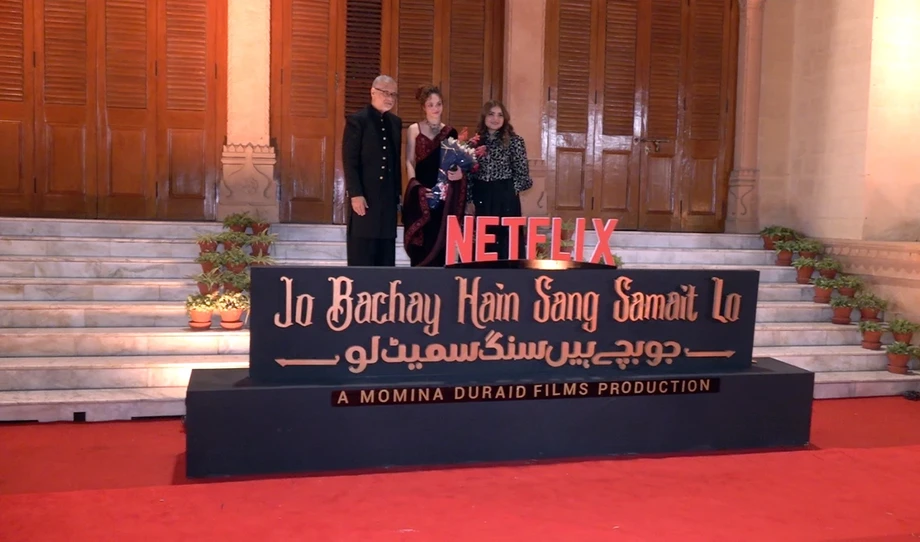
At Karachi's Mohatta Palace this week, some of Pakistan's best known actors gathered to unveil the trailer of Jo Bachay Hain Sang Samait Lo, the first series Netflix has made with a Pakistani production team. Hours later, a film workers' union in India wrote to Prime Minister Narendra Modi asking him to make sure the show never reaches Indian screens.
Contents
- A Demand to Keep a Pakistani Love Story Off Indian Screens
- Six Love Stories Across Three Generations
- The Advisory Behind the Ban Demand
- A Decade of Restrictions That Shaped This Fight
- The Films That Never Reached Indian Cinemas
- Islamabad Counts the Cost of a Ban
- What Netflix Has Said, and What It Has Not
- A Delhi Cafe, a Rival Drama and a Divided Internet
- The Statements That Fuelled the Anger
- What the Cast Says About the Story
- What the Decision Would Change
- Key Points
The All India Cine Workers Association (AICWA) sent its letter on 24 November. Its president, Suresh Shyamlal Gupta, signed the request that the series "is not released or streamed in India on 4 December 2026 or on any other date". The association also asked for a permanent law with the severest penalties to keep Pakistani productions and artists off Indian television, in cinemas and on streaming services. The Federation of Western India Cine Employees wrote a similar demand.
The show carries the English title All the Love Our Hearts Carry. Netflix's Middle East and North Africa division made it with Momina Duraid Productions, and its first instalment is set to premiere worldwide on 4 December 2026. Netflix has not said whether subscribers in India will be able to watch it, although the title has appeared on the company's Indian website.
The dispute lands on an audience that has followed Pakistani drama closely for years. Netflix has previously carried Pakistani shows made for domestic television, including Humsafar, Zindagi Gulzar Hai and Shehr-e-Zaat, and this production gives a Pakistani team a direct partnership with the platform plus a global launch for an Urdu drama. Fawad Khan, who stars in the series, described the change at the Karachi launch.
Some of the serials such as Humsafar, Zindagi Gulzar Hai, Shehr-e-Zaat and others, as well as some films, have had a run on Netflix earlier as well. But this is the first collaboration. So in a way, it kind of puts the best foot forward of both the producer and the platform.
Six Love Stories Across Three Generations
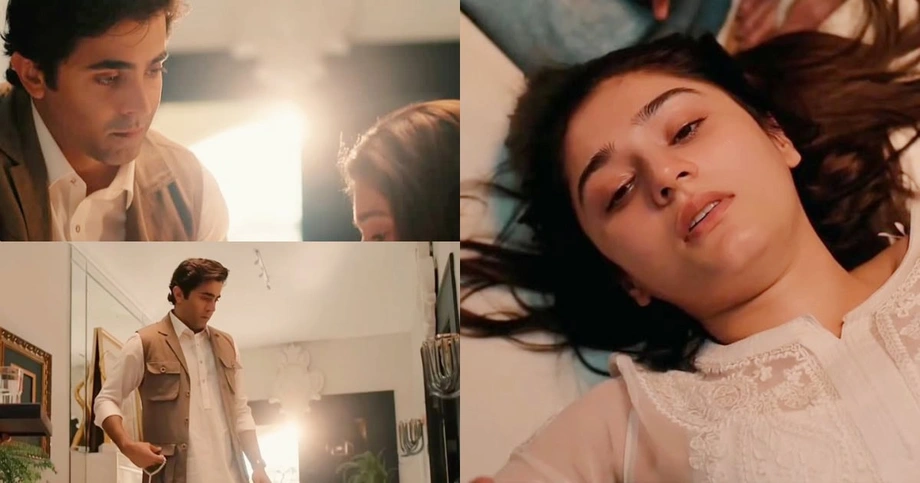
The series adapts Farhat Ishtiaq's 2013 Urdu novel of the same name. It follows six love stories across three generations, and Netflix describes it as the journeys of six couples toward discovering love. Momina Duraid created, directed and produced it and serves as showrunner. Filming took place mainly in Pakistan, with scenes shot in Rome and the United Kingdom, and the project had been in the works for almost eight years when the trailer and a soundtrack of six songs were unveiled.
Fawad Khan plays Mehmood, a man who has to take charge of his clan's responsibilities because of circumstances, and whose bond with Victoria, played by Sanam Saeed, is complicated. Mahira Khan plays Rahat. Ahad Raza Mir is Sikandar, a lawyer living in Rome, opposite Iqra Aziz as Lisa, an artist. Hania Aamir appears as Kulsoom, Hamza Ali Abbasi as Shehryar, Maya Ali as Aamna, Khushhal Khan as Zain and Aamina Sheikh as Sadia. The supporting cast includes Omer Rana, Nadia Jameel, Maha Hasan, Safi Hasan, Hoorain, Usman Javed, Shahzain Duraid, Nadia Hussain and Sameena Ahmed.
Duraid said the partnership with Netflix mattered for how Pakistan is seen abroad.
This particular series is a Pakistani brand but it could only be possible because Netflix MENA took it under its wing. You need a global platform to believe in you. They believed in us and I hope we can live up to their expectations.
Reaching that point took negotiation across borders. Netflix's South Asia headquarters sits in India, and the series ran into delays at the start, with the release eventually arranged through Netflix's Middle East office. Netflix MENA, Netflix UK and Netflix Golden released the posters and character looks that set off the current argument.
The Advisory Behind the Ban Demand
AICWA's case rests on a government instruction. On 8 May 2025, the Ministry of Information and Broadcasting told streaming services, OTT platforms and digital intermediaries working in India to stop carrying web series, films, songs and podcasts made in Pakistan. The advisory came two weeks after gunmen opened fire on tourists at the Baisaran meadow near Pahalgam in Kashmir on 22 April 2025, killing 26 people, among them a Kashmiri local. India blamed Pakistan, which denied involvement, and the two countries fought for four days in May before agreeing to a ceasefire. The association says a release in India would defy that advisory and the mood of the country.
No Pakistani face, voice or story has a place on Indian screens.
Gupta's letter added that "Desh sabse pehla aata hai. Aatankvaad ko taliyan nahi milni chahiye", which translates as: the country comes first, and terrorism should not be applauded. He described the people behind such productions as people of a terrorist country who would never wish India well, and accused several cast members of speaking against India during periods of high tension. The letter also recalled AICWA's own ban on Pakistani artists after the Pulwama attack of 2019.
Shiv Sena leader Anand Dubey backed the demand and went further, calling for a complete boycott of cultural and entertainment ties with Pakistan. He said India had no interest in Pakistani cricket, web series or any other form of cultural engagement.
A Decade of Restrictions That Shaped This Fight
Friction over Pakistani artists in India is a decade old, and the record shows how each political crisis narrowed the space for performers.
- 18 September 2016: gunmen attack an Indian army camp at Uri in Jammu and Kashmir, killing 18 soldiers. The Maharashtra Navnirman Sena gives Pakistani artists 48 hours to leave India.
- 30 September 2016: the Indian Motion Picture Producers Association passes a resolution against hiring Pakistani actors and technicians. Karan Johar's Ae Dil Hai Mushkil, which starred Fawad Khan, becomes the best known casualty, and other film bodies decide against working with Pakistani artists.
- February 2019: after the Pulwama attack in which 40 CRPF personnel were killed, AICWA announces a ban on Pakistani artists working in the Indian film industry.
- October 2023: the Bombay High Court dismisses a petition seeking a complete ban on Pakistani artists, calling the demand a step backward for cultural harmony and peace, and saying patriotism does not mean enmity with the people of another country.
- 22 April 2025: the Pahalgam attack kills 26 people. India launches Operation Sindoor, the neighbours fight for four days, and Pakistan bans Indian films in its cinemas.
- 8 May 2025: the information ministry issues its advisory on Pakistani content, and Indian authorities block YouTube channels run by Pakistani broadcasters including HUM TV and ARY Digital.
The 2025 conflict reached music as well. Songs such as Jhol, Maand, Pasoori and Faasle disappeared from Spotify India, Apple Music and YouTube Music, and some platforms removed artwork showing Pakistani artists. The blocking of Pakistani broadcaster channels on YouTube has eased unofficially in recent months, which is how dramas such as Dar-e-Nijaat found viewers in India.
The Films That Never Reached Indian Cinemas
Three recent releases show what the restriction has meant in practice for cinemas on both sides of the border.
- The Legend of Maula Jatt, starring Fawad Khan and Mahira Khan, was due in Indian cinemas in December 2022 and had screens lined up in Punjab and northern India. Opposition from the Maharashtra Navnirman Sena postponed it indefinitely. A second attempt was fixed for 2 October 2024 in Punjab and stopped again.
- Abir Gulal, pairing Fawad Khan with Vaani Kapoor, was scheduled for 9 May 2025. Government sources said it was not cleared for release in India. The film opened on 29 August 2025 in more than 75 countries, India excluded.
- Sardar Ji 3, a Diljit Dosanjh film featuring Pakistani actress Hania Aamir, was released outside India on 27 June 2025 and never reached Indian cinemas.
Cinema owners in Pakistan paid for the reverse ban. Nadeem Mandviwalla, a producer, distributor and cineplex owner, said exhibitors had lost a lot of revenue and business since Pakistan stopped showing Indian films in 2019, after New Delhi revoked the special status of the part of Kashmir it administers, and were keeping the industry alive with difficulty.
Islamabad Counts the Cost of a Ban
Pakistan's planning minister, Ahsan Iqbal, answered the letters to Modi on X, framing the demand as part of a pattern that has covered sport and water as well as films.
First weaponising sports, then water, and now art and culture. The All Indian Cine Workers Association is urging New Delhi to permanently ban Pakistani content. How insecure do you have to be to see a cricket match as a political threat and a television drama as a national security concern? India, grow up. Let athletes play, let waters flow, let artists create, and let audiences decide what they watch.
Iqbal posted under the hashtag #GrowupIndia and called the series a significant milestone for Pakistan's drama industry and cultural exports. He said a consistent policy of opening global streaming avenues, engaging platforms such as Netflix and Disney+ and aligning Pakistan with the MENA content region was bringing Pakistani talent to worldwide audiences. Actor Ayesha Omer and television anchor Ajmal Jami backed him.
Mandviwalla said the demand will decide the future of original Pakistani content on international streaming platforms. Omair Alavi, a film critic and podcaster, said the arrival of Pakistani shows on Netflix and elsewhere had made parts of India's entertainment industry feel threatened, pointing to the popularity of Dar-e-Nijaat on YouTube. Jamal Mir, who runs the Prestige advertising agency, said Pakistani content needs Indian audiences to succeed and to persuade platforms to invest further, because viewers in both countries relate closely on culture and art. The government's Uraan Pakistan initiative, launched this year, aims to widen the reach of Pakistani creators on paid global platforms.
What Netflix Has Said, and What It Has Not
Netflix has confirmed the date and the show, not the map. June Sauvaget, a Netflix marketing executive, addressed the launch in a recorded message, thanking the cast "for the heart they've poured into playing these characters and bringing them to life" and saying the company could not wait for audiences around the world to experience the series. Asked about India, the company has offered nothing.
India matters to the platform's numbers. HSBC estimates Netflix has about 20 million users in the country, and the company told shareholders in October that viewing hours in India rose 24 percent from a year earlier in the third quarter, its biggest quarterly increase in paid memberships there. Netflix does not disclose subscriber numbers for India, so the size of the audience at stake is not public.
A Delhi Cafe, a Rival Drama and a Divided Internet
While the Netflix series drew protests, a different Pakistani drama drew a crowd. Dar-e-Nijaat, shown on ARY Digital in Pakistan and available on YouTube, stars Sheheryar Munawar, Durefishan Saleem and Nameer Nawaz Khan. A fan group booked a paid watch party at a cafe in New Delhi for an episode, and a video of the gathering spread online. Dozens of people came, more than triple what the organisers had planned, and reservations were closed after interest surged. Some viewers brought their parents. Fans have held similar gatherings in Bengaluru and Hyderabad. A virtual question and answer session with the show's director, Saqib Khan, was reportedly part of the Delhi event.
Reaction split. One post called the Delhi screening proof that the craze is beyond words, while others asked how viewers could celebrate Pakistani soft power months after a deadly attack and after Pakistani celebrities criticised India's military action. Several questioned the need for such a gathering at all. No official statement has been issued by those involved, and the organisers of the cafe event have not responded publicly. The show has also drawn criticism inside Pakistan over its characters and story, with some viewers describing it as an incest drama.
The Statements That Fuelled the Anger
Anger in India fastened on two remarks. Fawad Khan called India's Operation Sindoor strikes shameful, and Mahira Khan described the action as a cowardly attack. Both are among the best known Pakistani actors in India, and their statements were raised repeatedly in posts urging a boycott of the new series.
Some Indian users made a different argument. One asked why a romantic drama needed to be stopped at all, and others said the Indian film and drama industry should concentrate on improving the quality and range of its own output instead of seeking bans. A user compared the situation with cricket, asking why matches between India and Pakistan continue almost every other month because the Indian board earns money from them. Another noted that films hostile to India are released in Pakistan, while this series is not hostile to India. Pakistani users answered with sarcasm. Actor Omer Rana posted a comic GIF, and actress Mishi Khan criticised the demand in a video message.
What the Cast Says About the Story
At the Karachi launch, the cast described a family saga rather than a political statement. Fawad Khan said his character gave him room to show a wide emotional range, adding that Mehmood loves, hates, gets angry and gets happy, and that viewers will see all those faces. Sanam Saeed described Victoria as a woman of mixed heritage living in Italy, a part she found startling at first.
That in itself was a shock for me to be able to be like, okay, I'm a half foreigner. I live in Italy and I just have to embody this girl. I hope it clicks with people.
Hania Aamir asked viewers to have empathy for Kulsoom, whom she called an extremely strong willed girl who goes to extreme lengths for love, whatever version of it she holds in her mind. Aamina Sheikh, who is based in Dubai and plays Sadia, said the release is a chance for audiences abroad to recognise Pakistani storytelling on its own terms, because people outside South Asia often cannot tell Pakistani content apart from Indian, Bangladeshi or Sri Lankan work.
What the Decision Would Change
For Netflix, the choice is narrow in scope and large in symbol. A block would keep the series from Indian subscribers while leaving the rollout elsewhere untouched, but it would also set a precedent for how the platform handles Pakistani originals at a time when India is one of its fastest growing markets. For Pakistani producers, the Indian audience is the difference between a regional release and a profitable global one. For viewers in India, the argument is about who decides what they watch.
Several things remain open. No date has been given for a government response to the letters, and Netflix has not said whether it will block the series for Indian users. The premiere on 4 December 2026 is when the practical answer will arrive, and the show's Indian fate will be settled by a company decision rather than a public vote.
Key Points
- Netflix will premiere Jo Bachay Hain Sang Samait Lo, its first Pakistani original series, worldwide on 4 December 2026.
- The All India Cine Workers Association wrote to Prime Minister Narendra Modi on 24 November asking that the show not be streamed in India on any date.
- The letter cites the Ministry of Information and Broadcasting advisory of 8 May 2025, issued after the Pahalgam attack of 22 April 2025 in which 26 people were killed.
- AICWA wants a permanent law with the severest penalties barring Pakistani content from Indian television, cinemas and streaming platforms; the Federation of Western India Cine Employees made a similar demand.
- Netflix has not confirmed whether the series will be available in India; HSBC estimates the company has about 20 million users there.
- Pakistan's planning minister, Ahsan Iqbal, called the demand the weaponisation of art and said audiences should decide what they watch.
- Fawad Khan and Mahira Khan, the show's leads, had earlier called India's Operation Sindoor action shameful and cowardly, which intensified calls for a boycott.
- A separate Pakistani drama, Dar-e-Nijaat, drew a paid watch party at a Delhi cafe with more than triple the expected turnout, and similar events in Bengaluru and Hyderabad.
- The series adapts Farhat Ishtiaq's 2013 novel, spans six love stories across three generations and took almost eight years to make.