Two Prizes Out of Eleven Nominations
Arrested Memory, the co-production between Japan and Taiwan directed by SABU, won Best Art Direction and Best Sound Effects at the 63rd Golden Horse Awards, announced on November 22, 2026 at a ceremony in the Taipei Music Center. The film entered the night with 11 nominations, the most ever for a work by a Japanese director in the history of the awards, which are widely treated as the highest honour in Chinese-language cinema.
Contents
- Two Prizes Out of Eleven Nominations
- What the Film Is and Where It Was Shot
- Inside the Room Where a Record Fell
- Why Japan Stood Out at This Year's Awards
- The Night's Other Big Winners
- A Host, a Jury and Two Oscar Winners
- Why a Telecom Company Is Backing Films
- When Audiences Outside Taiwan Can Watch
- Key Points
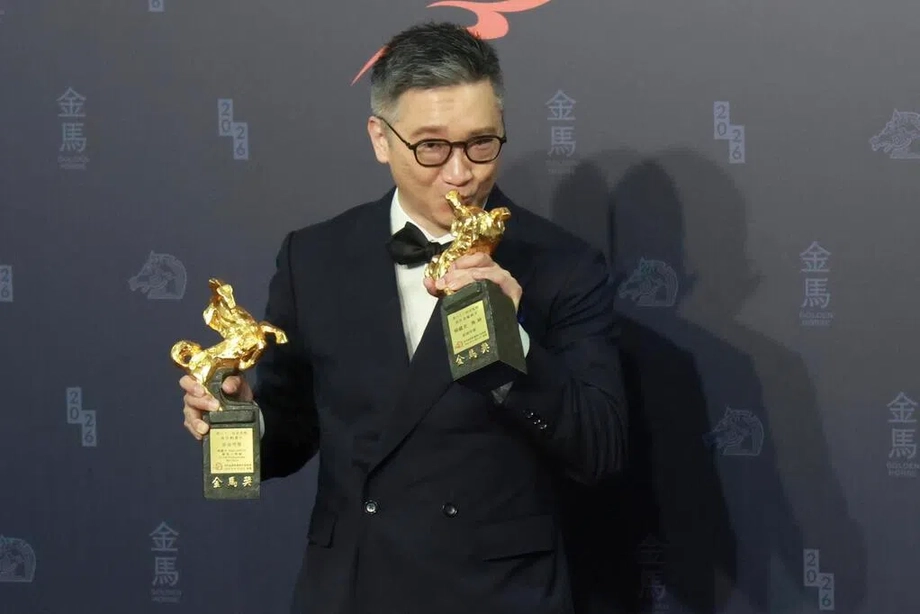
Production designer Chen Po-jen took the art direction prize. Sound honours went to Tu Duu-chih and his son Tu Chun-tang, a result that rewrote the record book by giving Tu Duu-chih a 14th Golden Horse statuette, one more than the 13 held by art director Chang Shu-ping.
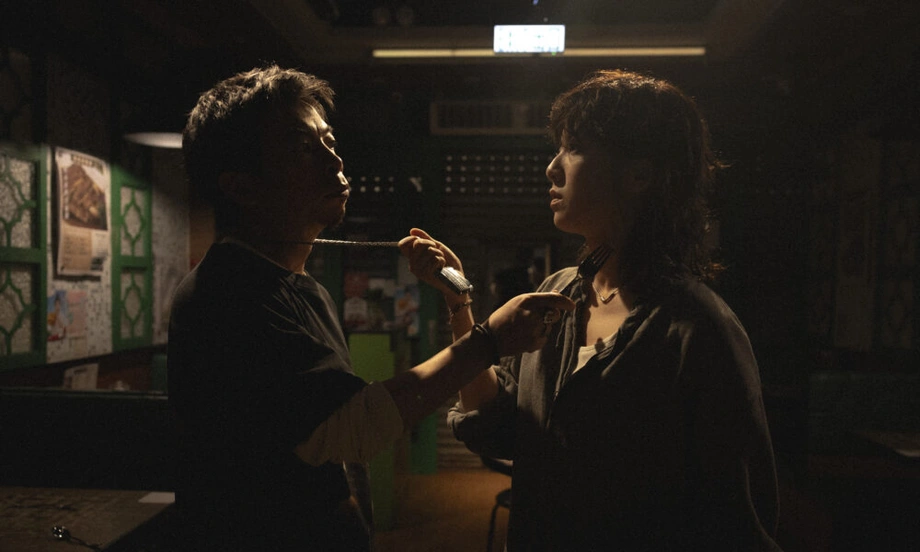
The film carries three titles: Arrested Memory in English, 狂忘警探 in Chinese and 記憶ゼロ in Japanese. SABU made it as his 20th feature, from a project that took about 20 years to reach the screen.
What the Film Is and Where It Was Shot
The production was assembled by producers Huang Chiang-feng, Shozo Ichiyama and Wang Ssu-ching, with a cast led by Golden Horse best actor winner Ethan Juan alongside Hsieh Ying-hsuan and Huang Kuan-chih. Promotional material describes it as a dark action crime film.
Filming took place entirely in Taiwan. Before the Golden Horse ceremony the film had been selected for the Venice Film Festival, the Toronto International Film Festival and the Tokyo International Film Festival.
Inside the Room Where a Record Fell
Tu Duu-chih is the sound designer most closely tied to Taiwanese art cinema, and the 63rd Golden Horse Awards belonged to him in a way it belonged to no other winner. His earlier Golden Horse sound awards came for films including Millennium Mambo, Monga, Warriors of the Rainbow: Seediq Bale, The Assassin and Snow in Midsummer. This time he shared the win with his son.
Winning an award is a kind of passing on. Working with him, I found that he expresses himself and executes very well. I actually did not do much, I offered a few ideas at the end, so he is quite impressive.
Tu Chun-tang said the work was strong and the team had put in a lot of effort, and that he had been confident before the ceremony.
Being recognised by my father makes me happier than winning the award.
His father called the shared prize a piece of good fortune. "I am really happy to see the effort he has put in over these years, and to have the chance to win my 14th award together with him today. It is a great happiness." It was the first time a father and his son had collected a Golden Horse prize at the same ceremony.
Why Japan Stood Out at This Year's Awards
Yaita Akio, executive director of the Indo-Pacific Strategy Institute and a veteran Japanese journalist who has lived in Taiwan for years, wrote after the ceremony that Japanese film people were unusually visible. He listed the 11 nominations for the SABU film, the invitations to Japanese actors Sota Fukushi and Rinko Kikuchi to hand out awards, and the win by Ryota Katayama, a Malaysian musician with Japanese background, for the song "一去不返" from the film Dead Tide.
Yaita compared the night with the awards of a decade earlier, when Chinese films held the centre. Blind Massage (推拿) collected six awards in 2014. In 2016, The Summer Is Gone (八月) won best picture and I Am Not Madame Bovary (我不是潘金蓮) took best director, while the leading actor and actress prizes went to Chinese performers.
Beijing barred Chinese films and Chinese film personnel from the awards in 2019 for political reasons, and the boycott has held since. Yaita wrote that the Chinese government stresses cross-strait exchanges while cutting an important channel of cultural exchange by its own hand, and that the Golden Horse Awards kept opening their doors to Asia and the world anyway.
He described the layers that make up culture in Taiwan, naming Indigenous, Hoklo, Hakka, Japanese, Chinese, European, American and Southeast Asian influences, and said good art does not belong to one nationality and cultural exchange should not be steered by political power. He also pointed to a city action exhibition organised by Shen Po-yang's team on Taipei streets that day, which used live performance to show the potential of Taiwanese culture.
Taiwan does not need to become more like Japan, and it does not need to become more like China. Taiwan only needs to become more like Taiwan.
The Night's Other Big Winners
We Are Born Good, a Hong Kong drama directed by Yeung Leung-chuen, won Best Narrative Feature and Best Original Screenplay, the screenplay shared by Yeung and his co-writer Thomas. The film had entered with nine nominations. It follows a former prisoner trying to start again as the owner of a cafe and an aspiring actress short of money, whose quarrel over a food order grows into a wider conflict.
Double Happiness, directed by Joseph Hsu Chen-chieh, finished with four distinctions in total. It won Best Director, a first Best Leading Actor award for Liu Kuan-ting and Best Film Editing for Chen Chun-hung, and had already taken the Audience Choice Award at the luncheon for nominees on November 21. Kung Fu matched it with three competitive prizes: Best Action Choreography, Best Visual Effects and Best Makeup and Costume Design.
Angela Yuen of Hong Kong won Best Leading Actress for Afterpiece, in which she plays a theatre hopeful drawn into a production that tangles the relationships of its director. Anson Kong took Best Supporting Actor for Herman Yau's We're Nothing at All, and the veteran actress Judy Ongg won Best Supporting Actress. Shu Qi won Best New Director for her debut Girl, set in Keelung in 1988, a day after the film took the FIPRESCI Prize.
The Violinist won Best Animated Feature and Best Adapted Screenplay. Dead Tide took Best Cinematography for Kartik Vijay and Best Original Film Song. Tsai Ming-liang added Best Documentary Short for 夜行, and Anthony Chen's We Are All Strangers won Best Original Film Score. Nandagopall Mohan was named Best New Performer for Sayang. In the short film categories, Best Animated Short went to 深水區 and Best Live Action Short to 三隻小豬, while Best Documentary Feature went to 離開即景. Yu Kan-ping received the Lifetime Achievement Award, and Chou Chia-sheng was named Outstanding Taiwanese Filmmaker of the Year.
The prizes were spread across Hong Kong, Taiwan and the wider Asian film community, covering independent drama, animation, genre cinema and documentary.
A Host, a Jury and Two Oscar Winners
Hong Kong actor Will Or hosted the ceremony, and a jury of 15 members led by the actress and filmmaker Sylvia Chang decided the competitive prizes. Ang Lee, who twice won the Academy Award for Best Director, and the South Korean director Bong Joon-ho appeared together to present the directing awards, the moment when two Oscar winners shared the stage.
Japanese actor Sota Fukushi, invited as an award presenter, had appeared on the festival's red carpet on November 21, when Sota Fukushi's festival debut drew fans to the Taipei Music Center. He had spent an intensive month filming in Taiwan, keeping to a strict diet for a physically demanding part while praising the meals the crew provided.
Why a Telecom Company Is Backing Films
Chunghwa Telecom, the investor behind Arrested Memory, said the prizes and nominations affirmed its move into content. The company, listed on the Taiwan Stock Exchange under the code 2412, funds films and series that also reach its MOD and Hami Video platforms.
Chairman Chien Chih-cheng said the company uses capital, content investment and partnerships to support production teams.
Reaching the highest hall of Chinese-language cinema and winning so many Golden Horse nominations is an important affirmation of Chunghwa Telecom's support for Taiwan's film and television industry over many years. We will keep working with outstanding teams so the world can see Taiwan's soft power in film and television.
Other titles in that slate have travelled further. The film 山忌 黃衣小飛俠 sold rights in Hong Kong, Macau and Southeast Asia and reached audiences in the Americas, Europe, Oceania, the Middle East and India through streaming, arriving on Netflix recently. 進行曲 screened in Thailand, Singapore and the United States and opened across Japan. Among series, 成名在望 went to Netflix and 郵票與舒芙蕾 premiered alongside Disney+. The fantasy series 微醺大飯店1980s, adapted from an interactive theatre show, premiered at the Kaohsiung Film Festival and begins streaming on MOD and Hami Video on December 6.
The company pointed to a 2025 survey by the Taiwan Creative Content Agency that put Hami Video first for paid subscription rate among domestic streaming platforms, and to a 2026 viewing behaviour survey by the Market Intelligence and Consulting Institute of the Institute for Information Industry that placed it first among domestic platforms chosen by subscribers.
When Audiences Outside Taiwan Can Watch
Chunghwa Telecom says the film opens in March 2027, while the Japanese release has been announced for early summer 2027. The two Golden Horse prizes add to a run that already includes three major festival selections. No distributor, streaming date or release plan for markets outside Taiwan and Japan has been announced.
Key Points
- Arrested Memory, directed by SABU, won Best Art Direction and Best Sound Effects at the 63rd Golden Horse Awards on November 22, 2026 in Taipei.
- The film had 11 nominations, the most for any work by a Japanese director in the history of the awards.
- Chen Po-jen won art direction, while Tu Duu-chih and his son Tu Chun-tang won sound, giving Tu Duu-chih a record 14th Golden Horse.
- Producers are Huang Chiang-feng, Shozo Ichiyama and Wang Ssu-ching, and the cast includes Ethan Juan, Hsieh Ying-hsuan and Huang Kuan-chih.
- We Are Born Good won Best Narrative Feature and Best Original Screenplay, and Double Happiness and Kung Fu each took three competitive prizes.
- Hong Kong actor Will Or hosted the ceremony, with a jury of 15 led by Sylvia Chang.
- China has boycotted the Golden Horse Awards since 2019, barring Chinese films and film personnel.
- Chunghwa Telecom is a backer and says the film opens in March 2027, with Japan's release set for early summer 2027.