A sprint to lend ten times more
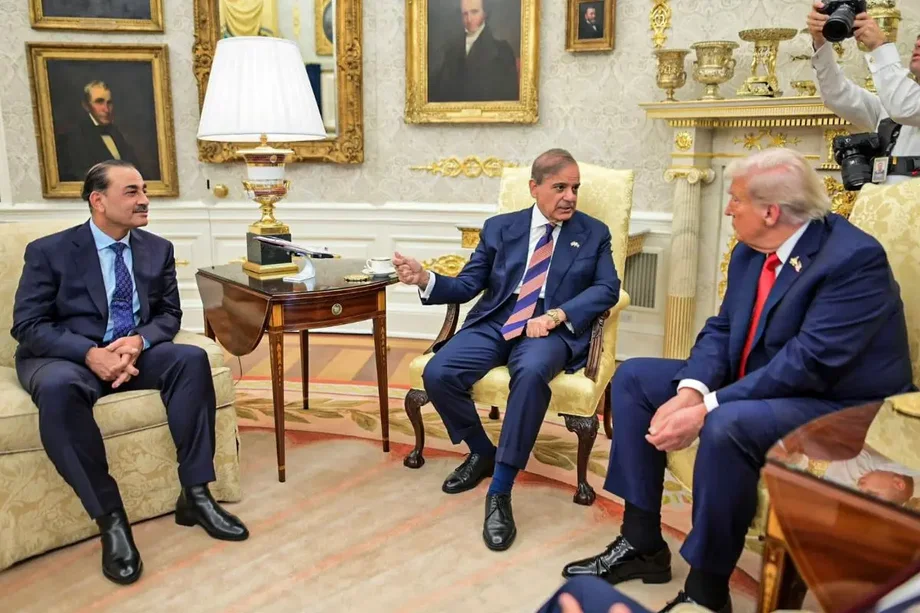
Prime Minister Shehbaz Sharif used a ceremony in Islamabad on Monday, November 23, 2026, to set a number for Pakistan's banks: disburse 1 trillion rupees, about $3.6 billion, in subsidized housing loans over the next six months.
Contents
- A sprint to lend ten times more
- What Apna Ghar offers borrowers
- The title deed, the paperwork and the delays
- Why banks prefer government paper
- Five banks, blue passports and a merit promise
- The subsidy bill and the fiscal squeeze
- A timeline from launch to the new target
- What changes for families and builders
- Key Points
The figure is roughly ten times what lenders had paid out since the Apna Ghar programme began in April. One trillion rupees is also about nine times the 112 billion rupees Sharif said had been disbursed by the time he spoke, and twice the roughly 500 billion rupees in loans that banks had approved.
The programme, formally called the Wazir-e-Azam Apna Ghar Program and also known as Ghar Ho Tu Apna, was launched in April 2026 with a goal of financing 500,000 homes over five years and boosting construction and jobs. The State Bank of Pakistan supervises it and has formally renamed the earlier Mera Ghar-Mera Ashiana initiative.
About 220,715 people had applied by late October. Finance Ministry figures for October 30 showed that banks had approved 90,405 applications worth 533 billion rupees, a 41 percent approval rate, and issued 17,697 loans worth 104 billion rupees, up from about 21 billion rupees in June, a 404 percent increase.
The International Monetary Fund said in a report last year that government bonds accounted for around 60 percent of Pakistani banks' assets, a concentration it flagged as a risk to financial stability. The 1 trillion rupee drive is a test of whether Pakistan can get banks to lend to households after years of relying on them to finance the government.
Sharif told the audience that the next six months must bring a much larger number. He said:
In the next six months, we should have a disbursement of Rs1,000 billion.
The ceremony marked the programme's first 100 billion rupees in payouts. Sharif said banks had approved about 500 billion rupees but had paid out only about a fifth of that amount, which shows how far actual lending trails approvals.
What Apna Ghar offers borrowers
Under the scheme, eligible borrowers can take up to 10 million rupees, about $36,200, for as long as 20 years. The customer pays a fixed markup of 5 percent for the first decade. After that, the rate moves to the Karachi Interbank Offered Rate plus 3 percentage points, reset for one year, the benchmark banks use to price loans.
Banks can finance up to 90 percent of a property's value, so the buyer must contribute at least 10 percent. The scheme covers houses up to 10 marla, or 2,720 square feet, and apartments up to 1,500 square feet. Loans can buy a ready house or apartment, build on land the borrower owns, or buy a plot and build. Property bought from a blood relative is excluded.
Eligibility starts with a valid CNIC, age 18 or above, a regular income and no other residential property. The minimum monthly income is 35,000 rupees for salaried applicants and 40,000 rupees for self-employed applicants. The debt burden ratio, the share of net monthly income used for loan payments, can go up to 65 percent. Spouses, parents, children and siblings can apply as joint applicants and combine incomes.
HBL, one of the five banks singled out for recognition, offers the scheme through a Shariah-compliant diminishing musharakah structure, a partnership in which the bank and customer own the property together and the customer gradually buys the bank's share, according to HBL's programme page. Non-resident Pakistanis can use Roshan Digital Accounts and Naya Pakistan Certificates, pledging investments as a lien or choosing financing without a lien.
Applications can be filed online or through banks, with a processing target of about 15 working days. The online form asks for CNIC and contact details, employment and income information, property details and scanned documents such as salary slips, bank statements, utility bills, tax returns for business applicants and property papers. The programme runs across all four provinces, Gilgit-Baltistan and Azad Jammu and Kashmir.
The title deed, the paperwork and the delays
Sharif put property ownership at the centre of the lending push. He told banks that a clean title was the one requirement that could not be waived, and that they should help applicants with the rest. He said:
An unencumbered and clear title property is the main requirement for a loan, and that other documentation should be handled by banks by helping applicants rather than turning them away.
Some applicants have stumbled on simpler steps. Wrong CNIC information, missing pages, unclear scans and hidden liabilities can delay or sink an application. Paying agents who promise approval is a common risk, and banks verify financial records before deciding. Sharif said some banks had claimed to be unaware of the scheme, which he called unacceptable, and told them to set up dedicated cells.
He also said political interference would not be tolerated and that no applicant had been asked about a political affiliation. The programme's scale still depends on approvals turning into payments. Of the 220,715 applications received, 90,405 had been approved by October 30, and 17,697 had been paid out.
Why banks prefer government paper
Pakistan's banks have a comfortable customer: the state. State Bank of Pakistan data show banks held 96 percent of their investments in government securities at the end of September. The five largest lenders held 57.3 percent of the banking system's assets and 52.8 percent of deposits, and government paper made up 95 percent of their investment books. They supplied 47.9 percent of loans to private borrowers.
Across the industry, investments of 41.35 trillion rupees accounted for 62 percent of 67.16 trillion rupees in total assets, while net loans came to 15.70 trillion rupees. For every 100 rupees deposited, banks lent out about 36 rupees. Government domestic debt stood at 57.76 trillion rupees at the end of September, 85 percent more than in July 2022. The budget for the fiscal year to June 2027 sets aside about 8 trillion rupees for debt servicing, 43 percent of total spending.
Treasury bills pay well. The central bank raised its policy rate by 50 basis points to 12 percent on October 26 to check an inflation shock driven by energy prices, and Treasury bills maturing in 12 months cleared at 12.41 percent at the November 11 auction. Banks posted a return on equity before tax of 39 percent at the end of September. Moody's has listed their heavy exposure to government debt as a key risk for the sector.
Sharif said banks had initially been reluctant to lend under the housing programme because they were used to earning returns on Treasury bills and doing business with large companies. Domestic credit to the private sector shrank to 10.7 percent of GDP in 2025 from 24.2 percent in 2008, World Bank figures show, under a third of Bangladesh's 34.5 percent and a quarter of India's 44.0 percent. The country's savings rate has fallen to its lowest in 28 years, which limits the pool both the government and private borrowers draw on.
Bolormaa Amgaabazar, the World Bank's country director for Pakistan, said the country had restored stability but that incomes were barely rising.
Pakistan has made real progress in restoring stability, and markets have taken notice.
Sebastian Essl, the lead author of the World Bank update, said the next step was to encourage private investment.
With macro stabilisation achieved but fiscal resources and foreign exchange still tightly constrained, structural reform to encourage private investment is the necessary next step towards higher living standards.
Five banks, blue passports and a merit promise
The ceremony singled out five banks for their role: United Bank Limited, Habib Bank Limited, Bank Alfalah, Meezan Bank and Mobilink Microfinance Bank. The executives named were UBL Deputy CEO Abdul Aleem Qureshi, HBL President Muhammad Nassir Salim, Bank Alfalah President Atif Bajwa, Meezan Bank Retail Acting CEO and COO Ziaul Hasan, and Mobilink Microfinance Bank Chief Business Officer Attaur Rehman.
Sharif said leaders of the five banks would receive blue passports and that the banks would serve as ambassadors at large for the programme. Each bank's owners or chief executives would decide who held the passports. He said the recognition carried responsibility, because a delay in a genuine approval would now be attributed to them.
He rejected political interference in loan decisions, saying he had told bankers to reject improper recommendations even if they came from him. He said no applicant had been asked about political affiliation and that people from opposition parties should receive loans if they qualified on merit.
Sharif also framed the programme as a welfare test. He said past housing schemes had mostly served the elite, who did not need bank loans, while the need was among labourers, widows, orphans and families with low incomes in Pakistan, Azad Jammu and Kashmir and Gilgit-Baltistan. He said:
If the state cannot provide even a roof to such families, it has no right to rule.
He put no cap on the number of homes, saying the government would support 100,000, 200,000 or 500,000 if needed. The prime minister's stated target is 150,000 homes by June 2027. Ceremony remarks also cited a 125,000 house target for the construction industry, and the Association of Builders and Developers, whose chairman Hanif Kohari said it represents about 1,500 members, is working towards that number.
The subsidy bill and the fiscal squeeze
The government has not said how much it would spend on subsidies if banks meet the new 1 trillion rupee target. That figure matters because a subsidy the budget cannot cover from revenue ends up as more Treasury bills and bonds, sold largely to banks whose investment books are already almost entirely government paper.
The government absorbs the first losses up to 10 percent of the outstanding loan portfolio. The initial phase aims to support about 50,000 housing units with an allocation of around 321 billion rupees. Over five years, the government says it wants to finance 500,000 homes with a broader funding commitment estimated at 3.2 trillion rupees.
The World Bank has told Islamabad to hold its fiscal line, keep adding to foreign exchange reserves and resist bringing back costly energy subsidies before the IMF programme ends in September 2027 and voters go to the polls in early 2029. The lender credited timely power tariff adjustments with cutting energy subsidies to 0.8 percent of GDP in the fiscal year to June 2026 from 1.1 percent a year earlier.
The IMF has renewed its call for Pakistan to scrap a broad fuel subsidy scheme launched in September, ahead of a board meeting expected in December that would release about $1 billion under its $7 billion Extended Fund Facility. Central bank reserves stood at $21.6 billion on November 13.
A timeline from launch to the new target
- April 2026: The Apna Ghar programme is launched with a goal of financing 500,000 homes over five years.
- June 2026: Disbursements stand at about 21 billion rupees.
- October 30: Banks have approved 90,405 applications worth 533 billion rupees and issued 17,697 loans worth 104 billion rupees.
- November 19: Central bank data show 96 percent of bank investments in government securities.
- November 23: Sharif sets a 1 trillion rupee target for the next six months; the ceremony marks the first 100 billion rupees, with total disbursements at 112 billion rupees.
- May 2027: The six-month period ends if counted from the November 23 announcement; no exact deadline was given.
- June 2027: The government aims for 150,000 homes under the programme.
What changes for families and builders
Beneficiaries at the ceremony described what the loans had changed. Musarrat Qamar from Azad Jammu and Kashmir, Dr Asad Ali from Quetta, Anam Akhtar from Rawalpindi, Jameela Bibi from Rahim Yar Khan, and Karachi couple Babar Zaib and Tayyaba Qazi said the financing helped them complete or buy homes after years in rented accommodation. Others from Khyber Pakhtunkhwa also spoke.
The prime minister said the loans covered 18,500 houses. Finance Minister Muhammad Aurangzeb put the number of families at 19,000 and approvals at about 560 billion rupees. Information Minister Attaullah Tarar said many women had also built houses and made them homes, and Housing Minister Riaz Hussain Pirzada said the programme would keep expanding.
A loan turns rent into a mortgage payment and, eventually, an asset. For builders, it creates work. Kohari said the programme had created opportunities for the construction sector and that ABAD was working with the government and banks. The construction industry's target of 125,000 houses is a quarter of the government's goal of 500,000 homes over five years.
The banks' response will decide whether the 1 trillion rupee target is met. Approvals already exceed the amount paid out, and the government wants banks to move faster on documents and titles. Whether the subsidy budget, the banks and the construction sector can keep pace is the question the next six months will answer.
Key Points
- Prime Minister Shehbaz Sharif set a target of 1 trillion rupees ($3.6 billion) in Apna Ghar housing loan disbursements over six months from November 23, 2026.
- Banks had disbursed 112 billion rupees and approved about 500 billion rupees by the ceremony; Finance Ministry figures for October 30 showed 17,697 loans worth 104 billion rupees and 90,405 approvals worth 533 billion rupees.
- The scheme offers up to 10 million rupees for 20 years at a fixed 5 percent markup for 10 years, then the Karachi Interbank Offered Rate for one year plus 3 percentage points; banks can finance 90 percent of property value.
- Government bonds made up 96 percent of bank investments at the end of September, and the five largest banks held 57.3 percent of assets, according to central bank data.
- Five banks were named top performers and offered blue passports; Sharif said political interference would not be tolerated.
- The government did not say how much subsidy it would pay if the 1 trillion rupee target is met; its target is 150,000 homes by June 2027.