Tajikistan Approves New Climate Targets
Tajikistan has committed to lowering its greenhouse gas emissions by 15% by 2035 compared to 1990 levels, with the potential to reach a 40% reduction if sufficient financial and technological assistance is secured from international partners. These goals are detailed in the country's updated Nationally Determined Contribution, known as NDC 3.0, which was officially approved by the government on October 16, 2026. A Nationally Determined Contribution serves as a foundational national climate plan submitted under the Paris Agreement, representing a country's formal pledge to limit global warming and address environmental shifts. Under the updated framework, Tajikistan plans to cut emissions by 10% by 2030 and 15% by 2035 using only domestic resources. With external assistance, those figures could scale up to a 25% reduction by 2030 and a 40% reduction by 2035.
Contents
The specific emission volume targets correspond to 23.5 million tons of carbon dioxide equivalent by 2030 and 22.2 million tons by 2035 under the unconditional scenario. Carbon dioxide equivalent is a standard metric used to express the warming impact of different greenhouse gases by converting them into the equivalent amount of carbon dioxide. Under the conditional scenario relying on foreign support, emissions would drop further to 19.6 million tons by 2030 and 15.7 million tons by 2035. The updated plan was published on the official website of the United Nations Framework Convention on Climate Change on November 18, 2026, following coordination by the Committee on Environmental Protection with support from the United Nations Development Programme and other development partners.
Financing and Implementation Challenges
Carrying out the measures outlined in the updated climate strategy between 2026 and 2035 will require an estimated $20 billion to $22.5 billion. The baseline domestic scenario carries a cost of $20 billion, while the ambitious international support scenario requires $22.5 billion. Bahodur Sheralizoda, chairman of the Committee for Environmental Protection under the Government of Tajikistan, emphasized that the formal adoption of the strategy initiates practical execution across the economy. He spoke about the necessity of embedding environmental targets into sectoral programs and regional plans during the launch of the Sustainable Climate Landscapes in Central Asia regional program, held in Antalya, Turkey, on the sidelines of the 31st Conference of the Parties to the UN Framework Convention on Climate Change.
The effectiveness of climate policy should be measured by tangible benefits for the economy and population rather than by the number of documents adopted.
Funding for these initiatives is expected to draw from a mix of domestic budgets, concessional loans, grants, technology transfers, and private investments. The financial burden is substantial for a developing nation where mountainous terrain covers about 93% of the land, leaving infrastructure and agriculture vulnerable to rising temperatures and glacial melting. Past regional challenges show how difficult it is to balance heavy energy demands with climate goals, much like the broader trends observed across neighboring regions where energy consumption continues to climb despite climate pledges made by governments.
Energy Transformation and Hydropower Priorities
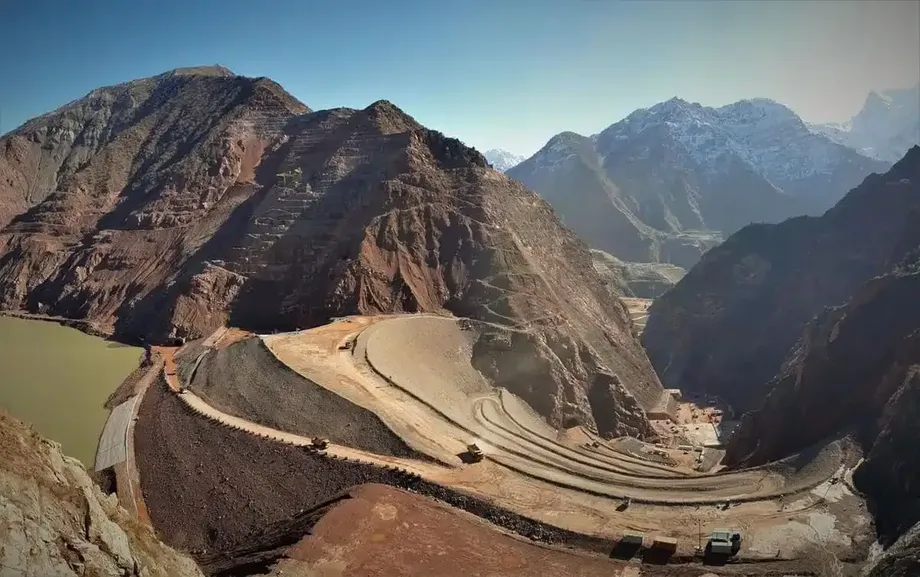
The energy sector is designated to deliver the largest share of emissions reductions in Tajikistan over the coming decade. A central pillar of this transition is the completion of the Roghun Hydropower Plant, which will feature an installed capacity of 3,780 megawatts and is scheduled to become fully operational by 2033. Hydropower involves generating electricity by harnessing the natural flow of moving water through large dams, providing a clean energy source that avoids burning fossil fuels. Alongside large hydroelectric projects, the government plans to expand solar, wind, and small-scale renewable energy generation to diversify power sources.
Distribution efficiency is another major target for the country's utility networks. Electrical losses in distribution lines are projected to drop from 15.9% in 2025 down to 9.5% by 2030. Reducing these technical losses means less wasted electricity generation is required to meet consumer demand, saving fuel and lowering overall emissions. These energy measures form a core part of the national strategy to modernize infrastructure while expanding reliable electricity access to homes and businesses across the country.
Reforming Transport, Industry, and Agriculture
The transport sector is slated for a radical shift toward electric mobility over the next decade. Electric vehicles accounted for less than 1% of new car sales in Tajikistan in 2022, but the government aims to elevate that share to 50% by 2030 and 75% by 2035. Achieving this transition involves introducing electric buses, building out charging infrastructure, and improving the fuel efficiency of conventional combustion engine vehicles. In heavy industry, cleaner production methods will target major aluminum and cement plants. Cement producers must reduce the proportion of clinker used in manufacturing, while exporters prepare to navigate international carbon rules such as the European Union's Carbon Border Adjustment Mechanism, which penalizes carbon-intensive imports.
Agriculture and forestry practices are also changing to address land degradation and water security. Proposed measures include introducing climate-resilient farming techniques, expanding drip and sprinkler irrigation systems, and improving pasture management. The country aims to increase its forest cover from 423,000 hectares to 430,000 hectares by 2030 while restoring at least 200,000 hectares of degraded pastures and forests. In waste management, the government plans to introduce separate waste collection systems in at least 30% of major cities by 2030, compost 40% of organic waste by 2035, and launch pilot projects to capture and utilize landfill gas.
Vulnerability and Regional Cooperation
Climate change poses severe internal risks to Tajikistan, where annual economic losses could reach 5% to 6% of gross domestic product by the middle of the century without adequate adaptation measures. Glacial retreat directly threatens water availability, agricultural productivity, and energy security throughout Central Asia. To mitigate these transboundary environmental risks, Tajikistan is cooperating with Kyrgyzstan and Uzbekistan through the Sustainable Climate Landscapes in Central Asia regional program, originally proposed in 2021 with assistance from the German development agency Deutsche Gesellschaft für Internationale Zusammenarbeit and the Green Climate Fund.
The regional program focuses on two main pillars. The first pillar involves identifying priority landscapes for joint investments in ecosystem restoration and improved water management, with active participation from local communities, women, and young people. The second pillar establishes monitoring systems to evaluate the actual ecological health, water access, and socio-economic impact of restoration efforts. As communities across the region face intensifying floods, droughts, and mudslides, these coordinated steps aim to safeguard vulnerable populations and stabilize shared natural resources.
Timeline of Key Developments
- 2021: The Sustainable Climate Landscapes in Central Asia initiative is proposed in discussions with the German development agency Deutsche Gesellschaft für Internationale Zusammenarbeit.
- October 16, 2026: The Government of Tajikistan officially approves the updated Nationally Determined Contribution.
- November 3, 2026: A conference in Dushanbe presents the climate document and discusses national priorities ahead of global climate talks.
- November 18, 2026: The updated Nationally Determined Contribution is published on the official website of the United Nations Framework Convention on Climate Change.
- 2026 to 2035: The implementation period for national emissions reduction and climate adaptation measures requiring up to $22.5 billion in funding.
At a Glance
- Tajikistan pledged to cut greenhouse gas emissions by 15% by 2035 compared to 1990 levels, or up to 40% with international funding.
- The updated climate plan requires an estimated funding of $20 billion to $22.5 billion between 2026 and 2035.
- Unconditional targets aim for a 10% reduction by 2030 and 15% by 2035, while conditional targets aim for 25% and 40% reductions.
- The Roghun Hydropower Plant is targeted for full operational capacity by 2033 with 3,780 megawatts of power.
- Electric vehicle sales share targets are set at 50% by 2030 and 75% by 2035.
- Forest cover is planned to increase from 423,000 hectares to 430,000 hectares by 2030.