Bursa Efek Indonesia Partners with Nasdaq to Transform Market Surveillance
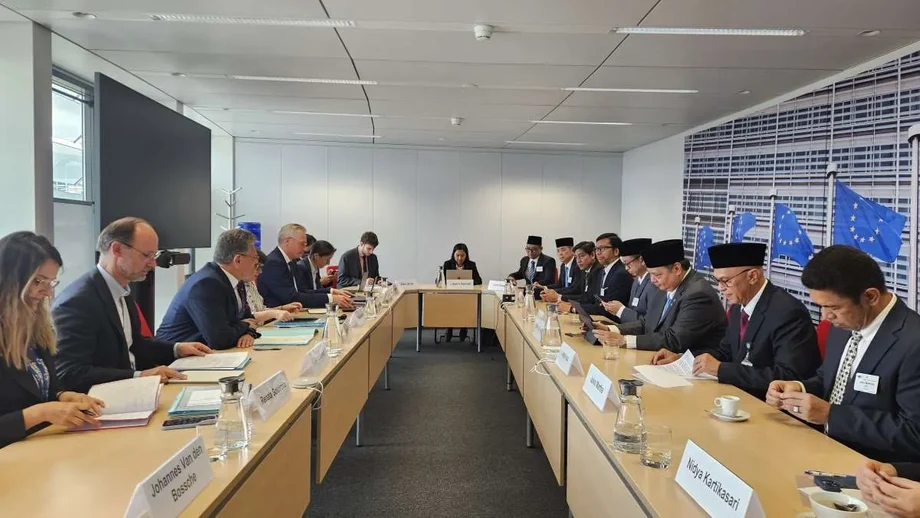
Bursa Efek Indonesia (BEI) is taking decisive action to clean up the nation's capital markets by teaming up with Nasdaq to overhaul its trade surveillance systems. BEI President Director Jeffrey Hendrik announced the collaboration during a meeting held on November 20, 2026, at the BEI Building in Jakarta, with the new joint operations slated to begin in early December 2026. Nasdaq has served as the core surveillance technology vendor for the Jakarta exchange for roughly two decades. Under the new agreement, the American exchange operator will station a dedicated team directly inside the BEI offices to calibrate monitoring parameters and align local oversight with global best practices. The partnership aims to enhance capacity building for the local surveillance team and sharpen the detection of abusive trading patterns.
Contents
- Bursa Efek Indonesia Partners with Nasdaq to Transform Market Surveillance
- Shifting From Internal Investigations to Public Disclosure
- OJK Imposes Heavy Penalties in Stock Manipulation Crackdown
- Global Index Pressures and the Push for Criminal Prosecution
- Comprehensive Structural Reforms Across the Exchange
- At a Glance
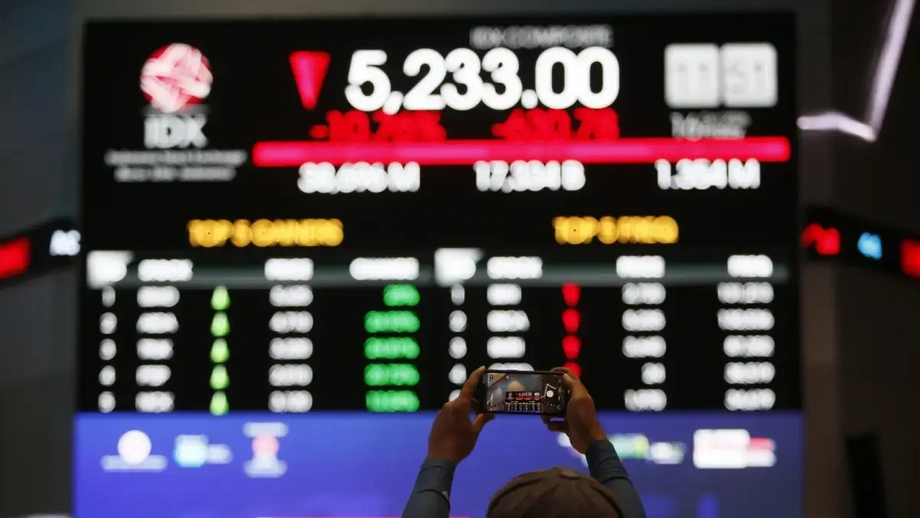
Jeffrey Hendrik explained the scope of the collaboration to reporters on November 23, 2026, noting that the partnership forms a cornerstone of broader market reforms. The initiative arrives at a time when the broader market index, the IHSG, closed at 5,146.33 on November 20, 2026, dropping 0.92 percent in a single day and 3.71 percent over the course of the week. Additional macroeconomic pressures include the Indonesian rupiah trading at Rp18,269 per US dollar, the VIX volatility index standing at 28.44, and the US Treasury 10-year yield holding at 5.04 percent. In this challenging environment, establishing rigorous market integrity is seen as vital for reducing risk premiums and lowering capital costs for listed companies.
Shifting From Internal Investigations to Public Disclosure
Bursa Efek Indonesia changed its investigative methodology on November 6, 2026, moving away from closed-door internal reviews toward public accountability. Under the previous framework, suspected price manipulation was investigated entirely behind the scenes by regulatory bodies until penalties were finalized. The revised approach requires the exchange to issue public notices immediately upon detecting irregular trading activity. These announcements disclose the specific stocks under scrutiny, the relevant trading timeframe, the number of participating investors, and the identity of the securities firms involved along with their transaction percentages. Officials intend for this transparency to signal to the market that ongoing investigations are active, thereby deterring retail and foreign investors from inadvertently joining problematic trading schemes.
The updated framework sets a strict timeline for accountability, requiring BEI to publish the findings of its investigations within 45 days of the initial public notice. When broker members or securities firms violate exchange rules, BEI applies internal disciplinary measures and penalties directly. Cases involving individual investors are handed over to the Financial Services Authority, known in Indonesia as Otoritas Jasa Keuangan (OJK), for further investigation and sanctioning. This public disclosure policy serves as a preventative measure to halt manipulative trading before structural damage occurs in the broader financial ecosystem.
OJK Imposes Heavy Penalties in Stock Manipulation Crackdown
The Financial Services Authority launched a massive regulatory enforcement action, issuing a formal press release numbered SP 237/DKPU/OJK/XI/2026 on November 21, 2026. The regulator blacklisted 17 individuals, barring them from operating in the capital markets, derivatives finance, and carbon exchange sectors for periods ranging from five to ten years. These sanctions stem from investigations into illicit trading schemes involving three listed companies: PT Grand House Mulia Tbk (HOMI), PT Saraswanti Anugerah Makmur Tbk (SAMF), and PT Suryamas Dutamakmur Tbk (SMDM). OJK ordered the disgorgement of illegal profits totaling Rp23.77 billion across these cases and mandated the immediate closure of 16 securities accounts used to facilitate the illicit transactions.
Regulatory investigations uncovered sophisticated coordination in these cases, such as the HOMI manipulation scheme that operated between March 20 and July 21, 2023. That particular operation utilized 15 separate securities accounts and generated illicit profits amounting to Rp6.89 billion. OJK handed down ten-year bans to three key figures in the HOMI case: Teddi Budiman, who served as a director at PT Sakti Maju Berdikari and held a registered representative license; Hermanto, who controlled the bank accounts of that corporate entity; and Indra S, who is Hermanto's younger brother. A separate probe into trading irregularities in SAMF shares between May 4 and May 19, 2021, uncovered transactions channeled through a single physical address at PT Bintang Pagi Kapital, resulting in an order to return Rp12.55 billion in ill-gotten gains alongside multi-year bans for five individuals and a corporate entity named PT Surapon Berkah Makmur.
Global Index Pressures and the Push for Criminal Prosecution
Indonesia's regulatory push coincides with intense scrutiny from global index providers regarding the integrity and transparency of the Jakarta exchange. Following an announcement on October 15, 2026, Morgan Stanley Capital International initiated a consultation proposing to reclassify the Indonesian stock market from an emerging market to a standalone market. Representatives from MSCI met directly with President Prabowo Subianto on the sidelines of the ASEAN Summit in the Philippines to discuss market standards. During these discussions, the index provider emphasized that administrative fines and regulatory suspensions are insufficient for preserving emerging market status, insisting that authorities must pursue criminal prosecution against repeat offenders.
Otoritas Jasa Keuangan Chairperson Friderica Widyasari Dewi confirmed that the regulator is preparing additional sanctions to bolster criminal enforcement efforts. The Indonesian government has also coordinated law enforcement responses through specialized investigative bodies, with the National Police Criminal Investigation Agency examining 68 witnesses by November 18, 2026. While FTSE Russell opted to maintain Indonesia within its secondary emerging market category during its review, the agency delayed increasing the weighting of Indonesian securities until its March 2027 review cycle. Meanwhile, MSCI established a consultation deadline of April 30, 2027, with a final classification decision scheduled for late June 2027.
Comprehensive Structural Reforms Across the Exchange
Bursa Efek Indonesia and its regulatory partners have implemented a series of structural modifications to address transparency concerns raised by institutional investors. Authorities broadened the investor classification framework from nine distinct categories to 39, providing granular detail on ownership distribution. Furthermore, the exchange introduced public reporting for high shareholding concentration to flag equities dominated by a small group of holders and began publishing the names of shareholders holding stakes above one percent. The regulatory roadmap also includes raising the minimum public float requirement from 7.5 percent to 15 percent for listed companies and eliminating the Rp50 minimum price rule to improve price discovery for illiquid shares.
To shield benchmark metrics from artificial distortion, the exchange began excluding stocks exhibiting extreme ownership concentration from the calculations of the composite stock price index starting November 2, 2026. These systemic overhauls are paired with massive financial penalties, highlighted by administrative fines totaling Rp2.1 trillion levied against entities linked to trading violations in shares of PT Dian Swastatika Sentosa Tbk (DSSA), PT Barito Renewables Energy Tbk (BREN), and PT Petrindo Jaya Kreasi Tbk (CUAN). Regulators hope these combined interventions will convince global index providers that the domestic market is serious about eliminating artificial price inflation.
At a Glance
- Bursa Efek Indonesia partnered with Nasdaq to station a dedicated surveillance team at the exchange starting in early December 2026.
- Otoritas Jasa Keuangan blacklisted 17 individuals across three stock manipulation cases, ordering Rp23.77 billion in illegal profit disgorgement and closing 16 securities accounts.
- Morgan Stanley Capital International set a final review deadline of late June 2027 regarding the potential reclassification of the Indonesian market to a standalone category.
- The exchange implemented a revised disclosure policy on November 6, 2026, requiring public announcements of irregular trading within 45 days of investigation.
- Authorities introduced broader structural rules, including a roadmap to raise the minimum public share float to 15 percent and the exclusion of concentrated equities from benchmark calculations.