Students fill Democracy Monument on World Children's Day
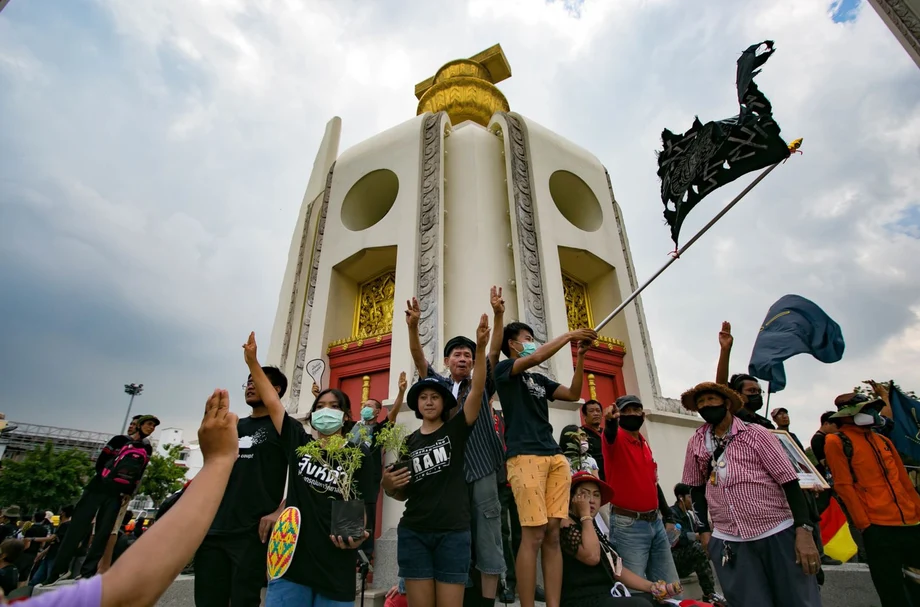
Bangkok's Democracy Monument became a gathering point for students on Friday, November 20, 2026, the date of World Children's Day, when groups calling themselves the Gen Z mob assembled from 3pm to press the government of Prime Minister Anutin Charnvirakul to listen to young people.
Contents
- Students fill Democracy Monument on World Children's Day
- Four demands for schools, six for the country
- Why cat ears, and who is Noo
- On stage, students describe a system they say is rigged
- Who is behind the rally? Organisers say no one
- An evening that ended with rubbish bags, not arrests
- Anutin says he is listening, but names no concession
- Echoes of the 2020 three finger salute
- Conscription, lese-majeste and grievances that go beyond schools
- What happens next
- Key Points
Student networks Studem Network and Free Thai Youth organised the rally under the theme "Wear Cat Ears to Chase Out Noo" and promoted it with the line "After school, head to Democracy Monument". Participants arrived in school and university uniforms, many wearing headbands with cat ears, and set up a cordoned speaking area near McDonald's on Ratchadamnoen Avenue. Handmade placards criticized the education system, with one reading "Education is not a commodity, the knowledge market is not a street stall".
Officers from Chana Songkhram and Samran Rat stations worked alongside traffic police to keep order. Pol Maj Gen Worasak Pisitbannakorn, commander of Metropolitan Police Division 1, said additional officers were posted nearby to prevent disturbances and that Ratchadamnoen Road remained open to traffic at the time of his briefing. Organisers had filed the notification required by the Public Assembly Act 2015, a law that obliges demonstrators to avoid blocking traffic or causing unnecessary disruption, for a gathering scheduled to run until 8pm. Police did not report how many people joined the rally.
Four demands for schools, six for the country
Studem Network set out four demands for education in a written statement: equal access to quality education regardless of economic or social background; restored student rights and freedoms with a real say in school rules; recognition of young people as active participants in decision making; and an education system that does not exist mainly to produce workers for commercial interests.
The network described the education it wants in its own words.
We do not simply want an education that teaches us to compete and survive within the existing system. We want an education that allows us to criticise, question and collectively transform the social structures that oppress us.
A second sentence in the same statement set the standard for schools: education should not produce people to serve capitalism, it should empower individuals to shape their own lives and build a fairer society.
A wider list of demands was read from the stage at 7.15pm by Phum, a representative of the Free New Generation group. It called for free education with no hidden costs, protection and union rights for teachers and education workers, a new constitution written with public participation, a budget directed at universal welfare, and protection of the environment. A separate manifesto read the same evening listed six points: abolition of military conscription, public budget allocation, a constitution 100 percent written by the people, protection of the rights of teachers and education workers, protection of nature, and the dismantling of colonialism to counter monopoly capitalism.
The breadth of the list surprised some observers, because school complaints sat next to demands about the constitution and the army.
Why cat ears, and who is Noo
The cat ears carry a joke with a political edge. Prime Minister Anutin is widely known by the nickname "Noo", which means mouse or rat in Thai, and the rally theme invited cats to chase the mouse out. Some participants joined an activity called "Chasing a Mouse", and the gathering was also circulated online under the name "fed up with Noo mob".
The humour follows a long Thai tradition of using cartoons and nicknames to make fun of powerful figures. In July 2020, during the last great wave of youth protest, the Free Youth group held a Hamtaro themed rally at this same monument, using a cartoon hamster and a satirical song about taxpayers' money to demand the dissolution of Parliament.
Organisers said the date was chosen for World Children's Day. Teerapat, a representative of the student and youth network, told reporters the demonstration was inspired by that occasion and by the wave of Gen Z led protests in other countries. He rejected accusations that political parties were pulling the strings.
We are not slaves to political parties. Political parties are supposed to serve the people.
Teerapat urged critics to argue with the demands instead of the protesters' affiliations, and said the gathering had no single leader. Asked whether the movement would grow, he declined to promise anything and pointed beyond the capital.
Bangkok is not the whole of Thailand.
His reasoning was that the problems reach every province, so any wider mobilisation would depend on people elsewhere facing the same difficulties. He also said the movement was not simply hunting for the government's removal, though an administration unable to deliver solutions should step aside.
On stage, students describe a system they say is rigged
Speakers took the microphone in turns from the late afternoon. Teerapat argued that access to good secondary and university education in Thailand still depends on family money, pushing many young people into student loans before they have any job, let alone a secure one. He questioned the drafting of a proposed National Education Act, raising concern that people involved had also helped write the 2017 Constitution.
Nong Ping, a student with the Free New Generation group, told the crowd that inequality is not produced by individual effort alone but reproduced through economic, political and social structures, while monopolistic capital accumulates power. Her list of asks included democracy inside schools, decentralised education policy and fair welfare guarantees for students, teachers and school staff.
We all were not born to adapt to an unjust society, but we have the right to change it together.
Title, a student from Srinakharinwirot University, spoke about authoritarian habits inside schools, the limits on what student councils can do, and his own experience of violence at school that he said brought no justice. Issariya Chaimontri, known as Dew, explained why he refuses conscription, calling the draft a source of cheap labour for the state and raising violence inside army camps and the situation on the Cambodian border.
Nong Pang, a youth representative, turned to wages. She said minimum pay no longer covers basic costs, asked the government to make it easier to form unions, and wanted social security contributions managed as the public's money rather than through the bureaucracy.
We will not accept this injustice any longer. Since June 24, 1932, we have declared that this country belongs to its people.
Her reference to June 24, 1932 points to the revolution that ended absolute rule in Thailand, a date protesters have invoked ever since. Another young woman, speaking without giving her name, challenged the adults who call teenagers naive.
Why is the word politics limited only to people sitting in parliament? Why must political participation be only an election?
Thee Thiranai, a political science student at Ramkhamhaeng University, announced he was leaving the Singthong political science group after saying its committee pressured him to stop his activism.
I am not coming out today for Ramkhamhaeng alone. I am coming out for every university, for education reform. No teachers, no doctors, is that not education?
He asked how a student of politics could avoid politics, and whether standing beside liberty and democracy was such a wicked thought that he had to be driven away.
Who is behind the rally? Organisers say no one
Claims of party sponsorship were denied on both sides of the street. People's Party MP Piyarat Chongthep, known as Toto, spoke to reporters at Parliament at 9.45am on November 20, hours before the gathering, and said his party had no hand in it.
The People's Party has no part in what happens outside Parliament. Its only part is watching and listening to every demand and translating it into a voice in Parliament.
Piyarat warned the state against intimidation, arguing that every escalation in Thai protest history came from officials provoking the situation. He criticized the habit of surrounding Democracy Monument with metal barriers, saying a smarter approach would let people climb the monument's base, keep traffic moving and send everyone home on time. He also welcomed an instruction attributed to Education Minister Prasert Jantararuangthong telling schools not to punish students who attended, while voicing concern over police reminders that parents could share liability if children broke the law.
Public questions about coordination did circulate before the rally. A Facebook page called FARA Thailand lined up the announcements of several groups and noticed that student organisers, the Democracy Restoration Group and the Politika Run Club had all chosen the same date and place, with runners told to gather at Rommaninat Park at 2.30pm and set off at 3pm toward the monument. The page asked who set the timetable, who paid for posters and advertising, and whether any foreign money was involved, while stating that no evidence so far showed foreign funding or paid participants. Other networks, including Bad Students, Thalugaz, Mok Luang Rim Nam and the United Front of Thammasat and Demonstration, shared the younger activists' material online.
An evening that ended with rubbish bags, not arrests
The rally stayed inside the timetable its organisers filed, and the crowd policed itself as the night came.
- October 15: the November 20 gathering is announced for 3pm to 7pm at Democracy Monument.
- November 19: the Student Government of Chulalongkorn University issues a statement backing the rally.
- November 20, 9.45am: People's Party MP Piyarat Chongthep speaks at Parliament.
- November 20, 2.30pm: Politika Run Club runners gather at Rommaninat Park, with the run starting at 3pm.
- November 20, 3pm: students begin arriving at the monument.
- 6.10pm: traffic is closed at Khok Wua Intersection and cars on Ratchadamnoen are cleared so people can sit on the road.
- 6.30pm: speeches stop, music starts, and the crowd sings together and raises phone lights.
- 7.15pm: the six point manifesto is read aloud.
- 7.25pm: organisers announce the end of the demonstration, and participants collect their rubbish before leaving; a detailed timetable of the evening puts the dispersal at 7.45pm.
- November 21, 9.50am: Prime Minister Anutin speaks to reporters at Government House.
- November 22: a separate gathering is planned outside Klong Prem Central Prison.
Senior officers oversaw the area, including Pol Maj Gen Siriwat Deepor, spokesperson for the Royal Thai Police, and deputy commissioners Pol Maj Gen Thawat Wongsanga and Pol Maj Gen Atthaporn Wongsiripreeda, who handled traffic and reminded participants to stay within the law. The evening was mostly calm. A few people sprayed political slogans on the barrier around the monument and tried to break part of it, and the crowd finished by picking up litter and returning the space to normal.
Anutin says he is listening, but names no concession
The day after the rally, Prime Minister Anutin Charnvirakul, who also serves as interior minister, met reporters at Government House at 9.50am on Saturday, November 21. He said the government was not ignoring the protesters and described a pipeline for their demands.
The government is ready to listen to every demand, as long as people are exercising their constitutional rights within the law.
Anutin said officials would receive, report and assess each proposal, decide what can and cannot be done, and forward the workable items to the right agency. Asked whether he expected the Gen Z demonstrations to escalate the way youth movements in other countries had, he gave a single word: "No". Asked whether he had listened to the speeches himself, he said a report would reach him. Pressed on which of the proposals the government could actually adopt, he nodded, thanked reporters and walked away, leaving that question unanswered.
Former Pheu Thai Party spokesman Prompong Nopparit urged the prime minister to assign each demand to a responsible agency, say which items can be fixed immediately, and give a clear date for explaining the answers to the public. He linked the students' call for free education up to a bachelor's degree with the Kamnan Mano group's demand to cut the diesel price by 10 baht per litre, arguing both come from households under pressure.
The government has an agenda, but people's hardship has been going on for a long time and has no expiry date.
Echoes of the 2020 three finger salute
Anyone who watched Thai politics in 2020 will recognise the setting. After the dissolution of the Future Forward Party, students organized flash mobs across the country and adopted the three finger salute as a sign of resistance. On July 26, 2020, Free Youth gathered at Democracy Monument. On August 10, 2020, the United Front of Thammasat and Demonstration held the "Thammasat Will Not Tolerate" rally at the Rangsit campus and presented ten demands for reform of the monarchy, a moment that helped create networks such as Ratsadon, Mok Luang Rim Nam, Thaluwang, Thalufah and Thalugaz.
Large demonstrations became less frequent in 2022 and 2023 as leading activists faced court cases, prison terms or left the country. One founder of Mok Luang Rim Nam, radiological technologist Sopon Surariddhidhamrong, has spent more than three years in detention across four cases under Section 112 of the Criminal Code, the lese-majeste provision that carries three to 15 years in prison. Mok Luang Rim Nam has kept campaigning for political prisoners, and in August 2023 it organized a car rally aimed at Anutin using similar language to this year's "chase out Noo" campaign.
The reappearance of these names around a Gen Z rally suggests older networks are passing on tactics rather than directing events. Veteran activists associated with 2020 shared the new groups' posters, and the student government of Chulalongkorn University used its November 19 statement to back the gathering, setting out four positions of its own: a new constitution written by the people through an open process with decentralisation and checks on power; equal protection of basic rights including education, labour rights and freedom of expression; budgets aimed at welfare, reducing inequality and curbing the monopoly power of big business; and resource management that lets communities take part in decisions.
Conscription, lese-majeste and grievances that go beyond schools
Conscription sits near the top of the students' list. Thailand drafts young men by lottery into one of two years of military service, a system speakers described as cheap labour that exposes recruits to violence inside camps. Teerapat also spoke about the Thai Cambodian conflict, arguing that nationalist tension has hurt both economies and that migrant workers contribute to Thailand rather than threatening it, and called for an end to discrimination based on race or nationality.
Older pro-democracy campaigners brought their own unresolved case to the same season of protest. A coalition of civic groups, marking 50 years since the October 6, 1976 massacre, launched a campaign to repeal Revolutionary Council Order No. 41, issued after that coup, which raised penalties for several offences including Section 112. Yingcheep Atchanont of the Internet Reform Dialogue, known as iLaw, led the legislative initiative, which carried nearly 60,000 signatures. The House of Representatives declined to accept it as a citizen initiated bill, a decision campaigners linked to House Speaker Sophon Saram of the Bhumjaithai Party, while parliamentary officials said the review had been delegated to a deputy speaker and that the draft did not meet constitutional requirements. The campaigners have appealed. Former Future Forward leader Piyabutr Saengkanokkul urged them to consider legal challenges and asked the People's Party to use its MPs' legislative powers to bring the proposal to Parliament.
Amnesty law has added disappointment. The Act on Promoting a Peaceful Society 2026 covers certain politically related offences but excludes Section 112 cases, which is why pro-democracy activist Wanwalee Thammasattaya, convicted over a speech at the November 25, 2020 demonstration, was sentenced on October 30, 2026. Supporters plan to gather outside Klong Prem Central Prison on November 22.
What happens next
No government decision on any of the students' demands has been announced, and no date has been set for a formal reply. Anutin said only that a report would reach him. The next scheduled political test is the no-confidence debate expected in December, which former Pheu Thai spokesman Prompong said could inherit the pressure from the streets if the government stays silent. He advised officials to treat demonstrators as citizens with real hardship rather than as political enemies, warning that unresolved anger tends to keep burning.
Former senator Somchai Sawangkarn wrote on Facebook that authorities should not underestimate the movement.
Do not underestimate, do not disregard the Gen Z mob. It has started. If it catches fire, it could spread.
Piyarat Chongthep made a similar point from the opposite direction. He said the gathering came from patient discussion rather than a passing mood, and suggested the prime minister meet the protesters in person when he returns from the APEC meeting, the way he once faced the Kamnan Mano group. He also raised the possibility that the next rally could move to Government House, and said the whole episode may amount to a question aimed at parliament itself, that representatives are not working hard enough for the young people who now feel forced to make their case on the road.
Key Points
- Students gathered at Bangkok's Democracy Monument on Friday, November 20, 2026, from 3pm under the World Children's Day theme "Wear Cat Ears to Chase Out Noo", mocking Prime Minister Anutin's nickname Noo, which means mouse or rat.
- Organisers Studem Network and Free Thai Youth filed notification for a rally running to 8pm under the Public Assembly Act 2015; police from Chana Songkhram and Samran Rat stations guarded the area and gave no crowd figure.
- The demands cover free education with no hidden costs, democracy and union rights inside schools, a constitution written 100 percent by the people, abolition of conscription, protection of teachers and the environment, and a budget directed at public welfare.
- Organisers declared the rally over at about 7.25pm and asked the crowd to collect rubbish; a detailed timetable puts the final dispersal at 7.45pm, and no arrests were reported.
- People's Party MP Piyarat Chongthep denied his party was behind the protest, while the Education Minister told schools not to punish students who attended.
- On Saturday, November 21, Prime Minister Anutin said the government would listen to every demand made within the law, answered "No" to questions about escalation, and named no proposal he would adopt.
- The rally echoes the 2020 three finger movement that began at the same monument, while grievances about Section 112, excluded from the Act on Promoting a Peaceful Society 2026, remain unresolved.
- The next dates are a planned gathering at Klong Prem Central Prison on November 22 and the no-confidence debate expected in December; no government reply has been scheduled.