Investors retreat as technology shares tumble
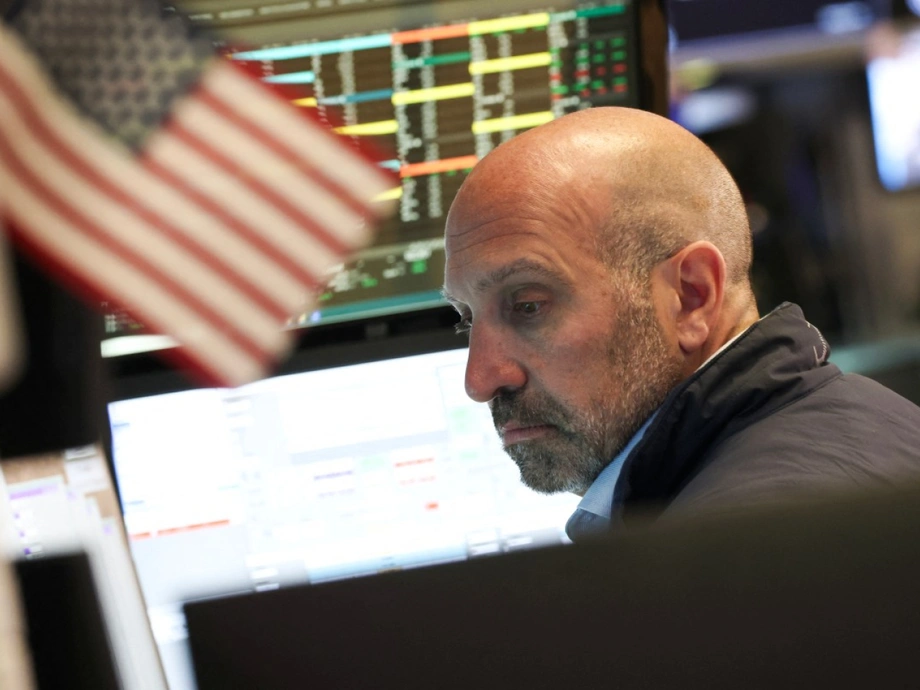
US stocks fell sharply on Friday, Nov. 20, as investors sold shares in chipmakers and other companies tied to artificial intelligence. Nvidia dropped about 14%, the S&P 500 fell 3.7% and the Nasdaq Composite lost 5.3%. The declines capped a painful week for markets and spread across Asia, where Hong Kong's Hang Seng Index entered bear market territory.
Contents
- Investors retreat as technology shares tumble
- Why did the rout spread beyond Nvidia?
- What is weighing on Nvidia?
- Anthropic's debut failed to calm technology investors
- Inflation and interest rates add another source of worry
- How did the market decline reach Asia?
- What changes for Hong Kong's technology index?
- Dates that frame the market's next moves
- What to Know
The Dow Jones Industrial Average closed at 48,147.33, down 949.73 points, or 1.9%, after falling nearly 1,100 points during the day. The S&P 500 ended at 6,910.39, below the 7,000 mark. The Nasdaq finished at 22,617.73, below 23,000 and in negative territory for the year.
A market correction is a fall of at least 10% from a recent high. By Friday's close, both the S&P 500 and the Dow had fallen more than 10% from their records and met that definition. The Cboe Volatility Index, commonly called the VIX, briefly rose nearly 41% to its highest level since April 2025. The index tracks the market's expected swings, so a sharp rise often signals that investors are bracing for bigger moves.
The S&P 500 fell for a seventh straight session, its longest losing run since February 2020. For the week, the Dow lost 8% and the S&P 500 dropped 8.6%, their steepest weekly declines in more than a year and a half. The Nasdaq slid 10%, its biggest weekly fall in more than six years.
Why did the rout spread beyond Nvidia?
Investors have grown less certain that companies will earn enough from artificial intelligence to justify the vast sums being spent on chips, data centres and related equipment. The technology had helped drive share prices higher, but doubts about the size and speed of future returns are now weighing on the same companies.
Chipmakers took some of the heaviest losses. Advanced Micro Devices fell 13.3%, Micron Technology lost 13.9% and Broadcom dropped 12.1%. South Korean memory chipmaker SK Hynix, optical equipment company Lumentum and data storage firm SanDisk also fell sharply, with losses in the range of 13% to 16%. Companies supplying other parts of the data centre buildout, including Corning and Bloom Energy, also sold off.
Some investors and political candidates have raised concerns about the cost of building data centres and the electricity and other resources they require. Recent election results added to speculation that governments could face stronger pressure to limit or slow new projects. Scrutiny of restrictions on chip exports to China also raises uncertainty for manufacturers that sell into global markets.
Michael Antonelli, a market strategist at Baird, said the market was reassessing the idea that spending on artificial intelligence could keep rising without limit. He also said the fall did not mean the broader rise in stocks that began in October 2022 was over.
The whole notion that AI can continue to spend unlimited amounts of money and support the stock market, I think the notion of that is ending as we speak, that's what's being priced right now.
Trading rules may have added momentum to the decline. The S&P 500 fell below its 200 day moving average, a measure many investors use to judge the market's longer term direction. When the index broke below that line, some computer guided trading strategies designed to follow price trends began selling, adding more pressure to shares.
What is weighing on Nvidia?
Nvidia's 13.8% fall on Friday took the share price to its lowest level since May 2025. The company's shares had declined for seven consecutive weeks, the longest such streak since 2008. Over those seven weeks, the stock fell 46%, erasing an estimated $2.6 trillion in market value. Nvidia was still valued at about $3 trillion, placing it behind Apple, Microsoft and Alphabet.
The US Securities and Exchange Commission's enforcement staff are examining potential accounting issues at Nvidia, according to people briefed on the inquiry. The agency declined to comment, and Nvidia had not immediately responded to requests for comment. The specific accounting matters under review and the start date of the inquiry had not been made public.
The inquiry adds to pressure on a company that sits at the centre of the market's enthusiasm for artificial intelligence. The US Justice Department has also been reviewing Nvidia's proposed $12.9 billion purchase of the open source software company Hugging Face as part of broader scrutiny of the chipmaker's business practices.
Investors are also considering how Nvidia will fare after co founder Jensen Huang resigned on Nov. 12. Board chair Harvey Jones said Huang left after the company learned of personal conduct that conflicted with its rules and standards.
Disclosure of personal behavior inconsistent with the company's code of conduct, standards and cultural norms.
Nvidia's interim chief executive, finance chief Colette Kress, projected 75% revenue growth for the next fiscal year and said customers were not leaving. The company also raised its longer term revenue outlook after reporting strong demand for its chips. Those forecasts did not stop investors from selling, as questions about future demand and the company's leadership competed with its sales outlook.
Nvidia shares were down about 40% in November, while one market tally put the weekly loss at 23%. Those shorter periods sit within the broader seven week decline. The stock's fall also came after a strong earnings report, showing how sharply investors' attention had shifted from recent sales to expectations about what comes next.
Anthropic's debut failed to calm technology investors
Anthropic, the maker of the Claude artificial intelligence tools, began trading on Thursday after an initial public offering priced at $83 a share. The stock briefly climbed above $115 before giving up most of those gains. On Friday, its second day of trading, it fell 8.5% to $88.91, close to its offering price. Another closing tally put the price at $88.30, down 9.1%; both figures left it above $83.
The share sale had been billed as a record setting public offering, making its early trading a major test of investor appetite for artificial intelligence companies. Its quick reversal added to worries that enthusiasm for the sector was fading rather than bringing buyers back to technology stocks.
Anthropic's revenue growth also slowed. Its third quarter growth rate was reported at 47%, down from 144% in the previous quarter. That change does not settle the company's long term prospects, but it gives investors a concrete reason to ask whether the fast growth behind high expectations can continue.
Michael Monaghan, a partner at Founder ETFs, described the market mood as a rush to sell before investors had fully weighed each company's news.
Right now the market is selling first and asking questions later.
Inflation and interest rates add another source of worry
Concerns about technology spending are arriving alongside pressure from higher costs and borrowing rates. Oil was above $83 a barrel, while inflation remained higher than the Federal Reserve's 2% target. The yield on the 10 year US Treasury bond rose above 5% before falling back below that level on Friday as investors sought safer assets.
Higher bond yields can make stocks less attractive because investors can earn more from bonds, while companies also face higher borrowing costs. That can be especially uncomfortable for businesses whose expected profits are years away, as is the case for some fast growing technology firms.
Federal Reserve Governor Christopher Waller said the central bank might need to raise its benchmark rate by half a percentage point next month to get inflation under control. A half point move would be larger than the quarter point increase made in September. No December decision had been announced.
Waller described his concern in an interview, saying inflation was moving in the wrong direction and spreading. The prospect of higher rates has made investors weigh the chance of slower growth against the possibility that price increases will remain difficult to control.
I'm very, very concerned about inflation. It's kind of headed in the wrong direction, and it's spreading out.
How did the market decline reach Asia?
Asian markets followed Wall Street lower as investors reassessed technology and chip companies. Japan, Taiwan and South Korea each recorded falls of more than 5% on Friday, while Hong Kong stocks extended a decline that had already pushed the Hang Seng below 24,000 earlier in the week.
The Hang Seng fell 430.82 points, or 1.89%, to 22,410.80, its lowest close since April 30, 2025, and its fourth consecutive daily decline. It briefly fell 2.2%. From its Jan. 29 peak, the index had lost 20%, the commonly used threshold for a bear market. The Hang Seng Tech Index dropped 3.78% to 3,511.14, while the Hang Seng China Enterprises Index fell 1.77% to 7,554.37.
Hong Kong's technology shares reflected a mix of global unease and company specific news. NetEase plunged 17.6% after reporting a quarterly fall in revenue. Tencent fell 1.26% to HK$344, its lowest level in more than two years. Battery maker CATL lost 4.23%, lidar maker Hesai fell 5.67%, and Hong Kong Exchanges and Clearing dropped more than 3%. Alibaba rose 3.48% after announcing its earnings.
Trading turnover in Hong Kong reached HK$270.3 billion. Mainland investors bought a net HK$11.811 billion of Hong Kong shares through the southbound trading channel, even as the wider market fell. That buying shows that some investors continued to add exposure selectively during the selloff.
What changes for Hong Kong's technology index?
Alongside the market decline, index provider Hang Seng Indexes announced changes to its quarterly membership review. The Hang Seng Index will keep 95 companies, while the Hang Seng China Enterprises Index will remain at 50. MiniMax and Zhipu will join the China Enterprises index, replacing Postal Savings Bank of China and Shenzhou International.
The Hang Seng Tech Index will expand from 30 companies to 50. Its additions include CATL, Kingboard Holdings, AAC Technologies, Luxshare Precision, Hesai and Zhongji Innolight. CATL is set to account for 2.17% of the enlarged index. The changes are due to take effect after the market closes on Dec. 4 and apply from Dec. 7.
For investors, an index change affects which companies are represented in a benchmark followed by funds and other market participants. It does not prevent share prices from falling, but it changes the group of companies used to track Hong Kong's technology sector.
Dates that frame the market's next moves
The selloff has unfolded alongside changes in company news, trading signals and expectations for interest rates. The next dates and events investors are watching include:
Oct. 6: The S&P 500 and Nvidia reached record highs, according to market tallies used to measure their subsequent declines.
Nov. 12: Jensen Huang resigned as Nvidia's chief executive, according to the company's board chair.
Nov. 19: Anthropic began trading at $83 a share and briefly rose above $115.
Nov. 20: US stocks ended sharply lower, and Hong Kong's Hang Seng closed 20% below its Jan. 29 peak.
Dec. 4 and Dec. 7: Hong Kong's announced index changes are scheduled to take effect after the close on Dec. 4 and apply from Dec. 7.
Next month: The Federal Reserve is due to make its next rate decision. Waller has said a half point increase may be needed; the central bank has not announced its decision.
What to Know
The Dow and S&P 500 entered correction territory after falling more than 10% from record highs; the Nasdaq dropped 5.3% on Friday.
Nvidia fell about 14% as investors weighed an SEC inquiry, leadership changes and doubts about future artificial intelligence spending.
Anthropic's shares fell toward their $83 offering price after an early jump above $115.
Hong Kong's Hang Seng fell 1.89% and reached the 20% decline from its Jan. 29 peak that marks a bear market.
Inflation, oil prices and the prospect of higher Federal Reserve rates added pressure to shares.