A less invasive option for a patient at high risk
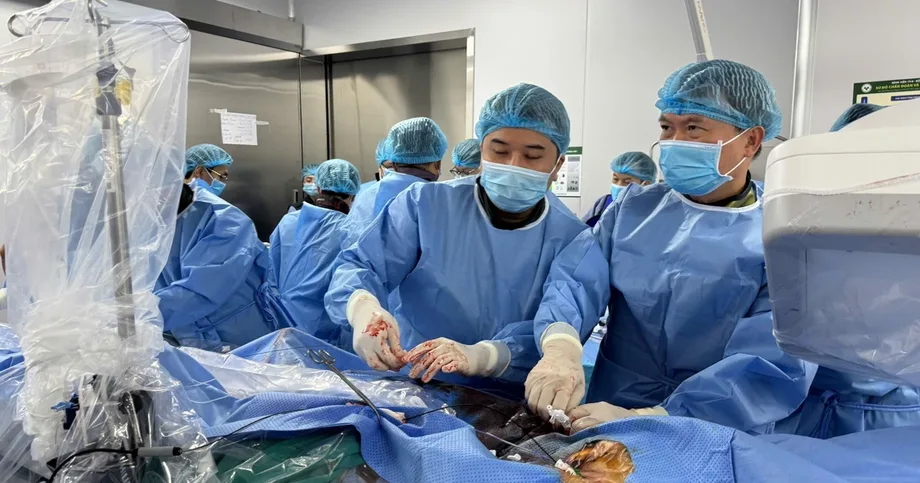
A team at the Cardiovascular Institute of 19-8 Hospital in Hanoi has performed Vietnam's first successful transcatheter aortic valve implantation (TAVI) for severe, isolated regurgitation of a natural aortic valve. The patient was an 85 year old man whose heart was weakened and whose risk from open heart surgery was judged very high.
Contents
- A less invasive option for a patient at high risk
- What was wrong with the valve?
- Why not use open heart surgery?
- How does TAVI work?
- Why is regurgitation harder to treat this way?
- What do the 2025 European guidelines say?
- How does this fit into Vietnam's TAVI experience?
- Key dates and what comes next
- What to Know
The hospital announced the procedure on November 19, 2026. Professor Pham Manh Hung, director of the institute, led the team. Before treatment, the valve had the most severe grade on the scale used by the hospital, 4 out of 4. The patient's left ventricular ejection fraction, a measure of how much blood the heart's main pumping chamber sends out with each beat, was 30%. A normal reading is above 50%.
The patient had been relatively well and alert before he suddenly developed severe shortness of breath nearly a month before the procedure. He was taken to hospital with acute pulmonary edema, a dangerous form of heart failure in which fluid builds up quickly in the lungs and makes breathing difficult. Scans showed severe valve leakage, an enlarged and weak left ventricle, and narrowed coronary arteries, which supply blood to the heart muscle.
The government health notice also identified the case as the first successful use in Vietnam of TAVI for severe regurgitation affecting a natural aortic valve without accompanying valve narrowing.
What was wrong with the valve?
The aortic valve sits between the left ventricle and the aorta, the large artery that carries blood from the heart to the body. It opens as the heart pumps, then closes to keep blood from flowing backward. Regurgitation means the valve does not close tightly, so some blood leaks back into the heart after each beat.
That backflow makes the left ventricle handle extra blood again and again. Over time, the chamber can stretch and weaken. In this patient, the leakage was severe and the heart's pumping ability had fallen. The acute pulmonary edema was a sign that the heart failure had become an emergency.
Regurgitation is different from aortic stenosis, the condition TAVI is more commonly used to treat. In stenosis, the valve opening becomes too narrow and blocks blood as it leaves the heart. In regurgitation, the problem is a poor seal and backward flow. Both conditions can strain the heart, but the difference affects how a replacement valve can be secured.
Why not use open heart surgery?
Open heart surgery remains the standard treatment for many people with severe, symptomatic aortic regurgitation who are fit enough for an operation. Surgeons replace the damaged valve directly. For this patient, however, doctors judged that age, severe heart failure after pulmonary edema, poor heart function and coronary artery disease together made the risks of open surgery very high.
A team of specialists in heart valve disease reviewed his condition and agreed that replacing the valve was needed to address a major cause of the heart failure. After examining the valve area and considering treatment options, they chose TAVI, which places a replacement valve through a catheter rather than through an open chest operation.
The decision was specific to this patient's health and heart anatomy. TAVI is not a substitute for surgery in every person with a leaking aortic valve, particularly when another part of the aorta also needs repair.
How does TAVI work?
During TAVI, doctors guide a folded biological valve through a catheter, a thin flexible tube, to the aortic valve. They then expand the new valve in position so it can take over the work of the damaged one. The procedure avoids opening the chest, although the access route used for this patient was not specified.
Before deployment, the team used imaging to measure the valve area, select a suitable size and plan the placement. The checks matter because a replacement valve must sit securely and evenly. After it was opened in the intended position, images showed that the leakage had almost disappeared. The patient's clinical condition and blood flow measurements were stable immediately after the procedure.
The hospital said he remained under close observation. The length of his stay, his later recovery and his longer term heart function had not been reported by November 20.
Why is regurgitation harder to treat this way?
In many patients with aortic stenosis, calcium builds up around the valve and makes its leaflets thick and stiff. That hard, narrowed area can help hold a new valve in place. Severe regurgitation without stenosis may present the opposite conditions: the leaflets and valve ring can have little or no calcium, leaving less natural support for the replacement.
The valve ring may also be enlarged. In some patients, the root or the ascending portion of the aorta is widened as well. These differences can make it harder to anchor the new valve securely. If it shifts, it may not function as intended; if it does not seal evenly against the surrounding tissue, blood can leak around its edges.
For that reason, the team had to plan around the patient's individual anatomy rather than rely on a standard placement. Imaging after deployment allowed doctors to check the valve's position, remaining leakage and blood flow. Professor Pham has said close monitoring in the days after placement is needed to assess heart function, watch for complications and follow recovery.
What do the 2025 European guidelines say?
The 2025 guidelines from the European Society of Cardiology and the European Association for Cardio-Thoracic Surgery say TAVI may be considered for people with severe, symptomatic aortic regurgitation when a specialist team judges them unsuitable for surgery and their valve anatomy suitable for a catheter procedure.
The choice also depends on why the valve is leaking and what other heart or aorta problems are present. If the aorta has widened enough to require repair, doctors need to consider treatment for both the valve and the affected aortic section. A catheter valve procedure may not address that wider problem by itself.
The guidance makes a specialist review central to the decision. For patients who face a very high risk from open surgery, a catheter approach may provide another option when their anatomy and other medical needs allow it.
How does this fit into Vietnam's TAVI experience?
TAVI for aortic stenosis is already performed at multiple centres in Vietnam. Ho Chi Minh City University Medical Center began offering the procedure in 2015 and marked its 100th TAVI case on October 16, 2025. That milestone shows the procedure has an established place in care for selected patients, particularly those with narrowed valves.
The Hanoi case extends that experience to a more difficult condition: severe regurgitation of a natural valve without stenosis. It is a first for this specific treatment in Vietnam, not the country's first TAVI procedure. Vietnamese interventional cardiologists have also taught and transferred TAVI skills to colleagues within Vietnam and abroad.
Each case still depends on a careful assessment. A centre's experience with TAVI for stenosis does not remove the anatomical challenges of regurgitation, where the replacement valve may have less calcium to grip and where enlargement of the valve ring or aorta may affect the plan.
Key dates and what comes next
2015: Ho Chi Minh City University Medical Center began performing TAVI.
October 16, 2025: The hospital marked its 100th TAVI case, in a programme focused on aortic stenosis.
November 19, 2026: 19-8 Hospital announced the first successful TAVI in Vietnam for severe isolated regurgitation of a natural aortic valve.
After the procedure: The patient was stable and remained under close hospital observation. No discharge date or later outcome had been announced by November 20.
The immediate result was that imaging showed almost no remaining leakage and the patient's clinical and blood flow measures were stable. Follow-up will determine how his heart responds over time. The case adds a possible catheter based option for some people with severe aortic regurgitation who face very high surgical risk, while leaving treatment decisions dependent on each person's anatomy and overall condition.
What to Know
An 85 year old man received Vietnam's first successful TAVI for severe isolated regurgitation of a natural aortic valve.
Before treatment, his valve leakage was graded 4 out of 4 and his left ventricular ejection fraction was 30%.
Doctors chose TAVI because his age, heart failure, weak heart function and coronary artery disease made open surgery very high risk.
Imaging after the procedure showed that leakage had almost disappeared, and his immediate clinical condition was stable.
European guidelines published in 2025 say TAVI may be considered for selected symptomatic patients who are unsuitable for surgery and have suitable anatomy.