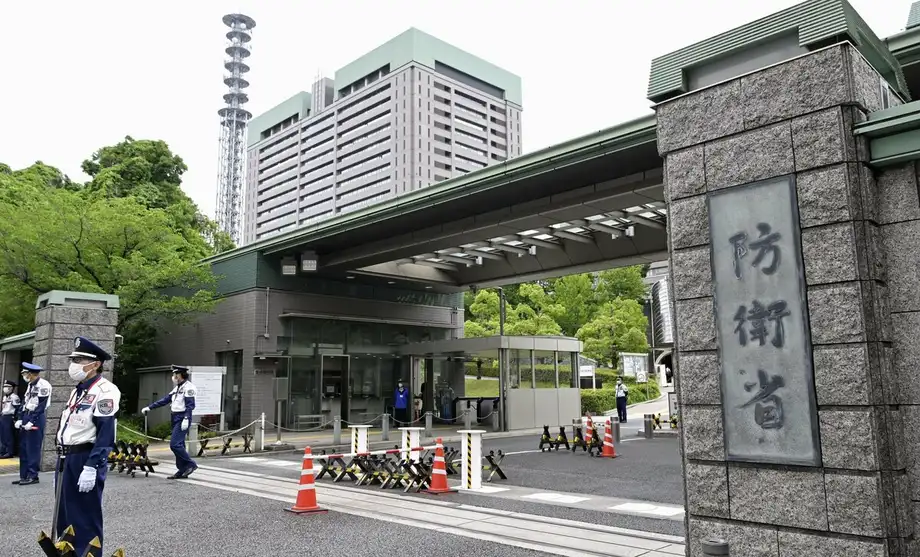
A first for Japan's forces on Indian soil
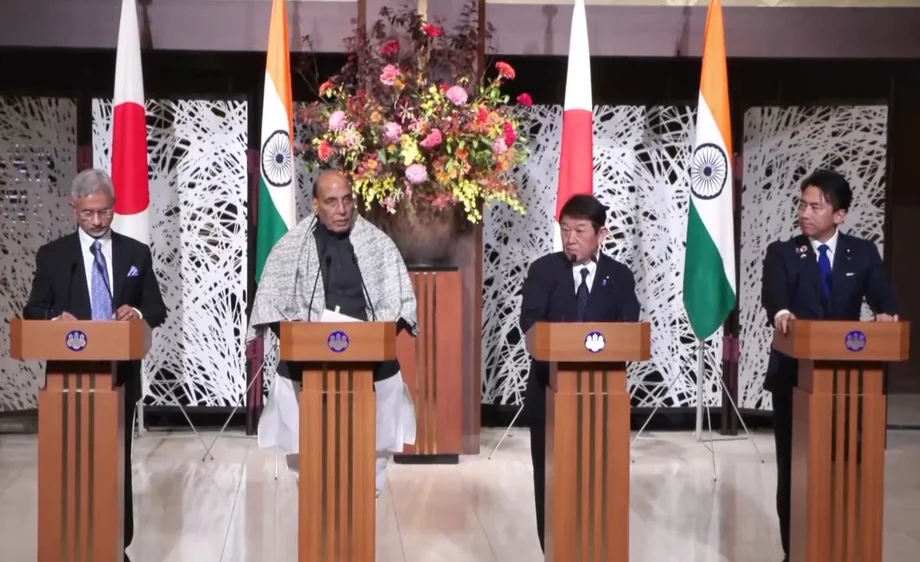
Japan's Self-Defence Forces are set to use Indian firing ranges for live fire training for the first time in 2027, including tests of missiles designed to hit ships. The agreement was reached in Tokyo on November 19 at the fourth India-Japan Foreign and Defence Ministers' Dialogue, known as the 2+2 meeting.
Contents
- A first for Japan's forces on Indian soil
- What the firing range agreement changes
- Why Japan needs space for long-range tests
- UNICORN would combine shipboard antennas
- Navies plan more practical cooperation
- More exercises and wider security work
- Terrorism and international rules
- How the agreements fit together
- Key Points
India's Defence Minister Rajnath Singh and External Affairs Minister S. Jaishankar met Japanese Defence Minister Shinjiro Koizumi and Foreign Minister Toshimitsu Motegi. The ministers welcomed a Letter of Intent on Japanese forces' use of the Indian ranges and agreed to speed up work to put the plan into effect. Chandipur Integrated Test Range in Odisha has been identified as a possible site.
Koizumi described the agreement as a strategic step. He said the Self-Defence Forces would use an Indian firing range next year for the first time.
This is also a major step strategically.
The first planned training includes missiles fired from land at ships. Japan's Type 25 missile, designed to strike ships, has a reported range of about 1,000 kilometres. Japan's Ground Self-Defence Force Chief of Staff, General Masayoshi Arai, said officials had visited India to inspect possible ranges for training with the missile.
The arrangement addresses a practical problem for Japan. Its islands are densely populated, while surrounding waters are busy with commercial activity. Testing a long-range weapon needs a large, controlled area where officials can monitor its path and keep ships and civilians clear. India has large military training areas and wide stretches of sea that may provide room for such tests.
What the firing range agreement changes
The Letter of Intent is a starting point for allowing Japanese forces to train in India. The joint statement says the forces will conduct live fire training, including exercises involving missiles aimed at ships. Defence authorities still need to coordinate the practical details, such as which range will be used and when particular exercises can take place. No detailed schedule for the tests was announced.
For Japan, access to an Indian range could let its forces practise with weapons over distances and in conditions that are difficult to arrange at home. For India, the agreement adds a new form of military cooperation with Japan and gives the two countries a setting for training together. The arrangement also moves their defence ties beyond meetings and exercises into the use of each other's military facilities.
Japan's fighters have already made a first visit of a different kind. Japanese Air Self-Defence Force aircraft took part in the Veer Guardian 26 air exercise in India for the first time. The two governments want future exercises to include more complex activities, unmanned systems and, when needed, shorter notice before training begins.
Unmanned systems are aircraft or other equipment that operate without a person aboard. Including them in exercises allows forces to practise coordinating piloted aircraft, remotely operated equipment and other military tools. The ministers also welcomed the first India-Japan-Indonesia trilateral naval passage exercise, held in February 2026.
Why Japan needs space for long-range tests
A missile test involves more than firing a weapon. Officials need to track where it travels and monitor the area where it could land or have an effect. A test over water also requires enough clear space to reduce risks to ships and other civilian activity. Those needs are harder to meet when nearby waters are heavily used and land is crowded.
India's large training grounds and maritime operating areas could give Japan more room to carry out this kind of work. The planned use of Indian ranges is therefore a practical arrangement as well as a sign of closer security ties. The countries have not announced how many tests will be held, which ranges will be used in each case, or the exact start date in 2027.
The project is part of a wider expansion of military cooperation. Singh said the countries had agreed to speed up work on specialised, underwater and missile technologies. Cooperation on underwater systems can include equipment designed to operate below the sea's surface, while missile technology covers areas such as weapon design, testing and related systems.
UNICORN would combine shipboard antennas
India and Japan are also working to advance UNICORN, a naval antenna mast project. UNICORN stands for Unified Complex Radio. It brings several antennas and communications devices, which might otherwise be placed in different spots on a warship, together in a single structure.
Putting equipment into one mast can reduce the number of separate structures on a ship and help manage its communications and electronic systems. The project is also intended to reduce the ship's radar signature, making it harder for an opponent to detect and track. Its value to a particular vessel will depend on how the system is designed and fitted.
The two countries want to move forward under the framework of Design with Japan and Make in India. That means Japanese design and technical knowledge would be paired with Indian production and participation. The first UNICORN co-production agreement was announced during Japanese Prime Minister Sanae Takaichi's visit to New Delhi in July 2026.
The ministers said they expected India's Acceptance of Necessity for the project by February 2027. Acceptance of Necessity is an Indian government approval step that confirms a defence requirement and allows the procurement process to move ahead. It is a target for consideration, not a statement that the equipment is already installed on Indian ships.
The third India-Japan Defence Industries Forum met in Tokyo on October 13, 2026. The forum and the UNICORN work sit within a wider push to develop defence equipment and technology together, rather than limit cooperation to buying finished products.
Navies plan more practical cooperation
The Indian Navy and Japan Maritime Self-Defence Force are preparing to turn a recently signed maritime security arrangement into practical work. Their planned cooperation includes maritime and air domain awareness, information sharing, search and rescue, and humanitarian assistance and disaster relief. Domain awareness means building a picture of activity in an area, including the movement of ships and aircraft.
Search and rescue cooperation can help the two navies coordinate when people are in danger at sea. Information sharing can help them understand developing situations, while disaster relief can involve support after events such as storms or other emergencies. The governments said they wanted to move swiftly from agreement to concrete cooperation.
The countries also plan to improve their ability to find and deal with sea mines. These are explosive devices placed in water to damage ships. Mine countermeasures include locating them and removing or neutralising them. Singh said the two sides had agreed to strengthen cooperation in this area.
Ship repair is another part of the agenda. The ministers called for an early conclusion of a Maritime Ship Repair Arrangement, which would let each country make repair facilities available to the other. They also agreed to explore the possibility of joint naval shipbuilding and design. The repair arrangement is still being worked on, and no start date was announced.
More exercises and wider security work
The first Japanese fighter aircraft visit for Veer Guardian 26 gives the air forces a new basis for future training. The ministers welcomed the participation and agreed to make bilateral exercises more complex. They also discussed coordination in air and space domain awareness, including ways that space based equipment can help monitor maritime activity.
The broader discussions covered cybersecurity and artificial intelligence. The two governments agreed to strengthen cooperation on cyber threats, including the protection of critical infrastructure and artificial intelligence systems. They directed their teams to renew an existing cybersecurity memorandum and hold the next India-Japan Cyber Dialogue at an early date.
Space cooperation was also discussed, including Space Situational Awareness, which means tracking objects and activity in space, and the use of space based assets to support maritime awareness. Such tools can help build a more complete picture of activity at sea, alongside information gathered by ships, aircraft and other systems.
The ministers also backed more resilient supply chains in areas including semiconductors, critical minerals, information and communications technology, clean energy and medicines. A supply chain is the network that moves materials and products from suppliers to manufacturers and buyers. The joint statement expressed concern about economic coercion, arbitrary export restrictions and policies that can disrupt trade. It did not name a country.
Jaishankar said the countries had discussed the use of supply chains, resources and market access in ways that could affect national security. The Indian foreign minister said they needed to strengthen resilience and explore alternatives. He also described the wider goal as supporting a multipolar Asia and a multipolar world, where influence is shared among several major centres of power.
Terrorism and international rules
The joint statement condemned terrorism and violent extremism in all forms, including cross-border terrorism. It named United Nations listed groups Al Qaeda, ISIS or Daesh, Lashkar-e-Taiba and Jaish-e-Mohammad. The ministers called for action against terrorist safe havens, financing networks and cross-border movement, as well as links between terrorism and transnational crime.
The two countries also reiterated support for reform of the United Nations Security Council, including expanding its permanent and non-permanent membership. They backed each other's bids for permanent seats in a reformed Council and supported each other's candidatures for non-permanent seats for the 2028-29 and 2033-34 terms.
India and Japan reaffirmed their commitment to a free, open and rules based Indo-Pacific and to resolving disputes peacefully under international law. Jaishankar said the two countries were working toward that goal alongside their Quad partners, Australia and the United States.
How the agreements fit together
The November meeting brought together plans that address different parts of defence cooperation. The firing range agreement concerns training and testing. UNICORN and other technology projects concern equipment and manufacturing. Maritime agreements focus on monitoring, rescue, repairs and mine safety. Cyber and space work adds cooperation in areas that support both civilian infrastructure and military operations.
Several steps remain ahead. Japan's forces are expected to begin using Indian ranges in 2027, but the precise schedule and selected locations have not been announced. India's Acceptance of Necessity for UNICORN is expected by February 2027, while the ship repair arrangement still needs to be completed. The governments have also set no public date for the next Cyber Dialogue.
The meeting followed the August 2025 Joint Declaration on Security Cooperation, which the ministers cited as a basis for reviewing progress. The countries are also preparing to mark 75 years of diplomatic relations in 2027. Their recent plans add practical military activity to a relationship that both governments describe as a strategic partnership.
Key Points
- Japan's Self-Defence Forces are expected to use Indian firing ranges for the first time in 2027, including for missile training.
- The Type 25 anti ship missile has a reported range of about 1,000 kilometres. Chandipur in Odisha is a possible test site.
- India and Japan want to advance the UNICORN naval antenna project, with India's Acceptance of Necessity expected by February 2027.
- Planned cooperation includes maritime monitoring, rescue, ship repairs, mine countermeasures, cybersecurity and space awareness.
- The joint statement condemned terrorism and named Al Qaeda, ISIS or Daesh, Lashkar-e-Taiba and Jaish-e-Mohammad.