Young performers' sleep, schooling and contracts face scrutiny
South Korea plans to conduct its first comprehensive survey of underage entertainers in 2027, examining how many young artists work under entertainment agencies, their ages and whether their rights to education, sleep and rest are being respected. The Ministry of Culture, Sports and Tourism also plans to review its standard contracts after renewed scrutiny of agreements signed by the five NewJeans members when they were aged 14 to 17.
Contents
- Young performers' sleep, schooling and contracts face scrutiny
- What the NewJeans contracts brought into focus
- What South Korean law already requires
- Why the standard agreement matters
- Earlier investigations documented similar problems
- Training, school and the pressure to debut
- A missed finale shows the tension around age limits
- How the contract dispute and policy debate developed
- What the government plans to examine next
- Key Points
The ministry said Monday that it takes the concerns seriously. The planned survey would speak directly with young artists, bringing their experiences into an examination of protections that already exist in law. Its scope and methodology have not been finalized, and no precise launch date has been announced.
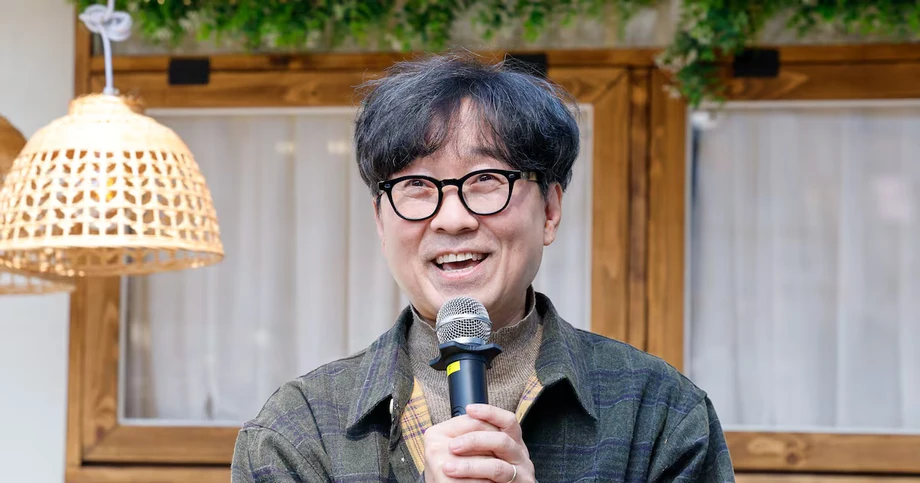
Kim Yu-mi, director of the ministry's Popular Culture Industry Division, outlined the government's response:
We plan to conduct a separate survey to properly assess the current situation and continue expanding psychological counseling and legal advisory services.
Kim also said the ministry would review whether improvements to standard contracts are necessary. For young performers, the practical issues include whether rehearsals leave enough time to sleep, whether schedules allow school attendance and how much control agencies exercise over their private lives.
The announcement follows a November 5 investigation into NewJeans' 2022 exclusive contracts with Ador, a subsidiary of Hybe. The companies dispute concerns about the agreements and say protections were included both in the contracts and in a supplementary agreement for minors. The controversy has brought together several issues: the terms young artists sign, the way agencies apply them and the government's ability to check what happens during training and work.
What the NewJeans contracts brought into focus
NewJeans' agreements drew scrutiny over expenses from the members' trainee years, including cosmetic surgery and dermatological treatments. The reported provisions required members to bear a substantial portion of those costs. For a young performer, such arrangements can make the financial terms of a career important well before earnings become predictable.
Other concerns involved clauses allowing continued use of members' names, likenesses and voices after their contracts ended, including in content generated by artificial intelligence. A likeness is a person's recognizable image. AI technology can also generate a voice that resembles a real singer, making consent over future uses a practical issue for artists.
The investigation also questioned restrictions on personal conduct, including attitudes toward work, romantic relationships and personal management. Another disputed provision concerned the formula for calculating payments following early contract termination, which could potentially produce a larger amount than the government model.
Hybe and Ador said the agreements were lawfully negotiated over roughly three months with the members, their guardians and legal representatives. The companies said the contracts and a supplementary agreement protected fundamental rights, including education, sleep, rest and personal rights.
The companies also said individual consent was required for AI content and that the method for calculating contractual penalties was substantially the same as the standard contract. Their response places the wording of the supplementary agreement, as well as the main contract, at the center of the disagreement.
What South Korean law already requires
Article 21 of the Popular Culture and Arts Industry Development Act requires contracts with young performers to include measures protecting physical and mental health, education, personal rights, sleep, rest and freedom of choice. That obligation was already in force when NewJeans signed its agreements in 2022.
Later legal revisions added prohibitions concerning school dropout and excessive appearance management. Agencies are also prohibited from interfering with young performers' education. Those protections concern ordinary parts of a child's day: attending lessons, having time to recover and making decisions about their own body.
Entertainment activities involving minors are generally restricted between 10 p.m. and 6 a.m., subject to exceptions. Working hour limits also vary according to age. The rules therefore require agencies to consider both a performer's age and the conditions attached to a particular activity.
The 2027 survey is intended to examine how these rights work in practice. A contract can contain a promise about rest, while the experience of a rehearsal schedule, travel or a late performance gives the government a more concrete picture of whether a young artist gets it.
Why the standard agreement matters
The culture ministry first introduced standard exclusive contracts for entertainers in 2009 to address unfair practices in the industry. An exclusive contract generally gives one agency responsibility for managing an artist's professional activities for an agreed period, under financial and other conditions set out in the agreement.
The government's standard form provides a model for those arrangements, but using it is not legally compulsory. Agencies still have to meet legal duties toward minors when they use their own wording. The difference matters because reviewing a model contract and checking compliance with the law are two distinct government tasks.
The ministry's official standard supplementary agreement specifically covers underage popular culture artists or trainees. Its listing identifies Ministry of Culture, Sports and Tourism Notice No. 2025-0070 and gives January 1, 2026, as the revision date.
The agreement is attached as an HWPX document, a Korean word processing file. The listing does not display its provisions, so the notice itself supplies the document's identity and revision date rather than a readable account of every protection. The ministry's new review will consider whether further improvements to its standard contracts are needed.
Earlier investigations documented similar problems
A fact finding survey in 2020 documented interference with young entertainers' rest and study, discrimination based on appearance, verbal abuse and bullying. In May 2022, the National Human Rights Commission of Korea recommended that the culture and education ministries guarantee young performers' rights to rest, sleep, health and education and strengthen ways to obtain help after rights violations.
The commission also raised concerns that young entertainers worked in environments little different from those of adults. Its recommendation addressed both the protections written into contracts and the conditions in which children actually trained and performed.
More recently, the Hanbit Media Labor Rights Center released findings in September from detailed interviews with 16 people who had experience as idols or trainees. Interviewees described demands for extreme weight loss, dehydration and fainting, interference with education, phone inspections and sexual harassment.
Those 16 interviews provide accounts of specific experiences. The planned government survey has a broader counting task as well: establishing how many underage artists agencies represent and the ages of those children. Speaking with young performers could connect that basic picture of the workforce with information about their daily lives.
Training, school and the pressure to debut
The NewJeans investigation described some members living in dormitories from age 12, before signing their formal contracts, and practicing until 2 a.m. It also reported that four of the five members stopped attending regular education during their trainee years. Hybe denied forcing them to leave school.
Training is an important part of the government's stated concern because an artist's relationship with an agency can begin years before a public debut. The official supplementary agreement's inclusion of trainees recognizes that children can need protections before they release music or appear on a major stage.
Young groups now illustrate the scale of that responsibility. A nine member girl group under A2O Entertainment was described as A2O Lite in the initial account and A2O MAY in another account. Both described all nine members as minors, including three aged 13. The agency was founded by former SM Entertainment chief Lee Soo-man.
A2O SOUL has 13 minors among its 15 members. TWEED has six minors among seven members, with its only adult member aged 20. Taken separately, those figures mean minors account for all of the nine member A2O girl group, about 87 percent of A2O SOUL and about 86 percent of TWEED.
For agencies managing such groups, education and rest protections affect most or all members of the act. Scheduling a rehearsal or a performance therefore involves the needs of a group made largely of children, rather than an occasional adjustment for one younger performer.
A missed finale shows the tension around age limits
RESCENE member May described how an age restriction affected an appearance at KCON LA. Speaking on August 19, when she was 18, she recalled being told shortly before the finale that the group's minor members could not join the stage.
May, a member of RESCENE, described her disappointment:
Right before going up on stage (for the finale at KCON LA), we were told, 'Wait, the minor members can't go up.' I wanted to go up so badly. Zena and I couldn't go up because we were minors.
Her account shows why planning matters to performers as well as agencies. A young artist may want to take part in a major event while still being subject to age restrictions. Identifying those limits before the final moments of a show gives performers a more predictable schedule.
The Korean Popular Music Industry Association also entered the contract debate on November 9. It criticized the extension of concerns about individual agreements into judgments about the industry as a whole and argued that producers' legitimate investment and contractual rights should be respected.
The ministry's proposed survey would bring more information to that debate by asking about both the number of young artists and their treatment. Its stated focus is on whether protections are being respected across agencies, alongside a review of the model agreements.
How the contract dispute and policy debate developed
NewJeans' contract dispute has its own legal history, stretching from the members' announcement that they were ending their agreements to a court decision upholding them. The rights debate now sits alongside that history and earlier government efforts to protect young entertainers.
- 2009: The government introduced standard exclusive contracts to address unfair entertainment industry practices.
- 2020: A fact finding survey documented violations involving rest, study, appearance discrimination, verbal abuse and bullying.
- May 2022: The National Human Rights Commission recommended stronger protection and remedies for young performers. NewJeans signed its exclusive contracts in 2022, when all five members were minors.
- November 2024: NewJeans announced the termination of its exclusive contracts with Ador.
- October 30, 2025: A Seoul court upheld the contracts through 2029. The ruling became final after the members did not appeal.
- December 29, 2025: Ador announced the termination of Danielle Marsh's contract.
- January 1, 2026: The ministry's current listing records a revision to its standard supplementary agreement for underage artists or trainees.
- 2027: The culture ministry plans its comprehensive survey of underage entertainers.
The group's situation had already changed after Danielle's contract termination. Ador and Hybe sought 43.1 billion won, approximately $30 million, from Danielle, a family member and former Ador chief executive Min Hee-jin. That claim concerns the parties to a specific dispute; the ministry's announced review concerns protections for underage performers across the industry.
What the government plans to examine next
The ministry has identified three central questions for the survey: how many young artists are represented by agencies, how old they are and whether their basic rights are protected. Direct conversations with young artists are expected to form part of that work.
Kim's announcement also includes continued expansion of psychological counseling and legal advice. Counseling can give young performers a place to discuss distress, while legal advice can help them understand contractual duties and the protections they can ask an agency to respect.
The standard contract review offers another route for change. The ministry could update the wording it recommends, while information from the survey could help identify where daily schedules or agency practices need closer attention. The announced measures are a survey, support services and a review; the ministry has not announced a requirement that every agency use its standard contract.
For young singers and trainees, the concrete test is whether their working lives leave room for school, sleep, recovery and personal choice. The 2027 exercise is intended to establish a fuller picture of those conditions before the government decides whether its contract framework needs further revision.
Key Points
- South Korea plans a comprehensive survey of underage entertainers in 2027, including direct conversations with young artists.
- The culture ministry will examine ages, agency representation and protection of rights to education, sleep and rest.
- Scrutiny of NewJeans' 2022 contracts renewed the debate. Hybe and Ador say the agreements protected the members' rights.
- South Korean law requires protections for young performers, while use of the government's standard contract is voluntary.
- The ministry also plans to review standard contracts and expand psychological counseling and legal advice.