A synthetic voice reaches No. 1
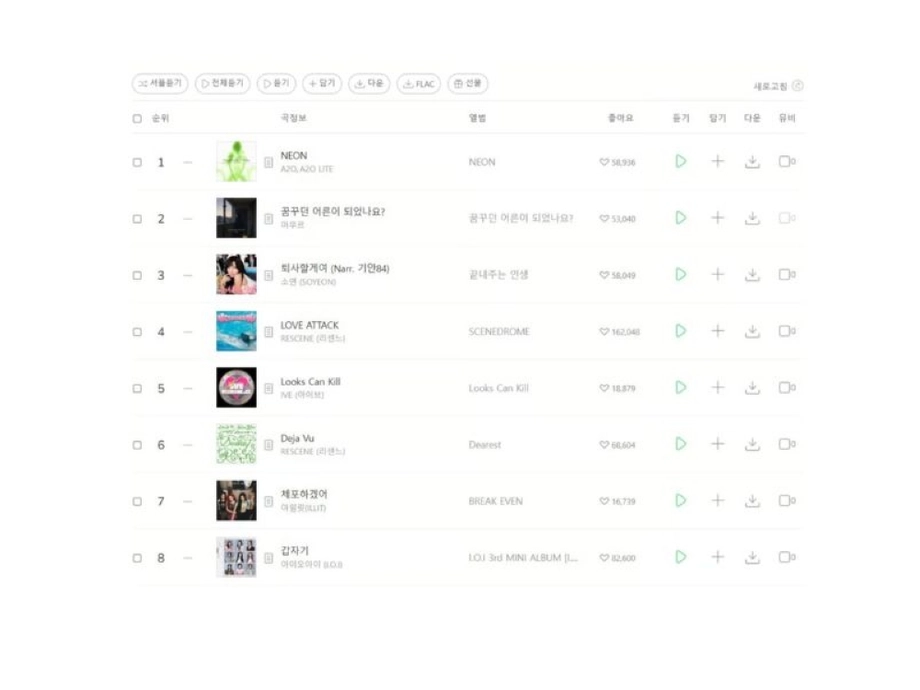
Meomuru's "The Adult I Dreamed Of" reached No. 1 on Melon's Top 100 at 5 p.m. on November 13, 2026, becoming the first song using artificial intelligence for composition and vocals to top the South Korean chart. Its producers now have a hit at the centre of the music market, but no settled route to collect the usual songwriting royalties through the Korea Music Copyright Association.
Contents
- A synthetic voice reaches No. 1
- How the song climbed the chart
- Why adults connected with the lyrics
- The people behind Meomuru
- Two different routes for music income
- A registration policy lasted 22 days
- The dates behind the dispute
- What would count as human creativity?
- Disclosure becomes part of the business
- Key Points
The rock ballad, released on June 23, overtook Rescene's "With" nearly five months after its release. It remained at No. 1 at 6 p.m. and 8 p.m. At the 5 p.m. chart reading, Rescene was second, A2O LITE was third and ILLIT was fifth.
Melon's audience figures reveal an unusual centre of gravity for a song competing with current idol releases: listeners in their 30s accounted for 36%, followed by people in their 40s at 30%. Together, those two groups represented 66% of its audience.
Behind the synthetic singer are two experienced human producers, Lee Yong-seok and Choi Seong-hyeok. They wrote the lyrics, used the music generation tool Suno to produce musical material and vocals, and repeatedly revised the results using conventional production software.
Their success brings two developments together. A voice generated by software has reached the top of a major popularity chart, while the institutions that collect money for human songwriters are still working out how to assess music made through a mixture of human decisions and machine generation.
How the song climbed the chart
Melon's Top 100 combines usage over the preceding 24 hours with usage during the most recent hour. The chart therefore reflects both a broader listening period and more immediate activity.
Meomuru's rise developed over months. The song had already reached No. 2 in October and remained near the top before taking first place in November. Its route to the summit included widespread use as background music in short videos on Korean social media.
Actor Gong Yoo also drew fresh attention to the song by singing it at a recent fan meeting. Together, those routes brought it to audiences beyond the project's own releases and channels.
The ballad's subject is familiar: growing older without becoming the confident adult imagined in childhood. Its lyrics describe worries settling onto a person's shoulders, connecting childhood expectations with financial pressure and uncertainty about the future.
Why adults connected with the lyrics
Listeners in their 20s made up 19% of the audience, while those in their 50s accounted for 11%, according to Melon. People in their 30s and 40s, at 66% combined, were more than twice the combined 30% share of those two other age groups.
The song offers a quiet account of adult anxiety rather than instructions about overcoming it. That approach gives listeners room to connect its words with their own circumstances. Comments on its YouTube release included personal accounts of difficult lives and ongoing struggles.
Lee and Choi have described choosing generated material according to whether the whole song flowed naturally and carried the emotion of the lyrics, rather than whether an individual high note or elaborate vocal moment sounded impressive.
That production choice helps explain the connection between the technology and the song's appeal. The voice came from Suno, but the producers selected and shaped it around a recognisable human story. Familiar ballad melodies and a vocal moving between fuller tones and falsetto gave that story a conventional musical setting.
The people behind Meomuru
Meomuru is a virtual artist project created by GLORYWAVE, the production team formed by Lee, who works as Martin East, and Choi, known as Beatjaru. The pair have spent more than a decade making ballads, including work for Hwang Chi-yeul, Gilgu Bonggu and Kim Jun-su, also known as XIA.
The producers handled the concept and lyrics themselves. Suno generated melody, arrangement and vocal material, after which they selected results and carried out further work in programs including Cubase, a tool used to record, arrange and edit music.
Korean pronunciation required particular attention. The pair changed lyrics and syllables, adjusted melodies and fed material back into the AI system. They repeated that process to make the performance sound more natural, then completed further editing and vocal correction.
The release description disclosed the use of Suno vocals from the beginning and credited Meomuru with planning, lyric writing and production direction. On the project's YouTube channel, Meomuru described the role of the technology:
To me, AI is a modern instrument and a partner that helps bring my imagination into reality. I believe that while the tools may change, the stories do not.
Two different routes for music income
GLORYWAVE receives revenue from distribution of the recording. Its Meomuru songs, however, have not been placed under the Korea Music Copyright Association's trust management system, leaving the team without the usual lyric, composition and arrangement royalties collected through that system.
A recording and the musical work within it generate different kinds of income. Distribution revenue relates to the released recording. Songwriting royalties relate to the lyrics and music, with organisations such as the association collecting and distributing payments on behalf of creators.
Trust registration means placing rights under the association's management so it can administer them and pay the relevant creators. Korea's current copyright framework protects human creative contributions, while material generated solely by AI does not itself receive copyright protection.
For Meomuru, the unresolved task is assessing a production in which people wrote lyrics, selected material and revised musical details while software generated other elements. GLORYWAVE has called for reasonable criteria that account for that complex process.
A registration policy lasted 22 days
The Korea Music Copyright Association tried to create a route for such works in August. Its proposed criteria would have allowed registration of human contributions where a person played a substantive and leading role in writing lyrics, composing or arranging music.
The association announced the criteria on August 3, although another account dates the announcement to August 4. On August 25, its eighth board meeting withdrew the relevant changes to its music registration rules and trust agreement terms, 22 days after the August 3 announcement.
Political and government objections preceded the reversal. Representative Kim Jae-won of the Rebuilding Korea Party, who performed as singer Ria, opposed the policy on August 10, citing the absence of social agreement or a legislative conclusion.
The Ministry of Culture, Sports and Tourism sent an official letter on August 18 saying discussion across the cultural and arts sectors should come first. Association chairman Lee Si-ha subsequently pledged to pursue legal and institutional standards through wider discussions involving the National Assembly and government.
Works already registered during the policy's operation were to enter a process requesting cancellation of their registration. Applications that had been received but not completed were put on hold until a new policy was developed. The association said it would continue checks and monitoring against false declarations and distorted royalty distribution.
The dates behind the dispute
Meomuru's chart rise and the debate over royalty administration developed alongside each other. The key dates show how a released song became a major commercial success while registration rules were being introduced, withdrawn and debated:
- June 23, 2026: "The Adult I Dreamed Of" was released.
- August 3: The copyright association announced criteria for registering human creative contributions to music using AI. Another account places the announcement on August 4.
- August 10: Representative Kim Jae-won publicly opposed the policy.
- August 18: The culture ministry called for broader discussion across the arts.
- August 25: The association's board withdrew the changes.
- September 22: A National Assembly forum examined possible standards for trust registration.
- October: Meomuru's song reached No. 2 on Melon's Top 100.
- November 13: The song reached No. 1 at 5 p.m. and retained the position at 6 p.m. and 8 p.m.
Two parliamentary discussions followed the withdrawal, but concrete standards for proving human contributions and allocating royalties had still not been settled when the song reached No. 1. No date was given for adopting replacement rules.
What would count as human creativity?
The September 22 forum at the National Assembly Members' Office Building moved the debate toward the evidence a creator might need. Organised by Kim Jae-won, it examined how lyrics, composition and arrangement could each be assessed separately.
Kim Hye-chang, head of policy research at the Korea Copyright Commission, identified several situations where human creativity could be recognised. They included entering one's own work into an AI system when its creative expression remained in the result, making creative additions or revisions to generated material, and selecting or arranging outputs in an independently creative way.
He contrasted those activities with minor corrections, results containing no identifiable independent human expression, and material produced simply by entering a prompt. A prompt is an instruction asking an AI system to generate something, such as a melody or a vocal performance.
Park Tae-yong, a professor at Seokyeong University, proposed standard records of the production process: prompt histories, revision logs and separate audio files for individual tracks or instruments, known as stems. Those records could help reviewers follow where human intervention occurred.
The withdrawn policy had required disclosure of the AI tools used, where and how they were used, and the creator's own contribution. It also provided for supporting production records when requested, an internal review body, withheld royalty collection or distribution in suspected cases, and contractual penalties for deliberate or seriously negligent false declarations.
Disclosure becomes part of the business
Meomuru disclosed its synthetic vocals, yet listener reactions have remained divided. Some accept AI as a production tool when people still write and direct the work. Others are uncomfortable with generated music or want clearer labels explaining its use.
Another act, Joseon Hiphop, has also entered Melon's Top 100 with "Forest of the Heart," which reached No. 89 in an earlier chart snapshot. Its concept and lyrics came from a human creator, while AI supplied composition and vocals.
Kim Chan-wook, chairman of the Korea Music Publishers' Association, told the September forum that some creators were willing to acknowledge using AI generally but reluctant to disclose its use on a particular song. He predicted a market divided between inexpensive music produced in volume and music centred on human creativity with higher commercial value.
Lawyer Seol Ji-hye, a partner at Yoon & Yang, argued at the same forum for bringing qualifying AI assisted music into a regulated registration system. Music critic Jung Min-jae described the spread of AI into popular music as an expected development following its use in film and television, and urged human musicians to concentrate on making better music.
Meomuru's success gives that debate a concrete financial consequence. A song can now attract enough listening to lead Melon's main chart while its human creators wait for an agreed process to assess their work and administer the associated songwriting royalties.
Key Points
- Meomuru's "The Adult I Dreamed Of" became the first song using AI for composition and vocals to top Melon's Top 100 on November 13, 2026.
- Producers Lee Yong-seok and Choi Seong-hyeok wrote the lyrics, directed production and revised material generated through Suno.
- Listeners in their 30s and 40s accounted for 66% of the song's audience, according to Melon.
- GLORYWAVE receives recording distribution revenue but has no trust registration for the usual songwriting royalties through the Korea Music Copyright Association.
- The association withdrew its AI registration criteria on August 25, and replacement standards had not been settled when the song reached No. 1.