A reset reaches more than one in five employees
Canva is restructuring 1,271 roles, about 22% of its workforce, as the Australian design software company confronts slower growth, expensive artificial intelligence tools and competitors that increasingly offer design services of their own. The changes combine job losses, new assignments and relocation requirements, with Sydney becoming the main base for its product teams.
Contents
- A reset reaches more than one in five employees
- What changes inside Canva
- AI changes the business, Canva says, without replacing departing staff
- Why popular AI tools can strain finances
- Canva is building cheaper ways to handle requests
- Partners are becoming design competitors
- How the pressure built
- The personal cost behind the restructuring
- Why the reset matters beyond one company
- Key Points
The announcement on November 3, 2026, marks Canva's first major workforce reduction in its 13 years. Employees learned about the changes on Wednesday, November 4. The company has not disclosed how many of the 1,271 affected roles will ultimately disappear.
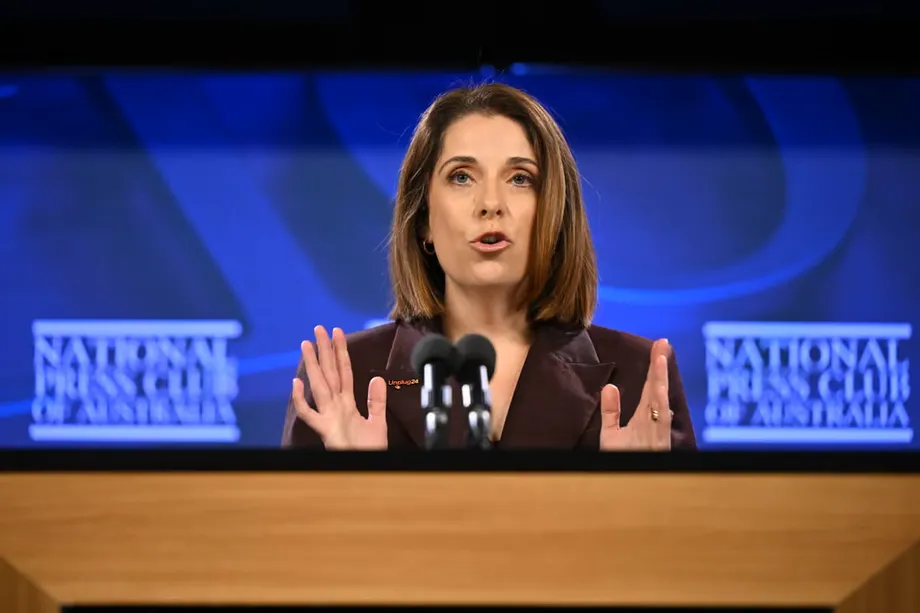
Co-founder and chief executive Melanie Perkins told employees that Canva's growth had slowed for the first time in a decade. Her response is to combine departments, reduce narrow specialisations and rebuild around smaller teams with more authority to make decisions.
Perkins described the scale of the change in her message to staff:
To set ourselves up for the next decade, we need to refound Canva, getting back to our roots of small, empowered teams with the freedom to make decisions, take ownership and focus on what matters most for our community,
Canva says departing employees will receive at least six months of salary, a year of healthcare coverage and career support. They can keep their company laptops and apply for grants to start businesses or community organisations.
The reset follows a reduction in Canva's projected revenue growth for 2026 from 30% to 20%. Demand for its AI features has exceeded expectations, according to Perkins, but serving that demand has proved costly. Canva now faces two connected tasks: making tools that people want and ensuring it can afford to provide them.
What changes inside Canva
Canva is merging its product, growth and platform teams into one unit. Those groups cover what the company builds, how it attracts and retains users, and the underlying technology supporting its services. Bringing them together is intended to reduce the communication delays that can arise when work crosses departmental boundaries.
Employees will also face fewer narrowly defined specialities, potentially taking responsibility for a broader range of work. Perkins wants smaller teams to make decisions more independently and focus on customer priorities.
Sydney will become the main home for product teams as Canva consolidates overlapping functions and increases work together in person. Some employees in Melbourne have been asked to move to Sydney or accept redundancy. Remote workers and staff overseas are also among those facing relocation requirements to central hubs.
Canva is moving toward hybrid work, with employees expected in an office a few days a week. For affected workers, the restructuring can therefore mean a change of city, working arrangements or responsibilities, as well as the possibility of losing a job.
AI changes the business, Canva says, without replacing departing staff
Canva says it will not assign the work of departing employees to AI. Its explanation is that new technology is changing the products customers expect and the organisation needed to build them.
A Canva spokesperson explained the company's position:
These changes are about setting Canva up to build those products, not using AI to do the work of people who are leaving.
Professionals Australia, the union representing employees, has asked for greater openness about the connection between AI and staffing decisions. Its technology industry director, Paul Inglis, said:
It's really important that large tech companies like Canva are honest about the impact that AI is having on jobs.
Canva's explanation places the pressure on its business model and product plans. Customers increasingly expect software to create images, layouts and presentations from instructions. Meeting those expectations changes both the skills a company needs and the computing bills it must pay.
Why popular AI tools can strain finances
Canva ended 2025 with more than 265 million monthly active users and over 31 million paid users. Those figures show the scale of the audience using its services, alongside a much smaller paying customer base. Free access helps Canva attract users, while subscriptions fund paid features and the wider business.
AI adds a cost each time a user asks a model to perform a task. Generating an image or interpreting a design request requires computing resources. When Canva uses an outside provider's model, access to that technology also carries a cost.
Perkins said the average cost of handling an AI task had become too high because Canva depended heavily on leading external models. Strong use of those features therefore increases pressure on spending, particularly when requests come from people using the platform for free.
Canva reduced its 2026 revenue growth forecast in early August from 30% to 20%. That is a reduction of 10 percentage points, or one third of the previous growth forecast. The company still expected revenue to rise, but at a slower rate than it had planned.
The financial challenge is straightforward: more use brings value only if the revenue it generates can support the cost of providing it. Canva's AI features have attracted demand, yet the company must make that demand financially sustainable while continuing to compete on product quality.
Canva is building cheaper ways to handle requests
Canva has been developing its own models and buying AI companies as it expands its technology. Perkins has described work on models designed for particular design tasks, systems that send requests to the most suitable model, and better management of computing demand.
A model built for a specific workflow can concentrate on a narrower job than a general purpose model. Routing allows the software to choose which model handles each request, rather than using the same expensive system for everything.
Since launching Canva 2.0 in April, the company says it has reduced the cost per task by up to 90%. In October, it introduced Canva Brush, which it says lowers that cost by 46% compared with its previous design agent.
The two percentages use different comparisons: the first concerns reductions since the April launch, while the second compares Brush with the earlier agent. Canva is pursuing cheaper individual tasks while managing a growing volume of requests. Its lower revenue growth forecast shows that those efficiency efforts are taking place alongside broader financial pressure.
Partners are becoming design competitors
Anthropic launched Claude Design in May, bringing a new competitor into a market already occupied by Canva, Adobe and Figma. Adobe and Figma had agreements to integrate Anthropic's Claude models into their products and were surprised by its move into design.
Canva said it had helped Anthropic develop Claude Design, despite having its own collaboration agreement with the company. That relationship captures a difficult feature of the AI market: a supplier can help a software company improve its products while also building tools that compete for the same customers.
Working with leading model providers lets design companies introduce sophisticated features faster. The trade involves ongoing computing costs and a closer relationship with businesses that may move further into their markets.
Competition also extends beyond specialist design software. ChatGPT and Google's Gemini can generate images, while platforms such as Instagram have added AI editing tools. Users who once opened a separate design application for a simple visual may now complete that task inside another service.
Canva pitched a strategy centred on AI earlier in 2026, roughly eight months before the workforce announcement. Its challenge is now to turn that strategy into products compelling enough to attract users and efficient enough to support the business.
How the pressure built
Canva's restructuring follows a series of financial and product milestones. The sequence shows a company expanding its AI ambitions while revising expectations for growth and value.
- August 2025: An employee share sale valued Canva at US$42 billion.
- End of 2025: Canva had recorded US$3.5 billion in annual revenue, more than 265 million monthly active users and over 31 million paid users.
- April 2026: Canva launched Canva 2.0, the starting point for its claim of task cost reductions of up to 90%.
- May 2026: Anthropic launched Claude Design, widening competition in design software.
- Early August 2026: Canva reduced its revenue growth forecast from 30% to 20%.
- October 2026: Canva introduced Brush, claiming a 46% reduction in cost per task against its previous design agent.
- November 3 and 4, 2026: Canva announced the restructuring and employees learned how the changes would affect them.
Canva also lowered its internal valuation from US$42 billion to about US$35 billion, a decline of roughly 17%. Another investor valuation put the company at US$31 billion, or A$44.5 billion. These figures concern estimates of the private company's worth, rather than revenue from customers.
The reset has sharpened attention on a possible initial public offering, when a company first makes its shares available on a stock exchange. No date has been announced.
The personal cost behind the restructuring
Laura Luland, Canva's first program manager, had worked at the company for eight years when she learned that her role was among those being cut, changed or moved. She was on parental leave and due to return that month.
Dunja Popovs, who led a team of content designers, described losing her job in a LinkedIn post. Her response combined distress with appreciation for her time at the company:
Truthfully, I am sad and devastated, but I'm also extremely grateful that I ever had the opportunity in the first place,
Canva's departure package provides at least six months of salary, 12 months of healthcare coverage and help finding work. Through the Canva Collective Fund, departing employees can apply for $10,000 grants to establish a business or community organisation. The grants are available through applications rather than as automatic payments to everyone leaving.
Professionals Australia welcomed the support while describing the news as a shock, especially so close to Christmas. Employees asked to relocate face another difficult decision: whether to move their lives to retain a role or leave the company.
Why the reset matters beyond one company
Canva employs about 5,700 people across 37 countries and has become a major part of Australia's technology industry. Perkins chose to build the business in Australia rather than Silicon Valley and remained chief executive through its rapid expansion.
Early investments in Canva helped build the financial strength and reputations of venture capital firms Blackbird, Airtree and Square Peg. Canva employees have also gone on to establish companies or take senior positions at other growing Australian technology businesses. A restructuring of this size therefore reaches a network of workers, founders and investors beyond Canva itself.
Blackbird has expressed continued confidence in the company. A spokesperson for the investor said:
We've backed Canva since the very beginning and we remain optimistic about its future and long-term potential.
Other Australian software businesses have also reduced staffing while changing their AI plans. Atlassian cut 1,600 jobs in March, citing a changing mix of skills and staffing needs. WiseTech Global revised a planned reduction from up to 2,000 roles to 1,700 as part of an AI efficiency drive.
Canva began turning a profit five years into its development as a startup. Perkins and co-founder Cliff Obrecht have described their ambition as building the world's most valuable company and then giving away their wealth to do the most good possible. The immediate task is more concrete: reorganise the workforce, control AI costs and restore stronger growth while preserving the products that brought users to Canva.
Key Points
- Canva's restructuring affects 1,271 roles, about 22% of its workforce, through job losses, reassignment and relocation.
- Product, growth and platform teams will merge, with Sydney becoming the main base for product teams.
- The company lowered its forecast for 2026 revenue growth from 30% to 20% as it worked to control AI costs.
- Canva says departing employees' work will not be delegated to AI. Professionals Australia is seeking greater openness about AI's effect on jobs.
- Departing staff will receive at least six months of salary, a year of healthcare and career support, and can apply for $10,000 venture grants.
- Canva is developing cheaper AI systems while competing with specialist design companies and the model providers it also works with.