A feed switch backed by broader safety duties
Australians over 16 would gain a choice between social media recommendations and a feed drawn from accounts they follow under legislation introduced in the House of Representatives on October 15, 2026. Platforms would have to keep that choice in place whenever users reopen an app, rather than repeatedly steering them back to recommendations.
Contents
- A feed switch backed by broader safety duties
- What would change when people open an app?
- Platforms would have to look for risks themselves
- New protections target sexual abuse and violence
- Parliament would decide new categories of harm
- Speech protections remain a political fault line
- Testing platforms with accounts under assumed identities
- Fines and a possible right to sue
- The timetable from consultation to enforcement
- Key Points
The Online Safety Amendment (Digital Duty of Care) Bill 2026 would also require online services to identify and reduce foreseeable harm before users suffer it. Its reach extends beyond social media to websites, games, messaging services, applications and artificial intelligence chatbots. Companies breaching the proposed requirements could face penalties of up to A$109.2 million.
Communications Minister Anika Wells is seeking to replace a collection of online codes and standards with a broader legal responsibility for safety. The proposal combines controls over platform design, stronger protections for children, faster responses to certain abuse notices and expanded enforcement powers for the eSafety Commissioner.
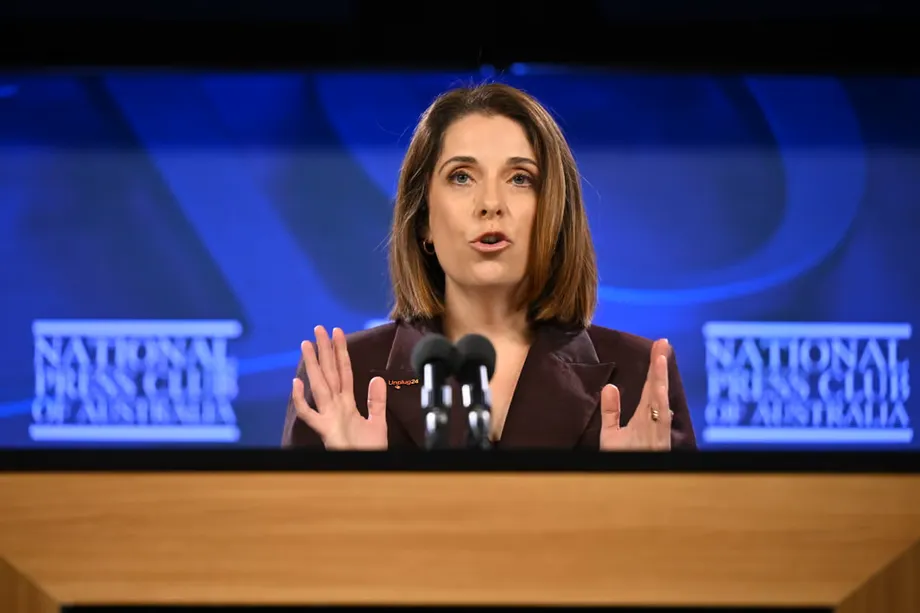
Wells, speaking at the National Press Club, described the responsibility she wanted companies to carry:
If you build it, you are responsible for its risks.
The bill must pass both houses of Parliament. Labor hopes to secure passage before the end of 2026, but the Coalition opposes it and the Greens want stronger penalties, action on addictive design and a right for individuals to sue technology companies. The feed controls are also being developed through separate rules, making the parliamentary vote one part of the process rather than the date users would immediately see a new switch.
What would change when people open an app?
A recommendation algorithm is software that chooses and ranks posts using signals such as what someone watches, likes or shares. A feed based on followed accounts instead draws content from people and pages the user has deliberately selected.
The government's My Feed, My Way proposal would make that choice visible and durable. Companies would have to notify account holders about it, keep the control easy to find and avoid making a feed harder to navigate after someone opts out.
Platforms would also have to remember the setting each time the app opens. For someone who wants to see followed accounts rather than suggested videos or posts, that would remove the need to change the setting repeatedly.
The bill supplies powers to require tools that let users manage service design features. Consultation on the specific feed rules is proceeding separately. The practical requirements therefore still need to move through that process, even though Wells has described the principles companies would be expected to meet.
Chanel Contos, founder and chief executive of Teach Us Consent, welcomed the proposed choice. She described how recommendations could remain available to people who want them:
Nothing about this stops people, organisations or businesses reaching audiences through algorithmic feeds. It just means people get to choose that feed, rather than have it forced on them.
Platforms would have to look for risks themselves
The proposed duty would amend the Online Safety Act and require providers to assess risks, take appropriate steps to prevent or reduce them, and document their response. Annual risk assessments would make safety a recurring responsibility rather than something considered only after a complaint.
Adults would receive protection against seriously harmful material and conduct. Children under 18 would receive broader protection, including against bullying, material promoting eating disorders, dangerous stunts, criminal behaviour and hostility toward women and gender equality. Some harmful algorithmic design features would also fall within the protections for children.
The age boundaries serve different purposes. Australia's restrictions on social media access concern children under 16; the proposed duty would also protect older teenagers who can use those services. Games, messaging apps and other covered services would have obligations of their own.
Wells has also pointed to limits in existing law, saying it could not block a controversial proposed livestream of an execution in the United States. Greens communications spokeswoman Sarah Hanson-Young planned to ask Meta not to carry the stream. The dispute illustrates the pressure for platforms to assess dangerous material before it reaches an audience, alongside government enforcement after publication.
New protections target sexual abuse and violence
The introduced bill expands the categories of serious harm to include creating fake nude material without consent, posting or threatening to post another person's intimate image without consent, and encouraging, promoting or inciting violence based on gender.
Fake nude material can be made by digitally altering an image or using artificial intelligence to depict someone naked. The proposal would give the eSafety Commissioner power to act against services that produce such material, often called nudification services.
The broader safety package also addresses material involving terrorism, suicide, self harm and eating disorders. For conduct that constitutes a Commonwealth criminal offence, the duty would apply where it is likely to cause serious harm. That threshold helps define which criminal conduct comes within this particular online safety obligation.
John Hartman, chief executive of the Minderoo Foundation, welcomed the expanded protections against sexual image abuse, threats and violence. He said women and children experience disproportionate harm online, including misogyny and inappropriate material on social media and dating apps.
The proposal would also shorten certain existing removal notice periods for cyberbullying and online abuse from 48 hours to 24 hours. That halves the response window for the affected notices, making rapid action a larger part of platforms' compliance work.
Parliament would decide new categories of harm
The government removed a proposed power that would have allowed the communications minister to add categories of harmful material. Further categories would instead require Parliament to amend the law, putting those changes through debate and votes.
The Department of Infrastructure, Transport, Regional Development, Communications, Sport and the Arts published the government's exposure draft for consultation. Its notice set a deadline of noon on Tuesday, September 22 for written feedback. The draft was released on September 8, allowing two weeks for submissions; a government summary of that feedback had not been published when the bill was introduced.
Professional news and certain entertainment material receive express exclusions in the introduced version. Other exclusions cover artistic and educational content subject to public interest conditions, scientific and academic research, and material that supports public health, safety or the reduction of harm.
The government also removed a proposed restriction on material encouraging or instructing illicit drug use. Public health advocates had worried that the wording could catch drug education intended to keep people alive or reduce injury.
Those changes respond to a practical problem: platforms use moderation systems to sort enormous amounts of content, and health education can contain the same sensitive words or images as material that causes harm. The exclusions give providers legal grounds to preserve useful information when applying the new duty.
Speech protections remain a political fault line
The Coalition argues that the bill's definitions remain too broad and could enable political censorship. Shadow Communications Minister Sarah Henderson has confirmed that the opposition will not negotiate on the legislation and has questioned the scope of its public interest protections.
Opposition Leader Angus Taylor has also criticised the proposal and argued that the government should concentrate on making the restrictions for children under 16 work. The removal of ministerial powers to add harms has therefore failed to resolve the political dispute.
Wells rejected the censorship argument at the National Press Club. She said the duty was aimed at platform behaviour and safety rather than political disagreement:
This is not about what people say on the internet. It's about what platforms do on the internet, and your right to disagree with me or the government or believe whatever you want to believe will not be impinged by a digital duty of care.
Wells also said adults could continue listening to manosphere podcasts, criticising the government, making memes or expressing beliefs that the Moon landing was fake. She described the duty as separate from regulation of misinformation and disinformation.
Health and community organisations face another concern: lawful material being removed by platforms applying safety rules too broadly. Repro Uncensored, an organisation that tracks digital censorship and helps users challenge account restrictions, says it has received more than 100 verified Australian cases, including more than 30 since August 2026.
The Telecommunications Industry Ombudsman says thousands of people have sought help over problems with platform providers since 2023 and has called for independent external dispute resolution. Additional appeal arrangements for public health organisations whose material is blocked remain unresolved. For these users, access to an effective complaint process matters alongside the wording of content exclusions.
Testing platforms with accounts under assumed identities
The eSafety Commissioner and accredited researchers would be able to use accounts under assumed identities, sometimes called sock puppet accounts, to observe and test services. Such accounts can help researchers see what a platform recommends to a particular kind of user.
The regulator would have to develop policies in consultation with the Australian Federal Police and report annually on its use of these accounts. University researchers would need ethics approval. Interaction with other users would be limited to what is necessary to prevent an account from being closed.
Henderson has argued that the accounts could be misused. Wells rejected suggestions that they would be used to spread government propaganda, saying their purpose would be research and enforcement, including examining harmful recommendations reaching children.
The compliance work would cover overseas services operating in Australia. Wells confirmed that Truth Social, the platform associated with US President Donald Trump, would fall within the regime because it has an Australian presence. It would be responsible for assessing risks, with eSafety determining compliance.
Small Business Minister Anne Aly said ordinary businesses would face obligations matched to their risks:
Providers of low-risk services, like websites and applications run by small businesses, will have minimal obligations.
That approach would also extend to other services presenting little risk, including those predominantly sharing exempt material. Providers would receive further regulatory guidance on what they must do.
Fines and a possible right to sue
The proposed maximum penalty of A$109.2 million is one part of the enforcement framework. A distinct penalty associated with eSafety compliance directions was reduced from A$21.8 million in the exposure draft to A$2.2 million in the introduced version. Those figures concern different provisions.
Hanson-Young wants penalties tied to platforms' global revenue, arguing that the consequences must be large enough to influence companies operating worldwide. The Greens also want stronger measures against addictive features, including infinite scrolling, which continually loads more content as a user moves through a feed.
The party's other major demand is a private right of action. This would allow people who experience harm to bring a legal claim against a platform themselves, potentially through a class action in which people with similar claims sue together.
Wells has said the government will consider that proposal. The introduced bill does not contain the right, although discussion before its introduction had described suing platforms as part of the wider package of possible protections. Its scope, including who could claim compensation and for which harms, has not been settled.
Wells is also considering whether eSafety should have multiple commissioners to share its expanding workload. Julie Inman Grant's second term as commissioner is due to end in 2026. The proposed restructuring would be a separate decision about how the agency handles enforcement and rising demand for assistance.
The timetable from consultation to enforcement
The Senate inquiry will give parties a chance to test the definitions, penalties and enforcement arrangements before a final vote. Its report is expected on November 20, before Parliament rises at the end of November.
The main dates and steps are:
- September 8, 2026: the government released the exposure draft for written feedback.
- September 22, 2026: consultation closed at noon.
- October 15, 2026: the bill was introduced in the House of Representatives.
- November 20, 2026: the Senate inquiry is expected to report.
- Before the end of 2026: Labor hopes to secure parliamentary passage.
- After passage: a transition period of 12 months would allow services to prepare, with enforcement expected by the end of 2027 if that timetable holds.
Labor needs support beyond its own senators. With the Coalition opposed, negotiations with the Greens will shape whether the bill passes and how far its final requirements go.
For users, the most immediate promised change is greater control over what appears in a feed. For platforms, the larger change is a continuing responsibility to examine how their services create risk, record what they find and take action before complaints arrive.
Key Points
- Australians over 16 would be offered a choice between algorithmic recommendations and content from accounts they follow.
- The proposed duty would cover social media, websites, games, messaging services, apps and AI chatbots.
- Children under 18 would receive broader protections than adults, including against harmful content and design features.
- The introduced bill removes ministerial powers to add harm categories and expands exclusions for news, education, research and public health material.
- The Greens seek stronger fines, action on addictive design and a right for individuals to sue. The Coalition opposes the bill.
- A Senate inquiry report is expected on November 20. Passage would be followed by a transition period of 12 months.