A spinning Earth and a crowd reaching beyond Indonesia
Ye opened with "King," closed with "Runaway" and brought an estimated 50,000 fans to Jakarta's Gelora Bung Karno Main Stadium on October 24, 2026, according to figures cited by organizer Raw Vision Collective. Across roughly two hours and 37 songs, the rapper formerly known as Kanye West turned a giant globe, lasers and fireworks into the setting for a journey through his catalogue.
Contents
- A spinning Earth and a crowd reaching beyond Indonesia
- The globe put the production at the centre
- Older songs carried much of the emotion
- Heartless gave the audience a leading role
- Runaway delivered the closing scene
- Sound quality depended on where fans listened
- Why overseas fans chose Jakarta
- The spending estimate and the businesses involved
- A busy weekend tested more than the stadium
- Key Points
The audience was part of the story. Raw Vision's marketing and communications lead, Karen Tjahja, said on October 22 that 20,500 people from overseas had bought tickets. Later figures put attendance at around 70,000, including 25,000 foreign tourists from 80 countries. A final reconciled count has not been released.
Jakarta was the only Southeast Asian destination on the Ye Live Concert Tour 2026, drawing people who otherwise would have needed to travel farther to see him. Visitors included fans from Thailand, Sweden, Australia, Malaysia, Singapore, Japan, the United States, Britain and Germany.
Inside the stadium, the appeal was more immediate: familiar songs, a stage displaying a rotating Earth and thousands of people singing together. Outside it, the concert became part of a wider discussion about whether Jakarta can turn major entertainment events into dependable business for hotels, transport providers, restaurants and local workers.
The night also delivered a contrast between an artist who spoke little onstage and an audience that supplied much of the emotion. Ye's later response to footage of the crowd made his own assessment unusually direct.
The globe put the production at the centre
The Giant World Globe Stage was the concert's defining feature. Images of Earth moved across a huge dome while lasers illuminated the stadium from different angles. The circular design arranged spectators around the performance space instead of directing everyone toward a conventional stage at one end.
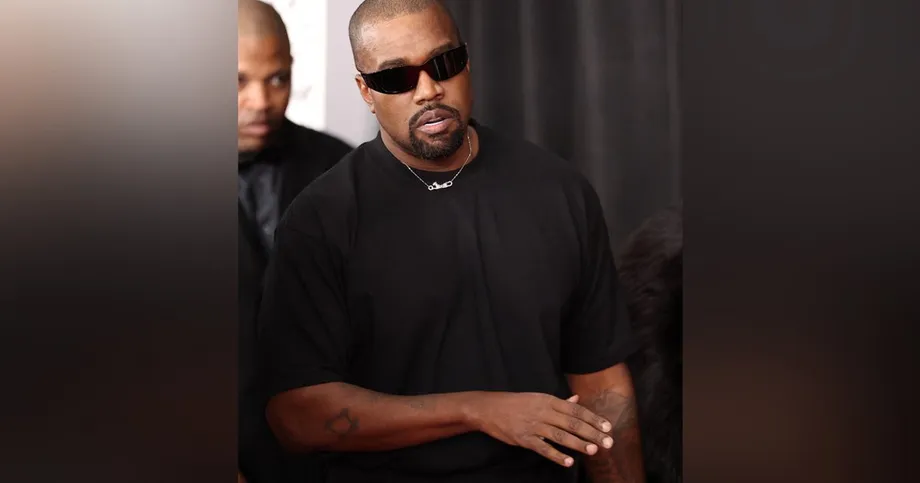
Ye appeared in an oversized gray outfit, black boots and a covering that concealed his entire head. As Jakarta's humidity took its toll, he removed the covering, revealing a face wet with sweat. The restrained clothing kept attention on his silhouette against the changing planetary images.
Rico Utoro, a 41-year-old fan who also works as a DJ, said the production compensated for the limited conversation between songs. He described the stage's appeal in simple terms:
The globe design was the coolest part.
Rico said the colors and images changed with the music, giving the performance a visual thread from beginning to end. Fireworks and lasers provided larger bursts of spectacle, while the globe remained the constant focus.
Preparations for Ye's first Indonesian concert had included importing the main production equipment and adding LED screens for Festival A and Category 1A. The promoter said GBK's wider layout required adjustments compared with SoFi Stadium in California so people in those sections could see more easily.
Older songs carried much of the emotion
Ye moved between different periods of his career rather than building the evening mainly around recent releases. "Gold Digger," "All Falls Down" and "Through the Wire" brought back the soul samples and personal storytelling associated with his early work. Sampling means using a piece of an existing recording to help build a new song.
Ino Imran, 40, had last seen Ye perform in 2004. His return to the audience after 22 years made the older material especially meaningful. A fan since The College Dropout, Ye's debut album, Ino had expected a set weighted more heavily toward newer music and welcomed the number of early songs.
"American Boy," Ye's collaboration with British singer Estelle, introduced a brighter pop and R&B sound. Later selections including "All of the Lights," "Flashing Lights" and "Ghost Town" widened the mood, moving between dense arrangements, dance rhythms and more melancholy passages.
Rico, explaining why the catalogue still mattered to him, put the music before the personality surrounding it:
I first got into Kanye because of his music.
Ye's appearance came amid continuing controversy over his antisemitic remarks and Nazi imagery, which had drawn condemnation and opposition to performances elsewhere. In Jakarta, he offered no extended political commentary or explanation of those controversies. His spoken instructions largely asked people to jump or raise their hands.
Heartless gave the audience a leading role
"Heartless" became one of the evening's clearest examples of the crowd taking over. Ye repeatedly encouraged spectators to sing the chorus, and at one point thousands of voices carried the refrain without instrumental backing.
The performance later generated discussion online when viewers interpreted Ye's unsmiling expression in a fan video as dissatisfaction. His response, in a social media post dated October 25, praised both the atmosphere and the volume of the crowd.
Ye, the performer at the centre of the video, wrote:
Bro This shit was a vibe The crowd was very loud It's called rock and roll
Fan footage after the show also showed him smiling while signing a spectator's shirt. He headed to Halim Perdanakusuma Airport on the morning of October 25 to leave Jakarta.
Other songs produced a more forceful reaction. "Ni**as in Paris," his 2011 collaboration with Jay-Z from Watch the Throne, was one of Ino's highlights. Its heavy beat, combined with lasers and pyrotechnics, gave the stadium another of its loudest collective moments.
Runaway delivered the closing scene
Ye ended with "Runaway," a song that some visitors had crossed borders specifically to hear. Grace, a fan from Sweden, identified it as her reason for attending the Jakarta show.
Before the finale, Ye disappeared inside the globe and returned minutes later with a small piano. The familiar opening notes drew an immediate response, followed by fireworks as the audience sang along.
The closing sequence combined the evening's two strongest elements: an elaborate visual production and songs that listeners already knew intimately. The globe supplied the scale, while the piano opening gave the crowd a recognizable cue to join in.
No rain fell during the performance, allowing the outdoor production to proceed without a tropical downpour interrupting the finale. For an event relying heavily on projected images, lighting and fireworks, the weather helped preserve the intended spectacle.
Sound quality depended on where fans listened
Rico found the sound rough at times, even while praising the visuals. He acknowledged the difficulty of delivering clear audio across a stadium as large as GBK.
Ino had a more positive assessment from Category 2B, where he found the sound generally clear. He also noticed that nearby speakers sometimes produced overlapping vibrations.
Their experiences capture a practical challenge for a concert built around a circular stage. A production must serve spectators spread across a wide space, and listeners in different positions can hear different balances of voices, bass and reflected sound.
For both men, those problems were outweighed by the music and production. Rico valued the songs' inspiration and danceability; Ino welcomed the unexpected return of tracks he had known for more than two decades.
Ye's limited banter was less troubling to Rico, who said the artist had never been especially interactive. The show relied instead on musical recognition, crowd participation and changes in lighting to connect one passage to the next.
Why overseas fans chose Jakarta
Raw Vision's figure of 20,500 overseas ticket buyers was announced two days before the concert. Alongside the organizer's estimate of about 30,000 domestic attendees, it suggested that roughly two in five expected spectators were coming from abroad.
Thailand visitors Kanya and Tiger were among those drawn by Jakarta's position as the tour's only Southeast Asian stop. Tiger said he chose the Indonesian concert because Ye was performing there for the region. The couple arrived in black formal clothing, joining a crowd whose outfits often echoed the artist's oversized streetwear aesthetic.
The wider tour began on April 1, 2026, and was scheduled to include 20 concerts. Destinations included the United States, Kazakhstan and Portugal, with Istanbul, Almaty and Jakarta among the Asian stops. Planned New Delhi appearances in March and May were canceled for security reasons.
The main dates around the Jakarta performance were:
- April 1, 2026: The Ye Live tour began.
- October 22: Raw Vision announced that 20,500 overseas fans had bought Jakarta tickets.
- October 24: Ye performed at Gelora Bung Karno Main Stadium.
- October 25: Ye praised the crowd in a social media post and left Jakarta that morning.
- October 28: Tourism specialists discussed the concert and the Jakarta Running Festival's effects on local businesses.
Jakarta's exclusive position within Southeast Asia gave fans a concrete reason to choose the city. Their journeys also created demand beyond the ticket itself, from airport transfers and hotel rooms to meals before and after the performance.
The spending estimate and the businesses involved
Estimates circulating after the concert put its total economic impact at Rp 450 billion, including about Rp 328 billion in ticket sales. Ticket revenue would therefore account for roughly 73 percent of that estimated total. The calculation method and a detailed breakdown of the remaining Rp 122 billion were not published alongside those figures.
Tourism specialist Professor Azril Azahari said international special events could benefit tourism, hotel occupancy and small businesses. He also pointed to their potential contribution to gross domestic product, the value of goods and services produced in an economy.
For Jakarta residents, the possible benefits are concrete. Hotels can sell rooms, drivers can carry visitors, food businesses can gain customers, and production crews, equipment suppliers, designers and security staff can find work connected to the event.
University of Indonesia lecturer Deni Danial Kesa said concert destinations depend on more than audience demand. Venue capacity, predictable regulation, flight connections and suitable facilities all influence where organizers take a major production.
Deni also argued that Jakarta should develop its own model rather than simply copy Singapore. Combining concerts with Betawi culture, Indonesian food, urban attractions and creative businesses could give visitors reasons to stay longer.
Recent touring schedules show the competitive setting. Coldplay performed once in Indonesia in 2023 and six times in Singapore. Taylor Swift's 2024 itinerary omitted Indonesia while giving Singapore six shows. Ye's Jakarta booking offered the capital a different advantage: one regional stop capable of attracting travelers from several countries.
A busy weekend tested more than the stadium
The concert coincided with the Jakarta Running Festival weekend on October 24 and 25. Jakarta's provincial government put participation in the running event at more than 37,000 people, bringing another large group into an already busy GBK area.
The provincial administration supported the weekend with transport arrangements, changes to MRT operating hours, weather modification operations and hundreds of health facilities. Those measures show how hosting a major event extends beyond booking an artist or opening a venue.
Azril described holding the concert and running festival close together as a bold decision with benefits for workers and businesses. Deni framed the weekend as part of an economy in which people spend money on shared experiences, including music, sport and entertainment.
GBK's appeal therefore comes with practical demands. Visitors need reliable routes in and out, safe public spaces and services that can handle large numbers at once. Businesses benefit most when people can move around the city comfortably rather than spend their visit struggling with access.
For Ino, the desired result was straightforward: more exclusive concerts in Indonesia. Ye's appearance showed how a rare booking can bring overseas fans to Jakarta. Turning that demand into repeat visits will depend on the quality of the whole trip, from the stadium sound to transport and accommodation.
Key Points
- Ye performed about 37 songs over two hours at Jakarta's GBK stadium on October 24, 2026.
- Organizers cited an estimated 50,000 attendees; later figures put the crowd at around 70,000.
- Raw Vision said 20,500 overseas fans bought tickets before the show; later tourism figures cited 25,000 foreign visitors.
- A giant globe stage, lasers, fireworks and singalongs shaped the performance, which closed with "Runaway."
- Ye publicly praised the Jakarta crowd after footage of "Heartless" prompted discussion about his reaction.
- Economic impact was estimated at Rp 450 billion, including about Rp 328 billion in ticket sales.
- The concert and Jakarta Running Festival brought major crowds to GBK during the same weekend.