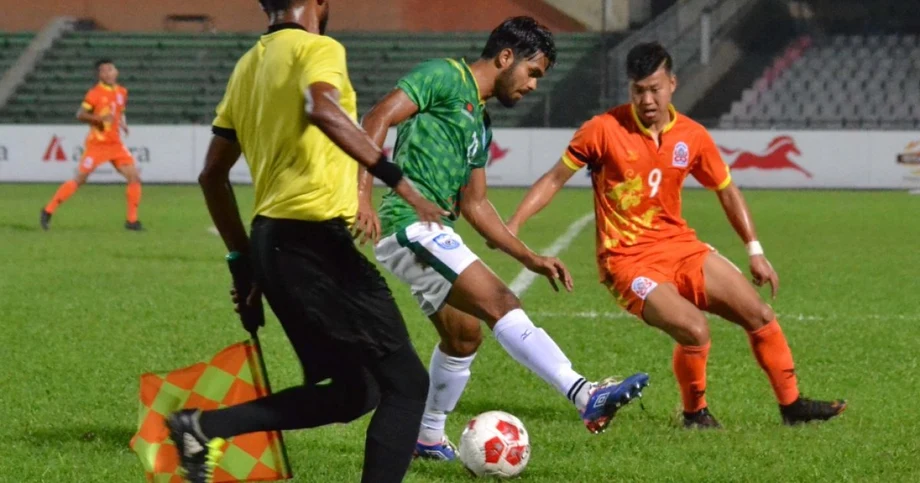
A substitute delivers the breakthrough in Dhaka
Mohammad Ibrahim scored in the 69th minute as Bangladesh beat Bhutan 1-0 at Dhaka's National Stadium on Thursday, November 5, opening their 2026 SAFF Championship campaign with three points after a frustrating evening in front of goal.
Contents
- A substitute delivers the breakthrough in Dhaka
- Topu's injury forces a late reshuffle
- Why Bishwanath played up front
- Possession brings pressure, but few accurate finishes
- Dooley changes the attack, then Ibrahim settles it
- A club match winner makes his mark for Bangladesh
- Bhutan's coach points to fatigue and limited preparation
- A festive opening carries memories of 2003
- Sri Lanka next, with Hamza expected to join
- Key Points
The Fortis FC forward struck soon after replacing Bishwanath Ghosh, the defender whom coach Thomas Dooley had selected for an unfamiliar role as the main striker. Zayyan Ahmed's delivery and Shamit Shome's header created the opening, with the ball taking a touch off a Bhutan defender before Ibrahim finished from close range.
Bangladesh moved to the top of Group A, ahead of Bhutan and a Sri Lanka side yet to begin its campaign. Each team plays twice in the group, with the top two advancing to the semi-finals. Bhutan face Sri Lanka on November 8, before Bangladesh meet Sri Lanka at the same stadium on November 11.
The narrow score reflected a recurring problem for the hosts: they could move the ball towards Bhutan's goal, but repeatedly failed to finish their attacks. Bangladesh had 64 percent possession and 12 shots in the first half, compared with Bhutan's four, yet both teams registered two shots on target.
Ibrahim's intervention gave Bangladesh their 14th victory over Bhutan across all competitions. Their previous win in the fixture had been 2-0 the year before. This time, a single goal was enough, supported by goalkeeper Mehedi Hasan Srabon and a defence that kept Bhutan from finding an equaliser.
Topu's injury forces a late reshuffle
Topu Barman had been named captain in the starting lineup and was preparing for his 70th international appearance. A muscle problem, described as the recurrence of a thigh injury, forced him out during the warm-up, leaving Dooley to reorganise the team shortly before kickoff.
Syed Quazem Shah came into the starting side, while Tariq Kazi moved from a planned defensive midfield role into central defence alongside Zidane Yousuf. Jamal Bhuyan took the captain's armband and worked with Shome in midfield.
Dooley said Topu had felt muscular discomfort in training the previous day, with the problem becoming worse on the morning of the match. The defender initially believed he could play, but withdrew near the end of the warm-up. The coach said he required players to be at least 80 percent fit rather than taking the field with an even chance of lasting the match.
Bangladesh used a 4-2-3-1 formation: four defenders, two deeper midfielders, three players supporting the attack and one central striker. Rakib Hossain and Foysal Ahmed Fahim provided width, with Bishwanath asked to occupy the central defenders and attack deliveries into the penalty area.
Why Bishwanath played up front
Bishwanath was making his 48th international appearance after an injury had kept him out of the FIFA ASEAN Cup campaign during September and October. Although familiar with several positions, he had never previously started at centre-forward for the national team.
His positional record illustrates the size of the change. He had played 63 matches at right-back, 34 at centre-back and nine at left-back, alongside five appearances spread across four midfield and attacking positions. Leading the attack required a different task: turning brief openings near goal into accurate finishes.
Dooley said Bangladesh lacked a dependable number nine, the football term for the main striker. He valued Bishwanath's energy, strength and willingness to enter crowded areas where physical challenges are frequent. Strong performances from Saad Uddin and Tariq in familiar defensive roles also influenced the search for another place for him.
Bishwanath did reach promising positions. He headed Rakib's cross wide early in the half, missed from a scramble following a corner around the 25th minute and later shot off target when through towards the goalkeeper. His movement helped produce chances, but none became a goal.
Possession brings pressure, but few accurate finishes
Fahim tested Bhutan goalkeeper Gyeltshen Zangpo in the eighth minute. After a defender blocked his first attempt, the winger tried again, forcing Zangpo to dive and save.
Shome threatened four minutes later with a header that slipped through the goalkeeper's gloves. Zangpo recovered quickly enough to gather the ball before Bishwanath could reach it. Shome forced another save around the 25th minute, earning the corner from which Bishwanath sent a volley wide.
Jamal also tried from distance, sending a powerful effort over the crossbar in the 22nd minute. Near the interval, Saad glanced a header across the face of goal from a Jamal delivery.
Bangladesh's 12 first-half shots were three times Bhutan's four, but the hosts put only two on target, about one in six. Bhutan also had two efforts on target from their smaller total. The figures explain why territorial control left Bangladesh vulnerable to a single effective attack at the other end.
Srabon supplied an important save around the 40th minute, denying Bhutan midfielder Pema Zangpo. Captain Chencho Gyeltshen led Bhutan's attempts to break forward, using his movement and pace as the visitors grew more confident after the opening half-hour.
Dooley changes the attack, then Ibrahim settles it
Fahamedul Islam replaced Fahim at halftime, but Bangladesh initially continued to rely on crosses. Bhutan defended in a compact group close to their goal, keeping several players between the ball and the net and leaving little space for a clean finish.
Dooley later introduced Ibrahim and Sohel Rana Jr for Bishwanath and Jamal. The main match accounts place the double substitution in the 65th minute, four minutes before the winner; another places it in the 63rd and describes a quicker scoring impact.
Ibrahim's arrival was part of a positional change rather than a simple exchange of strikers. Dooley said Bishwanath was tired and Bangladesh needed someone who could retain possession while teammates moved forward. Ibrahim was assigned the number ten role, an attacking midfield position behind the leading forward, while Shome moved closer to goal.
The winning move brought Shome into the area to meet a delivery from Zayyan. His header, redirected by a defender, left Ibrahim with the chance to score from close range. Descriptions of the final contact include a placed shot, a volley and a header, but Ibrahim was consistently credited with the decisive goal.
Bhutan pushed more players forward after falling behind. Bangladesh interrupted their attacks in midfield, made further changes through Mohammad Ridoy and Rahmat Mia, and protected the lead through five minutes of added time.
A club match winner makes his mark for Bangladesh
Ibrahim had already delivered an important goal for Fortis FC against Kyrgyzstan's Muras United, helping his club reach the AFC Challenge League group stage. His finish against Bhutan brought that ability to decide a tight game into the national team's tournament opener.
Dooley had left Ibrahim out of the ASEAN Cup squad, but said the forward earned his place for the SAFF Championship through his work in training. The coach explained that learning the strengths of players in a new country takes time.
Dooley said he had expected Ibrahim to create a chance for a teammate rather than score himself. The substitution nevertheless produced the combination he wanted: a player able to link the attack and Shome positioned farther forward to contest a ball near goal.
Bangladesh's next attacking adjustment concerns the number of players entering the penalty area. Dooley said the hosts sometimes had only one or two attackers facing seven or eight Bhutan defenders. He wanted the central midfielders and attacking midfielders to advance more often, giving the team more targets for crosses and more players ready to collect clearances.
Bhutan's coach points to fatigue and limited preparation
Bhutan coach Gary Michael Phillips said he was proud of his players' effort, particularly during the first hour, but felt inadequate match preparation had caught up with them. Some had gone six to eight weeks without a competitive game after the domestic league ended.
Phillips said assembling the whole squad had been difficult. He also described a smaller pool of replacements than Bangladesh could call upon. Bhutan's plan was to conserve energy through organised defending and attack when opportunities appeared, but fatigue made that approach harder to sustain.
The coach believed his team could have handled the winning goal better. He felt Bhutan might also have scored with better fortune, while acknowledging that chasing an equaliser with tired legs became especially difficult in the final 15 minutes.
Several Bhutan players suffered muscle cramps, according to Phillips. Bangladesh also experienced cramps during the second half, Dooley said. Bhutan additionally had a player taken from the stadium by ambulance after a first-half collision with Saad Uddin. Accounts identify the injured player and point of impact differently; no subsequent medical update was given.
Bhutan now have two full days of rest before meeting Sri Lanka on November 8. Phillips said recovery would be a priority because Sri Lanka would enter that game fresh, while his players would be returning after a demanding opening match.
A festive opening carries memories of 2003
The National Stadium hosted an opening ceremony lasting nearly an hour, with fireworks, a laser show and music from DJ Sanjoy Dev before Bangladesh faced Bhutan. Attendance estimates ranged from about 8,000 to 10,000 spectators.
Aminul Haque, the state minister for youth and sports, unveiled the trophy shortly before kickoff. His involvement connected the ceremony with Bangladesh's last SAFF title: he was the goalkeeper in the team that won the championship at home in 2003.
Bangladesh are seeking another title on home soil 23 years later. The victory also followed a damaging ASEAN Cup campaign that included a 9-0 loss to Indonesia, giving the hosts a welcome result even as their finishing remained uneven.
Earlier on the opening day, defending champions India beat Pakistan 3-2 in Group B. India had established a 3-0 lead by the 32nd minute, then conceded twice in stoppage time before securing victory. The six-team tournament therefore began with two narrow wins, reached through very different matches.
Sri Lanka next, with Hamza expected to join
Hamza Choudhury missed the Bhutan match because the FIFA international window had not opened. The window, scheduled for November 9 to 17, is the period set aside for national team football when clubs release players for international duty. He was expected to join Bangladesh after it began.
His expected arrival comes before the November 11 match against Sri Lanka, though his participation had not been confirmed. Bangladesh will first watch Bhutan and Sri Lanka meet on November 8, a result that will help shape the final Group A standings.
The immediate schedule is:
- November 5: Bangladesh beat Bhutan 1-0 in their opening Group A match.
- November 8: Bhutan face Sri Lanka in the group's second fixture.
- November 9: The FIFA international window opens, with Hamza expected to join Bangladesh afterward.
- November 11: Bangladesh face Sri Lanka at the National Stadium in their final group match.
Three points give Bangladesh a useful start in a group where each team has only two matches. Dooley's practical task before the next game is to turn the chances created against Bhutan into more accurate finishes, while preserving the defensive organisation that protected Ibrahim's winner.
Key Points
- Mohammad Ibrahim scored the decisive goal as Bangladesh beat Bhutan 1-0 in Dhaka on November 5.
- Bangladesh had 64 percent possession and 12 first-half shots but reached halftime without scoring.
- Topu Barman withdrew during the warm-up, and Jamal Bhuyan took over as captain.
- Dooley started defender Bishwanath Ghosh at centre-forward before bringing Ibrahim off the bench.
- Bhutan coach Gary Michael Phillips cited fatigue and a shortage of competitive matches.
- Bhutan meet Sri Lanka on November 8; Bangladesh face Sri Lanka on November 11.
- The top two teams in Group A advance to the semi-finals.