Phnom Penh ties peace to protection of its borders
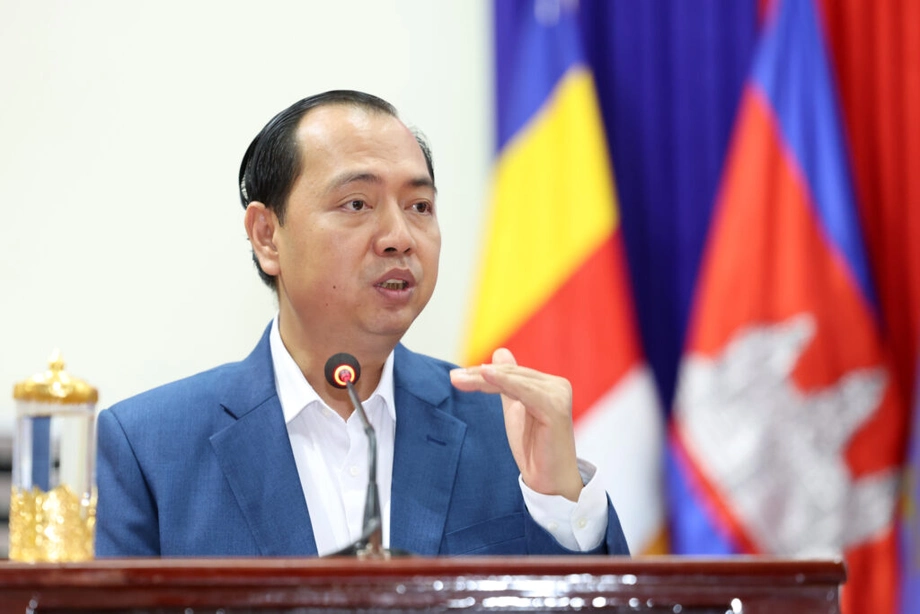
Cambodia will not exchange territory for peace, Information Minister Neth Pheaktra said at a meeting reviewing government working groups in Kratie province for the third quarter of 2026. He said the government would continue protesting violations of its sovereignty while seeking peaceful solutions to border disputes with neighbouring countries.
Contents
- Phnom Penh ties peace to protection of its borders
- Hun Manet calls for a settlement that lasts
- Four approaches, with negotiations at the centre
- The October 2025 declaration remains a reference point
- Families keep their belongings ready to move
- Damage extends beyond military positions
- How the government's position developed
- Key Points
Pheaktra, who heads the Royal Government working group for Kratie, described four approaches to Thailand's actions along the border: military, diplomatic, legal and information measures. His central message was that pursuing negotiations and international law would go together with defending Cambodia's territorial claims.
The minister referred to commitments by Prime Minister Hun Manet and Senate President Hun Sen to protect national territory and uphold Cambodia's rights under international law. Sovereignty means a country's authority over its territory. In this dispute, the practical question is where the boundary lies and how the two governments can settle disagreements about it.
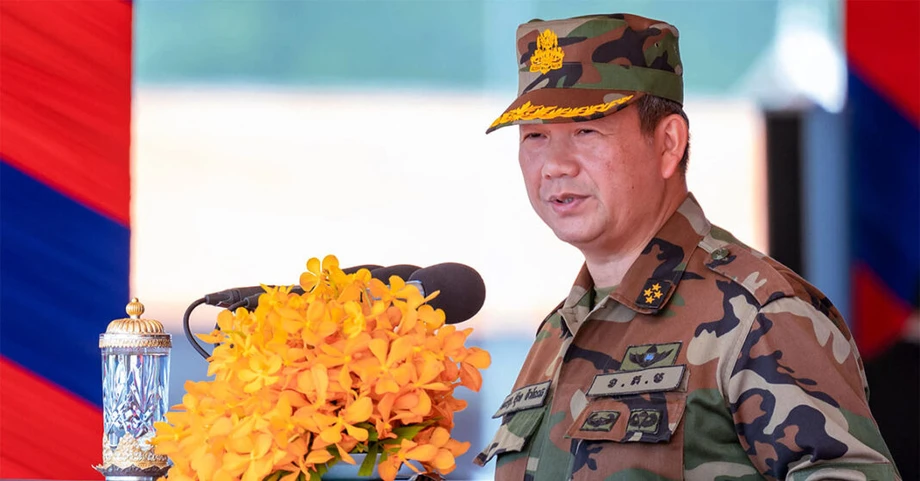
Hun Manet gave a more detailed explanation of that approach on October 30, 2026, while distributing rice seeds and food supplies to people affected by flooding in Battambang province. He said Cambodia would seek to recover territory through diplomatic and legal mechanisms rather than war, putting the lives of civilians and soldiers at the centre of that choice.
Hun Manet calls for a settlement that lasts
Hun Manet argued that stopping a battle is only part of resolving the border dispute. He called for negotiations, formal boundary demarcation and legal resolutions that could reduce the risk of fighting returning.
The prime minister explained why he considered talks essential to ending repeated conflict:
Negotiations to end a war are intended to prevent it from recurring. They involve striving for peaceful solutions, conducting formal demarcations and pursuing legal resolutions that ensure stability. War cannot be used to end a war.
Formal demarcation means identifying and marking an agreed boundary on the ground. For people living near disputed areas, a durable agreement would help determine where they can farm, travel and maintain their homes without facing another sudden confrontation.
Hun Manet also answered criticism that Cambodia's preference for diplomacy showed weakness. He said soldiers, national police and military police had demonstrated their commitment to defending the country, while the government sought to avoid further unnecessary fighting.
Explaining that decision, the prime minister said:
We prioritise diplomatic and legal avenues to resolve issues because the lives of our citizens and soldiers are precious.
Four approaches, with negotiations at the centre
Pheaktra's remarks in Kratie put the government's response into four categories. Military measures concern defending territory; diplomacy involves talks and efforts to secure international support; legal measures concern Cambodia's rights under international law; and information efforts communicate the government's position.
The minister placed particular weight on diplomatic and legal channels. Cambodia's stated aim is to pursue its territorial claims while preventing the dispute from causing further deaths and disruption. The government has not identified a specific court, legal filing, boundary settlement timetable or the precise territory covered by the proposed recovery effort.
Pheaktra had delivered a similar message at the closing of Kratie province's review of its 2025 work and the launch of its work directions for 2026. At that meeting, he said Cambodia had exercised restraint and sought peaceful solutions without yielding to what he described as Thai aggression, threats or pressure.
Those remarks connect the government's public position across the two provincial meetings: Cambodia presents restraint as a choice about how to defend its claims, while maintaining that its sovereignty is not open to negotiation as the price of peace.
The October 2025 declaration remains a reference point
Pheaktra cited the Joint Declaration signed by Cambodia and Thailand on October 26, 2025, as an outcome of diplomatic efforts to end hostilities. The United States and Malaysia witnessed the signing, with Malaysia serving as chair of the Association of Southeast Asian Nations, or ASEAN, at the time.
ASEAN is the regional grouping through which Southeast Asian governments cooperate on political, security and economic matters. Pheaktra said Cambodia had sought support from the organisation, the wider international community and major powers to end the fighting and prevent further loss of life.
The minister nevertheless alleged that Thailand continued to provoke tensions and violate Cambodian sovereignty after the declaration, despite monitoring by the ASEAN Observer Team. He cited armed incursions, occupation of border areas, troop deployments and encroachments.
Pheaktra also rejected allegations that Cambodia had planted new landmines, describing those allegations as false. Thailand's response to his statements was not included in the accounts of the remarks. The accusations about incursions, occupation and responsibility for renewed tensions therefore remain attributed to the Cambodian government.
The declaration and observer presence are central to Cambodia's account because they show that a diplomatic process was already in place. Pheaktra's complaint is that the agreement had not delivered the security Cambodia expected along the border.
Families keep their belongings ready to move
Hun Manet described the effects of continuing uncertainty in unusually concrete terms. In Battambang, Banteay Meanchey and Oddar Meanchey provinces, he said, some families had loaded belongings onto farm tractors so they could leave quickly if fighting resumed.
The prime minister said those preparations remained in place even after two rounds of conflict:
In provinces such as Battambang, Banteay Meanchey and Oddar Meanchey, families have prepared their farm tractors by loading them with belongings, ready to flee at a moment's notice. Even after two rounds of conflict, these preparations remain in place as people wait, not knowing when the next outbreak might occur.
A tractor normally used for farm work had become a means of emergency transport. Hun Manet used that example to describe how families continued to organise daily life around the possibility of another evacuation.
His October 30 appearance was itself concerned with another pressure on rural households: flooding. He was distributing rice seeds and food supplies in Battambang when he discussed the border. For residents trying to restore farming and household routines, the prospect of renewed fighting adds another source of insecurity.
Hun Manet said people on both sides of the border were left digging trenches and waiting without confidence about when another clash might begin. His stated goal was a settlement that would allow them to stop preparing for the next emergency.
Damage extends beyond military positions
Pheaktra said the conflict had displaced more than half a million people. In his remarks at the provincial annual review meeting, he also described civilian deaths, injuries and disabilities, along with deaths among Cambodian soldiers and national police guarding the border.
The minister listed homes, pagodas, schools, health centres and public infrastructure among the places damaged or destroyed. He also named the World Heritage site of Preah Vihear Temple and other ancient Khmer monuments. He attributed that destruction to Thai military aggression.
Damage to those places affects different parts of daily life at once. A damaged home leaves a family needing shelter; a damaged school interrupts education; and a damaged health centre makes access to treatment harder. The minister's account describes a civilian recovery burden extending well beyond the immediate fighting.
Hun Manet also pointed to the economic effects of conflict. He said fighting closes borders, stops trade and consumes ammunition, while leaving residents uncertain about whether normal activity can continue.
For border communities, the government's diplomatic objective therefore has a practical meaning: keeping crossings and commerce functioning, protecting public services and giving families enough confidence to stay at home. Pheaktra said Cambodia was trying to maintain economic, social, commercial and investment activity while defending its territory.
How the government's position developed
The statements span an agreement in 2025 and several government meetings and public remarks linked to 2026. Together, they show the connection Cambodian leaders draw between territorial defence, international engagement and civilian protection.
- October 26, 2025: Cambodia and Thailand signed a Joint Declaration witnessed by the United States and Malaysia, according to Pheaktra.
- At Kratie's review of its 2025 work and launch of its 2026 directions: Pheaktra said Cambodia had pursued peaceful solutions while resisting pressure, and alleged continued violations after the declaration.
- At the review of government working groups for the third quarter of 2026: Pheaktra said Cambodia would not trade territorial integrity for peace and outlined military, diplomatic, legal and information measures.
- October 30, 2026: Hun Manet said in Battambang that Cambodia would pursue recovery of territory through diplomatic and legal mechanisms rather than war.
Pheaktra's formulation sets out the government's position on territory. Hun Manet's remarks explain its preferred means of pursuing that position and the human costs it says it wants to avoid. The immediate challenge is turning agreements and negotiations into security that residents can rely on in their homes, fields and border communities.
Key Points
- Cambodia says it will defend its territorial integrity while pursuing peaceful solutions to border disputes.
- Pheaktra outlined military, diplomatic, legal and information measures in response to Thailand's border actions.
- Hun Manet called for negotiations, formal boundary demarcation and legal resolutions on October 30, 2026.
- Pheaktra alleged continued violations after the October 26, 2025, Joint Declaration and said more than half a million people had been displaced.
- Hun Manet said families in three border provinces kept belongings on tractors so they could flee renewed fighting.