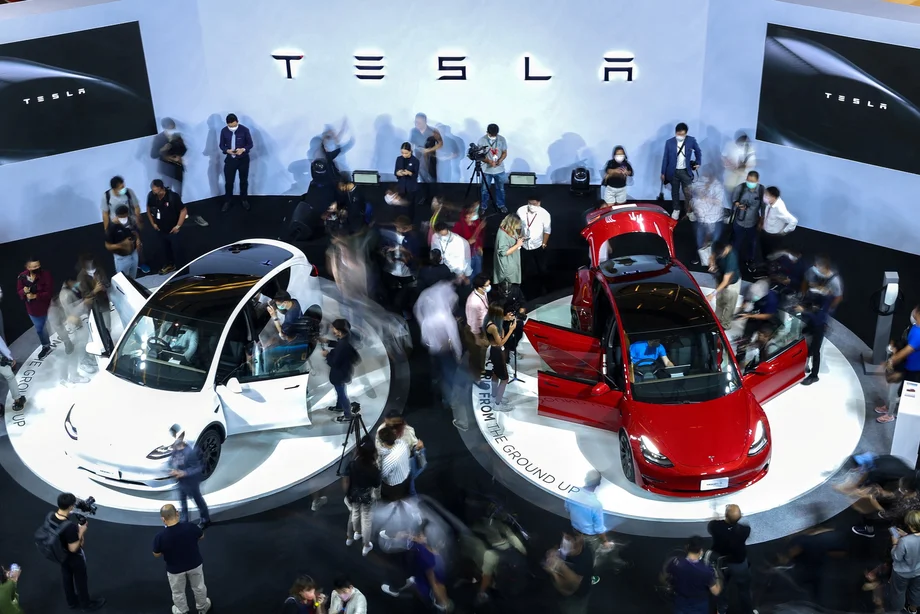
Tesla starts building its Vietnam operation
Tesla began recruiting five senior employees in Vietnam on October 28, 2026, following the registration of a company in Ho Chi Minh City with 77.667 billion dong, about $3 million, in charter capital. Its first hires would cover sales, servicing, personnel, purchasing and charging development, the main functions needed to start selling and supporting cars.
Contents
- Tesla starts building its Vietnam operation
- What the company registration and jobs reveal
- Vietnam already has a large electric car market
- VinFast's lead extends beyond electric vehicles
- Taxi fleets strengthen the domestic rival
- Charging access could shape Tesla's reach
- Imported cars face a different cost equation
- Premium buyers are the likely starting point
- The milestones behind a possible launch
- Key Points
The American automaker is preparing to enter a country where electric vehicles already account for nearly 40% of new car sales. Its biggest challenge will be VinFast, which controls about 92% of Vietnam's electric vehicle market, according to securities company HSC, and has access to a nationwide network of more than 150,000 charging ports.
Ricky Ip, Tesla's recruitment representative for the Asia Pacific region, announced the recruitment drive on X:
Tesla is officially coming to Vietnam – and we're hiring.
Tesla has not announced a sales launch date, vehicle lineup, prices, showroom locations or the identity of its Vietnam country manager. The recruitment nevertheless gives a detailed picture of the operation it is assembling, including a role dedicated to finding and securing charging sites.
What the company registration and jobs reveal
Tesla Motors Vietnam LLC was established on September 11, 2026, with its registered office at Me Linh Point Tower, 2 Ngo Duc Ke Street, in Ho Chi Minh City. Its registered activities include vehicle imports, wholesale and retail sales, parts and equipment distribution, and related export activities.
David Jon Feinstein is listed as company chairman and Isabel Ching Fan as general director. Charter capital is the capital registered for the business; Tesla has not announced a broader investment budget for Vietnam.
The five advertised positions are Sales Manager, Service Manager, HR Business Partner, Purchasing Manager and Project Developer, Charging. All are full time roles. Together, they cover the people, premises, vehicle handovers and support services that customers would need once sales begin.
The sales manager would report to a country manager and oversee sales locations and vehicle deliveries. The country manager position is absent from the five vacancies. The purchasing manager would work within Tesla's regional indirect procurement team, while the human resources role also includes office and facilities responsibilities.
Tesla has used recruitment to prepare for other Southeast Asian launches. In Thailand, a hiring drive in September 2022 was followed by the opening of orders three months later. Vietnam's recruitment is another preparatory step, with its own commercial timetable still to be announced.
Vietnam already has a large electric car market
Vietnam became Southeast Asia's largest electric car market in 2025, according to the International Energy Agency's Global EV Outlook 2026. Electric car sales more than doubled that year, lifting their share of new car sales to nearly 40%.
The change has been rapid. Electric cars had only a marginal presence in Vietnam in 2020. By 2025, roughly four out of every 10 new cars sold were electric, compared with about one in four worldwide and nearly one in five across Southeast Asia.
Southeast Asian electric car sales exceeded 500,000 in 2025. Thailand, the region's second largest market, recorded about 140,000 sales, an increase of 70%, with electric models making up nearly a quarter of new car purchases.
Vietnam's attraction for Tesla is therefore different from that of a market where buyers are just discovering electric vehicles. Consumers already see them on roads, in taxi fleets and at charging stations. Tesla's task is to win a place in that established market.
The IEA projects that electric cars could account for more than 80% of Vietnam's new car sales by 2035. That is a projection of future purchases. Separately, the Vietnam Automobile Manufacturers' Association projects about 1 million electric cars on the country's roads by 2028 and 3.5 million by 2040.
VinFast's lead extends beyond electric vehicles
VinFast delivered 177,697 vehicles in Vietnam during the first nine months of 2026. Against a national new car market of about 495,000 vehicles, that amounts to approximately 36% of all sales, including petrol and diesel cars.
The 36% figure measures VinFast's position across the whole car market. HSC's estimate of about 92% measures its share within the electric vehicle market. Together, the figures show how strongly one domestic manufacturer has shaped Vietnam's shift to electric driving.
VinFast's nine month deliveries exceeded the combined 175,136 vehicles sold by Toyota, Hyundai, Mitsubishi, Ford and Kia over the same period. Its total was also 2,598 vehicles above the 175,099 it delivered in Vietnam during the whole of 2025, with three months of 2026 still remaining.
September deliveries reached 23,624 vehicles, up 17% from August, according to VinFast. The company said September was its 25th consecutive month as Vietnam's leading car brand. It held 37.7% of the total market that month, and its models occupied the five highest sales positions.
The VF 3, a small electric crossover launched at less than $13,000, was Vietnam's bestselling vehicle for the year to that point. Other important contributors included the VF 5 and Limo Green. Tesla would enter a market where affordable domestic models already set many buyers' expectations.
Taxi fleets strengthen the domestic rival
VinFast's position also rests on businesses connected to its chairman, Pham Nhat Vuong, and the wider Vingroup group. GSM, the electric taxi and ride hailing company behind Xanh SM, takes a significant share of VinFast's deliveries.
Fleet purchases give VinFast a substantial customer alongside individual households. They also put its vehicles into daily public use, where passengers can experience electric travel without first buying a car. The precise fleet share of the 177,697 deliveries was not specified.
Koketso Tsoai, a senior automotive analyst at BMI, part of Fitch Solutions, identifies domestic brand recognition, the Vingroup business network, Green SM taxi operations and extensive service support as advantages for VinFast.
For Tesla, competition therefore reaches beyond the vehicle itself. A buyer can compare purchase prices, but also the convenience of repairs, the availability of charging and confidence in a brand already visible throughout the country. Tesla's service manager vacancy shows that customer support is part of its preparations from the start.
Charging access could shape Tesla's reach
V-Green operates Vietnam's dominant charging network, with more than 150,000 ports nationwide, principally serving VinFast vehicles. A port is an individual connection for charging a vehicle; a station can contain several ports.
Supparoek Sawangwong, an ASEAN market analyst at Mobility Global, identifies that network as a major competitive advantage. Independent charging remains limited, making the location and availability of chargers a practical concern for any new manufacturer.
Tesla's charging project developer would identify suitable sites, negotiate with property owners and coordinate approvals involving electricity providers and regulators. Those duties point to preparations for Tesla charging infrastructure, although the company has not announced a Supercharger construction schedule or locations.
Independent operators EV One and Charge+ already provide charging points using the CCS2 standard in Vietnam. CCS2 is a connector standard used to connect a vehicle to charging equipment. Access for Tesla buyers would depend on the specifications of the vehicles officially sold in Vietnam and the arrangements of each charging operator.
V-Green has announced plans to spend about $380 million on 99 stations equipped for very rapid charging. VinFast has also worked with Petrolimex and PVOIL on charging facilities at petrol stations. PV Power, a PetroVietnam unit, has signed an agreement with South Korea's EN Technologies to study and develop charging systems in Vietnam.
Imported cars face a different cost equation
VinFast manufactures vehicles domestically at Hai Phong. Tesla is expected to supply Vietnam from its Shanghai factory, giving the two manufacturers different production and import costs.
Vietnam has retained passenger cars among products subject to high tariffs under the ASEAN China free trade agreement. The duty applicable to Tesla's eventual imports, alongside its choice of vehicle specifications, would help determine the final price paid by customers.
Vietnam's registration fee exemption for battery electric cars, extended through the end of 2030, provides some support for Tesla because it also applies to imported vehicles. A registration fee is a charge associated with registering a newly purchased car, separate from the vehicle's selling price and any import duties.
The exemption gives both imported and locally produced battery electric cars a benefit. Tesla would still have to set prices against domestic alternatives such as the VF 3, which entered the market below $13,000, and against VinFast's existing service and charging coverage.
Premium buyers are the likely starting point
Analysts expect Tesla to begin with the Model 3 sedan and Model Y SUV, aiming initially at customers with higher incomes. Those expectations describe a likely strategy rather than an announced product lineup.
Peter Richardson, vice president and research director at Counterpoint Research, sees Tesla's global brand, technology and software capabilities as attractions for premium buyers, particularly people interested in technology.
Sawangwong suggests the Model 3 could compete near the premium end of the market, while the Model Y could become Tesla's main seller among SUV buyers. Reaching a much larger audience would require more competitive pricing or a cheaper model.
Tsoai's assessment puts the central commercial challenge simply: Tesla is entering a country where demand for electric vehicles already exists. It must persuade customers that its technology, brand and ownership experience are worth paying more for than domestic alternatives.
The milestones behind a possible launch
Tesla's preparations have moved from establishing a legal business to recruiting the managers needed to operate it. The sequence provides a clearer picture than a single hiring announcement:
- 2025: Vietnam became Southeast Asia's largest electric car market, with electric vehicles accounting for nearly 40% of new car sales.
- September 11, 2026: Tesla Motors Vietnam LLC was established in Ho Chi Minh City with 77.667 billion dong in charter capital.
- September 2026: VinFast delivered 23,624 vehicles, bringing its total for the first nine months to 177,697.
- October 28, 2026: Ricky Ip announced Tesla's Vietnam recruitment drive for five full time positions.
- End of 2030: Vietnam's extended registration fee exemption for battery electric cars is scheduled to run through this date.
The practical work now described in Tesla's vacancies includes securing charging sites, organising sales and delivery operations, arranging purchasing and building a service team. For prospective customers, those preparations will matter alongside the eventual vehicle prices: they determine where a car can be collected, maintained and charged.
Key Points
- Tesla has registered a Vietnam company and begun hiring for sales, service, personnel, purchasing and charging development.
- VinFast controls about 92% of the electric vehicle market and accounted for roughly 36% of all new car sales in the first nine months of 2026.
- Vietnam's electric car sales more than doubled in 2025, making it Southeast Asia's largest market.
- VinFast benefits from domestic production, affordable models, taxi fleet demand and access to more than 150,000 charging ports.
- Analysts expect Tesla to target premium buyers first, while import costs and charging access shape its competitiveness.
- The registration fee exemption for battery electric cars runs through the end of 2030 and includes imported vehicles.