A powerful start across 448 Japanese theaters
Godzilla Minus Zero opened in Japan on November 3, 2026, with box office revenue by 11 a.m. reaching 201% of the opening day comparison for Godzilla Minus One, according to figures announced by Toho. The calculation excluded midnight screenings held at 31 IMAX theaters, giving the sequel a strong early start before those receipts were added.
Contents
- A powerful start across 448 Japanese theaters
- What the 201% figure means
- Yamazaki's nervous night before release
- The cast sees audiences returning
- A family faces another disaster in 1949
- King Ghidorah brings a different scale of threat
- New characters join the response
- An Oscar winning team and an IMAX launch
- Key Points
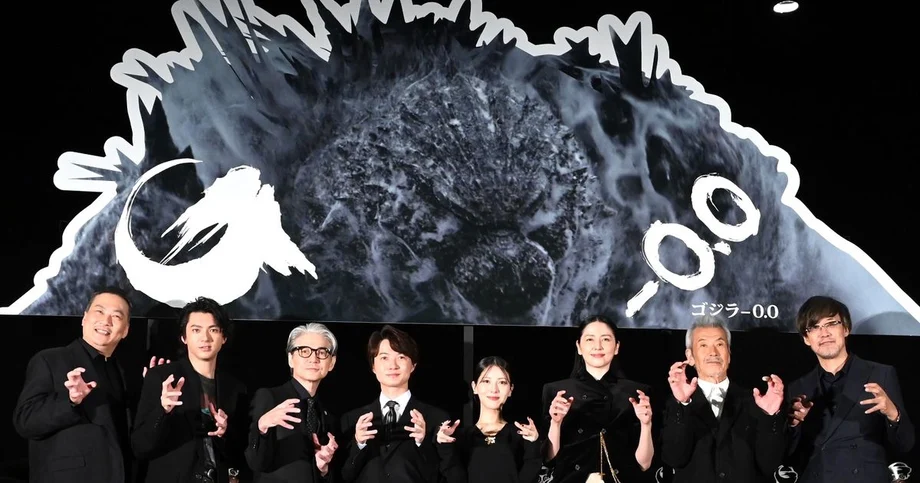
The film launched at 448 theaters nationwide, comprising 383 standard locations and 65 IMAX locations. At TOHO Cinemas Roppongi Hills in Tokyo, director Takashi Yamazaki joined returning stars Ryunosuke Kamiki and Minami Hamabe as the cast learned that the opening comparison had passed twice the level of their previous film.
Godzilla Minus One, released in Japan on November 3, 2023, ultimately earned 7.65 billion yen domestically. Its sequel brings back the survivors of that film, adds Masami Nagasawa and Min Tanaka to the cast, and introduces King Ghidorah into Yamazaki's vision of Japan recovering from World War II.
The opening also puts a possible domestic total of 10 billion yen into focus. Reaching that level would require 2.35 billion yen more than the predecessor earned, an increase of about 31%. For the filmmakers, the immediate news was simpler: audiences were arriving in large numbers, and a director who had spent the previous night searching for reactions could finally see their faces.
What the 201% figure means
Toho's figure was an update issued at 11 a.m. on opening day. Expressed another way, 201% means just over twice the comparison figure for Godzilla Minus One, or a rise of 101%. A complete opening day total in yen was not announced at the event.
The available opening day report specifies the November 3, 11 a.m. cutoff and the exclusion of midnight screenings, but does not identify the basis of the comparison or provide a specific box office total in yen.
The release calendar gives the comparison useful context. Godzilla Minus One opened on a Friday, while Godzilla Minus Zero opened on a Japanese public holiday. A holiday gives more people an opportunity to attend daytime screenings, helping explain why the sequel could draw particularly strong business early in the day.
The 7.65 billion yen figure belongs to the previous film's completed Japanese theatrical run. The sequel's immediate milestone is its opening pace; its eventual earnings will depend on attendance across the rest of its release, including how well it continues to attract audiences after the opening rush.
IMAX also accounts for a substantial part of the launch. Its 65 locations make up about 14.5% of the 448 theaters showing the film. Midnight screenings took place at 31 of those IMAX locations, almost half of the IMAX venues, and their exclusion gives readers a precise boundary for the announced comparison.
Yamazaki's nervous night before release
Takashi Yamazaki returned as director, screenwriter and visual effects supervisor, carrying responsibility for both the human story and the creatures surrounding it. At the Tokyo event, he described an anxious approach to opening day, repeatedly searching online for comments about the film and checking theater seating plans.
Yamazaki told the audience that the attention had become difficult to stop following. In comments translated from Japanese, the director said:
I couldn't stop searching for reactions online since last night.
The director explained that his nervousness had grown as release approached. People were showing enthusiasm, but he was waiting to discover whether the finished film would satisfy them. Seeing the audience at the event brought relief because he felt the film was reaching viewers.
Seat reservations supplied another immediate measure of interest. Yamazaki said he had been checking different theaters and finding full screenings. He also described the emotional effect of seeing only scattered reservations, explaining why opening day could be frightening even for a filmmaker returning after a major success.
The cast sees audiences returning
Ryunosuke Kamiki, who again plays Koichi Shikishima, reacted to the box office announcement with surprise and gratitude. Speaking about the result and the enthusiasm surrounding the release, the actor said:
Twice as much? I can only be grateful.
Kamiki said the response conveyed how deeply audiences loved Godzilla and that the energy around this release felt different. He also helped turn the event into a celebration of the director, prompting the audience to chant Yamazaki's given name, Takashi, when the filmmaker appeared.
Yuki Yamada, returning as Shiro Mizushima, described finding sold out screenings when he checked theater websites. His social media feeds and television viewing, he said, seemed to be filled with Godzilla. Those observations echoed Yamazaki's account of watching reservations fill.
The gathering brought together Kamiki, Hamabe, Yamada, Mio Tanaka, Nagasawa, Min Tanaka, Hidetaka Yoshioka and Yamazaki. Their comments moved between excitement about the opening and memories of making a film that asks familiar characters to face another catastrophe.
A family faces another disaster in 1949
Godzilla Minus Zero takes place in 1949, during Japan's recovery from World War II, two years after the events of Godzilla Minus One. One release description instead puts the interval at three years. The 1949 setting and the two year interval also appeared in the earlier account of the sequel's story.
Kamiki's Koichi Shikishima now has a family to protect. The actor described playing two feelings at once: the strength that comes from having people worth defending, and the fear of losing them. That gives the new monster attacks a personal cost beyond the destruction of streets and buildings.
Minami Hamabe returns as Noriko, Shikishima's wife. Because Noriko suffered serious injuries in the previous film, Hamabe said she had expected a sequel might leave her out or explain her later life through narration. Instead, she found herself with a larger presence in the new film.
The return continues the family story established before release. An earlier account of the sequel's family story described Koichi, Noriko and their adopted daughter Akiko trying to protect the home they had built while a new attack expanded the danger beyond Godzilla alone.
For these characters, recovery means having something concrete to lose. Kamiki's description of Shikishima connects the fear of another monster attack to the ordinary wish to keep a family safe after years of upheaval.
King Ghidorah brings a different scale of threat
King Ghidorah, the giant monster with three heads, appears alongside Godzilla in the sequel. The Tokyo event made that presence part of its presentation: a monster roar sounded and Ghidorah's silhouette appeared on the screen.
Kamiki described an instinctive reaction when he saw the creature in the film. Recalling its power, the actor said:
The moment I saw it, I thought we couldn't win.
Hamabe said she had been surprised to learn that a Godzilla sequel would also include Ghidorah. Her first thoughts concerned both the characters and the production: how anyone could fight such a creature, and how the filmmakers would shoot those scenes.
Yamazaki's response was more openly delighted. He described Ghidorah as a monster he loved and said that including it fulfilled a wish. Kamiki recalled the director happily discussing the creature and its necks during production, a detail that brought the conversation back to the filmmaker's own enthusiasm for Godzilla's world.
The new opponent changes the scale of the confrontation while the returning family keeps the danger grounded in individual lives. The cast's comments point to that balance: amazement at the creature's size, followed immediately by concern about what the people facing it could possibly do.
New characters join the response
Masami Nagasawa plays Makoto Aoyama, a gifted meteorologist assigned from a meteorological observatory to an office handling major disasters. Her role brings weather expertise into the human response to the unfolding threat.
The performance marks Nagasawa's return to a Godzilla film after 22 years, following Godzilla Final Wars in 2004. At the opening event, she spoke enthusiastically about scenes that left her character dirty and battered, saying that the physical demands made her feel energized and more involved in the performance.
Min Tanaka joins as biologist Kanji Murakami. Tanaka, who is also a dancer, described a change from the restrained performances he had often given before. This role asked him to express joy, anger, sorrow and pleasure as fully as he could, and he said he discovered that heightened emotion could make him tremble.
Hidetaka Yoshioka returns as Kenji Noda. He recalled a scene opposite Kamiki in which the younger actor proposed a dialogue change on the day of filming. Together, those recollections show the work behind the spectacle: new specialists enter the story, while returning actors continue shaping relationships established in the first film.
An Oscar winning team and an IMAX launch
Godzilla Minus Zero follows a film that won the Academy Award for Visual Effects at the 96th Academy Awards, the first Asian film to receive that award. Yamazaki again combines writing and directing with supervision of the visual effects, linking the sequel's dramatic choices to the design of its destruction and creatures.
The new film is described as the first Japanese production shot using IMAX certified digital cameras. That certification concerns the capture equipment used in making the film. The launch across 65 IMAX theaters gives audiences a corresponding large screen option alongside the much wider standard release.
November 3 also carries a specific place in the franchise's history: the original Godzilla opened in Japan on that date in 1954. The sequel therefore arrived on Godzilla Day, three years after Godzilla Minus One used the same release date.
The release sequence brings together several milestones:
- November 3, 2023: Godzilla Minus One opens in Japan, eventually earning 7.65 billion yen domestically.
- 2024: Godzilla Minus One wins the Academy Award for Visual Effects.
- November 3, 2026: Godzilla Minus Zero opens at 448 Japanese theaters, with its 11 a.m. comparison reaching 201% of its predecessor's opening day figure.
- November 6, 2026: The North American theatrical opening is scheduled to follow the Japanese launch.
The next box office milestone is a full opening result, followed by the film's ability to keep drawing viewers beyond the holiday. The immediate achievement is a launch that brings a larger monster confrontation, familiar characters and a much stronger opening comparison into the same release.
Key Points
- Toho announced an opening comparison of 201% against Godzilla Minus One at 11 a.m. on November 3.
- The calculation excluded midnight screenings at 31 IMAX theaters.
- The Japanese release spans 448 theaters, including 65 IMAX locations.
- Godzilla Minus One finished its domestic run with 7.65 billion yen.
- Kamiki and Hamabe return, while Nagasawa and Min Tanaka join the cast.
- King Ghidorah appears in the sequel, set in Japan during its recovery from World War II.
- The North American opening is scheduled for November 6, 2026.