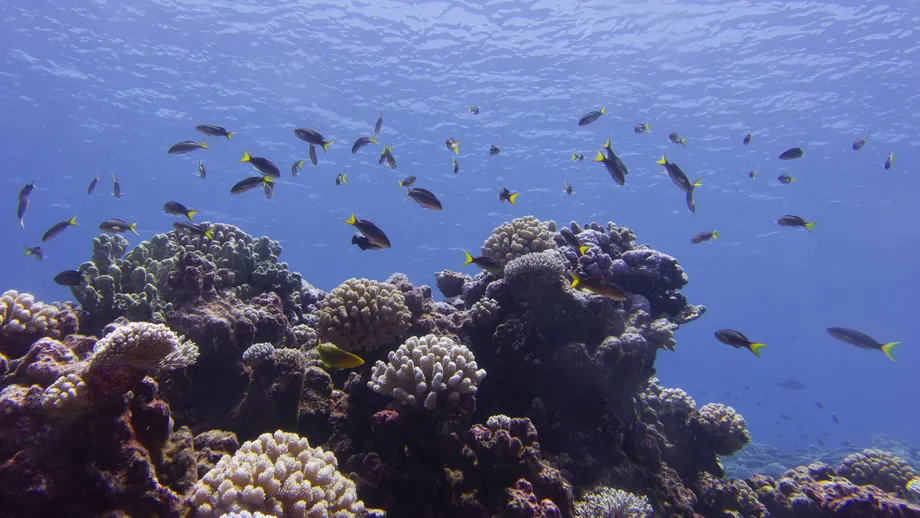
A global warning with Australia at its centre
All 17 Australian shallow water coral reef ecosystems face an extremely high risk of collapse by 2075, according to the first global assessment of coral reefs under the International Union for Conservation of Nature (IUCN) Red List of Ecosystems. Across the world, 96 percent of reef ecosystems assessed were classified as Critically Endangered.
Contents
- A global warning with Australia at its centre
- What happens when a reef collapses?
- Why future warming changes the result
- Australian monitoring shows losses already happening
- A succession of bleaching events
- Resilience offers a chance, with limits
- Fishing and pollution add pressure to heat
- What reef loss means for people and species
- Conservation decisions have a nearer deadline
- Key Points
The assessment, released on 22 October 2026, covers 188,362 square kilometres of reefs across 127 tropical and subtropical marine ecoregions. Its most revealing comparison concerns the warming still ahead: using observed changes over the past 50 years alone, 24 percent would be Critically Endangered. Including projected climate impacts increases that share to 96 percent, four times as much.
The Great Barrier Reef, Southeast Asia and the western Pacific's Coral Triangle, the Mesoamerican Barrier Reef System and the Red Sea reefs all fall within the highest threat category. Increasing ocean heat is the most widespread and severe pressure, shortening the intervals between bleaching events and leaving corals less time to recover.
The IUCN global assessment draws on decades of ecological monitoring and satellite observations of ocean temperatures. More than 250 experts contributed, covering reefs in more than 80 countries and territories.
For coastal communities, the stakes extend from the fish people eat to the businesses that employ them and the reefs that help protect their shores. The researchers say rapid emissions cuts and stronger local conservation can still change the outcome, because much of the projected damage lies ahead.
What happens when a reef collapses?
Hard corals build the living foundation of a reef. Their structures create places where fish shelter, small animals feed and many species reproduce. Ecosystem collapse occurs when those corals largely disappear and algae, rubble, sponges and other organisms take over.
The resulting habitat supports a different, poorer community of marine life. Changes spread through the food web, affecting creatures ranging from small invertebrates to groupers, turtles and sharks. A reef can lose its ability to function even while some individual corals survive.
Critically Endangered means an ecosystem faces an extremely high risk of collapse. The assessment evaluates that risk through historical observations, current conditions and future warming projections. The 2075 horizon describes the period of danger assessed by the researchers, rather than a single year when every reef would change at once.
Four of the 127 ecoregions were classified as Data Deficient because information was insufficient. The Western Galápagos Islands were already classified as Collapsed following the 1982–83 El Niño event. IUCN says those five cases account for the ecosystems outside the 96 percent classified as Critically Endangered.
Why future warming changes the result
The researchers used the Intergovernmental Panel on Climate Change's middle of the road scenario, which projects atmospheric warming of about 2.7°C above preindustrial temperatures by 2100. Continued warming of the ocean surface exposes reefs to more frequent and damaging heat stress.
Corals live with tiny algae inside their tissues. The algae supply much of their food and colour. When the water becomes too hot, corals can expel these partners and turn white, a process called bleaching. Corals can recover if conditions improve quickly enough; prolonged heat can kill them.
Repeated marine heatwaves make recovery harder. Surviving corals need time to grow and reproduce, while young corals need suitable places to settle. Another damaging summer can interrupt that rebuilding before a reef has regained its strength.
Dr Mishal Gudka, the assessment's scientific lead, research director at CORDIO East Africa and a University of Melbourne research fellow, described the danger directly:
The future threat of climate change is looming and severe, and that poses a very high risk to the survival of these ecosystems.
Australian monitoring shows losses already happening
The Great Barrier Reef's recent monitoring record shows how quickly coral gains can reverse. The Australian Institute of Marine Science's 2024/2025 condition report, published on 6 August 2025, recorded substantial declines across its northern, central and southern regions after the 2024 mass bleaching event.
The findings came from surveys of 124 reefs between August 2024 and May 2025. Scientists estimated hard coral cover, the proportion of seafloor occupied by living hard coral, using observations collected while an observer was towed around reefs. The regional results were:
- Northern Great Barrier Reef: average coral cover fell from 39.8 percent in 2024 to 30.0 percent in 2025, a relative decline of 24.8 percent.
- Central Great Barrier Reef: cover fell from 33.2 percent to 28.6 percent, a relative decline of 13.9 percent.
- Southern Great Barrier Reef: cover fell from 38.9 percent to 26.9 percent, a relative decline of 30.6 percent.
The southern region fell below its historical average of 29.3 percent. Northern and central coral cover remained above their respective historical averages, despite the losses. Across individual reefs, declines reached as much as 70.8 percent.
AIMS identified bleaching as the main cause of coral mortality, alongside damage from cyclones, freshwater flooding and crown-of-thorns starfish. Fast growing Acropora corals, which had helped reefs recover between 2017 and 2024, were among the most severely affected.
Substantial coral cover remained across all three regions. Among the 124 reefs surveyed, 48 percent lost coral cover, 42 percent showed no net change and 10 percent gained cover. Most stable or improving reefs were in the central region, illustrating how differently nearby reefs can respond to the same broad period of stress.
A succession of bleaching events
The 2024 bleaching event had the largest geographical footprint ever recorded on the Great Barrier Reef. High to extreme bleaching occurred across all three regions. Another mass bleaching event followed in 2025, the sixth since 2016, concentrated in the northern Great Barrier Reef, while reefs across northwestern Australia were also affected.
The recent sequence helps explain why researchers are concerned about shrinking recovery periods:
- 2023: The fourth global mass bleaching event began on reefs in the Northern Hemisphere.
- April 2024: The US National Oceanic and Atmospheric Administration and the International Coral Reef Initiative declared the global event.
- August 2024 to May 2025: AIMS surveyed 124 Great Barrier Reef locations to measure coral condition after the 2024 bleaching.
- March 2025: Aerial surveys documented further bleaching in northern and parts of central Great Barrier Reef waters.
- 22 October 2026: IUCN released its global assessment of ecosystem collapse risk through 2075.
During the March 2025 aerial surveys, 41 percent of 162 inshore and middle shelf reefs had medium to high bleaching prevalence. Across all 258 reefs surveyed, including offshore locations, 9 percent had very high prevalence. Those percentages describe different groups of reefs and different bleaching severity levels.
AIMS completed its northern underwater monitoring surveys in December 2024, before the 2025 bleaching began. The agency said the later event's effect on coral cover would be captured in its following annual report. The global IUCN assessment also did not fully account for the damage from the fourth global bleaching event.
Resilience offers a chance, with limits
East Asian reefs demonstrate how future heat changes the outlook even where coral cover has historically been comparatively resilient. Based on observed changes alone, 20 percent of the region's reef ecosystems would be Critically Endangered. Including future climate projections puts all of them in that category.
The northern Red Sea presents another striking example. Its corals have unusually strong tolerance of heat, and recent trends alone would place the ecosystem in the Vulnerable category. Future warming raises the classification to Critically Endangered.
Dr Ben Fitzpatrick, director of Oceanwise Australia and an adjunct research fellow at the University of Western Australia's Oceans Institute, led the Australian assessment. The University of Melbourne statement describes his warning that climate change is increasingly overwhelming gains from local management.
Fitzpatrick said:
Unfortunately, these climate change impacts are only expected to intensify under current climate change trajectories, making the risk of collapse for all our coral reefs exceptionally high,
Gudka also pointed to the possibility of surviving reefs, while urging action to give them the best chance:
Pockets of surviving, resilient coral reefs can still remain in the future, so we must do everything within our reach to set them up for success
Fishing and pollution add pressure to heat
Overexploitation of important fish groups threatens 63 percent of coral reef ecosystems, according to IUCN. The affected regions include East Asia, the western Indian Ocean, the Caribbean and Brazil.
Parrotfish graze on algae that can otherwise occupy space needed by recovering corals. Predators such as groupers help maintain the balance of the food web. Depleting these populations changes how reefs function and makes recovery from heat stress harder.
Coastal development, pollution, intensive tourism, industrial activity, aquaculture, storms, freshwater flooding and crown-of-thorns starfish outbreaks add further damage. These pressures can occur together, leaving a reef weakened before a marine heatwave arrives.
Emily Nicholson, who leads the IUCN Red List of Ecosystems Thematic Group within its Commission on Ecosystem Management, set out the practical conservation response:
Effective conservation can still make a real difference by easing local pressures, expanding marine protections and restoring key fish stocks.
Cleaner coastal water and sustainable fishing address pressures that national and local authorities can act on directly. Reducing greenhouse gas emissions addresses the warming that increasingly affects reefs across borders, including places with strong local protection.
What reef loss means for people and species
Coral reefs occupy less than 1 percent of the ocean floor but support around a quarter of all marine species. Their concentration of life makes their decline especially consequential for fishing communities, tourism businesses and coastal settlements.
Fish lose feeding areas, shelter and breeding grounds as coral structures deteriorate. Communities that depend on reef fisheries face damage to a source of food and income. Tourism operators depend on living reefs to attract visitors, while reef degradation can weaken the natural protection that coastlines receive from waves and storms.
A companion IUCN reassessment examined 892 species of reef building coral and found 44 percent threatened with extinction. The species assessment measures the danger of individual kinds of coral disappearing. The ecosystem assessment examines whether whole reefs can continue functioning, including the relationships between corals, fish and other organisms.
IUCN Director General Dr Grethel Aguilar linked ecological damage to human livelihoods:
Their decline is depriving countless species of the food, shelter and breeding grounds they depend on, while threatening the safety and livelihoods of coastal communities and undermining key economic sectors such as fisheries, aquaculture and coastal tourism,
Conservation decisions have a nearer deadline
The assessment was coordinated by IUCN, its Commission on Ecosystem Management, the University of Melbourne and CORDIO East Africa, working with regional partners in the Global Coral Reef Monitoring Network. Its findings place climate action, fisheries management, water quality and habitat protection within the same urgent task.
Governments already have a nearer deadline under the Kunming-Montreal Global Biodiversity Framework, adopted in 2022. Its commitments include conserving 30 percent of land, inland waters and marine areas by 2030, alongside restoring damaged ecosystems and reducing pollution.
Marine restoration receives a small share of restoration activity. A joint report by the Society for Ecological Restoration and the Secretariat of the Convention on Biological Diversity put more than 90 percent of ecosystem restoration efforts on land, compared with 2 percent in coastal and marine areas.
Andrew Baker, director of the University of Miami's Coral Reef Futures Lab, said emerging restoration technologies could help struggling reefs and buy time for broader changes. Such work sits alongside the emissions cuts, stronger protection and sustained investment urged by IUCN.
Aguilar described the required response:
We know what is needed: ambitious emissions reductions, stronger protection and restoration efforts, and sustained investment in resilient coastal ecosystems and the communities that depend on them.
The gap between 24 percent classified as Critically Endangered from observed changes and 96 percent with projected warming gives the warning its urgency. Much of the assessed risk concerns damage still ahead. Decisions about emissions and local reef pressures will shape how much of that damage occurs.
Key Points
- All 17 Australian shallow water coral reef ecosystems are classified as Critically Endangered, facing extremely high collapse risk by 2075.
- The global assessment covers 127 ecoregions and 188,362 square kilometres of reefs, with 96 percent classified as Critically Endangered.
- Using observed changes alone, 24 percent would fall into that category; future warming raises the figure to 96 percent.
- AIMS recorded substantial Great Barrier Reef coral losses after the 2024 bleaching event, including a 30.6 percent relative decline in southern coral cover.
- Overexploitation of key fish groups threatens 63 percent of reef ecosystems.
- IUCN urges rapid emissions cuts, cleaner coastal waters, sustainable fishing, stronger protection and restoration to give reefs a better chance of survival.