A place for video games among Japan's cultural honours
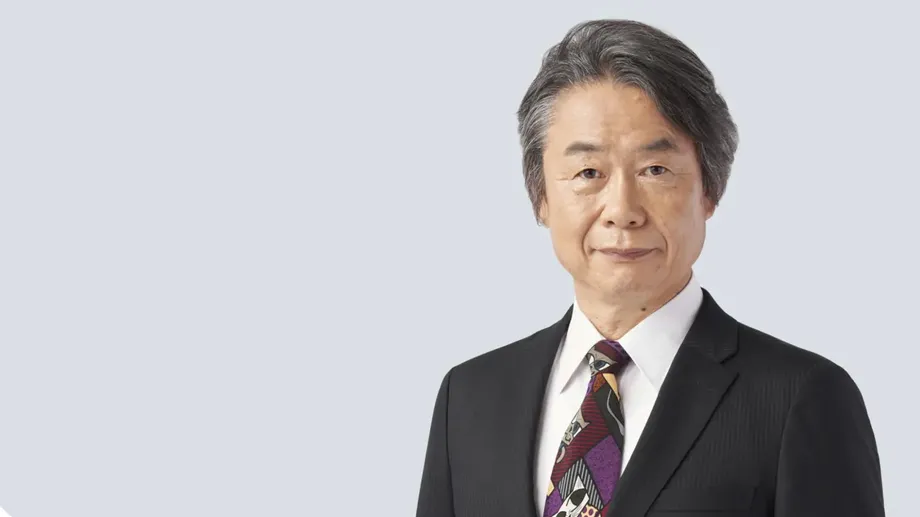
Japan's government selected Nintendo's Shigeru Miyamoto and seven other people for the 2026 Order of Culture on October 23, making the creator of Super Mario the first person from the video game industry to receive the honour. The ceremony is scheduled for November 3 at the Imperial Palace, where the Emperor will present the award.
Contents
- A place for video games among Japan's cultural honours
- Miyamoto shares the recognition with his collaborators
- From industrial design to nearly half a century at Nintendo
- Why simple controls mattered to his work
- How movement helped shape Mario
- Films and theme parks bring the characters to new audiences
- AI can help with tasks, while creators decide what to make
- Lessons from Kyoto, classrooms and museums
- Who else will receive Japan's cultural honours?
- Key Points
Miyamoto was recognised in the field of Media Arts (Gaming). His inclusion places video game creation alongside architecture, literature, music and scientific research in an award established in 1937 to recognise major contributions to Japanese culture.
The government also named 21 People of Cultural Merit, including jazz saxophonist Sadao Watanabe and animation director Rintaro, known for Galaxy Express 999. Their recognition ceremony is scheduled for November 4 at a Tokyo hotel. Miyamoto received that distinction in 2019, seven years before his selection for the Order of Culture.
At a press conference held at Nintendo's headquarters in Kyoto on October 22, ahead of the announcement, Miyamoto, Nintendo's representative director and fellow, described his reaction:
I'm a bit embarrassed.
Miyamoto quickly turned attention to the people behind the games. His career has included creating characters, directing development and working with teams whose contributions turn an idea into something millions of people can play. More recently, those partnerships have extended to films and Super Nintendo World.
The award therefore recognises an individual whose response was to stress collective work. It also gives formal cultural recognition to a medium that Miyamoto helped build from its early commercial years into entertainment familiar to children, parents and grandparents.
Miyamoto shares the recognition with his collaborators
Miyamoto used his remarks to explain why he would accept the honour on behalf of others. Games require many people to make their controls, images, sounds and rules work together, and his statement placed those collaborators at the centre of the occasion.
The Nintendo creator described his approach to accepting the award:
As I always say, I don't make games by myself. This award is the result of working together with many people, so I intend to accept it as a representative of them.
His recent work has brought him into contact with professionals outside game development, including people working on Universal Studios Japan's Super Nintendo World and the Super Mario Bros. films. He said he wanted to share the joy of the award with those collaborators as well.
Miyamoto also described a change within families. When he began making games, relatively few people of his own age played them. Those early players have since become parents and grandparents. Three generations can now recognise the same medium, helping explain his pleasure at seeing games acknowledged as culture.
From industrial design to nearly half a century at Nintendo
Miyamoto was born in 1952 and grew up in Sonobe, now part of Nantan in Kyoto Prefecture. He studied industrial design at Kanazawa College of Art before joining Nintendo in 1977. His work went on to include Donkey Kong, Super Mario Bros., The Legend of Zelda and Pikmin.
Nintendo appointed him to lead its newly established Information Development Section in 1983. He later became general manager of the Entertainment Analysis and Development Division in 1998 and senior managing director in 2002. In 2015, he moved from the division's general management into a creative fellow role.
At the press conference, Miyamoto used 50 years as a convenient description of his career in games. His 1977 arrival at Nintendo puts the October 2026 announcement roughly 49 years later, approaching the half century mark.
- 1977: Miyamoto joined Nintendo after studying industrial design.
- 1983: He began leading Nintendo's Information Development Section.
- 1985: Super Mario Bros. was released.
- 2015: He moved into a creative fellow role.
- 2019: Japan named him a Person of Cultural Merit.
- October 22, 2026: He discussed the Order of Culture at Nintendo's Kyoto headquarters.
- November 3, 2026: The Order of Culture presentation is scheduled at the Imperial Palace.
Why simple controls mattered to his work
Miyamoto identified the transition from the GameCube to the Wii as a period when Nintendo had to confront a practical problem: controllers could feel intimidating to people who had never used them. More buttons and more functions gave experienced players options, while making the first encounter harder for newcomers.
The Wii controller grew from an effort to make that encounter more approachable. Miyamoto described wanting to reach people who were not already interested in games, rather than designing only for an established audience.
His wider concern was the user interface, meaning the controls and signals through which a person operates a device or program. In a game, that includes how a button press moves a character, how quickly the screen responds and how clearly the player understands what happened.
Miyamoto argued that Japanese game developers have built valuable skills by paying close attention to these details. He pointed to ordinary computer menus as another place where design matters: a badly chosen default answer can lead many people to select the wrong option. For him, skills developed through games can make other digital services easier to use.
How movement helped shape Mario
Super Mario Bros. emerged from Miyamoto's wish to make a game in which the screen kept scrolling and the player could keep running. He connected that idea to the childhood experience of looking out of a train window and imagining someone racing across the passing landscape, jumping over obstacles and rivers.
The design brought together activities that were easy to imagine wanting to try: running across land, swimming through water and flying through the air. Its appeal began with movement and the pleasure of controlling it.
Miyamoto also recalled the challenge of finishing the game with Bowser. A solution was to let Mario jump past him and reach an axe that removes the bridge beneath him. The player could overcome the final obstacle through movement and the environment, offering an alternative to direct combat.
Donkey Kong had presented a related communication problem. Players needed to understand why they should travel from one part of the screen to another. The rescue story gave them an immediate reason to climb. Miyamoto's recollections connect the two games through a repeated design task: making a player's goal understandable through actions and visible events.
Films and theme parks bring the characters to new audiences
Miyamoto said he once resisted making films because a movie requires decisions about a character's personality, family and history. Defining those details too tightly could restrict the freedom to invent a different kind of game later.
Fans gradually changed his thinking. He came to recognise that people could love Nintendo's characters even if they did not play their games. Films and theme parks offered ways for those people to spend time with characters originally created for interactive entertainment.
Super Nintendo World and the Super Mario Bros. films now form part of that broader work. Miyamoto described these projects as collaborations with specialists from other fields, extending the circle of people with whom he wanted to share the honour.
Film production is currently a particular interest, he said, while leaving open the possibility that the experience could make him want to create another game. He gave no specific new game announcement or release date at the press conference.
AI can help with tasks, while creators decide what to make
Miyamoto approached generative artificial intelligence by separating creative intention from production work. Generative AI is software that produces material such as text, images or code from instructions. His focus was on the decisions a person makes before and while using such tools.
A creator, he explained, first decides what to build and how its parts should fit together. Many tasks then follow, such as filling gaps, refining details and completing the work. He compared changes brought by AI with earlier changes caused by computers and word processors.
Miyamoto warned that production tasks can be enjoyable enough to create a feeling of accomplishment even when the central idea still needs work. If AI takes on more of those tasks, he suggested, people may spend more attention on what they actually intend to create.
His advice to younger developers followed the same reasoning. Rather than starting with a favourite successful game and asking how to modify it, he urged them to begin with a basic idea for something that might be enjoyable. The important starting point was an original intention, followed by experiments that turn it into an experience another person can understand and enjoy.
Lessons from Kyoto, classrooms and museums
Kyoto remained central to Miyamoto's account of his career. He recalled being told that a designer should go to places such as Italy or New York, yet he continued working in Kyoto. Looking back, he valued having the time and space to develop ideas without constantly chasing trends elsewhere.
Sonobe supplied another lasting influence. Climbing hills, entering rivers and exploring the natural world gave him physical experiences that later informed his judgment as a designer. He described those childhood sensations as part of the foundation of his work, rather than identifying a single local place as the model for a particular game.
Nintendo's handheld systems also gave him opportunities to take interactive design beyond conventional games. He recalled working with Sharp on a classroom system connecting a teacher's computer with Nintendo DS devices used by pupils. Teachers could see answers as children wrote them and communicate directly with them.
Museum applications followed a similar interest in useful interaction. Experiments with handheld explanations of artworks developed into the Nintendo 3DS guide for the Louvre. Miyamoto saw such projects, and the later spread of smartphones, as examples of the boundary between games and other uses of computers becoming less rigid.
He named former Nintendo president Hiroshi Yamauchi and fellow designer Gunpei Yokoi as major influences. Yamauchi encouraged originality rather than direct competition on identical terms, while Yokoi showed him the value of thinking carefully about how to make something already in front of him more entertaining.
Who else will receive Japan's cultural honours?
The other seven Order of Culture recipients represent a wide range of work. They are lighting designer Motoko Ishii, architect Toyo Ito, biological scientist Tsuneyoshi Kuroiwa, French literature scholar Tetsuya Shiokawa, synthetic organic chemist Kenzo Soai, composer and former Agency for Cultural Affairs commissioner Shunichi Tokura, and immunologist Shigekazu Nagata.
Soai was also named a Person of Cultural Merit. The two distinctions have separate ceremonies: the Order of Culture presentation takes place at the Imperial Palace on November 3, Culture Day, while the Cultural Merit ceremony follows at a Tokyo hotel on November 4.
Alongside Watanabe, Rintaro and Soai, the Cultural Merit recipients include poet Kazuhiko Ito, Japanese dancer Michiko Kanze, golfer Ayako Okamoto, conductor Tadaaki Otaka, disability sports promoter Kiyoshi Kakitani, philosopher and ethicist Naotake Kato, magnetic materials scientist Masato Sagawa and Ryukyuan dancer Fusako Shida.
The remaining recipients are Japanese painter Hiroshi Senju, Noh performer Akio Tomoeda, intellectual property law scholar Nobuhiro Nakayama, plant nutrition scientist Naoko Nishizawa, molecular biologist Eisuke Nishida, plant cell biologist Ikuko Nishimura, composer and pianist Ichiro Nodaira, architectural historian and architect Terunobu Fujimori, energy materials chemist Tsutomu Miyasaka and Pia president Hiroshi Yanai.
Key Points
- Japan selected Shigeru Miyamoto and seven others for the 2026 Order of Culture on October 23.
- Miyamoto is the first recipient from the video game industry, recognised in Media Arts (Gaming).
- He said he would accept the honour on behalf of the many people who have worked with him.
- His press conference covered accessible controls, the origins of Mario, films, theme parks and creative intention in an age of AI.
- The Order of Culture ceremony is scheduled for November 3 at the Imperial Palace.
- Twenty one People of Cultural Merit, including Sadao Watanabe, Rintaro and Kenzo Soai, will be recognised at a separate ceremony on November 4.