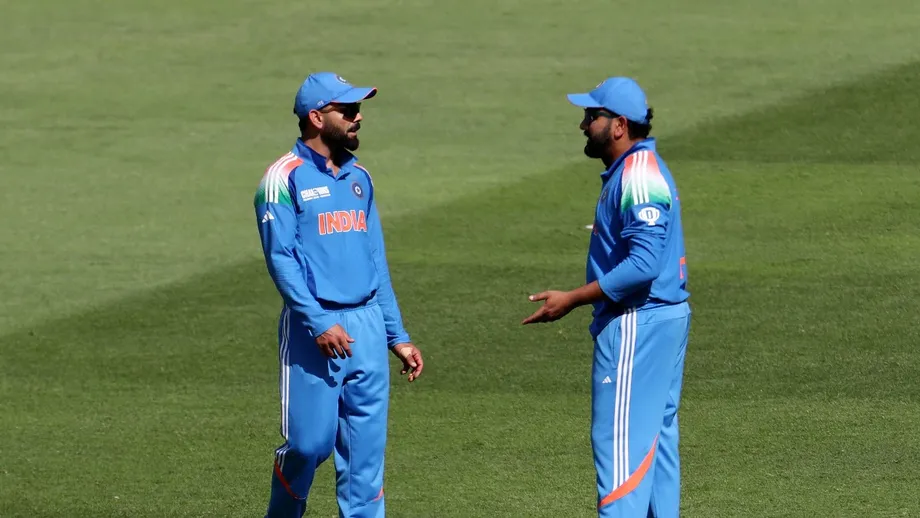
Two senior batters, one selection test
Rohit Sharma will be 40 when the 2027 ODI World Cup begins, and Virat Kohli will turn 39 during the tournament. BCCI president Mithun Manhas says their chances of representing India should depend on fitness, runs and contributions to victories, rather than their birthdays.
Contents
- Two senior batters, one selection test
- Recent runs strengthen their cases
- How the transition reached this point
- Gill can lead with experience around him
- A changing selection panel must make the calls
- Fitness means recovery as well as availability
- Younger players are competing for the same opportunities
- New Zealand brings the next assessment
- Key Points
His comments come ahead of India's tour of New Zealand, which begins on October 22 and includes five one day internationals from November 4 to 15. With both batters now playing only ODIs at international level, those matches will provide another opportunity to strengthen their cases for a tournament scheduled for October 4 to November 21, 2027, in South Africa, Zimbabwe and Namibia.
Manhas, president of the Board of Control for Cricket in India, gave his personal view while placing responsibility for selection with the selectors and coaches.
As far as the BCCI is concerned, we are not in a position to comment, as it all depends on the selectors and the coaches.
He then set out the standard he believes should guide those decisions.
But, from my perspective, fitness and performance should be the criteria for selection, definitely not age. If someone is fit to play, performing well and winning games for the country, that should be the only criterion we focus on.
India's task is to prepare a team capable of winning the World Cup while giving younger players room to develop. Rohit and Kohli bring experience from the side that reached the 2023 final, but their places will depend on how they perform as preparations continue.
No final decision on either player's World Cup selection has been announced. Manhas's position keeps both in contention while leaving the squad choices to the people responsible for assessing form, fitness and team balance.
Recent runs strengthen their cases
Kohli and Rohit enter the discussion with substantial recent scores against the West Indies. India won that ODI series 2-1, with both former captains making centuries.
Kohli struck an unbeaten 139 from 88 balls in Thiruvananthapuram, reaching his 55th ODI hundred and passing 15,000 runs in the format. His innings included nine sixes, combining a major career milestone with rapid scoring.
Rohit made 32, 101 and 92 across the three matches, a total of 225 runs. His century in Guwahati came from 75 balls, followed by 92 from 85 balls in New Chandigarh. He also became the fourth opener to reach 10,000 ODI runs while batting at the top of the order.
Rohit's scores of 101 and 92 accounted for 193 of his 225 runs, about 86% of his series total. Those two innings gave selectors consecutive examples of his ability to make substantial contributions, rather than a single standout performance.
For readers less familiar with cricket, an ODI gives each team a maximum of 50 overs to bat. Selectors therefore consider both how many runs a batter scores and how quickly those runs arrive, alongside the demands of fielding and recovering between matches.
How the transition reached this point
India's leadership change began before the latest debate over World Cup places. Shubman Gill replaced Rohit as ODI captain in October 2025, ahead of a series in Australia, giving India time to prepare a new leader for 2027.
Rohit and Kohli had already stepped away from the other two international formats. Their departures reduced their international schedules while making ODI selection the central question in the final stages of their India careers.
- June 2024: Rohit, Kohli and Ravindra Jadeja retired from T20 internationals after India's World Cup victory.
- March 2025: Rohit and Kohli were part of India's Champions Trophy winning side.
- 2025: Rohit and Kohli retired from Test cricket.
- October 2025: Gill took over the ODI captaincy ahead of three matches in Australia, beginning on October 19 in Perth.
- October and November 2026: The New Zealand tour provides another ODI assessment before the 2027 World Cup.
The earlier Australia selections were reported to have rested on Rohit and Kohli's Champions Trophy performances, with subsequent places dependent on merit. Manhas's latest comments describe a similar approach: assess what players can contribute as the next tournament approaches.
Gill can lead with experience around him
Gill's appointment separates the captaincy decision from the selection of two senior batters. He can develop as India's ODI leader while Rohit and Kohli compete for places as players.
Manhas pointed to Gill's experience captaining Gujarat Titans as useful preparation. He also argued that a captain benefits from having experienced teammates available when a match becomes difficult.
The BCCI president identified Kohli, Rohit and Hardik Pandya as players who could support Gill, with Jasprit Bumrah taking responsibility within the bowling group.
Having Virat, Hardik (Pandya) and Rohit in the side will definitely help him. Then there are the likes of (Jasprit) Bumrah, who could take charge as the bowling captain, while someone else could lead the fielding unit. So, it is all about distributing the workload.
A bowling leader can help discuss plans with bowlers, while another senior player can help organise fielding positions. Gill would remain captain, drawing on teammates who have already dealt with demanding situations.
Manhas described that experience as particularly valuable under pressure.
They have been under pressure, and they have delivered so many times in crunch situations. So, it is a good combination.
A changing selection panel must make the calls
Ajit Agarkar's term as chief selector ended on October 4, with former India spinner Pragyan Ojha initially serving as interim chairman before being appointed permanently on Monday. The panel's own transition adds another element to India's preparations.
The BCCI confirmed Agarkar's departure and Ojha's interim appointment, with Ojha chairing the recent squad selection meeting for India's New Zealand tour. In an October 7 tribute, the board thanked Agarkar for his commitment, conviction and contribution, noting that his tenure, which began in July 2023, included three ICC trophies, two Asia Cup titles and back-to-back Asian Games gold medals.
"The BCCI places on record its appreciation for Mr Ajit Agarkar for his commitment, conviction and contribution during his tenure as Chairman of the Men's Selection Committee," BCCI secretary Devajit Saikia said in a statement.
Manhas praised Agarkar's work and said leaving was his decision. He credited the selection committee's tenure with India's World Cup victories in 2024 and 2026 and the Asia Cup triumph in 2025, while pointing to cooperation between selectors and coaches.
Gautam Gambhir, who became head coach in July 2024, had worked with Agarkar on planning for the 2027 tournament. Earlier accounts of that process described concerns about how India would respond if either senior batter's form declined before the World Cup.
Gill's appointment gave India an established direction for the captaincy during that period. The selectors can now assess Rohit and Kohli's batting places without also having to decide who should lead the side.
Manhas also drew a distinction between introducing a player and bringing someone back into a team.
The first time you are picked for a team, you are picked on promise. When you make a comeback, it is on performance.
Fitness means recovery as well as availability
Rohit's recent injury concerns make fitness a practical part of the selection discussion. For both batters, the requirement extends beyond being able to start a match: they must also field, run between the wickets and recover for the next game.
Manhas said workload planning should account for differences between individuals, rather than applying the same schedule to every player.
Every individual is different. We have to assess what an individual feels, and then we chalk out a plan.
V.V.S. Laxman's participation in selection discussions could help connect those assessments with decisions about the squad. As head of the BCCI's Centre of Excellence and an overseer of India A teams, he follows player fitness and development beyond the senior international side.
Manhas said Laxman's knowledge could help selectors make informed choices, particularly when teams have overlapping assignments and the senior coaching staff are occupied elsewhere.
The age calculation also matters when describing the challenge accurately. Rohit turns 40 on April 30, 2027. Kohli begins the World Cup aged 38 and turns 39 on November 5, during the scheduled tournament. Both would need to sustain their fitness through a competition lasting several weeks.
Younger players are competing for the same opportunities
India's transition extends beyond Rohit and Kohli. Mohammed Shami has moved down the ODI selection order despite strong domestic performances, while younger pace options including Harshit Rana and Gurnoor Brar are being assessed.
Those choices show the broader task facing selectors: maintaining a competitive team now while learning which players could contribute in 2027. Opportunities given to emerging players provide evidence about their readiness for international cricket.
Manhas said India's depth can help manage injuries and simultaneous tournaments. He also argued that competition for places encourages better performances.
For Rohit and Kohli, a strong player pool means their experience sits alongside other candidates' claims. For Gill, it means the team can develop alternatives while retaining senior support where selectors consider it useful.
Domestic cricket is another part of that preparation. Manhas said senior players should appear when available, both to maintain their own form and to give younger teammates the chance to learn alongside them.
New Zealand brings the next assessment
India's New Zealand tour is scheduled to include five T20 internationals, five ODIs and two Tests, starting on October 22. The ODI series from November 4 to 15 is the relevant assignment for Rohit and Kohli because they have retired from the other international formats.
Five matches offer selectors several opportunities to assess batting form, fielding and recovery within one series. They also give Gill further time to lead an ODI side containing senior players who have previously captained India.
Rohit and Kohli's recent West Indies performances give them a strong starting point. The next task is to keep producing useful innings and remain available as India moves closer to the World Cup.
Manhas's comments place those measurable demands at the centre of the discussion. India can retain experienced players and prepare a new generation at the same time, with selection decisions shaped by performances across the months ahead.
Key Points
- BCCI president Mithun Manhas says fitness and performance should guide Rohit Sharma and Virat Kohli's selection, rather than age.
- Final selection decisions rest with the selectors and coaches.
- The BCCI confirmed Ajit Agarkar's departure after his term ended on October 4; Pragyan Ojha initially took over as interim chairman before being appointed permanently on Monday.
- Kohli made 139 not out and Rohit scored 225 runs in India's recent 2-1 ODI series win over the West Indies.
- Shubman Gill is preparing to lead India, with Manhas backing support from experienced teammates.
- India's five ODIs in New Zealand are scheduled for November 4 to 15.
- The 2027 World Cup is scheduled for October 4 to November 21 in South Africa, Zimbabwe and Namibia.
- Rohit will be 40 at the tournament; Kohli will turn 39 during it.