School restrictions come before a national age limit
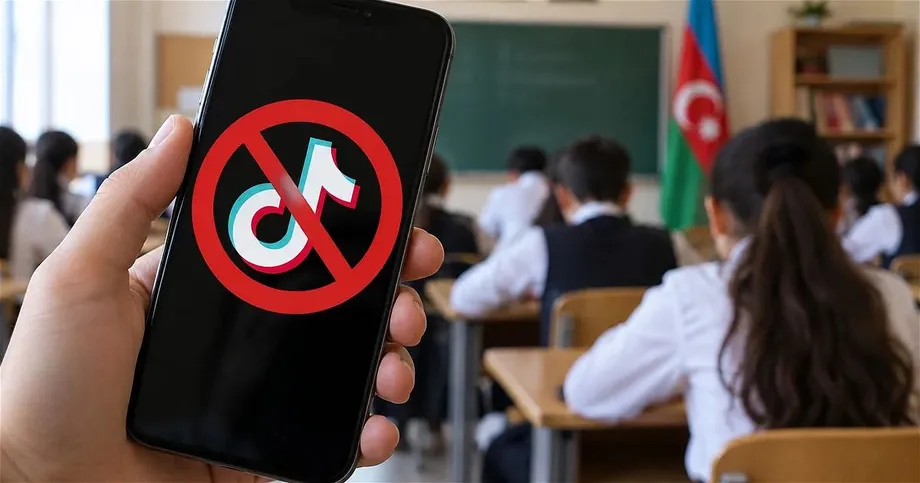
Azerbaijan has restricted access to TikTok in schools and filtered material involving crime, drugs and violence, Deputy Minister of Science and Education Firudin Gurbanov said at the Family Forum on October 21, 2026. His announcement comes as the country prepares to introduce wider restrictions on social media accounts for children under 16.
Contents
- School restrictions come before a national age limit
- What schools are blocking
- How the measures developed
- What changes for children and teenagers
- How age checks would work
- Platforms face registration and enforcement requirements
- Concerns about the boundaries of harmful content
- Gurbanov also describes benefits of online access
- Key Points
Speaking at the forum, titled Family in the Digital Age: New Frontiers of Transformation, Gurbanov said schools had restricted more than 200 categories or items of harmful content. He urged families to continue supervising children's internet use outside school.
The school measures are already operating. The national account restrictions are scheduled to take effect on August 5, 2027, under legislation adopted on June 30, 2026. Children under 16 will be barred from opening accounts on designated social networks, while registration for those aged 16 to 18 will require consent from a parent or legal guardian.
Gurbanov had described the school filtering system during parliamentary discussions on June 8. His October remarks therefore describe an existing restriction, although no precise date for its introduction was given.
What schools are blocking
Gurbanov described TikTok restrictions as part of broader filtering of children's internet access at school. Filtering means that a school internet connection prevents users from reaching selected services or material.
The deputy minister identified crime, drugs, violence and similar subjects among the material being restricted. His main figure was more than 200 harmful topics, categories or content items; another description of his October remarks put the figure at nearly 200 pages promoting terrorism and drugs. The exact list and the unit being counted were not published.
Gurbanov, the deputy minister responsible for science and education, explained the reasoning at the forum:
These materials contained content related to crime, drugs, violence, and similar issues. Of course, these restrictions should not be limited to schools alone. Families should also monitor children to ensure they stay away from such content and platforms.
The practical reach of a school filter depends on which connection a child uses. A restriction on a school network governs access through that network. The announcements did not explain whether schools also apply controls to devices using personal mobile data, or how individual schools enforce the restrictions.
How the measures developed
Azerbaijan's school restrictions and its wider social media legislation developed along separate schedules. The education ministry was already filtering access while lawmakers were still discussing the national rules.
The main dates show how the measures fit together:
- October 30, 2018: Azerbaijan adopted its main law on protecting children from harmful information.
- January 1, 2020: That child protection law took effect.
- June 8, 2026: Gurbanov told a joint parliamentary committee meeting that TikTok was blocked in schools and that children's internet access was filtered.
- June 30, 2026: Parliament adopted the new social media amendments as Law No. 431-VIIQD.
- August 5, 2026: The legislation was published, and President Ilham Aliyev signed an implementing decree assigning enforcement responsibilities.
- October 21, 2026: Gurbanov discussed the school restrictions at the Family Forum.
- August 5, 2027: The social media age restrictions are scheduled to take effect, 12 months after publication.
The June committee meeting brought together the parliamentary bodies responsible for human rights; family, women and children; and legal policy and state building. They discussed changes to the Code of Administrative Offenses, the Law on Information, Informatization and Protection of Information, and the Law on the Protection of Children from Harmful Information.
For families, the immediate issue is access at school. The later national rules concern whether children can register and retain accounts on covered platforms, including when they are away from school.
What changes for children and teenagers
The legislation raises the minimum account age to 16 on designated social networks. That is three years above the minimum age of 13 commonly applied by many platforms. Instagram, Facebook, TikTok, X and Snapchat were among the services named during discussion of the package.
Existing accounts are also expected to undergo age checks. Accounts whose holders' ages cannot be verified are to be deleted. A child who already uses a covered service may therefore face a new check rather than simply keeping an account opened before the rules began.
Users aged 16 to 18 will face a different set of requirements: parental consent and oversight, special safety measures, limits on content and advertising, and restrictions involving geolocation. Geolocation is information that can reveal where someone or their device is located.
Osman Gunduz, an information and communication technologies expert, criticised the choice of 16 as the threshold. He pointed to teenagers who already program, run businesses, create startups and participate in international competitions. His concern is that a rule designed to protect younger children could also restrict useful activity by older teenagers.
Gunduz argued that international discussion has focused more heavily on protecting children under 13. Azerbaijan's higher threshold extends the account prohibition to children aged 13, 14 and 15, placing a larger group under the restriction.
How age checks would work
Havva Huseynli, head of the cooperation and communication sector at the Electronic Security Service, described a proposed verification process involving bank card information, email addresses and mobile phone numbers. The card check could involve temporarily blocking funds while information is checked.
Age verification is the process of checking whether a user meets an age requirement. It can involve more information than asking someone to type a birthday into a registration form. Huseynli said personal data would be used solely for verification and deleted immediately if a match could not be confirmed.
The practical burden will fall on both platforms and users. Platforms will need systems for checking ages, while users may need to supply information to keep accounts active. The descriptions of the process did not set out a complete procedure for correcting a failed check or recovering an account deleted after an unsuccessful verification.
Parents of teenagers aged 16 to 18 will also have a formal role in registration. Their consent will become part of access to covered services, rather than remaining solely a matter of household rules.
Platforms face registration and enforcement requirements
The new framework requires covered platforms to register in Azerbaijan or establish a local representative office. It also requires them to respond to requests from state bodies within five working days.
The Ministry of Digital Development and Transport has the main oversight role. Some powers under Article 13-4.4 of the information law are exercised jointly with the State Security Service. For other functions, the ministry acts in its capacity as the National Cybersecurity Agency, rather than through a separate legal entity.
The Ministry of Science and Education and the State Committee for Family, Women and Children Affairs are also assigned roles in awareness and education measures. The August decree therefore connects school policy, family policy, digital regulation and security bodies within the enforcement framework.
Financial penalties changed between the draft and adopted versions. Draft discussions described fines of 100,000 to 300,000 Azerbaijani manat. The adopted sanctions described in the August update set fines for legal entities ranging from 15,000 to 50,000 manat, depending on the violation and whether it is repeated.
For example, failure to answer an official request within five working days, or providing distorted information, carries a company fine of 25,000 to 30,000 manat. Violations of safe use rules carry fines of 35,000 to 40,000 manat, rising to 45,000 to 50,000 manat for a repeat violation within a year.
Enforcement also includes advertising bans, phased reductions in internet traffic and blocking. A reduction in traffic, often called throttling, makes a service slower or harder to use. Those measures can affect access more directly than a financial penalty.
Concerns about the boundaries of harmful content
Human rights lawyer Yalchin Imanov questioned how authorities define the harmful topics covered by school filters. His concern centred on whether broad or unclear categories could extend to alternative information and public debate.
Imanov, commenting on the restrictions and legislative proposals, said:
"we don't know what specific topics are prohibited, namely, dangerous topics. It's unclear what topics are meant by the phrase "more than two hundred dangerous topics", and this could be exploited by the authorities".
Imanov also criticised the lack of public discussion of draft laws. He warned that restrictions presented as protecting children could be used to limit access to alternative sources of information.
The wider legislative package expands grounds for temporarily blocking internet resources without a court decision. The listed grounds include insult and defamation, violations of privacy, promotion of narcotics, and disinformation posing a threat to public safety.
Those provisions reach beyond children's account registration. They give authorities powers over access to online information more broadly, making the wording of prohibited categories and the procedures used to apply them central to how the rules will operate.
Gurbanov also describes benefits of online access
Gurbanov's June remarks acknowledged that social media can help children communicate, participate in public life, obtain social support and express themselves. He also linked problematic use to depression, anxiety, cyberbullying and other harmful outcomes.
The deputy minister described the task as protecting children while allowing them to benefit from digital opportunities. He said that required joint efforts by government, technology companies, schools, parents and children.
At the October forum, Gurbanov also discussed the experience of pandemic school closures. Online teaching supported education, he said, while reduced face to face contact created difficulties for children's social development.
His remarks put two concrete needs alongside the restrictions: keeping children away from harmful material and preserving opportunities to learn and communicate. Schools are already applying filters; families and platforms now face the approaching August 2027 deadline for a much wider account regime.
Key Points
- TikTok access is restricted in Azerbaijan's schools, Deputy Minister Firudin Gurbanov said on October 21, 2026.
- Schools also filter material involving crime, drugs, violence and other harmful subjects.
- Gurbanov had already described the school restrictions to parliamentary committees on June 8.
- National rules scheduled for August 5, 2027, will bar children under 16 from opening accounts on designated social networks.
- Registration for users aged 16 to 18 will require parental or legal guardian consent.
- Covered platforms face age verification, local registration requirements, fines and possible access restrictions.
- Critics have raised concerns about unclear content categories, older teenagers' access and broader powers to block information.