Five victories bring gold in Casablanca
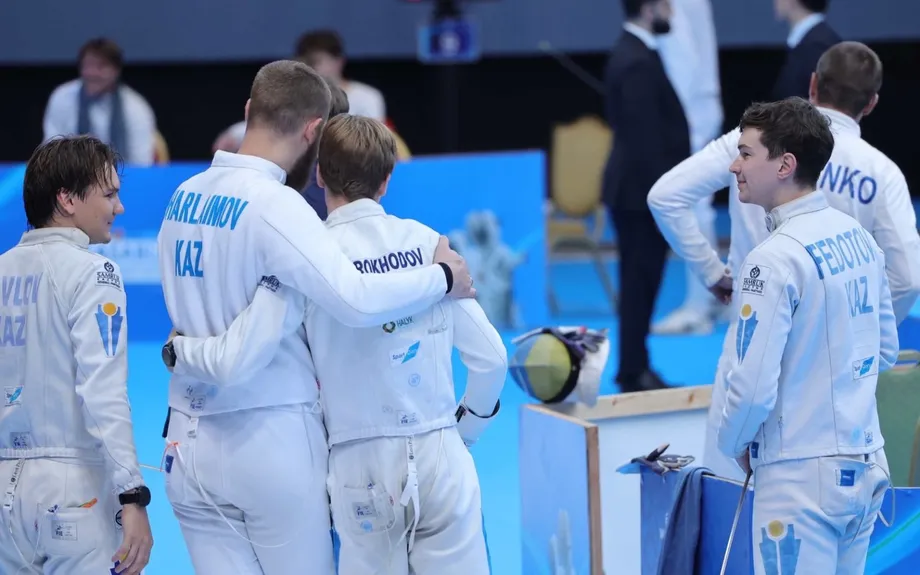
Kazakhstan defeated Russia 45 to 40 in the men's team epee final in Casablanca on October 18, winning a World Cup gold medal with a changed lineup and adding another title to a run that already included the Asian championships, world championships and Asian Games in 2026.
Contents
- Five victories bring gold in Casablanca
- The route became tighter near the final
- How a team reaches 45 touches
- A changed squad keeps the winning run going
- Four titles across the 2026 calendar
- Asian Games gold ended a 24 year wait
- Three Kazakh fencers reached the individual quarterfinals
- Astana is the next named target
- Key Points
Alexander Fedotov, Kirill Pavlov, Kirill Prokhodov and Vadim Sharlaimov formed the winning squad at the Senior Epee World Cup in Morocco. Kazakhstan's National Olympic Committee confirmed the victory, which opened the team's international season for 2026/27.
The tournament, which included men's and women's epee competitions, ran from October 15 to 18. Kazakhstan won five successive team matches, beating Turkey, Hong Kong, Egypt and France before overcoming Russia in the final.
The result also gave Kazakhstan a successful test of its squad beyond the lineup that had won the world title in July. Fedotov and Pavlov came into the Casablanca team in place of Ruslan Kurbanov and Yerlik Sertay, joining Prokhodov and Sharlaimov, who had already won world championship and Asian Games gold.
The route became tighter near the final
Kazakhstan began with its biggest winning margin of the tournament, defeating Turkey 45 to 20 in the round of 32. A 45 to 28 victory over Hong Kong in the round of 16 followed, taking the team into the quarterfinals.
Egypt provided a closer contest, with Kazakhstan winning 45 to 40. France then stood between the Kazakh team and a place in the final. The semifinal finished 45 to 39 in the published match list; the score against France was also reported as 45 to 40.
Russia lost the gold medal match by five touches. Using the match list's score against France, Kazakhstan's winning margins narrowed from 25 and 17 touches in the opening two rounds to five, six and five in the last three. The early rounds produced a combined margin of 42 touches, compared with 16 across the quarterfinal, semifinal and final.
Kazakhstan reached 45 in every match. Its route included opponents from Asia, Africa and Europe, giving the new lineup a series of different national teams to overcome before it secured the title.
How a team reaches 45 touches
Team epee is a relay contest in which the score carries forward from one bout to the next. Three fencers from each team take part in a match, and each fences three bouts, making nine bouts in total. A squad can include a reserve, which is why four athletes were named in Kazakhstan's winning team.
A touch is a scoring hit made with the tip of the weapon. In epee, the whole body is a valid target, and both fencers can score if their hits arrive close enough together. Team matches work toward a total of 45 touches, with time limits also governing the bouts.
The final score of 45 to 40 therefore means Kazakhstan finished five scoring touches ahead across the team contest. It describes the accumulated result, rather than the number of individual bouts each side won.
World Cup events also award points in the International Fencing Federation's world rankings. The Casablanca title consequently brought Kazakhstan both a gold medal and a result that contributes to its standing between major championships.
A changed squad keeps the winning run going
Fedotov and Pavlov took the places of Kurbanov and Sertay, who had competed in Kazakhstan's victorious world championship team in Hong Kong. Prokhodov and Sharlaimov provided continuity between that squad, the Asian Games winners and the four athletes selected for Casablanca.
Mirbulat Abuov, president of the Kazakhstan Fencing Federation, singled out the combination of younger athletes and established champions when discussing the result. In comments translated from Russian, he said:
It is especially valuable that the gold was won by a renewed lineup in which young athletes compete successfully alongside reigning world champions. For us, this is an indicator of the depth of the national team and its potential for the coming years.
Casablanca gave Fedotov and Pavlov a place in a gold medal squad while allowing Kazakhstan to maintain its winning results after two changes. For the federation, that expands the group of athletes with experience of a successful international team campaign.
Prokhodov and Sharlaimov now connect three of the year's winning squads: the world championship team, the Asian Games team and the World Cup team in Morocco. Their presence gave the changed lineup two athletes who had already been part of major victories together.
Four titles across the 2026 calendar
Kazakhstan's sequence began at the Asian championships in New Delhi in June, where the men's epee team defeated Japan 45 to 40 in the final. A month later, it won its first men's team epee world championship in Hong Kong, beating Ukraine by the same score.
Asian Games gold followed in Japan in September, before the World Cup success in Morocco in October. The four victories came at different competitions, taking Kazakhstan from a continental championship to a world championship, a major continental multisport event and then a World Cup stop.
- June 2026: Kazakhstan beat Japan 45 to 40 for the Asian championship title in New Delhi.
- July 2026: The team defeated Ukraine 45 to 40 in Hong Kong to win its first men's team epee world title.
- September 2026: Kazakhstan won men's team epee gold at the 20th Asian Games in Aichi-Nagoya, Japan.
- October 15 to 18, 2026: The Casablanca World Cup ended with Kazakhstan beating Russia 45 to 40 in the team final.
The sequence also spans a season change. Casablanca opened Kazakhstan's international campaign for 2026/27, carrying its calendar year success into the next competitive season. The world championship title came in July; the October victory added the title from the Casablanca stage of the World Cup circuit.
Asian Games gold ended a 24 year wait
Kazakhstan's September victory in Aichi-Nagoya restored a title it had last won at the Asian Games in Busan, South Korea, in 2002. The gap between those victories was 24 years.
The result gave the men's epee team another major title shortly after its first world championship success. Within the same stretch of competition, Kazakhstan won against Asian rivals at the continental championships and Asian Games, then continued its run at an international World Cup tournament.
Prokhodov also won silver in the individual epee competition at the 2026 Asian Games. His results in Japan therefore included both an individual medal and membership of the gold medal team, followed weeks later by another team title in Casablanca.
Three Kazakh fencers reached the individual quarterfinals
Kazakhstan's Casablanca results extended beyond the team competition. Elmir Alimzhanov finished sixth in the men's individual event, Prokhodov seventh and Sharlaimov eighth. All three reached the quarterfinals.
Those finishes placed three Kazakh athletes among the individual tournament's top eight. Prokhodov and Sharlaimov then also appeared in the squad that won the team title, contributing to results in both formats at the same World Cup stop.
Alimzhanov had Kazakhstan's highest individual placing in Casablanca, while Fedotov and Pavlov joined Prokhodov and Sharlaimov in the team squad. The individual and team results together show how several members of the national programme contributed during the tournament.
Astana is the next named target
Abuov identified the Asian championships in Astana in June 2027 as the next major reference point for Kazakhstan's preparations. He said the event would mark the beginning of the Olympic qualification period and linked the Casablanca victory to the team's effort to strengthen its world ranking.
The federation president described that objective in comments translated from Russian:
We are now strengthening our position in the FIE world ranking, and in June 2027 Astana will host the Asian championships, which will mark the start of the Olympic qualification period. Our task is to approach it from the strongest possible position.
The qualification period is the stretch of competition during which eligible results count toward earning Olympic places. Abuov's stated priority is to arrive at that stage with Kazakhstan in a strong competitive position, following a season that has already produced titles with different team lineups.
The precise June dates for the Astana championships and Kazakhstan's next team selection were not announced. For now, Casablanca leaves the federation with a winning start to the new international season and another successful combination of athletes to consider as preparations continue.
Key Points
- Kazakhstan beat Russia 45 to 40 in the men's team epee World Cup final in Casablanca on October 18.
- Alexander Fedotov, Kirill Pavlov, Kirill Prokhodov and Vadim Sharlaimov formed the winning squad.
- The team defeated Turkey, Hong Kong, Egypt and France before reaching the final.
- Casablanca added a World Cup title to Kazakhstan's 2026 Asian championship, world championship and Asian Games victories.
- Elmir Alimzhanov, Prokhodov and Sharlaimov finished sixth, seventh and eighth in the individual event.
- Federation president Mirbulat Abuov named the June 2027 Asian championships in Astana as a target ahead of Olympic qualification.