A sales recovery built on four years of quality work
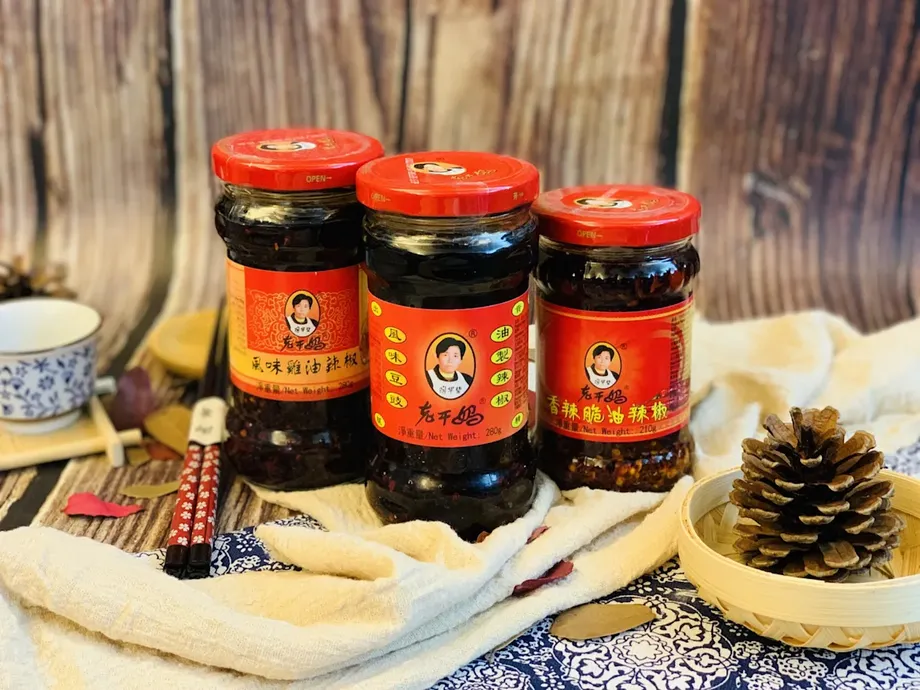
Laoganma recorded revenue of 5.4 billion yuan in 2025 after four years of work to strengthen quality controls, according to Li Xin, the Chinese chili sauce maker's executive deputy general manager and chief quality officer. Cameras that identify damaged chilies within 0.3 seconds and digital records that trace ingredients back to farms are now part of that effort.
Contents
- A sales recovery built on four years of quality work
- What the revenue figures reveal
- From a Guiyang restaurant to a family succession
- Why the chili sourcing story is complicated
- How the AI sorting system works
- Fewer sorting workers, with people still checking
- Tracing ingredients from farms to finished jars
- A quiet online presence and a wide export business
- Can reliable flavor deliver faster growth?
- Key Points
Li disclosed the figure at the 2026 Guizhou Provincial Quality Development Conference. He described it as a record, although previously published figures also put the company's 2020 revenue at 5.4 billion yuan. At the precision disclosed, the latest result brings Laoganma back to its earlier peak.
The recovery has been substantial since revenue fell to about 4.2 billion yuan in 2021. More recently, growth has slowed sharply: sales rose from 5.391 billion yuan in 2024 to 5.4 billion yuan in 2025, an increase of about 0.17 percent, or 9 million yuan.
Founder Tao Huabi's return to active management in 2019, renewed attention to ingredients and spending on factory automation form the longer story behind those numbers. The company also received the fifth Guizhou Governor's Quality Award, bringing fresh attention to how it makes one of China's most familiar condiments.
Laoganma now faces two connected tasks: keeping the flavor reliable for existing customers and finding room to grow as competitors sell sauces with less oil, less sodium and different ingredients. Its factory changes address the first task more directly than the second.
What the revenue figures reveal
The 2025 Top 100 Enterprises in Guizhou list, published by the Guizhou Provincial Enterprise Confederation, puts Laoganma's 2024 revenue at 5.391 billion yuan. Figures cited alongside that ranking show revenue of 5.26 billion yuan in 2022 and 5.381 billion yuan in 2023.
Those numbers describe a strong rebound followed by much smaller annual increases. Revenue grew by about 2.3 percent in 2023, about 0.19 percent in 2024 and about 0.17 percent in 2025. Across the three years from 2022 to 2025, the total increase was approximately 2.7 percent.
The longer comparison is more encouraging. Sales of 5.4 billion yuan were about 29 percent above the roughly 4.2 billion yuan recorded in 2021. Higher raw material costs were among the pressures cited during that downturn.
Revenue means the money received from sales before expenses such as ingredients, wages, packaging and transport are deducted. Laoganma's latest disclosure gave no profit figure or detailed calculation of the financial savings from its AI equipment.
From a Guiyang restaurant to a family succession
Tao built the business around a sauce that customers wanted to take home. Her early food selling activity dates to the 1980s. She opened a restaurant in Guiyang in 1989, converted it into a condiment shop in 1994 and established a chili sauce factory in 1996. The company was formally registered in August 1997.
Students who received generous portions, inexpensive meals or food without charge helped give Tao the nickname behind the brand: Lao Gan Ma, commonly translated as Old Godmother. Her portrait later became the familiar face on its jars.
The main stages of the business and its recovery span several decades:
- 1989: Tao opened her restaurant in Guiyang.
- 1994 to 1997: The business shifted to condiments, opened a factory and formally registered the company.
- 2014: Tao stepped back and transferred ownership to her two sons.
- 2019: Tao returned to active management.
- 2021: Revenue fell to about 4.2 billion yuan.
- 2022 to 2025: Revenue recovered from 5.26 billion yuan to 5.4 billion yuan.
Accounts of the succession connect complaints about flavor to a switch toward cheaper chilies from Henan and describe Tao restoring Guizhou chilies and earlier recipe standards after her return. The company's more recent explanation of its sourcing is broader.
Why the chili sourcing story is complicated
Lei Bangchao, head of personnel and administration at Laoganma's Guiding county branch, said the company buys chilies from Guizhou, Xinjiang and Henan. He declined to disclose the precise formula. The present supply chain therefore includes several growing regions, including Henan.
Customers have repeatedly debated whether the sauce tastes different. In a response to renewed discussion in January 2026, the company said its raw materials, processes and formula had not changed. Meanwhile, accounts of Tao's earlier return describe a restoration of traditional ingredients and production standards.
Laoganma's practical challenge is consistency across large quantities of agricultural ingredients. A recipe needs chilies, oil and fermented beans that meet its requirements each time a batch is made. Sorting and supplier records give the factory more control over what enters production.
Lei said experienced employees remain central to judging the finished flavor:
"We have many long-serving employees who can judge the flavor by experience and ensure our taste remains consistent," Lei said.
The company is combining that experience with machinery. Cameras inspect visible features of the ingredients, while workers continue to make judgments that depend on familiarity with the product.
How the AI sorting system works
High speed industrial cameras scan chilies moving along a conveyor belt. The visual inspection system identifies mold, dark spots and other visible defects, then directs jets of air to push rejected chilies out of the production stream. The inspection cycle takes about 0.3 seconds.
AI visual inspection is essentially a machine making a rapid decision from an image. Here, its job is to recognize the appearance of unacceptable ingredients repeatedly as raw materials pass the camera.
Li said AI visual quality inspection was fully deployed in 2025 and that the defect rate at key production stages had fallen to 0.02 percent. Expressed as a proportion, that is two defective units for every 10,000 assessed under that production measure. The company has not published the earlier rate or a detailed description of how it calculates the figure.
Laoganma has spent several hundred million yuan in recent years on making production more intelligent, according to Li. Lei separately put automation above 90 percent. Those investments cover a wider factory effort that includes ingredient selection, production controls and supply chain scheduling.
The scale helps explain the attention to raw materials. In an earlier company account, Li said Laoganma purchased more than 40,000 tonnes of dried chilies and more than 100,000 tonnes of vegetable oil annually, working with 110 suppliers of raw and auxiliary materials.
Fewer sorting workers, with people still checking
The chili sorting operation once used more than 600 workers. It now retains about 48 experienced employees for a final check after machine sorting, according to descriptions of the factory changes. That puts the number of people assigned to that operation at less than one twelfth of its earlier level.
Laoganma has not disclosed how the affected workers were reassigned, whether positions disappeared through departures or retirement, or how many employees lost their jobs. The change nevertheless shows how automation is reducing the labor needed for a repetitive inspection task.
Company annual filing figures cited for the main operating entity show participation in urban employee basic pension insurance falling from 2,915 people in 2021 to 740 in 2025, a decline of 2,175, or about 74.6 percent. The largest fall occurred between 2022 and 2023, before the stated completion of AI visual inspection deployment in 2025.
Those pension figures cover employees enrolled through that legal entity. Employment across other entities, contractors and the wider supplier network sits outside that count. Together, the timing and scope point to a longer period of operational restructuring.
Tracing ingredients from farms to finished jars
Li said all core raw materials became traceable in 2025. Batches of chilies, rapeseed oil and soybeans receive digital identifiers that connect their origins with factory intake and production records.
Traceability works like a recorded journey for an ingredient. If a finished batch has a problem, staff can follow its records backward to the ingredients and suppliers involved, then investigate the relevant deliveries or farms.
Laoganma had described ingredient tracing before the latest AI deployment. An earlier account of its production said peppers underwent at least ten quality checks, covering stages such as variety selection, purchasing and screening. At that time, the company produced 21 kinds of chili sauce and said its business had helped 200,000 rural households increase their income.
Packaging has also required substantial spending. In 2022, Laoganma invested 40 million yuan to replace bottle caps with versions using a thermoplastic elastomer liner. Quality engineer Si Huaguang said the change added 0.06 yuan per bottle, equivalent to 180,000 yuan at a daily capacity of 3 million bottles.
The company also said it spent 10 million yuan annually on market surveys and product research and development. Cameras are the most visible recent change, but purchasing standards, packaging and product work have been part of its quality spending for years.
A quiet online presence and a wide export business
Laoganma's public social media activity has been sparse even while it invested in digital factory systems. Its official WeChat account last posted on March 24, 2022. Checks of its Douyin presence cited February 2025 as the latest video on a flagship account, while another check cited June 2023; the accounts examined and checking dates were not consistent. Both descriptions recorded an absence of recent livestream selling.
Lei described production and quality as the priorities behind the company's restrained publicity:
"We guarantee product quality and safety. We have pushed automation to over 90 percent, and we place less emphasis on external publicity," he said.
Exports account for roughly 10 percent of sales, according to Lei. Overseas revenue rose 30 percent in 2023, and the company's products now reach around 160 countries and regions, including Peru, Brazil, Nigeria and Zimbabwe. Earlier descriptions put its reach at 130 countries and regions.
The business produces about 3 million bottles a day. Li has also described production capacity exceeding 1 million tonnes, although the period and product scope behind that capacity figure were not specified.
Li Miaoxing, the company's general manager and Tao's son, explained in 2024 how the original product still guides the business:
We craft it with traditional techniques," he said. "For us, it remains the heart of our brand and the product that started it all.
Can reliable flavor deliver faster growth?
Retail tracking figures from Mashangying place Laoganma first in the Chinese style condiment sauce category in the third quarter of 2025. Its share in the narrower chili sauce category stayed around 55 percent between 2022 and 2025, while the second largest brand had a share in single digits.
Competitors are growing from smaller bases. Hubang generated more than 600 million yuan in revenue by the end of October 2025, with growth approaching 40 percent. Chuanwazi recorded more than 300 million yuan in revenue for 2025. Their ranges include sauces marketed around reduced sodium, less fat and different flavor combinations.
A comparison of product nutrition labels puts Laoganma's flavored fermented soybean chili oil at 2,280 milligrams of sodium, 58.96 grams of fat and 2,606 kilojoules of energy per 100 grams. A portion of 20 grams supplies 456 milligrams of sodium, about 11.8 grams of fat and 521 kilojoules of energy.
Some competing products have very different compositions. A Songxianxian chili product lists 60 milligrams of sodium per 100 grams, while a Chuanwazi apple and fresh chili sauce lists zero fat and 291 kilojoules per 100 grams. Buyers comparing these sauces are choosing between different ingredients, textures and uses as well as different nutrition figures.
Laoganma has introduced alternatives of its own, including a version of chopped fermented chili with sodium reduced by 30 percent, as well as tomato chili sauces and other meal accompaniments. Its challenge is to build demand for newer products while protecting the familiar sauces that sustain sales.
Euromonitor International valued the global chili sauce market at $5.72 billion in 2023 and projected $6.52 billion by 2028, an increase of about 14 percent. That offers room for expansion, although Laoganma's own recent revenue figures show how slowly growth can come even to a dominant brand.
Li's account describes four years of quality work rather than a sudden factory transformation. The business has recovered from its 2021 low, automated more inspection and tightened ingredient records. The next commercial test is whether that reliability, together with exports and newer products, can lift annual growth beyond its recent narrow gains.
Key Points
- Laoganma reported revenue of 5.4 billion yuan in 2025, matching its previously published 2020 peak at the disclosed precision.
- Revenue rose about 0.17 percent from 2024 and about 29 percent from the 2021 low.
- The company says AI visual inspection was fully deployed in 2025 and the defect rate at key production stages reached 0.02 percent.
- About 48 workers now provide final checks in a sorting operation that once used more than 600 people.
- Li Xin says all core raw materials are traceable through digital records.
- Exports contribute roughly 10 percent of sales, with products reaching around 160 countries and regions.
- Slow revenue growth and competition from different sauce styles remain central business challenges.