Five years of higher disease rates bring scrutiny of overtime permits
South Korean workplaces authorized to use special overtime recorded an average occupational disease rate of 0.20% between 2021 and 2025, compared with 0.12% across all workplaces. The figures, submitted by the Ministry of Employment and Labor to Cho Kuk Innovation Party lawmaker Seo Wang-jin, put the rate at authorized workplaces at about 1.7 times the national average.
Contents
- Five years of higher disease rates bring scrutiny of overtime permits
- What the annual figures actually show
- How an emergency exception became more widely used
- Who used the system and what protection was planned
- Inspection figures contain an unresolved mismatch
- A Samsung researcher's death connects hours with a compensation decision
- Why compensation records need careful interpretation
- Deaths and night work expose a wider follow-up problem
- What changes have been requested, and what remains undecided
- Key Points
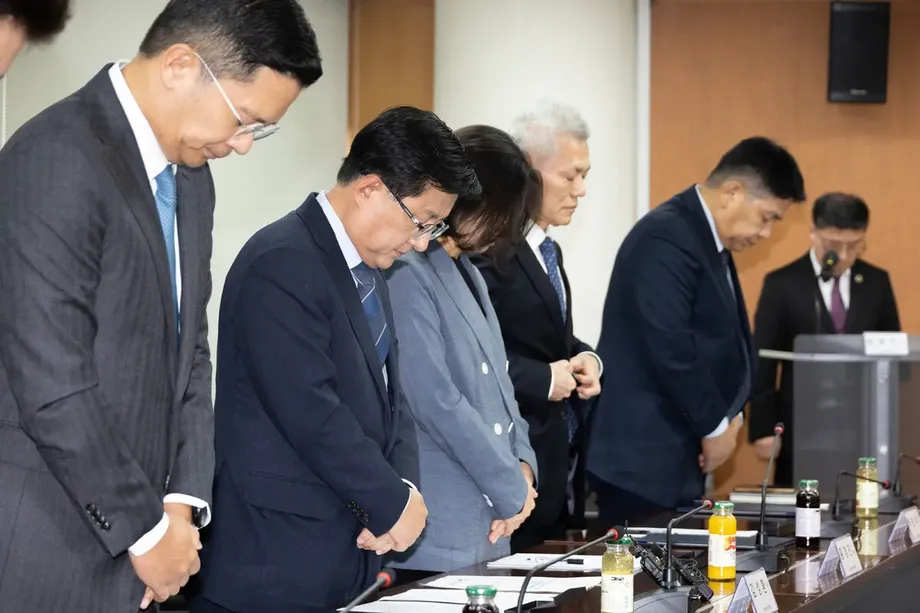
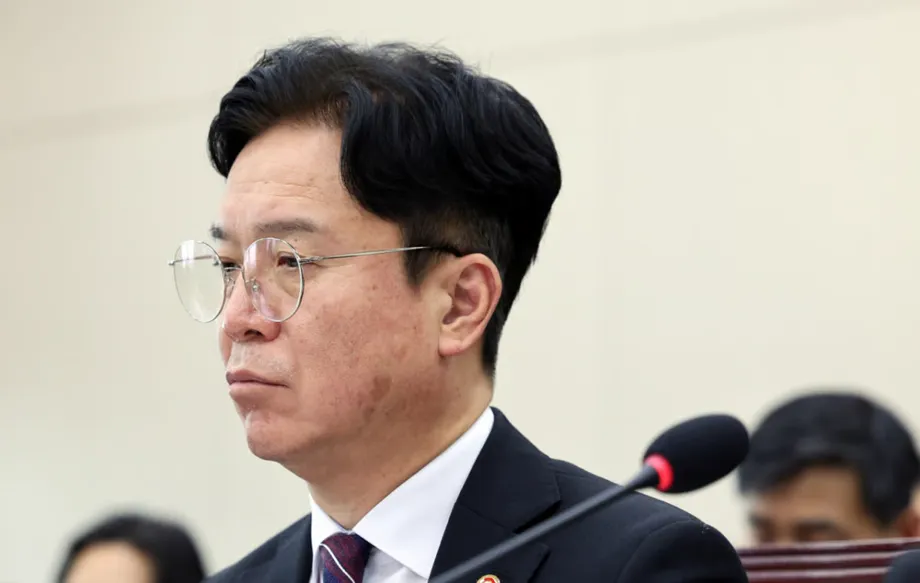
The difference was present in every year examined, although it narrowed sharply by 2025. At an October 13, 2026 National Assembly audit, Employment and Labor Minister Kim Young-hoon said he would consider changes after Seo demanded a comprehensive investigation into whether extended working hours were contributing to occupational illnesses.
The dispute concerns both the permission to work longer and what happens after permission is granted. Seo said 2,185 workplaces received 7,111 special overtime authorizations in 2025, with the numbers of workers covered by those authorizations adding up to more than 380,000. That total does not establish how many distinct workers were involved, because repeated authorizations may cover the same people.
Only 15 authorized workplaces were inspected that year. Inspections of those workplaces, selected because they repeatedly used special overtime, found 58 legal violations, including breaches of working hour limits.
The findings have also entered a debate over proposed exemptions from the standard 52 hour working week for highly paid research and development staff in designated industrial zones. A separate compensation decision involving a Samsung Electronics semiconductor researcher has made that debate more concrete: the worker died in 2023, and his death was recognized as an occupational disease in July 2025.
What the annual figures actually show
The occupational disease rate counts workers with recognized occupational illnesses per 100 people covered by industrial accident compensation insurance. A rate of 0.20% therefore corresponds to approximately two recognized cases per 1,000 insured workers, compared with 1.2 per 1,000 at a rate of 0.12%.
The annual comparison shows why the five year average and the largest yearly difference should not be confused:
- 2021: 0.23% at special overtime workplaces, against 0.11% across all workplaces.
- 2022: 0.25%, against 0.11%, approximately 2.3 times as high.
- 2023: 0.21%, against 0.11%.
- 2024: 0.17%, against 0.13%.
- 2025: 0.16%, against 0.15%.
Seo's statement that the rate was as much as 2.3 times higher is consistent with the rounded 2022 figures. It does not describe the average for the entire period. By 2025, the difference was just 0.01 percentage points, compared with 0.14 percentage points in 2022.
The narrowing reflected movement in both groups: the rate at authorized workplaces fell after 2022, while the national rate rose. It does not establish whether working conditions improved at the same workplaces, whether the mix of authorized employers changed, or whether compensation decisions affected the trend.
The Ministry of Employment and Labor's 2025 industrial accident statistics, published on March 31, 2026, explain a crucial timing rule. Cases are counted by the date the Korea Workers' Compensation and Welfare Service approves compensation, rather than the date an illness or accident occurred. An incident in December 2024 approved in December 2025 would enter the 2025 statistics.
That distinction limits any attempt to connect a particular year's authorizations directly with illnesses recorded that year. The comparison identifies a pattern requiring investigation, not proof that special overtime caused every recognized disease.
How an emergency exception became more widely used
Under the Labor Standards Act, the standard working week is 40 hours, with ordinarily no more than 12 hours of overtime. Special overtime allows work beyond that overtime limit in exceptional circumstances, subject to approval from the labor minister and consent from the workers concerned.
Qualifying circumstances include preventing or responding to disasters, rescuing people, ensuring safety and handling sudden situations. In January 2020, the grounds were expanded to include research and development and temporary surges in workload.
The ministry's 2022 authorization analysis, released on August 31 that year, recorded 2,116 authorized workplaces in 2021 and 2,208 by July 2022. The 2021 total represented 0.26% of workplaces with at least five employees. Authorization cases increased by 77.2% in the first half of 2022 compared with the same period a year earlier.
The ministry attributed that growth to several overlapping pressures: the full application of the 52 hour limit to employers with five to 49 workers from July 2021, presidential and local elections in 2022, and a surge in COVID-19 infections. Disaster response and sudden increases in workload accounted for most use of the system.
Seo described special overtime at the 2026 audit as permitting working weeks of up to 64 hours. The academic article Working hours and regulations, published in 2023, describes a standard special overtime limit of 24 overtime hours a week, subject to prescribed rest. Its table also lists no limit for special overtime periods shorter than two weeks.
The academic account is a description of rules at publication, not confirmation of every rule applying in 2026. It also discusses theoretical weeks of 64 to 69 hours under different working time arrangements. Those arrangements should not be treated as interchangeable with a special overtime permit.
Who used the system and what protection was planned
The ministry's July 2022 breakdown covered 5,793 authorization cases, rather than 5,793 separate workplaces. Employers with 50 to 299 workers accounted for 44.7% of cases, those with five to 49 workers for 37.0%, and those with at least 300 workers for 18.2%.
Manufacturing accounted for 47.5% of authorizations, followed by public administration at 18.2%, health and social welfare at 9%, and transport and warehousing at 4.9%. These figures show that special overtime was not confined to semiconductor research or other advanced technology jobs.
Among 1,673 workplaces authorized under two specified grounds, numbered three and four in the rules, 49.4% used the system for 29 days or fewer. The ministry said guidance then allowed the periods under those two grounds to total up to 90 days a year.
Health protection plans most often provided 11 consecutive hours of rest, accounting for 46.1% of the plans recorded. Another 29.9% provided rest equivalent to the special overtime worked, while 24.1% limited special overtime to less than eight hours a week. These were planned safeguards, not evidence that every rest period was delivered.
A ministry survey of 200 workplaces authorized in 2021 found that 157, or 78.5%, reported difficulty complying with working hour limits. At the time, labor policy chief Lee Jung-han defended strict operation of the system and promised tailored support for employers with persistent problems, including recruitment, changes to shift arrangements and the use of foreign workers.
Inspection figures contain an unresolved mismatch
The 15 inspections in 2025 represented approximately 0.7% of the 2,185 authorized workplaces. The 58 violations found at employers repeatedly using the system strengthen the case for follow-up, but they cannot be used to estimate violations across all authorized employers because the inspected group was selected, not a random sample.
The ministry plans to inspect 50 workplaces in 2026. That is more than three times the previous year's number, but the stated coverage percentage does not match the accompanying workplace count.
The figure given for the first half of 2026 is 2,185 authorized workplaces as of June, alongside a claim that 50 inspections would cover about 3.5%. Dividing 50 by 2,185 produces approximately 2.3%, not 3.5%. The denominator behind the stated 3.5% has not been explained, so it should not be treated as a verified coverage rate.
Seo also said authorization approval rates exceeded 90% each year and argued that scrutiny had become largely formal. He requested stricter authorization conditions, longer examination periods and continuous monitoring of working hours and industrial accidents after approval.
Responding to those demands, Employment and Labor Minister Kim Young-hoon said he would actively consider the proposals. He also committed to stronger follow-up where special overtime could not be avoided:
Even when special overtime is unavoidable, we will ensure thorough follow-up measures.
The commitment was to review improvements. No completed investigation, revised authorization standard or implementation deadline was announced in the audit accounts.
A Samsung researcher's death connects hours with a compensation decision
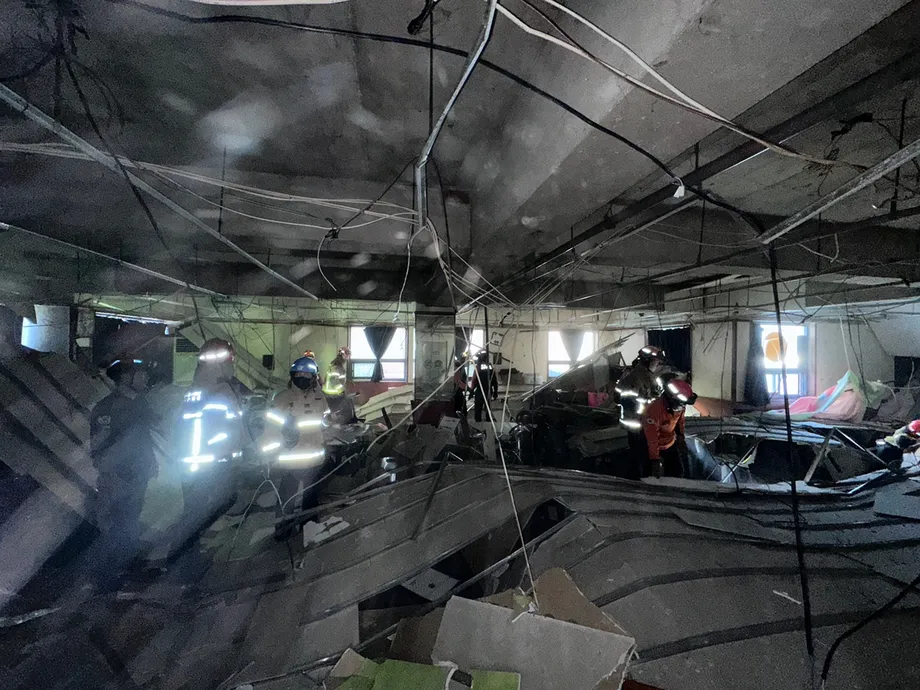
A Samsung Electronics semiconductor researcher in his 40s, who had worked in research and development for 17 years, died of a stroke in 2023 after being taken to hospital following cardiac arrest while resting after work. Health examinations in 2019 and 2021 had assessed his cardiovascular and cerebrovascular risk as below the average for men of his age.
His work records showed 60 hours in the week before the illness and an average of 54 hours and 43 minutes a week during the preceding month. The occupational disease judgment committee recognized the death as an occupational disease in July 2025, considering the working hours, workload and job stress.
That case should be distinguished from another recognized claim involving a Samsung researcher who averaged 58 hours and 41 minutes a week during the month before death. Between 2021 and 2024, three Samsung research and development workers applied for recognition of cardiovascular or cerebrovascular illnesses, with one claim recognized during that period.
A separate claim concerning the late researcher Kim Chi-yeop, who died by suicide after about a year at the company, was filed by his family in May and was still under review when the case was reported. No final decision was given.
Cho Seung-gyu, a labor consultant with Banollim, an organization supporting semiconductor workers' health and rights, said research staff face intense pressure to deliver results within particular periods. He linked stronger industry competition with longer hours and heavier workloads. The individual compensation decisions provide evidence about those workers' circumstances, but do not establish that they worked under special overtime authorizations.
Why compensation records need careful interpretation
South Korea recognizes cardiovascular and cerebrovascular illnesses associated with long working hours as occupational diseases. These include illnesses affecting the heart and blood vessels in the brain, such as ischemic heart disease and stroke.
The 2019 academic review Overwork and national policy, by Inah Kim and colleagues, examined 4,898 compensation claims from 2013 to 2016. Approval rates were 66.7% among claimants averaging more than 60 hours a week during the 12 weeks before diagnosis, compared with 32.6% among those averaging 52 to 59.9 hours.
Those percentages measure the likelihood of approval among people who submitted claims. They do not mean that 66.7% of all workers exceeding 60 hours developed an illness. The distinction matters because recognition criteria themselves take working hours into account.
The review describes changes adopted in December 2017 that gave greater consideration to workload factors, including unpredictable schedules, shift work, insufficient holidays, heavy physical work and high psychological tension. Night hours were also given additional weight, with 30% added for the relevant calculations.
In 2017, 589 cardiovascular or cerebrovascular cases and 104 mental disorder or suicide cases received occupational disease compensation. Among 59 compensated suicides in 2016 and 2017, the review linked 61% to overwork, including long hours, increased responsibility or increased workload.
Average weekly working hours fell from 50.7 in 2006 to 44.4 in 2017, a reduction of 6.3 hours, while employees at workplaces with fewer than five workers still averaged 47.0 hours in 2017. The 2023 academic article similarly found that 6% of wage earners worked more than 52 hours a week in 2020, rising to 11.6% at employers with fewer than five workers.
Deaths and night work expose a wider follow-up problem
Disease accounted for 76.7% of recorded occupational deaths at special overtime workplaces in 2025, compared with 61.2% across all workplaces, a difference of 15.5 percentage points. The corresponding differences were 14.8 points in 2021, 10.5 in 2022, 19.5 in 2023 and 9.7 in 2024.
This is a share of deaths attributed to disease, not a death rate per worker. A higher share alone cannot establish that workers at authorized workplaces faced a higher absolute risk of dying. Cardiovascular and cerebrovascular illnesses ranked first or second among causes of disease deaths in the authorized group during the period.
Separate findings on night work show how medical safeguards can fail after a health check. A 2020 labor authority investigation found that a Coupang logistics center had not provided required special health examinations to 167 night workers, including the late Jang Deok-jun. The failure resulted in a fine of 10 million won.
From 2020 through August 2026, about 3,200 workplaces were detected failing to provide special examinations, with fines totaling approximately 3.6 billion won, or about 1.1 million won per workplace. These figures concern special health examinations more broadly and should not be presented as inspection results for special overtime employers.
The number of night workers examined rose from 1.01 million in 2016 to 1.28 million in 2024. Those showing disease findings increased from about 120,000 to about 300,000. Reports describe the latter rise as 2.4 times; the rounded totals produce approximately 2.5 times.
Of workers showing disease findings, 92% continued night work while receiving treatment, and only 0.3% were moved to daytime work or had their hours reduced. Even among the highest risk workers whom doctors said should not continue their current work, 72% remained on night shifts. Of 140 workplaces that failed to carry out follow-up measures, nine faced criminal investigation.
What changes have been requested, and what remains undecided
Seo wants an investigation of every workplace authorized for special overtime over the past five years, followed by occupational safety and health inspections where illnesses are frequent. He has also asked the ministry to examine actual hours, disease categories and harmful exposures, then use the findings to revise authorization and health protection standards.
That approach would address a central limitation of the current comparison: the workplace disease figures do not separate the effect of extended hours from differences in industry, job demands or other exposures. Matching hours and illnesses at worker level would give a more useful basis for deciding which safeguards are failing.
The debate has developed through several distinct policy and compensation events:
- January 2020: Authorization grounds were expanded to include research and development and temporary workload surges.
- August 31, 2022: The ministry published its analysis of growing use and planned health protections.
- July 2025: The Samsung researcher's 2023 death was recognized as an occupational disease.
- March 31, 2026: The ministry published the annual 2025 industrial accident statistics.
- October 13, 2026: Seo requested stronger investigation and monitoring at the National Assembly audit, and Kim agreed to consider improvements.
On the proposed mega special zone legislation, Kim said productivity and worker health protection should be balanced, and that exceptions to the 52 hour limit required careful consideration. The government was conducting dialogue among labor, employers and government over the proposed labor provisions.
Reports describe different legislative targets: introduction of a bill during October and enactment before the end of 2026. These are separate stages, not confirmation that an exemption has become law. No settled text, vote date or deadline for the special overtime investigation was given.
Kim also made an OECD comparison during the audit that was reported as putting Korean working hours below the OECD average. That wording conflicts with the 2023 academic article's description of Korea as having longer annual hours than other OECD countries. Without a specified year and measure for the minister's comparison, the two statements cannot support a reliable numerical conclusion.
Key Points
- Special overtime workplaces averaged a 0.20% occupational disease rate in 2021 to 2025, against 0.12% nationally.
- The largest annual ratio was about 2.3 in 2022; the difference narrowed to 0.01 percentage points in 2025.
- Only 15 of 2,185 authorized workplaces were inspected in 2025, with 58 violations found.
- The planned 50 inspections equal about 2.3% of the stated first half 2026 workplace count, not the reported 3.5%.
- A Samsung researcher's death was recognized as occupational disease in July 2025 after records showed 60 hours worked in the preceding week.
- Kim Young-hoon agreed to consider stronger safeguards, but no final reforms or investigation deadline were announced.
- Proposed research staff exemptions remain under discussion, separate from the existing special overtime system.