
Seven Members Return, With More Than a Reunion to Resolve
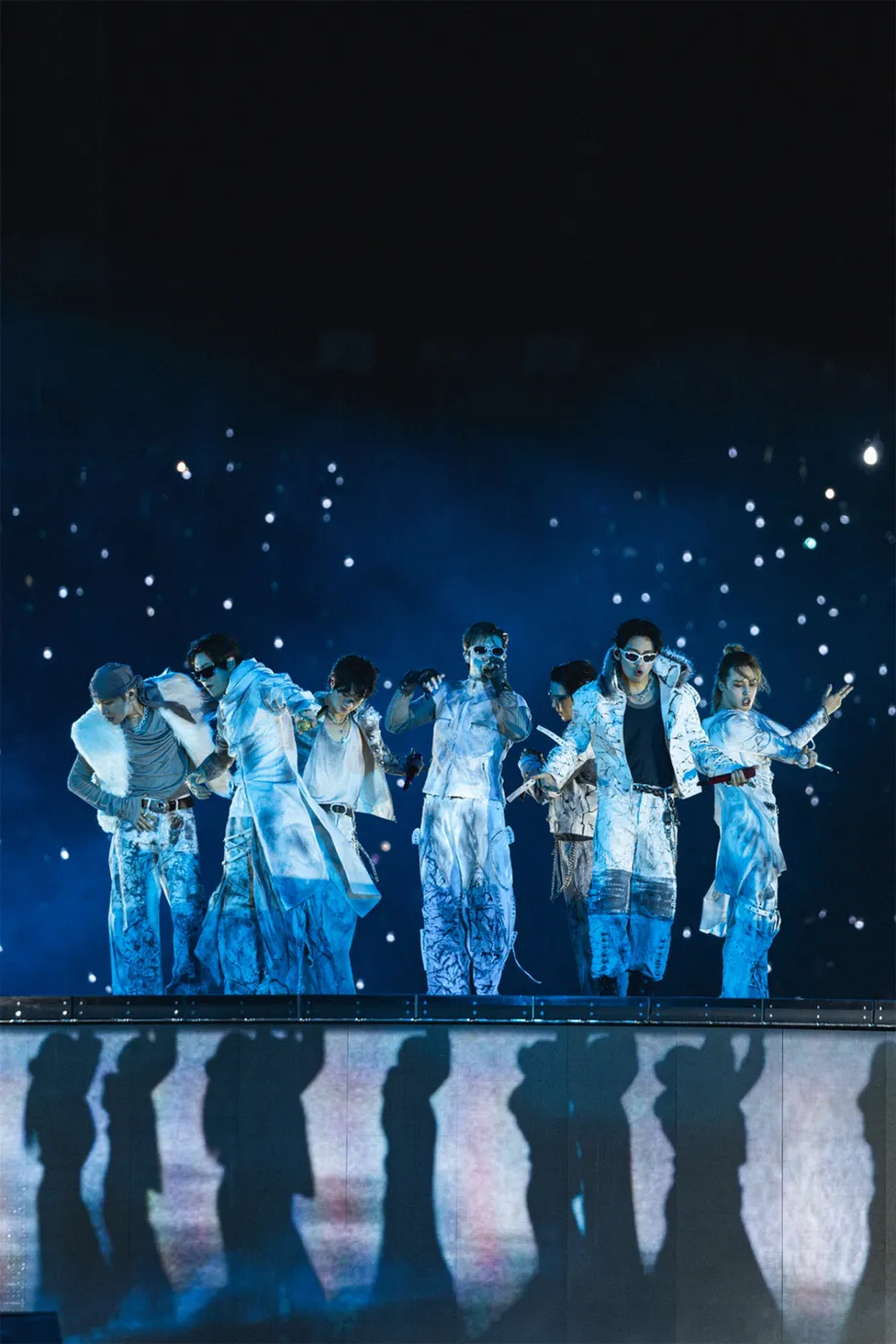
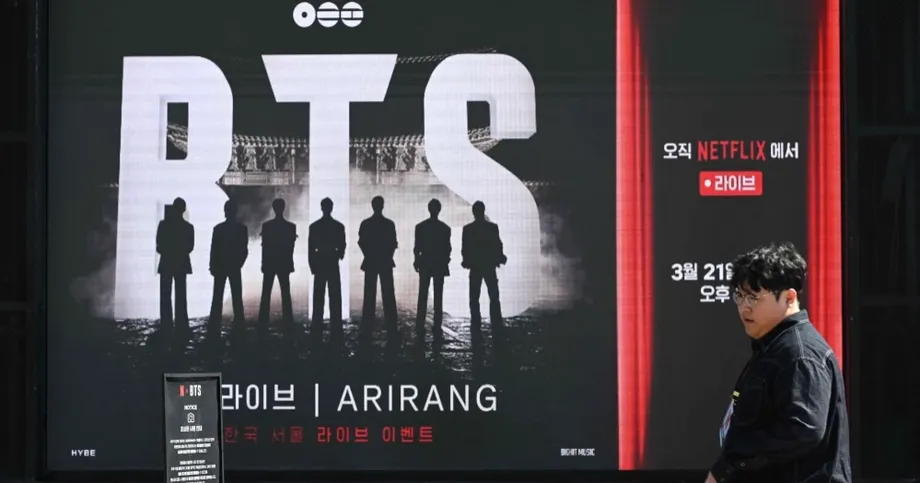
BTS released its fifth studio album, ARIRANG, on March 20, performed at Seoul's Gwanghwamun Square on March 21 and returned to Netflix on March 27 with a documentary showing how uncertain that comeback sometimes felt from inside the recording studio. The concert reached a reported 18.4 million viewers worldwide through Netflix's livestream. The film turns from that public scale to the decisions seven musicians had to make before they could stand together again.
Contents
- Seven Members Return, With More Than a Reunion to Resolve
- From Military Service to a Shared House in Los Angeles
- Why the Album Became ARIRANG
- A Historic Recording Divides the Room
- SWIM Tests What a BTS Lead Single Should Sound Like
- Korean Identity and a Global Audience
- How the Cameras Entered the Creative Process
- Brotherhood Without Erasing Individual Lives
- A Successful Launch Does Not Erase the Doubts
- Key Points
Directed by Bao Nguyen and produced by This Machine and HYBE, with Jane Cha serving as producer, the 91 minute BTS: The Return follows RM, Jin, SUGA, j-hope, Jimin, V and Jung Kook through the creation of their first full album in nearly four years. All seven had completed South Korea's mandatory military service before the collective recording process began.
The documentary's central tension is specific: how could BTS return recognizably as BTS without simply repeating its past? Arguments over the subdued lead single SWIM, the use of a historic Arirang recording and the balance between Korean and English lyrics show that a reunion did not automatically produce agreement about the music.
Netflix's official documentary announcement describes a film about doubts, rediscovery and an evolving identity. Its most revealing scenes put those ideas into practical terms: choosing a chorus, questioning a song's energy and deciding how much cultural weight an album should carry.
From Military Service to a Shared House in Los Angeles
The film covers nearly eight months, beginning with recording in Los Angeles during summer 2025 and continuing through comeback preparations in Seoul in early 2026. The members lived and worked together in a rented Los Angeles house for about a month, temporarily returning to a shared domestic routine that was no longer their usual arrangement.
The opening reconnects the group through a livestream before moving through military footage and the return to music. South Korea generally requires eligible men to serve between 18 and 21 months. For BTS, completing that obligation removed the immediate barrier to working together, but the time apart had also changed the individuals returning to the band.
Jin arrived at the album sessions after completing a solo tour, missing some early recording work. Tight deadlines meant the group had to rebuild its collective rhythm while production was already moving. Collaborations with international producers in Los Angeles were followed by further sessions in South Korea, where the album's final shape emerged.
The sequence places the documentary after the music and the public comeback, allowing viewers to compare the finished result with the hesitation that preceded it:
- Summer 2025: BTS reunites in Los Angeles to live together and begin recording ARIRANG.
- Early 2026: Work continues in Seoul as the members prepare for their return.
- March 20, 2026: ARIRANG is released, and Nguyen discusses the documentary at a Seoul press conference.
- March 21, 2026: BTS performs at Gwanghwamun Square in a concert livestreamed by Netflix.
- March 27, 2026: BTS: The Return premieres on Netflix.
Why the Album Became ARIRANG
The idea for the album title did not originate with one of the seven members. In a filmed presentation, Boyoung Lee, executive creative director at Big Hit Music, proposed ARIRANG by drawing a connection between BTS and seven Koreans who recorded the traditional song in the United States in 1896.
A Korea.net government article identifies them as Korean students in Washington and describes their recording as the first recording of Arirang. Lee's presentation gave the album a concrete historical reference: seven Koreans bringing their culture to an American setting, more than a century before BTS's Los Angeles sessions.
Arirang is a traditional Korean folk song with a strong place in the country's cultural identity. Using its name made the album's connection to Korea explicit. It also created a creative responsibility beyond choosing an appealing title, because listeners would bring their own associations with the song to the new record.
RM initially welcomed the reference, but the documentary shows that accepting the concept was easier than deciding how to express it. The group had to weigh whether such a familiar tradition would fit the music they were making and how it would sound to listeners both inside and outside Korea.
A Historic Recording Divides the Room
That tension became audible in Body to Body, the album's opening track. The question was whether to include the historic Arirang recording and, if so, how to integrate it. A sample is a piece of an existing recording used within a new song. Here, the sample carried a historical meaning as well as a musical texture.
When j-hope, Jimin and V heard one version, their response was enthusiastic. RM and SUGA were less convinced. RM thought the arrangement sounded like several different ideas competing inside the same track. These were disagreements about the construction of a song, not evidence that the members had rejected the album's Korean identity.
HYBE chairman and founder Bang argued for retaining Arirang during a meeting in Seoul. He asked the members to imagine what the passage could become in a large concert setting, while acknowledging that the decision belonged to them.
"Imagine performing in front of 60,000 or 70,000 people. Imagine most of them are foreigners, singing along to the chorus of 'Arirang.' That moment will be incredibly iconic," says Bang.
The Arirang passage ultimately appeared on the album. Bang's imagined audience of 60,000 or 70,000 was a scenario used in the creative discussion, not a reported attendance figure for the Gwanghwamun performance. The scene shows how the same musical passage could be judged differently as a studio arrangement, a cultural statement and a potential concert moment.
SWIM Tests What a BTS Lead Single Should Sound Like
The debate over SWIM was different. Instead of asking how much history to include, the members questioned whether a mellow song was the right introduction to their return. A lead single often gives listeners their first impression of an album, making its tone a consequential choice after a long absence.
RM, the group's leader, described the track as a departure from their usual style and connected that departure to the decision to take a risk.
The song's a bit mellow so it's already a big departure from our usual style," says RM. "But even so, now is the time to take that risk.
The uncertainty did not disappear once SWIM had been selected. RM still thought it felt low in energy, and Jung Kook shared that concern. V observed that the song moved in the opposite direction from what people might expect. Jimin distinguished liking the track from feeling confident about releasing it: a good song could still be a frightening choice.
SUGA, a BTS member who supported SWIM, reminded the group that uncertainty had accompanied an earlier release that became a major success.
"We weren't sure about 'Dynamite' either," he says.
That comparison did not prove SWIM would repeat the success of Dynamite. It did give the members a shared example of their instincts being unsettled before a release. Their eventual choice favored a more mature sound rather than treating the comeback as a requirement to recreate an earlier hit.
Korean Identity and a Global Audience
The government account identifies another recurring discussion: the proportion of Korean and English lyrics. Placed alongside the Arirang debate, it shows that cultural identity was being negotiated through the details of the record, not simply declared through its title.
The members were making music for an international audience while deciding what felt authentic to them. A historic Korean recording, contemporary pop production and lyrics in different languages could coexist, but the documentary shows that finding the right balance required repeated discussion.
RM puts the broader task directly in the film. As BTS's leader, he describes the search for the group's musical identity after its time apart.
"We're trying to find what makes us BTS," RM says.
The film also addresses the industry's so called seven year curse, a shorthand for the difficulty some Korean pop groups face in staying together over time. BTS debuted in 2013 and had already moved well beyond that period. Its immediate challenge was more specific: preserving the collective bond while allowing seven artists with separate experiences to change.
How the Cameras Entered the Creative Process
Nguyen, whose previous films include The Greatest Night in Pop, approached the studio with an observational method. Cameras placed on tripods allowed the crew to watch without continually moving through the room. The intent was to avoid interrupting a creative flow that could be fragile even without a documentary team present.
The access extended beyond recording sessions. Cha describes filming in the shared house, sometimes in bedrooms during downtime, and between the house and studio. The documentary also includes the meeting with Bang. Nguyen says he witnessed polite musical disagreements rather than major conflict among the members.
The filmmakers could not be present around the clock. Nguyen therefore gave the members small camcorders so they could film one another when the crew was absent. Those images brought a different perspective from professional studio footage, with the feeling of personal home movies rather than a continuous outside observation.
The method matters to what viewers see. A disagreement captured from a quiet corner can retain the pauses and uncertainty of a working session. Footage made by the members can show interactions that occur without a film crew in the room. Neither guarantees complete access to private life, but together they broaden the account beyond polished performances.
Brotherhood Without Erasing Individual Lives
Once filming returned to Seoul, each member was asked to choose a meaningful activity for an individual shoot day. The resulting scenes include Jimin cooking at home, Jin playing tennis and Jung Kook spending time with his dog, Bam. These moments distinguish the members from the collective image that dominates a stadium performance.
V's segment includes dinner with his Wooga Squad friends: actors Woo Shik Choi, Seo Jun Park and Hyung Sik Park, and musician and producer Peakboy. The gathering places him within friendships outside BTS rather than presenting the band as the entirety of every member's personal world.
Other scenes are more uneasy. Jimin discusses the isolation associated with fame, while Jung Kook expresses a wish that he could sometimes simply be a singer. RM describes life as BTS as both a blessing and the burden of a crown that feels too heavy. Together, these reflections complicate the idea that worldwide recognition removes personal uncertainty.
The shared house offers a counterweight to that pressure. As the Los Angeles stay ends, the members talk about missing it and consider living together again. Their attachment is expressed through ordinary routines and company, not just statements about loyalty. Nguyen says the film became a story about brotherhood and how responsibilities that feel overwhelming individually can be carried together.
A Successful Launch Does Not Erase the Doubts
The public response gave the comeback an immediate scale. ARIRANG was reported to have become Spotify's most streamed album in a single day that year and to have set a platform record for a Korean pop album. SWIM was also reported at No. 1 globally on Spotify after release. No exact stream totals accompany those claims here, so they cannot establish the size of the gap between BTS and other releases.
The Netflix concert's reported 18.4 million worldwide viewers measures a different kind of reach from an album's streams. It should not be treated as a count of individual ticket buyers or compared directly with Bang's imagined stadium audience. Both figures point to scale, but they describe different activities.
At the March 20 press conference at Cinecube Gwanghwamun in Seoul, Nguyen described the film as more than a record of artistic work. His account focused on the responsibilities BTS carries as Korean and global artists, and on the members' ability to navigate those responsibilities together. Big Hit Music vice president Kim Hyunjung explained that an album lasting less than an hour rests on a much longer process involving many people's teamwork.
That contrast is the documentary's strongest contribution. The finished album, concert and streaming response show what reached the audience. The film preserves the less certain process that produced it: a title proposed by a creative director, a historical sample debated with the chairman, and a lead single chosen despite the members' fear. Beyond the March 27 premiere, no specific next release date or tour deadline is established in these accounts.
Key Points
- BTS: The Return premiered on Netflix on March 27, following ARIRANG's March 20 release.
- The 91 minute documentary follows nearly eight months of recording and comeback preparations in Los Angeles and Seoul.
- ARIRANG's concept draws on an 1896 recording made by seven Koreans in Washington.
- The members debated the Arirang sample in Body to Body, the balance of Korean and English lyrics, and the mellow lead single SWIM.
- Bao Nguyen combined observational studio filming with footage recorded by the members themselves.
- The March 21 Gwanghwamun Square concert reached a reported 18.4 million viewers worldwide through Netflix.