A 90 Degree Turn in a Public Sports Project
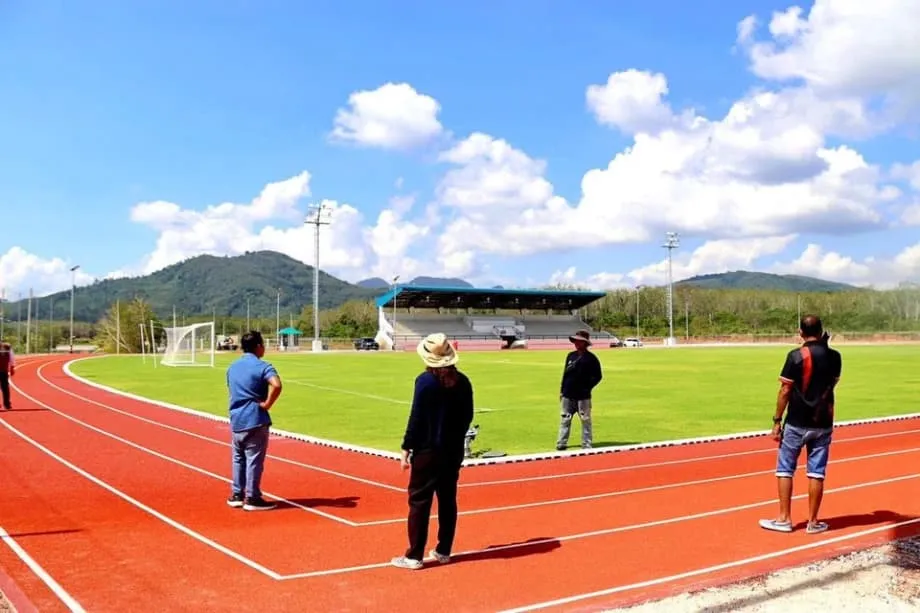
A new sports complex in Padang Besar, in Thailand's southern province of Songkhla, has drawn international attention for a running track with four sharp corners. Instead of the familiar oval surrounding a football pitch, the track follows the field's rectangular shape, requiring users to change direction through 90 degrees at each corner.
Contents
- A 90 Degree Turn in a Public Sports Project
- How a Stadium Announcement Became a Controversy
- Why Officials Put the Football Pitch First
- What Happens When a Runner Reaches a Sharp Corner?
- Safety Questions Extend Beyond Competitive Running
- Online Jokes Carried a Serious Spending Question
- What the Anti-Corruption Commission Is Examining
- The Planning Decisions Under Scrutiny
- Handover Leaves the Possibility of Changes
- The Bottom Line
The stadium was described as costing approximately 30 million baht, or S$1.22 million. Nearly 7 million baht was allocated specifically to the track. The National Anti-Corruption Commission (NACC), which announced an investigation on January 14, described its review as covering nearly 35 million baht in public funds. Those figures put both the design and the return on public spending at the centre of the controversy.
Images appeared on the Facebook page of the Padang Besar municipality office on December 24. An announcement intended to celebrate a new community facility quickly attracted ridicule and concern about planning, safety and the use of taxpayers' money. The football pitch reportedly meets international standards, while the surrounding track has become the main target of criticism.
Dech-it Khaothong, a former Member of Parliament for Songkhla and former deputy interior minister who helped secure funding, said the track was intended for walking, not competitive athletics. His explanation was that the site could accommodate a regulation football pitch or a conventional oval track, but lacked enough space for both.
As of January 22, 2026, the project had not been formally handed over to municipal authorities. Dech-it said modifications remained possible, although no commitment to make changes had been announced. The controversy therefore involves three connected issues: what the municipality intended to build, whether the result is suitable for its users, and whether the construction process delivered value for public money.
How a Stadium Announcement Became a Controversy
The December 24 photographs showed a track that mirrored the football field rather than enclosing it within sweeping curves. Its unusual appearance spread across social media, bringing scrutiny from athletes, people concerned about safety and residents questioning the investment.
The contrast with conventional athletics facilities was immediately visible. A runner on an oval gradually changes direction through each bend. At Padang Besar, someone following the track encounters an abrupt corner. That difference helped turn a local building project into an international talking point and prompted comparisons with architectural oddities.
Public criticism soon moved beyond appearance. Questions concerned who approved the layout, how the limited space was assessed, and why money was spent on a track that officials now describe as a supplementary walking path. The investigation followed several weeks after the municipality published the photographs.
The main events unfolded in this sequence:
- December 24: Photographs of the completed facility appeared on the Padang Besar municipality office's Facebook page, drawing attention to its rectangular track.
- January 14: The NACC announced an investigation into the project, including bidding, budgeting and planning procedures.
- January 22, 2026: The project remained awaiting formal handover, with changes possible but no announced commitment to carry them out.
Why Officials Put the Football Pitch First
Dech-it's explanation centred on the municipality's need for a sports venue of its own. Local organisations previously had to rent private facilities for events, bringing additional costs and sometimes creating scheduling conflicts. The new stadium was intended to give the growing community near the Malaysian border a dedicated public place for sport.
The football field was the priority, he said. Once a pitch meeting international standards had been accommodated, the remaining space was used for an exercise path. In his account, the rectangular layout reflected the limits of the site rather than an attempt to create a track for competitive runners.
Dech-it, the former Songkhla MP and deputy interior minister involved in obtaining funding, described the intended use in these terms:
The track was never intended for athletic purposes but only as an exercise path for walking.
Dech-it also presented the path as a bonus feature, saying the principal objective of providing a quality football field had been achieved. His explanation places the football pitch at the heart of the project and treats the surrounding exercise area as secondary.
Critics questioned that choice. If the available space could not support a suitable running track, they argued, the resources spent constructing one could have been used elsewhere. Nearly 7 million baht is a substantial allocation for a feature described as an extra, especially when the entire project was financed with public funds.
The disagreement concerns the usefulness of the finished facility as much as its shape. Officials point to a public football venue that can reduce dependence on private rentals. Critics ask whether the additional path provides enough benefit to justify its cost and whether its design matches the exercise people expect to do there.
What Happens When a Runner Reaches a Sharp Corner?
Athletics tracks use curved bends because a moving runner needs to change direction gradually. Centripetal force is the force that turns a moving body towards the centre of a curve. On a bend with a suitable radius, a runner can adjust their body angle while continuing forward at a relatively steady pace.
A sharp right angle asks the runner to make that change much more abruptly. Someone approaching a corner at speed must slow considerably or place greater demands on their footing and joints. Braking and accelerating again also interrupts momentum and uses more energy than maintaining a smoother pace through a gradual turn.
Track design addresses those forces through the shape and radius of its bends. Banking, where the surface slopes through a turn, helps counter the outward effect experienced by a runner and reduces the lateral pressure involved in changing direction. The concern at Padang Besar is the sudden change in direction created by each corner.
The knees and ankles are central to that concern. Running already involves repeated impacts, while an abrupt turn adds uneven loading as the body redirects its weight. The physical explanation behind the criticism is that forward movement with gradual directional changes is easier to sustain than repeated sharp turns.
The potential consequences described include joint stress, tendon strain, overuse injuries and falls. A public facility also serves people with different levels of fitness and athletic experience, making its practical demands relevant beyond trained competitors. A runner accustomed to maintaining speed around an oval would face a different movement pattern on this rectangular route.
Safety Questions Extend Beyond Competitive Running
Slips and falls are among the most immediate concerns. A runner turning sharply generates sideways forces while relying on the grip between shoes and the track surface. If those forces exceed the available traction, the runner can lose their footing. Wet conditions increase concern because the surface can become more slippery.
Medical concerns also involve repeated use. Uneven pressure on the knees, ankles and hips during abrupt changes of direction can contribute to overuse problems, including tendonitis and stress fractures. Tendonitis refers to inflammation of a tendon, the tissue connecting muscle to bone. Repeated loading is part of the concern, alongside the possibility of a single fall.
Older users and people with existing joint conditions may find sharp turns particularly uncomfortable. A facility intended to encourage exercise could instead discourage some residents if moving around it feels awkward or places unwelcome demands on their joints.
Walking is the use Dech-it identified, but criticism also addressed that activity. Walking paths commonly use gentle curves for practical and visual reasons. At a right angle, a walker may need to slow and shift their weight more abruptly, interrupting a continuous exercise rhythm and potentially reducing its cardiovascular benefit.
The distinction between walking and running therefore matters to everyday use. The official explanation describes a path for slower movement; the public reaction focused heavily on what would happen if someone tried to run around it at speed. Both concerns feed into the question of whether the finished layout serves the people likely to use the stadium.
Online Jokes Carried a Serious Spending Question
Reddit and Facebook users responded with a mixture of humour and frustration. Some wondered whether the photographs were a prank, while others focused on the prospect of injuries. Jokes about cutting corners became part of a wider argument over whether basic design considerations had been overlooked.
An unnamed Reddit user questioned the authenticity of the scene by asking:
Is today April 1st?
Another unnamed social media user connected the unusual geometry to the strain that a runner might experience:
In case this 90 degree turn concept catches on, we will need to start practising sharp turns. My knees may not cope.
Other commenters expressed fears that sharp turns could damage knees and ankles or cause injuries serious enough to end an athletic career. Alongside those concerns, taxpayers questioned the utility of a feature costing nearly 7 million baht and the apparent lack of common sense in its design.
The track allocation represents approximately 23% of the stated 30 million baht construction cost, calculated by dividing nearly 7 million by 30 million. Using the nearly 35 million baht figure cited for the commission's review, it represents about 20%. Either comparison explains why attention moved from the unusual photographs to the financial decisions behind the project.
What the Anti-Corruption Commission Is Examining
The NACC's investigation covers contract bidding, budget allocation and whether proper planning procedures were followed. Its review extends beyond the track's appearance to the wider question of whether the sports complex provides appropriate value for the public funds invested.
Ram Wasuthanapinyo, director of the NACC's Songkhla office, explained that the inspection considered public benefit and transparency throughout the project:
This inspection was not just about the unusual appearance of the stadium. We also focused on the value for money of the nearly 35 million baht of public funds, ensuring that the public would receive maximum benefit and that the project was transparent at every stage.
The construction contract is being examined to determine whether the required procedures were followed and whether shortcuts occurred during approval and building. The bidding review concerns how the work was awarded, while the budget review concerns what the allocated money purchased.
Drainage and maintenance are also areas of concern. Critics questioned whether the layout could create water accumulation problems or additional upkeep requirements. Such problems would affect how usable the facility is and could add pressure to municipal budgets after construction.
The commission's focus on public benefit connects the immediate controversy with longer term costs. A stadium requires more than an initial building budget: the concerns raised here include whether it can be maintained efficiently and whether residents receive practical value from the football pitch and exercise path.
The Planning Decisions Under Scrutiny
Sports facility planning normally involves consultation with athletics associations, safety specialists and potential users. Their involvement helps match a design to the activities it is meant to support, while checking performance and safety requirements before construction begins.
At Padang Besar, critics questioned whether that kind of consultation had adequately informed the layout. The conspicuous departure from conventional track design brought the planning process itself under scrutiny, particularly the decision to fit an exercise route into the space left around the football pitch.
The municipality's limited land and budget are central to the explanation officials offered. A crowded site can force choices between competing uses. Here, the choice was to protect the dimensions of the football field and adapt the surrounding path to the remaining area.
Public scrutiny concerns how openly that choice was made and assessed. Explaining intended uses and design compromises during planning allows residents to understand what their money will buy. At this stadium, the disagreement became prominent after the completed facility's photographs appeared.
The case has also renewed debate about stricter planning procedures, feasibility studies, public consultation and transparent budgeting in regional infrastructure projects across Thailand. Technical advice before building, and a clear account of why particular compromises were selected, are practical parts of that debate.
Handover Leaves the Possibility of Changes
Padang Besar's stadium remained awaiting formal handover to municipal authorities as of January 22. Dech-it said the project could still be modified, but no commitment or timetable for changes had been given. No next investigation deadline was announced.
The municipality still has the original reason for building the venue: providing a public sports space where local organisations previously relied on rented private facilities. The football pitch reportedly meets international standards. The unresolved argument concerns the surrounding exercise path, its cost and its suitability for the activities residents may undertake.
The NACC review places those practical questions alongside procurement and financial accountability. Its examination of bidding, budgets, planning, the construction contract, drainage and maintenance will address how the project was delivered and whether public benefit justified the spending.
The immediate choice is therefore more specific than whether the stadium looks unusual. It concerns what should happen before handover, how the exercise area can serve its intended users, and how the municipality will account for both the initial investment and the upkeep of its new facility.
The Bottom Line
- The Padang Besar stadium in Songkhla has a rectangular running track with 90 degree corners surrounding a football pitch that reportedly meets international standards.
- The project was described as costing about 30 million baht, or S$1.22 million; the NACC cited nearly 35 million baht in public funds for its review.
- Nearly 7 million baht was allocated specifically to the track.
- Municipal photographs published on December 24 prompted international attention, online ridicule and concerns about safety and spending.
- Dech-it Khaothong said limited space required prioritising the football pitch and that the surrounding path was intended for walking rather than competitive athletics.
- The NACC announced its investigation on January 14, covering bidding, budgeting, planning and public value, with drainage and maintenance also drawing scrutiny.
- Safety concerns involve abrupt changes in direction, joint stress, slips and repeated loading, particularly for runners and users with existing joint problems.
- As of January 22, 2026, the project had not been formally handed over; modifications remained possible, but no changes or timetable had been committed to.