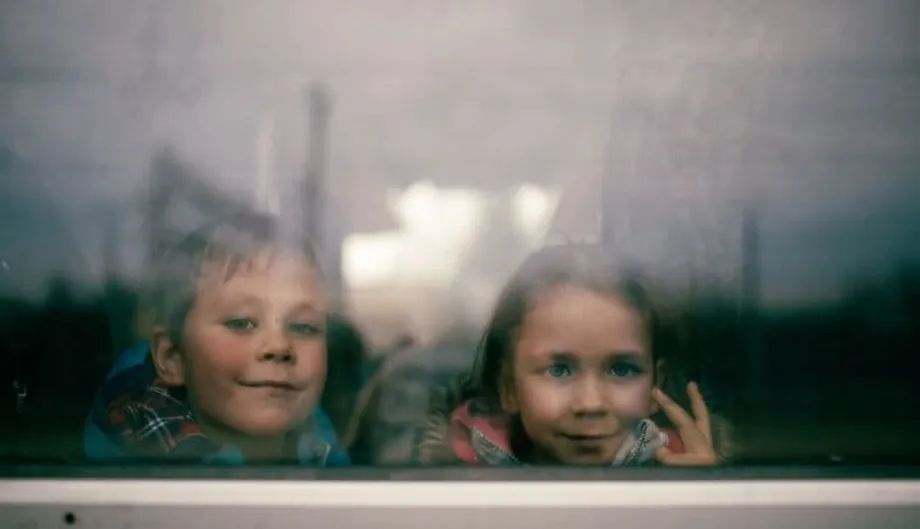
Two children taken thousands of kilometers from home
A boy aged 12 from occupied Donetsk and a girl aged 16 from Simferopol in Crimea were taken to North Korea's Songdowon International Children's Camp for ideological training, according to Ukrainian testimony to lawmakers in Washington. The children, identified as Misha and Liza, were transported about 9,000 kilometers from their homes to a coastal complex near Wonsan.
Contents
- Two children taken thousands of kilometers from home
- What investigators describe at Songdowon
- A network of more than 210 facilities
- Why lawyers challenge the evacuation claim
- Arrest warrants and the international timeline
- What the United Nations demanded
- Why Russia's ties with North Korea matter
- How children are being brought home
- Families and the terms of peace
- At a Glance
A Ukrainian human rights lawyer told a United States Senate subcommittee in sworn testimony that her organization had recorded two verified cases of children taken to North Korea. The account described military themed instruction, Soviet era narratives adapted to North Korean ideology and meetings with veterans connected to the 1968 attack on the United States Navy ship Pueblo.
Ukrainian investigators say the children were isolated from their families, prevented from speaking Ukrainian and exposed to a narrative denying Ukraine's existence as a nation. Their cases extend Ukraine's account of unlawful deportation and forced assimilation beyond Russia and occupied Ukrainian territory to a country that permits little independent scrutiny.
As of December 5, 2025, Kyiv had verified information concerning more than 19,500 children deported since 2022. Researchers at Yale University's Humanitarian Research Lab estimated that at least 35,000 Ukrainian children, ranging from infants to teenagers aged 17, had been temporarily or permanently under Russian custody. Ukraine had brought home roughly 1,800 children, often with help from intermediaries.
Russia rejects the allegations of wrongdoing. Moscow says it evacuated children for their safety, reports that hundreds of thousands of Ukrainian children crossed into Russia and says it has procedures for family reunification when possible. Ukraine and human rights lawyers argue that the transfers described in their investigations lack the safeguards required for lawful evacuations.
What investigators describe at Songdowon
Misha and Liza were taken to a camp that has operated for decades as a flagship North Korean youth complex. North Korean media presents Songdowon as a seaside retreat for children, and the camp has hosted mass youth programs with patriotic content for domestic participants and invited foreign groups.
The Senate testimony described lessons urging children to defeat Japanese militarists, including instructions to destroy them. The children were also shown a heroic version of North Korean military history and met Korean veterans who took part in the 1968 Pueblo incident.
External accounts of Songdowon describe regimented schedules, activities in large groups, uniformed routines and frequent political instruction. Ukraine says placing abducted children in that environment fits a broader effort to replace their national identity with loyalty to Russia and powers friendly to Moscow.
Investigators describe similar practices at other locations holding Ukrainian minors: restrictions on contact with relatives, mandatory use of Russian and patriotic education that erases Ukrainian identity. These placements can involve prolonged stays, strict isolation and carefully controlled encounters with officials and veterans who reinforce wartime narratives.
The account of the two children gives the wider deportation issue a new geographic dimension. A return from North Korea would require cooperation from two governments, while families and those tracing children would face additional difficulties obtaining access, confirming their location and arranging travel.
A network of more than 210 facilities
Yale's Humanitarian Research Lab has documented more than 210 facilities inside Russia and occupied Ukrainian territory that have hosted or trained deported children since 2022. Its research identifies eight types of locations, including summer camps, sanatoriums, educational centers, religious institutions, temporary shelters and a military facility.
Children pass through this network in different ways. Some are moved for weeks, while others remain for months or longer. Some are transferred between several camps before being placed with Russian guardians or adoptive families.
The children identified in the research include those living in state institutions, minors separated from their parents in conflict areas, children with disabilities and children taken directly from families by occupation authorities. Tracing their movements can require reconstructing a series of transfers rather than locating a single destination.
Kyiv's figure of more than 19,500 verified deportations and Yale's estimate of at least 35,000 children under Russian custody describe different categories. The Ukrainian figure concerns verified information about deported children, while the research estimate includes children held temporarily or permanently. Both show a scale far larger than the roughly 1,800 returns Ukraine has secured.
Russian authorities have simplified access to Russian citizenship for Ukrainian minors and accelerated adoption procedures. Changes to citizenship, guardianship and family placement are central to Ukraine's concerns because they affect children's identities and the arrangements needed to reunite them with relatives.
Why lawyers challenge the evacuation claim
Ukrainian legal experts argue that transfers are often described as evacuations without the protections international law requires. The Geneva Conventions require diligent registration, monitoring and family reunification for children moved from conflict zones. In practical terms, those safeguards create a record of who a child is, where the child has gone and how relatives can be reunited.
The lawyers cite missing registries shared with the International Committee of the Red Cross, a lack of standardized documentation and the denial of voluntary return. The Ukrainian human rights lawyer who testified to United States lawmakers described those failures while calling for stronger pressure to secure the children's return.
"No list was provided to the Red Cross. No assessment was carried out. No voluntary repatriation took place," she said.
Human rights lawyers also point to the Genocide Convention. Forcibly transferring children from one national group to another can meet its definition of genocide when the aim is to destroy the identity and continuity of the protected group. That legal argument concerns the purpose of the transfers as well as the children's treatment and placement.
Russia maintains that its actions were intended to protect minors and that family reunification is possible through its procedures. Ukraine's challenge centers on the absence of the records, access and voluntary return arrangements that lawyers say a lawful evacuation requires.
Arrest warrants and the international timeline
The International Criminal Court issued arrest warrants in March 2023 for Russian President Vladimir Putin and Maria Lvova Belova, the Russian official responsible for children's rights. The warrants allege their roles in the unlawful deportation of Ukrainian children.
The court's action made deportations a focus of international criminal proceedings. Enforcement depends on cooperation from countries where the suspects might travel. The warrants constrain diplomatic travel for the accused and raise the longer term costs of continuing the program.
Governments have separately sanctioned Russian officials, agencies and institutions linked to child transfers. Those measures add political and financial pressure to the criminal process, while the practical work of identifying children and negotiating returns continues.
The events described by Ukraine, researchers and international bodies span several years:
- Since 2014: The period covered by the United Nations demand for the return of Ukrainian children transferred by force or illegally deported.
- Since 2022: Kyiv has verified more than 19,500 deported children, and Yale researchers have documented a network of more than 210 facilities.
- March 2023: The International Criminal Court issued arrest warrants for Vladimir Putin and Maria Lvova Belova.
- Mid 2024: Russia and North Korea signed a comprehensive partnership agreement containing far reaching security language.
- By December 5, 2025: Ukrainian testimony described two verified cases involving North Korea, and Ukraine had brought home roughly 1,800 children since 2022.
The legal and diplomatic measures address different parts of the problem. Criminal proceedings seek accountability for alleged crimes, sanctions target those connected to the transfers, and negotiations seek the children's return to their families.
What the United Nations demanded
The United Nations General Assembly adopted a resolution demanding the immediate and unconditional return of all Ukrainian children transferred by force or illegally deported since 2014. Ninety one countries voted in favor, while a dozen, including Russia, Belarus and Iran, voted against.
The resolution also demands an immediate end to new deportations, family separations, changes of status or citizenship, adoptions, placements in foster care and ideological conditioning. Its scope covers both the physical movement of children and measures that alter their identities or family relationships after a transfer.
General Assembly resolutions are not legally binding. They nevertheless establish political benchmarks and record the position taken by participating governments. Here, the central benchmark is the unconditional return of the children, together with a halt to practices that make reunification more difficult.
Ukraine's deputy foreign minister, Mariana Betsa, told the assembly that the issue should not become a bargaining chip in negotiations. She presented the return of children as a basic humanitarian requirement.
"There will be no just peace in Ukraine without the unconditional return of Ukrainian children. This resolution is not about politics. It is a matter of humanity," Betsa said.
The demand for unconditional return puts families at the center of the diplomatic response. Ukraine's position is that children should be reunited with relatives without their return depending on concessions over other parts of the war.
Why Russia's ties with North Korea matter
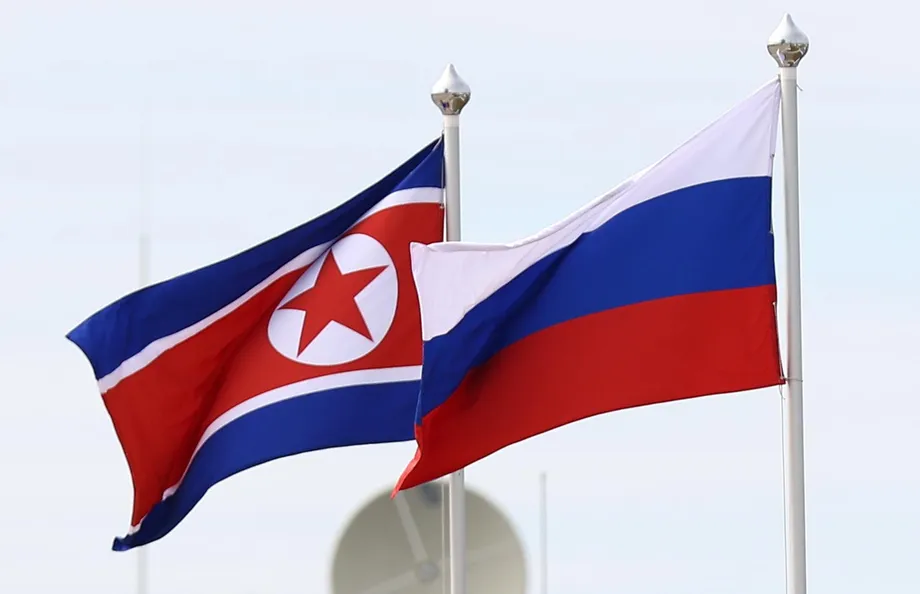
Moscow and Pyongyang have tightened their relationship since Russia's full scale invasion of Ukraine in 2022. Their leaders signed a comprehensive partnership agreement in mid 2024 with far reaching security language.
Western governments say North Korea has supplied artillery shells and ballistic missiles to Russia. Both capitals argue that their cooperation complies with international rules. Independent visibility into the relationship is limited because North Korea allows little outside scrutiny.
Against that backdrop, the reported placement of Ukrainian children at Songdowon would signal deeper coordination between the two governments. The camp's focus on loyalty, discipline, state history and patriotic pageantry aligns with the methods of propaganda and control described in Ukraine's account.
Families seeking children in North Korea would face the custody problems already encountered inside Russia alongside North Korea's closed environment. Transfers to a third country complicate tracing, consular access and oversight by neutral organizations, while widening the area that investigators must search.
Russian leaders have also said North Korea should be involved in future talks on the conflict. Such a role would give Pyongyang a voice in humanitarian arrangements, including child returns. That prospect makes commitments on access, communication and eventual return especially relevant to the two cases.
How children are being brought home
Ukraine has secured the return of roughly 1,800 children since 2022, often through mediation by third parties. Qatar, South Africa and the Vatican have helped in individual cases.
Each return can require months of verification, negotiation and travel arrangements. A child's identity must be confirmed, relatives must be located and the authorities controlling the child's movement must agree to the journey. Thousands of children remain missing or in foreign custody, making this a large and continuing undertaking.
Ukrainian agencies and nongovernmental groups use open source research, school records and DNA matching to trace children. DNA matching can help establish a family relationship, while records and publicly accessible information can help reconstruct a child's movements.
Ukraine has delivered official lists of deported minors during talks with Russia, demanding direct answers about their location and status. Confirming individual cases, including the two children reportedly taken to Songdowon, helps build a legal record and can create an opportunity to negotiate repatriation.
Humanitarian advocates identify four areas of work needed to bring more children home:
- Map, verify and track every child through open registries shared with neutral bodies and detailed records of transfers, guardians and locations.
- Expand safe return channels through third countries able to mediate and provide travel documents, prioritizing children whose parents are identified and reachable.
- Apply targeted sanctions, asset freezes and travel bans to officials and institutions that arrange, fund or publicize deportations and adoptions.
- Collect evidence for future prosecutions and civil claims seeking restitution and support.
Documentation, diplomacy and legal pressure have already helped bring hundreds of children back to their families. The work remains demanding because records, permissions and travel arrangements must often be secured for each child separately.
Families and the terms of peace
Nathaniel Raymond, director of Yale's Humanitarian Research Lab, told United States lawmakers that returning abducted children should be a condition of any negotiated settlement. He described that requirement as a baseline for moral credibility and a practical safeguard against accepting wartime child transfers as normal.
"The return of all abducted Ukrainian children should be a prerequisite for any negotiated solution to this war," Raymond said.
A binding mechanism to identify and return every child would give families in occupied regions a way to rebuild their lives. The issue affects public support in Ukraine and abroad and carries weight in discussions about ceasefires, prisoner exchanges and humanitarian corridors. Measurable progress on returns would demonstrate that agreements can be enforced and that protections for civilians are being respected.
Ukraine's human rights ombudsman, Dmytro Lubinets, has called for a concerted search for every missing child and a comprehensive system to protect them from ideological and physical harm. He argues that moving children across borders without consent and stripping them of their identity turns them into instruments of war.
"Every child must be found, protected and brought home. Ukrainian children cannot be used as weapons by the aggressor," Lubinets said.
Ukraine's first lady, Olena Zelenska, has described the emotional toll on families and the nation. In a recent speech, she called for faster international action and said delays carry a human cost measured in lives and lost childhoods.
"Perhaps the most painful recognition of this war is the systematic deportation of Ukrainian children," Zelenska said.
As of December 5, the account gave no date for the return of Misha and Liza. Their reported transfer to North Korea illustrates the practical demands facing families: finding a child, securing contact, confirming the child's status and obtaining cooperation from every government involved in the journey home.
At a Glance
- Ukrainian testimony described two verified cases involving Misha, 12, and Liza, 16, who were taken to North Korea's Songdowon camp, about 9,000 kilometers from home.
- The testimony described ideological instruction and meetings with veterans linked to the 1968 attack on the United States Navy ship Pueblo.
- Kyiv has verified more than 19,500 deported children since 2022; Yale researchers estimate at least 35,000 children have been temporarily or permanently under Russian custody.
- Researchers have documented more than 210 facilities in Russia and occupied Ukraine that hosted or trained deported children.
- The UN General Assembly demanded the unconditional return of children transferred by force or illegally deported since 2014, with 91 countries supporting the resolution and a dozen opposing it.
- The International Criminal Court issued arrest warrants for Vladimir Putin and Maria Lvova Belova in March 2023 over alleged unlawful deportations.
- Russia denies wrongdoing and says it evacuated children for safety and has procedures for family reunification.
- Ukraine has brought home roughly 1,800 children since 2022, often through mediation involving third parties.
- Ukrainian officials and Yale's Nathaniel Raymond argue that returning the children must be part of any negotiated peace.