A 12 day celebration will begin on December 24
A Journey into Japanese Craft Aesthetics will go ahead at PMQ in Central for 12 days beginning December 24, its organizers have confirmed, despite private concerns about renewed diplomatic tension between China and Japan. The independent festival will bring master artisans, live performances and workshops to Hong Kong, with a rare local appearance of Awa Ningyo Joruri puppet theater from Tokushima Prefecture at the center of its program.
Contents
- A 12 day celebration will begin on December 24
- Why the diplomatic backdrop matters
- From molten tin to fragrance and color
- The patience behind lacquer and brushwork
- Dance, martial arts and a Tokushima centerpiece
- How three puppeteers bring one figure to life
- Why PMQ suits the festival
- A busy year for Japanese culture in Hong Kong
- The calendar leading to December 24
- What visitors can expect
- Key Points
Theresa Ting, the festival's cofounder, said the team had received no request from any organization or institution to cancel or postpone the event. As of November 28, the plan remained to give city audiences a close look at Japanese craft traditions through demonstrations, performances and opportunities to work with materials themselves.
Ting described the project as commercial and cultural, with no connection to a government agenda. Nevertheless, questions from friends and supporters across different industries had brought personal strain, reflecting concern that political friction could reach into cultural life.
Ting explained how those informal conversations had affected the organizers:
We have been continuously receiving concerns and inquiries from friends across various sectors, which has indeed brought some psychological pressure, to a greater or lesser extent.
The festival's response has been to keep its purpose focused on makers, their techniques and the heritage they sustain. Ting said the intention was to bring Hong Kong residents closer to Japanese traditions through a more detailed encounter with the people who practice them.
Describing that cultural purpose, Ting said:
We have been crystal clear about our focus on cultural promotion, with the goal of bringing Japanese culture to friends in Hong Kong from a more in depth perspective.
Why the diplomatic backdrop matters
Japanese Prime Minister Sanae Takaichi's recent remarks during questioning in the Diet, Japan's parliament, about a possible Taiwan contingency and collective self defense drew sharp criticism from Beijing. The exchange followed earlier strains over trade and maritime issues, adding to a political climate in which cultural events can attract attention beyond their programs.
A Taiwan contingency means a possible crisis involving Taiwan. Collective self defense concerns a country's response when an ally is attacked. Those subjects form the backdrop to the current friction, while the PMQ festival's stated purpose remains the presentation of craft and performance.
Hong Kong has continued to host Japanese cultural programs throughout the year and has a long history of welcoming Japanese food, design and performance. Private organizers nevertheless watch public sentiment, venue policy and safety planning closely when diplomatic relations become strained.
Ting said the concerns reaching her team had largely come through informal conversations with friends. No public body had asked for the festival to be paused. For visitors, the organizers' message is that the event remains a place to meet makers, learn techniques and appreciate traditions.
From molten tin to fragrance and color
The workshop program will cover Takaoka tin casting, incense making, Okinawan dyeing, lacquer art and calligraphy. Each offers a different way to understand how materials, tools and repeated movements become a finished object.
Takaoka tin casting introduces the alloys that have made Toyama Prefecture known for metalwork. An alloy is a mixture of metals. Participants will encounter the process of guiding molten tin into molds and finishing the resulting pieces to produce a warm, satin sheen.
Incense making sessions will explore the blending of powdered woods, resins and natural aromatic ingredients. They will also touch on the tradition of appreciating fragrance, often known as kodo. Here, the craft involves both preparing a material and paying attention to the scent it produces.
Okinawan dyeing will introduce the island tradition of vivid patterns and resist techniques such as bingata. In resist dyeing, selected areas are protected so that color reaches some parts of a surface while leaving others untouched. Stencils, rice paste and natural dyes are used to create layered designs rich in color and symbolism.
The patience behind lacquer and brushwork
Lacquer art will show the careful work involved in building glossy or matte finishes with urushi, Japanese lacquer. The process can involve dozens of extremely thin coats, which harden through exposure to humidity. The finished surface depends on patience across many stages rather than a single application.
Calligraphy sessions will give beginners and enthusiasts an opportunity to try simple exercises in shodo. Rhythm, wrist control and the amount of ink held by the brush are as central to the practice as the characters being written.
A completed object or sheet of writing is only part of the workshop experience. The program aims to help participants understand how individual gestures carry intention, whether a maker is finishing metal, applying lacquer, placing dye or moving a brush.
Hong Kong audiences will therefore be able to approach the crafts at several levels: watching an experienced artisan, learning about a material and attempting a technique themselves. The combination brings centuries of practice into a setting accessible to people encountering these traditions for the first time.
Dance, martial arts and a Tokushima centerpiece
Live performances will extend the festival beyond objects and surfaces. Japanese dance will showcase precise timing, posture and restraint, while martial arts sessions and swordsmanship demonstrations will present training systems that value discipline and safe practice alongside spectacle.
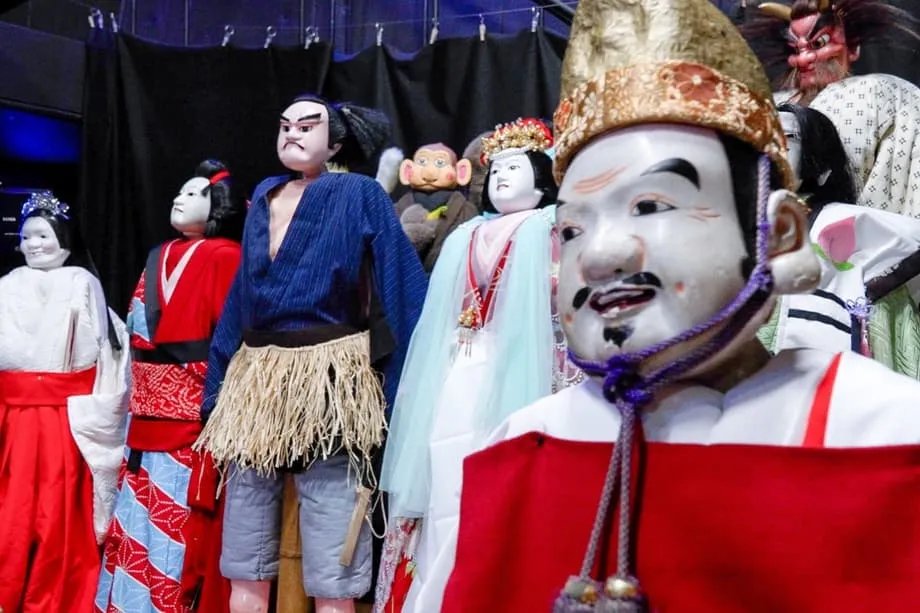
Awa Ningyo Joruri will anchor the program with music, narration and skilled puppet handling. Rooted in Tokushima Prefecture, it is a regional form of ningyo joruri, the wider puppet theater tradition that also includes the style known internationally as Bunraku.
The Awa tradition developed over centuries alongside traveling troupes, rural stages and local patrons. Its appearance at PMQ will offer many Hong Kong viewers a rare opportunity to experience the art in person rather than encounter it through reading.
A narrator delivers poetic lines, shifting between characters and chorus, while shamisen music supports the performance. Together with the puppeteers, these elements create storytelling driven by emotion, allowing a small movement or a change in delivery to carry the drama.
How three puppeteers bring one figure to life
Three puppeteers work together to animate a single Awa Ningyo Joruri figure. Typically, one guides the head and right hand, while two assistants control the left hand and feet. Their coordinated movements can produce gestures as delicate as a turn of the wrist or as expansive as the slow arc of a bow.
The puppets are often half life size and contain mechanisms that allow their eyes, eyebrows and mouths to move. Those details help express grief, humor or resolve. A face can change while the body moves, giving the character a range of expression beyond a fixed mask.
Layered, heavy costumes add to the work required of the performers. The three people handling a figure must anticipate one another's movements, much like musicians in a chamber ensemble. The operators remain visible, yet a successful performance draws the audience's attention toward the character as though it were alive.
Classic plays appear alongside regional tales and seasonal pieces. Loyalty, honor and tragic love recur as themes, with space also for comedy and invention. The stories give purpose to the elaborate mechanisms, costumes and movements.
Bringing Awa Ningyo Joruri to PMQ also connects several crafts within one performance. Puppet making, textile work and music all contribute to a stage tradition that continues to captivate audiences across Japan. Viewers can see how the making of an object and the skill of its performers work together.
Why PMQ suits the festival
PMQ, the former Police Married Quarters on Hollywood Road, has become one of Hong Kong's central platforms for design and creative industries. Its studios, temporary shows and spaces suited to classes make it a practical setting for workshops and demonstrations.
The venue places the festival in a neighborhood known for galleries and independent retailers. Visitors can combine time at PMQ with other cultural stops in Central and Sheung Wan, connecting the Japanese program with the surrounding creative district.
Hong Kong's craft audience is accustomed to watching and trying before buying. Ceramics studios, printmakers, tea houses and specialty knife shops are among the places where curiosity about materials and methods already forms part of the experience.
The festival's mixture of approachable classes, demonstrations and performances fits that appetite. For artisans traveling from Japan, PMQ provides a professional and visible platform that also welcomes learners with little prior experience.
A busy year for Japanese culture in Hong Kong
The Japan Autumn Festival in Hong Kong marked its tenth anniversary in 2025 with more than one hundred activities, mostly across October and November. Run under the auspices of the Consulate General of Japan, its program spanned movies, performing arts, food and crafts.
The opening brought together public and private figures from both communities, reflecting an established network of cultural partners. The Consulate General of Japan in Hong Kong sets out details in its Autumn Festival opening announcement.
June brought the Sake Jump festival to Tsim Sha Tsui for a weekend of tastings led by young brewers from across Japan. Masterclasses and guest bartenders complemented the tastings, adding another format for Hong Kong audiences to meet people involved in Japanese production and craft.
M+ in West Kowloon partnered with The National Art Center, Tokyo on Prism of the Real: Making Art in Japan 1989 to 2010. The exhibition surveyed more than fifty artists reflecting on identity, memory and globalization across two turbulent decades. The National Art Center, Tokyo describes the collaboration in its Prism of the Real exhibition overview.
The Hotel Artz Fair concluded its second edition at Conrad Hong Kong in November, bringing together artists from across the region. Its program included a debut collaboration connecting Japan's Ultraman with a Hong Kong artist.
These events differed in scale and subject, from beverages to contemporary art and popular culture. Together, they show the range of Japanese cultural activity reaching Hong Kong audiences during the year. The PMQ festival adds heritage practices to that mix, using formats intended to welcome both newcomers and established fans.
The calendar leading to December 24
The craft festival follows several Japanese cultural events already held or developed during 2025. Its planned opening places it after the main October and November period of the Japan Autumn Festival.
- June 2025: Sake Jump brought young Japanese brewers, tastings, masterclasses and guest bartenders to Tsim Sha Tsui.
- October and November 2025: Most activities marking the Japan Autumn Festival's tenth anniversary took place across these months.
- November 2025: The Hotel Artz Fair concluded its second edition at Conrad Hong Kong.
- November 28, 2025: Organizers confirmed that A Journey into Japanese Craft Aesthetics would proceed without any request to cancel or postpone.
- December 24, 2025: The craft festival is scheduled to begin its 12 day run at PMQ in Central.
December 24 remains the next scheduled opening date for the PMQ event. Ting's confirmation gives audiences a firm statement of the organizers' intention after weeks of private questions about the political backdrop.
What visitors can expect
Visitors will have three main ways to take part. Demonstrations offer a close view of tools and processes. Performances, including Awa Ningyo Joruri, bring storytelling and music to the program. Workshops provide guided opportunities to practice techniques.
Booking early is advisable for classes with limited capacity. Comfortable clothing will help participants trying calligraphy or dyeing, while attention to performance etiquette will support the experience of those watching live work.
Puppet theater particularly benefits from quiet and stillness, allowing audiences to follow subtle movements and the relationship between narration, music and the figure on stage. A small turn of the head or hand can carry meaning that is easy to miss amid distraction.
Ting's position remains that the festival is a private commercial platform centered on heritage and living practice, with no government affiliation. Its purpose is to allow people to meet makers, understand techniques and leave with a small object, a new skill or a closer appreciation of the work involved.
Key Points
- A Journey into Japanese Craft Aesthetics is scheduled for 12 days from December 24, 2025, at PMQ in Central.
- Cofounder Theresa Ting says no organization, institution or public authority has requested cancellation or postponement.
- Private concerns about China Japan tensions have placed psychological pressure on the organizers.
- The program includes Takaoka tin casting, incense making, Okinawan dyeing, lacquer art, calligraphy, dance, martial arts and swordsmanship.
- Awa Ningyo Joruri from Tokushima combines three person puppet operation, shamisen music and narrated storytelling.
- The diplomatic backdrop includes Prime Minister Sanae Takaichi's remarks about a Taiwan contingency and collective self defense, which drew criticism from Beijing.
- Japanese cultural activity continued across Hong Kong in 2025, including more than one hundred Japan Autumn Festival activities, Sake Jump, an M+ collaboration with The National Art Center, Tokyo and the Hotel Artz Fair.
- The organizers describe the PMQ festival as a cultural and commercial event with no connection to a government agenda.