A sixth coal unit joins Gansu's renewable energy boom
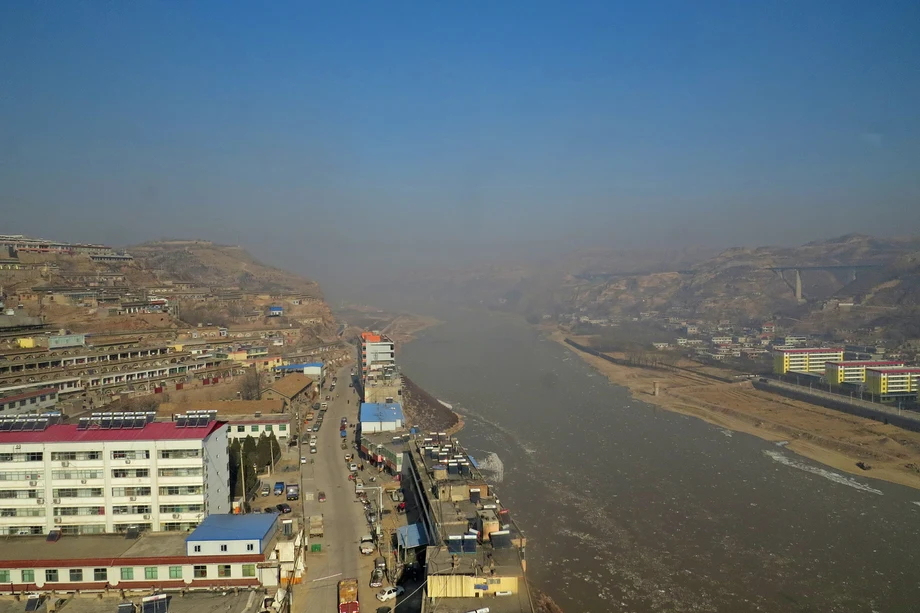
Gansu's Changle Power Plant has reached 6 gigawatts of capacity after its sixth unit, rated at 1 gigawatt, entered service. The expansion makes Changle the province's largest coal power plant, even as the surrounding Hexi Corridor becomes one of China's most important centers for wind and solar electricity.
Contents
- A sixth coal unit joins Gansu's renewable energy boom
- Coal construction reaches its highest level in a decade
- Clean power grows faster, but coal still supplies much of the electricity
- The shortage that reshaped energy security decisions
- Why renewable electricity can be left unused
- More plants can mean fewer hours for each one
- Gansu and Yushen Yuheng show different approaches
- Inner Mongolia tests renewable hydrogen for chemicals
- Changes that could give clean electricity more room
- China's choices carry global weight
- Key Points
Along this corridor at the edge of the Gobi Desert, steady winds and vast plateaus support long rows of turbines and solar panels. Coal stacks stand beyond the dunes. Changle alone has enough generating capacity to supply electricity comparable to the needs of a small country, illustrating the scale of the two energy systems China is building at the same time.
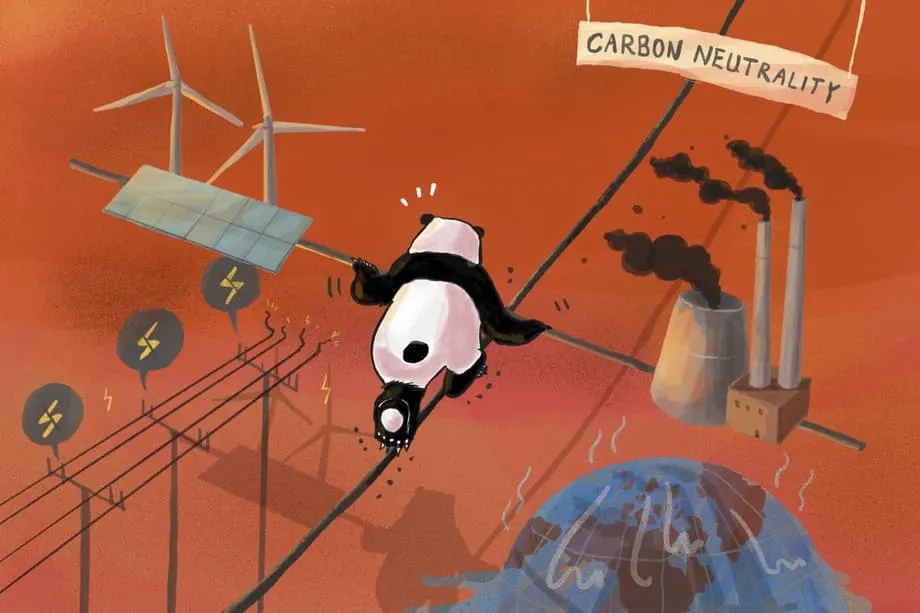
China has pledged to reach its peak in carbon emissions before 2030 and achieve carbon neutrality by 2060. Carbon neutrality means balancing the carbon emissions that remain with an equivalent amount removed. Record investment in clean technology is helping advance those goals, while local authorities continue to promote coal projects as protection against shortages and support for industrial growth.
Officials describe coal as a safety net for an electricity system increasingly supplied by weather dependent sources. Solar production falls at night and can weaken during sandstorms or cloudy weeks. Wind output changes with seasonal conditions. Coal plants can supply electricity around the clock when fuel is available.
The central challenge is how those systems work together. China can build more coal capacity while burning less coal if wind, solar and other clean sources supply more electricity. Contracts, grid access and the way plants are operated will determine whether new coal units provide occasional support or keep running when renewable electricity is available.
Coal construction reaches its highest level in a decade
Builders started 94.5 gigawatts of new coal power projects in China during 2024 and restarted another 3.3 gigawatts that had been on hold. Analyst tallies put that construction activity at its highest level in a decade, with China accounting for the vast majority of new coal construction starts worldwide that year.
New permits reached 66.7 gigawatts in 2024. Approvals accelerated in the second half after a slower start. Proposals for new projects totaled 68.9 gigawatts, below the surge of 2022 and 2023 but still substantial.
Approvals, construction starts and plants entering service describe different stages of a project. A permit allows construction to proceed; a construction start means building has begun; commissioning means the plant has entered service. The pipeline means many new coal units will begin supplying electricity over the next two to three years.
Retirements have slowed while construction has expanded. China retired about 13 gigawatts of old coal capacity in 2020, compared with roughly 2.5 gigawatts in 2024. The 2024 figure was less than one fifth of the 2020 total, leaving more older equipment on the system as new units were built.
Researchers are concerned that this growing fleet could crowd out renewable electricity, particularly in provinces where contracts and grid rules favor coal. The effect on fuel use depends on how often plants run, as well as how many are built.
Clean power grows faster, but coal still supplies much of the electricity
China added about 356 gigawatts of wind and solar capacity in 2024 alone, several times Europe's annual additions. By late 2024, research groups put China's installed solar capacity near 890 gigawatts and wind capacity close to 520 gigawatts. Its coal fleet remained near 1,200 gigawatts.
The combined wind and solar total was therefore about 1,410 gigawatts, exceeding the coal fleet's rated capacity. Electricity production depends on how much power each source can deliver throughout the day and across the seasons. A solar installation produces no electricity at night, while a coal unit can continue generating when fuel is available.
By June 2025, coal's share of electricity generation had fallen to about 51 percent, its lowest level in nine years. Renewables accounted for approximately 60 percent of installed generating capacity. The first figure measures electricity actually produced; the second measures the size of the equipment available to produce it.
Clean power has covered most of China's growth in electricity demand in recent years, and all of it during some periods. This growth has helped slow the increase in national emissions by supplying demand that would otherwise have been met by fossil fuels.
The shortage that reshaped energy security decisions
The 2021 power crunch remains a major reason provincial leaders want additional coal capacity. Electricity demand surged, coal prices rose and rigid retail tariffs limited the prices charged to customers. Plants faced producing electricity at a loss, leaving some unwilling or unable to generate.
Several provinces imposed rationing. Factories reduced shifts or slowed production, and some districts experienced power cuts. Pricing and dispatch reforms followed, but many local governments also approved new coal units as insurance against another shortage.
Planners now face rapidly rising summer peaks in electricity use, alongside the possibility of extreme weather, extended periods of weak wind or solar production, and further demand increases from factories and households. Dispatch is the process of deciding which generators supply electricity and when. Improving it can help existing plants and clean sources respond more effectively to changing conditions.
The main dates show how the construction drive and renewable expansion have developed alongside China's climate commitments:
- 2020: About 13 gigawatts of old coal capacity were retired.
- 2021: Power shortages prompted rationing and factory slowdowns across several provinces.
- 2022 and 2023: New coal proposals surged, exceeding the level recorded in 2024.
- 2024: New coal construction starts reached 94.5 gigawatts, another 3.3 gigawatts resumed, and wind and solar additions totaled about 356 gigawatts.
- Late 2024: Changle's expansion was announced as Gansu continued developing renewable energy bases that export electricity eastward.
- First half of 2025: China and India accounted for most new coal power commissioned worldwide.
- June 2025: Coal's share of China's electricity generation fell to about 51 percent.
- Before 2030 and by 2060: China has pledged to peak carbon emissions and reach carbon neutrality, respectively.
Why renewable electricity can be left unused
Long term contracts and minimum purchase quotas for coal power still influence which generators run in a number of provinces. Some buyers must take a fixed amount of coal electricity even when wind and solar power are available at lower cost.
Transmission constraints create another barrier. Interior regions produce large amounts of renewable electricity, but the connections carrying it to coastal demand centers can be insufficient. When electricity is available but cannot enter the grid or reach a buyer, generators must reduce output. This is called curtailment.
Analysts estimated that renewable curtailment rose in late 2024, reaching a rate around the mid single digits. Rates are often higher in interior regions affected by transmission bottlenecks.
Qi Qin, a China analyst at the Centre for Research on Energy and Clean Air, described how agreements governing electricity purchases were limiting renewable access to the grid:
More solar and wind should be integrated into the power grid, but it was not because of these agreements.
Coal's persistence also reflects finance and industrial policy. Coal mining companies have backed a large share of newly approved plants, securing continuing demand for their fuel and supporting local employment.
Provincial governments promote coal plants as anchors for industries that consume large amounts of energy, including chemicals, metals and data processing. These incentives keep coal central to local development unless electricity markets reward flexible operation and give priority to the cheapest available generation.
More plants can mean fewer hours for each one
Coal generation fills the gap between total electricity demand and the combined output of hydro, nuclear, wind and solar power. When clean sources meet more of that demand, the gap narrows. Coal generation can then flatten or decline even while new coal units enter service.
Researchers see little correlation between additions to coal capacity and increases in coal burning. Instead, utilization hours tend to fall as more plants compete for fewer operating hours. Utilization hours describe how much a plant runs relative to its rated capacity.
Chinese policy calls for coal to provide flexible support. Many plants, however, still operate as baseload generators, supplying electricity steadily for long periods. Their equipment can limit how far output can fall while remaining stable and how quickly output can rise or drop. The speed of that adjustment is known as the ramp rate.
Contracts and the design of capacity payments can also encourage generation rather than flexibility. Capacity payments compensate plants for having generating capacity available. Their design affects whether operators are rewarded for readiness to respond or encouraged to keep producing.
Retrofitting plants to operate at lower output and adjust more quickly would help them fill gaps around renewable production. Storage and dispatch based on market conditions can also make coal's supporting role more practical.
Experience since the shortages shows that better grid operation, transmission between provinces, storage and demand response can help maintain supply during periods of stress. Demand response means changing when electricity is used, or temporarily reducing use, to ease pressure on the system. These improvements reduce the need for additional coal units built primarily for reliability.
Gansu and Yushen Yuheng show different approaches
Gansu's 6 gigawatt Changle complex is presented by local officials as a stabilizer for a grid rich in wind and solar. Its turbines can fill gaps during long winter nights or periods of still weather, when batteries and pumped hydro cannot yet provide support at the required scale.
Pumped hydro stores energy by moving water uphill when electricity is available and releasing it through turbines when power is needed. Along with batteries, it can shift electricity production from one period to another. Gansu's continued investment in both renewable bases and coal illustrates the current limits of storage and the priority officials place on dependable supply.
In China's coal heartland, the mega plant known as Yushen Yuheng has been cited as a model for replacing older equipment. It is replacing hundreds of megawatts of small, inefficient units with larger supercritical units designed for higher efficiency.
Supercritical units use steam under high pressure and temperature to generate electricity more efficiently. The project also incorporates renewable generation at the site, including dozens of megawatts of wind and a few hundred megawatts of solar.
A carbon capture facility at Yushen Yuheng is designed to trap about 100,000 tons of carbon dioxide a year. The project's approach combines more reliable generation, lower emissions at the unit level and removal of older plants from the fleet.
Inner Mongolia tests renewable hydrogen for chemicals
Inner Mongolia offers a different experiment. A large complex that converts coal into chemicals, operated by a state owned power company, has added a green hydrogen production line and a dedicated wind and solar plant of about 150 megawatts.
The aim is to lower the carbon intensity of hydrogen and synthesis gas used to produce chemicals such as ammonia and methanol. Carbon intensity measures emissions associated with a given amount of production. Replacing part of the coal input with renewable hydrogen offers a route to reducing emissions from heavy industry over time.
Green hydrogen is made through electrolysis, which uses electricity to split water into hydrogen and oxygen. It requires abundant electricity at low cost, along with substantial transport and storage infrastructure. Analysts estimate that green hydrogen in China still costs more than grey hydrogen made from fossil fuels.
Hydrogen has potential uses in steel, chemicals and storage that can cover long periods or seasonal changes. Its role in everyday electricity generation remains limited. Burning ammonia alongside coal can reduce emissions, but even a blend of 10 percent can make electricity much more expensive than coal alone.
Over the next five years, expanding wind, solar, storage, transmission and demand management offers a cheaper route to replacing coal at scale. Hydrogen pilots can continue developing for industrial uses and backup storage while those electricity technologies expand.
Changes that could give clean electricity more room
Analysts, grid experts and many provincial planners identify a common goal: allow clean generators to run whenever their electricity is available, make coal more flexible and give investors clear timelines for change. The next five year plan and updated climate targets can set that direction.
The proposed measures address plant construction, electricity trading, grid infrastructure and the local financial incentives that support coal:
- Stop new approvals for conventional coal units unless they are explicitly designed and contracted to provide flexibility.
- Retire older, inefficient plants more quickly and set targets to reduce the coal fleet's average utilization hours.
- Reform long term electricity purchase contracts requiring minimum quantities of coal power, and prioritize the cheapest generation through dispatch based on market conditions.
- Expand spot markets, where electricity is traded closer to the time it is used, and markets that pay for services such as flexibility, rapid output changes and voltage support.
- Upgrade transmission from interior renewable energy centers to coastal consumers and expand electricity trading between provinces.
- Increase batteries, pumped hydro and demand response to manage shorter variations in supply without calling on coal.
- Design capacity payments to reward flexible readiness rather than constant generation.
- Align provincial incentives with national climate goals through tax and finance reforms that reduce the incentive for coal mining companies to sponsor new plants.
These measures would change both the physical electricity system and the rules governing its use. More transmission can carry renewable output to customers, while contract reform can allow those customers to buy it when it is available.
China's choices carry global weight
China and India accounted for most new coal power commissioned worldwide in the first half of 2025. Coal capacity continues to expand in Asia's two largest economies even as many other regions move toward retirement.
Europe and Latin America have little or no pipeline of new coal plants and are focused on closing existing units. In the United States, economic pressures continue to drive coal retirements even as policy choices change with elections.
Julie Dabrusin, Canada's Minister of Environment and Climate Change and co chair of the Powering Past Coal Alliance, described the international direction at a climate gathering:
As the world moves towards low carbon energy and clean technologies to advance economic growth and a clean environment, the coal to clean transition is inevitable.
China also anchors the global clean energy economy. It manufactures the vast majority of the world's solar panels, dominates batteries and electric vehicles, and is expanding grid storage and high voltage transmission. Its exports lower technology costs elsewhere and help countries in the Global South install renewables rapidly.
China's scale gives its domestic electricity decisions worldwide importance. Its coal fleet affects global fuel demand, while its manufacturing and supply chains influence how quickly other countries can adopt clean technology.
The future operating pattern of the new coal units is not yet settled. If grid and market reforms keep pace with renewable installations, clean electricity can run for more hours, curtailment can decline and coal generation can fall despite some new capacity entering service. If contracts and dispatch rules continue to favor coal, renewable output will be restricted and emissions will remain higher than necessary.
Changle's expansion captures the central issue: China is adding both clean generation and coal capacity. The pace of replacing coal electricity will depend on how effectively the grid, contracts, storage and provincial incentives allow renewable production to reach consumers.
Key Points
- Gansu's Changle plant reached 6 gigawatts after its sixth unit entered service, alongside continued wind and solar expansion.
- China started 94.5 gigawatts of new coal construction in 2024 and restarted 3.3 gigawatts, the highest activity in a decade.
- Coal approvals totaled 66.7 gigawatts and new proposals 68.9 gigawatts in 2024.
- Old coal retirements fell from about 13 gigawatts in 2020 to roughly 2.5 gigawatts in 2024.
- China added about 356 gigawatts of wind and solar in 2024; coal supplied about 51 percent of electricity in June 2025.
- Coal purchase obligations and transmission constraints limit renewable generation, while mining investment supports new coal projects.
- More coal capacity can coexist with lower coal generation when clean sources meet more demand and plants run fewer hours.
- Gansu, Yushen Yuheng and Inner Mongolia illustrate approaches involving backup power, more efficient plants, carbon capture and renewable hydrogen.
- Proposed reforms include faster retirements, revised contracts, expanded electricity markets, more storage and payments for flexible readiness.
- China and India led new coal commissioning in early 2025, while China's clean technology exports helped reduce renewable energy costs abroad.