From a spoken request to a working tool
Ant Group has introduced LingGuang, a multimodal artificial intelligence assistant that can turn everyday language into working mini applications and visual answers in about 30 seconds. Available through Apple's App Store and major Android app stores in China, the product brings software creation into a mobile conversation: users describe what they want, and the assistant builds a tool they can open, change and share.
Contents
- From a spoken request to a working tool
- What happens when a user asks for an app?
- Answers that use pictures, movement and sound
- The camera brings the assistant into daily life
- How language becomes runnable code
- Why Ant is moving beyond financial services
- A crowded race for consumer attention
- Where quick creation meets practical limits
- Privacy and access shape the experience
- Early interest and the role of sharing
- What to Know
Ant Group says LingGuang is China's first assistant to deliver responses driven by code across formats including 3D models, animations, charts, audio, interactive maps and instant flash apps. Multimodal means the system can work with several kinds of information, such as words, pictures and sound, rather than relying on text alone.
The launch moves Ant further into a consumer AI market where assistants increasingly combine answers with actions. LingGuang can produce a calorie tracker, a basic budget tool, a trip planner, a shopping helper, a game in the style of Pac Man or an application for memorizing Chinese characters. The resulting tool opens inside the conversation, giving people a way to try an idea without writing software themselves.
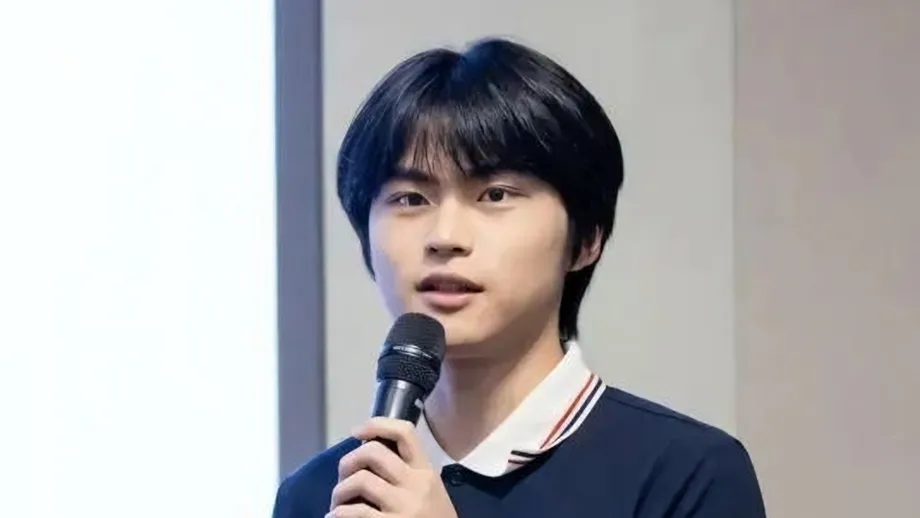
Ant Group's chief technology officer described the assistant as a way to make software development and visual explanation available to ordinary users:
LingGuang brings every user their own personal AI developer, someone who can code, create visuals, build apps, and simplify complex ideas.
As of November 19, 2025, the product is aimed at mainstream users in China, including students, parents and workers who want either a customized tool or an answer they can see and interact with. Its three main functions are chat, a flash app builder within chat and a camera mode.
What happens when a user asks for an app?
LingGuang's main promise is an output people can use immediately. Many assistants summarize information or help users search. This assistant also interprets a request, plans a response across different formats and assembles code and media into a working result.
A person could ask for a budget tracker with preset spending categories, a monthly view and a save function. LingGuang writes the interface, the part the user sees, and the logic that makes its controls work. It then runs the tool on the phone. The user can request changes to categories or currency without leaving the conversation.
Flash apps are small applications built around a specific task. They run directly inside LingGuang's chat and are intended to be editable and shareable. A user can adjust inputs, change a layout or add a graph, then send the result to a friend. The same process applies to simple games, planning tools and study aids.
The speed comes with a narrow scope. These applications are designed to be light enough for quick creation and use on a phone, rather than to handle the demands of a large business system. A tool that tracks steps for a week or plans a trip lasting two days fits that approach.
Someone who would never open a code editor could still request a workout routine tracker, a tool for splitting expenses or a classroom quiz. The practical change is the shorter journey between having an idea and getting something usable: the assistant creates the interface instead of merely explaining how someone else could build it.
Answers that use pictures, movement and sound
LingGuang also aims to explain subjects that are difficult to understand through words alone. A question about quantum entanglement or supply and demand can receive diagrams, animations or simple 3D objects alongside a written explanation.
For a physics question, the assistant can produce an outline in steps and a simple animation showing how two particles behave in an entanglement scenario. A geography request can bring together a 3D landmark, an interactive map and a short audio description. The purpose is to illustrate the subject as well as describe it.
LingGuang can organize a response into a concise overview, key points and a supporting graphic. Combining those elements gives users several ways to approach the same information. A student might follow the written explanation first, then use an animation to understand the relationship it describes.
Ant's emphasis on a clean, minimalist appearance supports that approach. Simple visuals keep attention on the concept rather than elaborate textures or effects. Lightweight models and animations also help the assistant deliver results quickly over mobile networks.
Accuracy remains as important as presentation. A visual explanation can make a complicated subject easier to follow while also simplifying it too much. Generated answers are best used as starting points for learning, with particular care when the subject requires precise or professional guidance.
The camera brings the assistant into daily life
LingGuang's camera mode applies its ability to work with different kinds of information to real world images and video. It can interpret a scene, identify objects and provide advice connected to what the camera sees.
A user might point the camera at a plant and ask for watering guidance. The same conversation could then move to a comparison photo showing images side by side or a stylized picture for a post. The feature combines understanding an image with creating or editing one.
The assistant can also generate or edit images and short video in real time. Users can request changes on the fly or ask it to create a short clip, keeping analysis and creative work inside the same application.
For people using AI during everyday activities, that combination expands the role of the assistant beyond a text box. A question can begin with something in front of the camera and end with advice, an edited picture or a new piece of visual content.
How language becomes runnable code
Ant Group describes LingGuang as a system that brings language, images, audio, data and application code into a unified workflow. At a broad level, it breaks a request into tasks such as designing an interface, handling data and creating a visualization.
Specialized components propose code and content for the different parts. A coordinating component assembles them into a mini application or an answer that combines several formats. This modular approach is common in modern assistants: dividing a request into smaller jobs helps the system turn a description into steps and usable outputs.
On the phone, LingGuang acts as the container in which those outputs run. It can execute generated code, display charts and 3D objects, and play audio or animations. Keeping each result simple and focused helps reduce loading time.
Edits stay within the conversation. A user can change a setting or ask for an adjustment and see the result update immediately. That is particularly useful for a small tool whose requirements become clearer only after someone starts using it.
Generating visual media requires choices of its own. The system must select a suitable way to represent a subject and keep the output lightweight. A learning animation, for example, needs to communicate the idea clearly while remaining quick enough to produce and display on a mobile device.
Runnable code also brings security concerns. Consumer assistants typically use a restricted environment, often called a sandbox, which limits what generated software can do. The model is intended to prevent changes to the wider system and restrict sensitive operations while allowing useful functions such as local storage, charts and maps.
Ant highlights interactive and shareable outputs. That points toward a standardized format with controls intended to limit risk while making it easy for people to pass a tool between them.
Why Ant is moving beyond financial services
Ant Group built one of China's most widely used mobile ecosystems through Alipay and a broad range of lifestyle services. An assistant that creates small tools on demand fits that experience of helping people complete daily tasks through a phone.
LingGuang could bring more activity into Ant's ecosystem over time. It also reflects the company's investment in AI for general use beyond finance, alongside recent work in health services, robotics and models under its Ling series.
Ant presents the assistant as part of a broader push toward artificial general intelligence, or AGI. In the consumer product, its immediate focus is practical: fast creation, understandable answers and useful tools for ordinary activities.
A student could make a Chinese character quiz using spaced repetition, which returns to material at intervals to help with memorization, without installing a separate application. A traveler could create a weekend plan with transport and restaurant budgets and change it during the trip.
A parent could build a chores tracker, share it with a child and revise its design. Each example is modest in scale, but together they show the appeal of software that can be customized at the moment someone needs it.
For users, the benefit is both speed and control. Rather than accepting a fixed set of features in an existing application, they can describe a small task and then refine the tool that LingGuang produces.
A crowded race for consumer attention
LingGuang arrives as major technology platforms compete to make AI assistants part of everyday life in China. Alibaba Cloud recently released Qwen, a multipurpose application that brings together shopping, mapping and other services. Baidu, iFlytek and other companies are also upgrading assistants with chat, image tools and productivity features.
Industry estimates counted more than 500 million generative AI users in China by the middle of the year. That figure points to a large potential audience for assistants that move beyond answering questions and offer something people can operate.
Global assistants including ChatGPT, Gemini and Copilot are also moving toward richer outputs, with tools for generating images, code and small interfaces. Many can call external services or create code that a developer can copy and refine.
LingGuang's pitch centers on keeping creation and use within one conversation. It builds the tool, runs it and lets the user edit it without moving to another application. That workflow makes experimentation more accessible to people without technical training.
Several assistants in China already offer image and video generation, translation and document tools. LingGuang puts code at the center of the answer: when asked for a calorie tracker, it creates and opens one instead of giving instructions for making it.
Where quick creation meets practical limits
Students and small businesses may find that approach useful for simple, repetitive tasks. A small application tailored to a particular need can save time when the alternative involves searching for a suitable tool or setting one up manually.
Flash apps are deliberately lightweight. They serve a different purpose from full mobile applications or complex enterprise systems. Users working on advanced projects may prefer developer tools, platforms that require only limited coding or dedicated application builders with deeper features.
LingGuang instead targets situations where speed, clarity and ease of use matter more than a large feature set. A budget tool created in seconds can help with basic planning, while professional accounting software serves more demanding financial work.
Generated outputs still need judgment from the person using them. An attractive chart or an easy to operate interface is useful only when its information and behavior fit the task. For health or legal questions, verified information and professional advice remain the appropriate route.
The ability to revise an app within chat makes experimentation easier, but the intended scale stays small. The product's strongest examples are focused tools for learning, planning, tracking and simple entertainment rather than extensive software projects.
Privacy and access shape the experience
LingGuang can receive photographs, read prompts and run generated code, making privacy and security central concerns. Ant Group's experience handling sensitive financial data means consumers will expect comparable care from a general AI product.
Restricted execution and limited permissions help reduce the risks of generated applications. Camera safeguards, filters for prohibited content and controls over data sharing also form part of a safe experience, particularly when users move between personal images, advice and shareable outputs.
The initial release focuses on China. Its experience, content sources and integrations are aligned with Chinese users and services. Wider language support and international availability could expand its audience, but products that depend on local data and app store approvals often need time to make that expansion.
No timetable for broader language support or an international release was given. For now, access is through Apple's App Store and major Android stores in China, with free access lowering the barrier to trying the assistant.
Early interest and the role of sharing
Early reports indicated that LingGuang passed 200,000 downloads on its first day of availability. That initial interest suggests an appetite for assistants that produce more than text, especially when users can try them on a phone without paying to begin.
Sharing is part of the product's appeal. A user who creates a useful flash app can send it to friends or colleagues, who can join the process of using and refining small tools. That circulation can bring more people into the application through something practical rather than through a standalone conversation with AI.
Ant's launch combines three related ideas: chat that can produce rich explanations, flash apps that turn a request into working software and camera features that connect the assistant to images and scenes. The common aim is to make AI fast and usable in everyday life.
The immediate test is whether those quick outputs help people complete the modest tasks they were built for. LingGuang's focus is on tools people can open, adjust and share within seconds, with the convenience of a single mobile conversation.
What to Know
- Ant Group's LingGuang can create working mini applications and visual answers from everyday language in about 30 seconds.
- Ant calls it China's first assistant to deliver responses driven by code across formats including 3D models, animations, charts, audio and interactive maps.
- The product combines chat, editable and shareable flash apps, and a camera mode for scene understanding and creative edits.
- Flash apps are intended for focused tasks such as budgeting, travel planning, study aids, workout tracking and simple games.
- Early reports put downloads above 200,000 on the first day of availability.
- The app is available through Apple's App Store and major Android stores in China, with free access.
- The initial release focuses on Chinese users and services; no timetable was given for wider language support or international availability.
- Generated tools and explanations need checking, especially for sensitive tasks, and lightweight flash apps serve a different role from complex professional software.