A new company targets reactors small enough to transport
China has established a nuclear technology company with initial registered capital of 1 billion yuan to develop microreactors producing between 1 and 10 megawatts of electricity. The venture aims to advance a demonstration reactor that could supply remote islands, mines and industrial sites for years between refuelling stops.
Contents
- A new company targets reactors small enough to transport
- Who is financing the industrial push?
- How small is a microreactor?
- How the fuel and liquid metal work together
- Where years of steady power could matter
- Using heat as well as electricity
- Established fuel experience meets a new reactor design
- What earlier projects reveal about the route to market
- A large market forecast, with demonstration still ahead
- Key Points
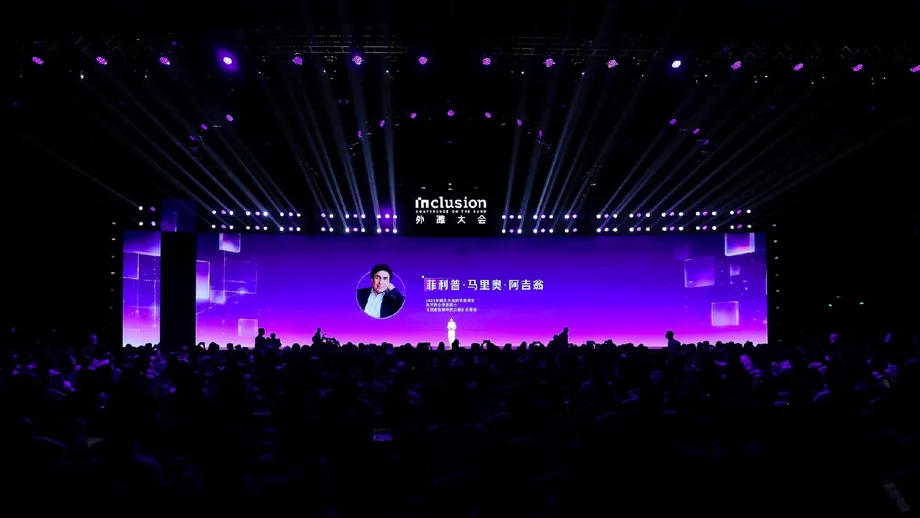
Sichuan Energy Nuclear Industry Co., Ltd. was unveiled in Chengdu on October 20, 2026. Sichuan Energy Development Group, its controlling shareholder, and the Nuclear Power Institute of China jointly established the company, bringing together provincial investment resources and nuclear engineering expertise.
The proposed reactor combines uranium zirconium hydride fuel with a liquid lead and bismuth coolant. Its developers describe a compact system designed around materials that help slow the nuclear reaction automatically when temperatures rise.
The immediate objective is to advance what the partners describe as the world's first demonstration project using this particular combination of fuel and coolant. They have not announced a demonstration site, a licensing timetable, a construction start date or an electricity price.
Cui Huaiming, deputy chief engineer at the nuclear institute, described the intended size and transport options:
The reactor core is about the size of a household refrigerator, and the entire power generation system can fit into two or three containers. So it can be transported by trucks on land, an aircraft in the sky or a ship at sea,
The refrigerator comparison concerns the core, where nuclear reactions generate heat. The complete electricity system would include equipment to move that heat and convert it into power. The company's launch begins a coordinated push toward engineering demonstration and commercial deployment, with investment, manufacturing and potential customers being brought into the same programme.
Who is financing the industrial push?
Sichuan Energy Development Group is contributing capital, potential operating locations and experience in building and managing energy projects. The nuclear institute is supplying technology, research facilities and specialist staff.
Strategic investors include the Guangdong, Hong Kong and Macao Greater Bay Area venture capital guidance fund, the Chengdu Future Industry Venture Capital Fund and companies from the industrial supply chain. The Chengdu fund is associated with Chengdu Industrial Investment Group.
The new company will work across three areas: advanced microreactors, green energy technology and nuclear technology applications. Its planned activities cover research, the development of new projects and industrial investment.
At the launch, attended by more than 40 representatives from companies, universities, industry organisations and participating institutions, the company signed a technology development contract with the nuclear institute. Supply chain participants also signed a framework agreement for joint research and development.
Shen Yunhai, deputy director of the institute's industrial development department, said the cooperation model brings technology, capital and markets together. The practical task is to connect a reactor design with manufacturers able to build it, investors willing to fund it and customers prepared to purchase its energy.
How small is a microreactor?
A microreactor sits at the smallest end of the nuclear power market. The proposed Chinese technology targets electrical output of 1 to 10 megawatts. A megawatt measures power, or the rate at which electricity is produced.
A review of reactor technologies, titled Research Progress and Prospects of Key Technologies for Small Nuclear Reactors, describes microreactors as producing no more than 10 megawatts. It gives an International Atomic Energy Agency definition of small reactors spanning 10 to 300 megawatts of electrical output.
A January 2024 nuclear safety overview published on China's National Nuclear Safety Administration website uses a slightly narrower boundary: micro modular reactors have capacity below 10 megawatts and primarily serve remote locations operating without a large electricity grid.
For scale, China's Linglong One project, also called ACP100, has a planned capacity of 125 megawatts. That is 62.5 times the electrical output of the 2 megawatt microreactor example described by the Chinese developers. The two projects address very different sizes of energy demand.
How the fuel and liquid metal work together
Uranium zirconium hydride fuel combines uranium with a material containing zirconium and hydrogen. The hydrogen acts as a moderator, slowing neutrons so they can sustain the nuclear reaction more effectively.
The fuel also provides what developers describe as an automatic brake. As its temperature rises, changes within the fuel reduce the strength of the chain reaction. Sun Chao, deputy director of the institute's Fourth Institute, identifies this temperature response as a central safety feature.
Liquid lead and bismuth carry heat away from the core. The proposed design places the main components in a compact, integrated arrangement and operates at normal pressure, avoiding the high pressure used in conventional pressurised water reactors.
The developers say the dense coolant provides radiation shielding and transfers heat effectively. They also describe an extreme accident response involving water injection for cooling and the formation of a lead seal intended to limit radioactive releases.
Sun says the combined fuel and reactor design would allow construction without a conventional containment building or an emergency response system outside the site. These are developer claims about the proposed safety approach; the licensing process will determine the project's approved safety arrangements.
The construction target is about 30 months, with some descriptions putting it below that figure. The developers expect simpler systems, fewer duplicate components and a smaller construction footprint to reduce costs. They have not published a project budget or a demonstrated cost per unit of electricity.
Where years of steady power could matter
A representative design producing 2 megawatts would have an intended operating life exceeding 40 years. Its developers say one fuel loading could provide electricity for five to 10 years, reducing the frequency of fuel deliveries to difficult locations.
Remote islands and offshore platforms are among the proposed customers. Diesel generation in these places depends on regular fuel shipments, which can be expensive or disrupted. A compact reactor is intended to provide a continuous local source of power.
Floating versions could be positioned near islands or reefs, preserving limited land space. Their heat could also support seawater desalination and aquaculture using warmer water, combining electricity, fresh water and fish farming around one energy source.
Mountain mining areas, polar research stations and facilities involved in deep sea exploration are other proposed applications. Developers also identify industrial parks, chemical facilities, data centres and emergency electricity supplies as potential markets.
Using heat as well as electricity
Nuclear reactors first produce heat. Electricity generation uses part of that energy, while suitable equipment can direct additional heat toward useful work such as industrial steam production or desalination.
The Chinese programme proposes supplying both electricity and heat, potentially replacing some coal or gas consumption at industrial sites. Hydrogen production is another application identified by the venture, although the launch announcements give no details of a specific hydrogen project.
Microreactors could also operate alongside wind turbines and solar panels. The reactor would supply steady generation while wind and solar output changed with the weather and daylight. A local electricity network, often called a microgrid, could coordinate the different sources.
Industrial customers would need the reactor's heat output to match their processes. The academic review identifies efficient power conversion systems and flexible delivery of electricity and steam as important engineering priorities for small reactors.
The intended benefit is concrete: an isolated site could receive electricity and useful heat from the same installation, with fewer fuel deliveries. The value would depend on the site's energy demand, transport costs and ability to use the available heat.
Established fuel experience meets a new reactor design
The nuclear institute developed uranium zirconium hydride fuel during the 1980s and 1990s and used it in projects including China's pulse reactor. It says the lead and bismuth reactor programme has involved more than a decade of research.
Cui says the institute was the first organisation worldwide to propose this fuel route for a microreactor cooled by lead and bismuth. Sun says China and the United States are the two countries possessing the core design and manufacturing technology for this fuel.
Sun also says the technology could reduce the uranium loading by between one quarter and one half compared with alternatives producing the same power. The financial benefit would depend on fuel manufacturing and the complete operating cycle, alongside the amount of uranium required.
The industrial plan places specialised fuel production upstream, equipment manufacturing and system integration in the middle, and local installation and operating services closest to customers. The company is intended to connect those activities rather than develop each part separately.
Research capacity remains a practical constraint. The academic review counts 16 operating research reactors in China, only five of which can conduct irradiation testing. Such testing exposes fuels and structural materials to radiation to assess how they perform over time.
The review recommends building a multifunctional research reactor providing a high flux of fast neutrons. It also identifies advanced materials, component manufacturing, precise instrumentation, power conversion and digital operating systems as areas needing further work.
What earlier projects reveal about the route to market
China's microreactor effort follows several larger small reactor projects. Their development shows that operating experience, demonstration construction and regulatory approval proceed on different schedules.
- May 2020: Russia's Akademik Lomonosov floating nuclear power station formally entered operation, supplying the remote Chukotka region with two reactors rated at 35 megawatts each.
- July 2021: Construction began on China's 125 megawatt Linglong One project at Changjiang in Hainan.
- November 2023: Linglong One's lower steel containment section had been installed. Separately, a proposed US project using NuScale technology was cancelled on November 8 after failing to secure enough customer participation.
- December 2023: China's HTR-PM project at Shidaowan entered commercial operation, using two reactor modules to drive one generating system with full electrical output of 210 megawatts.
- October 20, 2026: The Sichuan company was unveiled to advance the uranium zirconium hydride and lead and bismuth microreactor programme.
The academic review projected operation of ACP100 in 2026 and a grid connection for Argentina's CAREM project in 2028. Those dates are the review's expectations, while the milestones above describe events already recorded in the accounts of those projects.
The National Nuclear Safety Administration overview identifies four major deployment challenges: choosing technologies for demonstration, adapting licensing rules, building dependable supply chains and gaining public acceptance. Its assessment anticipated that several designs based on established light water technology might receive approval around 2030.
Reactors using liquid metals, gases or molten salts present regulators with different materials and system arrangements. The overview expects their approval process to be more demanding than for designs drawing directly on decades of water reactor experience.
A large market forecast, with demonstration still ahead
Cui puts intended microreactor orders for 2026 at 1.8 gigawatts, equivalent to 1,800 megawatts, and says they represent 38% of new demand that year. He forecasts more than 3,200 installed units worldwide by 2030 and a supply chain value exceeding $42 billion.
Those figures describe expressions of purchasing interest and a forecast of future installations. The commercial task now is to turn customer interest into financed, licensed projects with agreed delivery schedules and operating responsibilities.
Cui also says 12 countries have incorporated micro nuclear energy into national energy strategies and cites 127 small reactor designs identified by the International Atomic Energy Agency. That design count covers the broader small reactor field, including systems much larger than the Sichuan venture's proposed units.
The January 2024 nuclear safety overview described more than 80 small reactor technologies under development at that time, roughly half based on light water reactors and half on advanced reactor technologies. Its research survey counted 181 patent applications, including 94 grants, and 766 scientific publications from the United States compared with 361 from China.
The Sichuan venture brings funding and industrial coordination to a specific Chinese design. Its next major task is to deliver a demonstration plant that can provide operating experience, establish manufacturing requirements and give prospective customers a firmer basis for purchasing decisions.
Key Points
- A new Sichuan nuclear company has initial registered capital of 1 billion yuan and targets microreactors producing 1 to 10 megawatts of electricity.
- The proposed design combines uranium zirconium hydride fuel with liquid lead and bismuth coolant.
- Developers describe a 2 megawatt example lasting more than 40 years, with five to 10 years between fuel loadings.
- Potential uses include island electricity, desalination, mining, industrial heat and data centre power.
- The partners aim to advance a demonstration project; its location and licensing timetable have not been announced.
- Testing capacity, regulatory approval, supply chains and customer commitments remain central to commercial deployment.