A pause in Dutch controls eases the car industry's chip shortage
The Netherlands has suspended its intervention at Nexperia after a six week standoff with China disrupted supplies of chips used by carmakers around the world. As of November 19, 2025, most exports from China had resumed, and Volkswagen and Honda reported that parts were again reaching factories in Germany and Mexico.
Contents
- A pause in Dutch controls eases the car industry's chip shortage
- Why the Netherlands intervened on September 30
- How the dispute unfolded
- Why small chips caused such a large disruption
- The bottleneck between wafers and finished products
- Why carmakers cannot simply buy another chip
- Factories report relief, while suppliers seek certainty
- What the Dutch suspension changes
- The court case remains separate
- Europe seeks a more reliable supply chain
- Key Points
Dutch Economic Affairs Minister Vincent Karremans described the suspension of his supervisory control order as a gesture of goodwill toward Beijing. The decision followed talks in the Chinese capital and moves by Chinese authorities to allow shipments from facilities where Nexperia packages and finishes many of its products.
Nexperia, headquartered in Nijmegen in the Netherlands and owned by China's Wingtech Technology, sits across both sides of the dispute. Many of its semiconductor wafers are produced in Europe, while much of the work needed to turn them into finished chips takes place in China. Restrictions at the Chinese end of that chain left car factories struggling to obtain components made partly in Europe.
The Dutch decision offers relief, but several controls and disputes remain. The government can restore its intervention if it sees renewed risks to production or intellectual property, meaning the company's protected technology and knowledge. A separate court case over Nexperia's management also continues, while European carmakers are seeking an agreement that will keep supplies moving in both directions.
Why the Netherlands intervened on September 30
The Dutch cabinet invoked the Goods Availability Act on September 30 to take effective supervisory control over Nexperia. The order gave the economic affairs minister power to block corporate decisions that could threaten chip supplies in Europe.
The government said intelligence pointed to a potential loss of crucial technological knowledge and capabilities in the Netherlands and elsewhere in Europe. Its stated aim was to prevent the transfer of key technology or physical assets from Nexperia's facilities in Nijmegen and Hamburg during a crisis.
The Goods Availability Act is a law dating from the Cold War, designed to protect the production of essential goods during emergencies or war. It allows the government to direct companies temporarily and stop particular decisions in order to safeguard national and European supply security.
The law had not been invoked in recent memory for a technology company on this scale. Its use brought an emergency measure into a dispute over an international chip business, helping explain the strength of the diplomatic reaction.
Wingtech was already facing scrutiny over its governance and security posture after being placed on a United States trade restriction list in 2024. That pressure formed part of the setting for the Dutch intervention and the subsequent fight over who should control Nexperia's operations.
How the dispute unfolded
China responded in early October by blocking exports of finished Nexperia chips from Chinese facilities. The restrictions turned a dispute over corporate control into an immediate problem for manufacturers waiting for parts.
The main developments stretched from the Dutch intervention at the end of September to the resumption of shipments in November:
- September 30: The Dutch cabinet invoked the Goods Availability Act to gain supervisory control over Nexperia and protect technology, assets and chip supply.
- Early October: China blocked exports of finished Nexperia chips from its Chinese sites.
- October: The Enterprise Chamber of the Amsterdam Court of Appeal removed Nexperia's then chief executive, Zhang Xuezheng, in a related case concerning alleged mismanagement.
- November 9: After meetings between Dutch and Chinese officials, Beijing began granting permissions that allowed Nexperia shipments to resume.
- By November 19: Most chip exports from China had resumed, and Karremans had suspended the Dutch control order while talks continued.
The export stoppage put pressure on factories far beyond the Netherlands and China. Production pauses occurred in North America, including Mexico, and European manufacturers warned that they were only days away from having to stop production lines.
Why small chips caused such a large disruption
Nexperia supplies discrete semiconductors and power management components, including diodes, transistors, voltage regulators, power MOSFETs and logic devices. These are basic electronic parts, but they perform jobs that cars and consumer electronics depend on every day.
A diode helps control the direction of electric current. A transistor can act as an electronic switch, while a voltage regulator keeps electricity at the level a circuit needs. Power MOSFETs are transistors used to switch and control electrical power. Logic devices help circuits respond to electronic signals.
Inside a vehicle, such components support power distribution, motor control, lighting, safety sensors and actuators. An actuator is a device that turns a control signal into movement. Nexperia parts are embedded across thousands of vehicle platforms, making disruption to their supply a problem shared by many manufacturers.
Industry estimates place Nexperia among the major suppliers of these basic automotive chips. Research firms put its global market share at roughly 40 percent in certain segments. That figure applies to particular parts of the market, while its portfolio spans several types of component.
A factory needs all the required parts to complete a car. A shortage of a basic electronic component can therefore interrupt vehicle production even when larger and more complex components are available. The Nexperia dispute showed how a restriction affecting one stage of chip production could quickly reach assembly lines on other continents.
The bottleneck between wafers and finished products
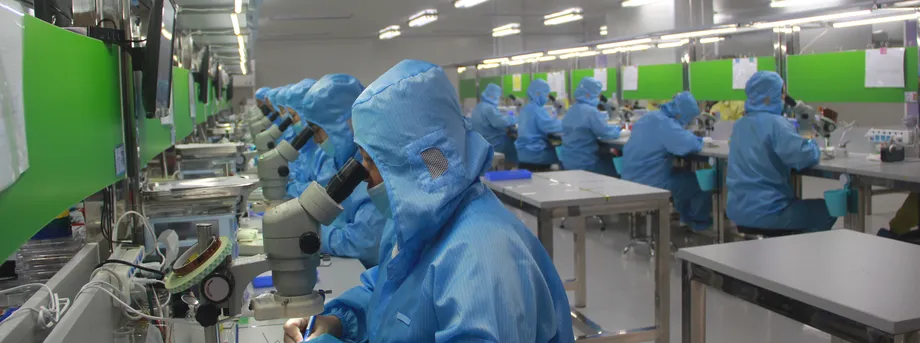
Nexperia's manufacturing process divides work across locations. Wafer fabrication for many of its parts takes place in Europe and Asia, while assembly, packaging and testing for a large portion of its portfolio take place in China.
A semiconductor wafer carries the electronic circuits from which chips are made. Further work is needed to turn those circuits into separate components that can be connected to other electronics, protected by packaging and tested before shipment. For Nexperia, much of that finishing work links European production to Chinese facilities.
Nexperia entities in the Netherlands said during the dispute that they had sufficient wafers for months. Finished chips still could not leave the Chinese sites while export permissions were blocked. The immediate shortage was therefore tied to the movement of completed products, even though supplies existed earlier in the production process.
The renewed export approvals removed that bottleneck for many products and allowed stocks to move toward car factories again. The industry's request for reliable flows in both directions reflects the structure of the business: production resources and unfinished components must reach the facilities that need them, and completed chips must then reach customers.
Why carmakers cannot simply buy another chip
Automakers and their major direct suppliers must qualify chips for each vehicle platform before using them. Qualification means checking that a component meets the safety and reliability requirements of the vehicle in which it will operate.
Those checks can involve months of testing. A part that appears similar to a Nexperia component still has to be approved for its particular use, so switching suppliers takes more than placing a new order.
Infineon, NXP and Texas Instruments are among the alternative suppliers. Moving large volumes to them at short notice can create another problem if their factories are already running at capacity. The existence of an alternative component and the availability of enough approved parts are separate practical requirements.
Carmakers can qualify a second source for important parts and build redundancy into their designs and contracts. That means having another approved supplier or supply route ready before a disruption occurs. Such preparation takes time and money, and its value often becomes most visible during a shortage. These measures consequently tend to be underused when supplies are moving normally.
Factories report relief, while suppliers seek certainty
Volkswagen and Honda reported that Nexperia parts were arriving again at plants in Germany and Mexico after China began allowing shipments to resume on November 9. Those deliveries eased the immediate pressure created by the export restrictions.
Bosch, a major supplier to the car industry, had been working across its network to limit disruption. A company spokesperson described its efforts to keep customers supplied and prevent restrictions on production:
We are currently doing everything we can to serve our customers and avoid or minimise production restrictions.
European manufacturers continued to seek more than the return of individual shipments. Jonathan O'Riordan, international trade director at the European carmakers association ACEA, said the industry needed a practical arrangement to protect supply in both directions:
For us the situation remains critical and we need a workable contingency agreement to ensure supply in both directions.
The request reflects the gap between restarting deliveries and having a dependable plan for another interruption. Carmakers and suppliers want predictable access to parts throughout the production chain, including when political disagreements affect the companies that make them.
What the Dutch suspension changes
Karremans suspended the government control order after talks with Chinese officials and the return of most exports. He presented the decision as a constructive step while negotiations continued, and said the Netherlands would keep engaging directly with Chinese authorities.
The economic affairs minister welcomed the action Beijing had already taken to maintain shipments:
We are positive about the measures already taken by the Chinese authorities to ensure the supply of chips to Europe and the rest of the world.
China's Ministry of Commerce welcomed the Dutch move as a positive gesture while calling for a full resolution of the legal proceedings affecting Nexperia. The ministry described the suspension in these terms:
It is a first step in the right direction toward a proper resolution.
The Dutch government retains the option to reinstate supervisory controls if it identifies new risks to production or intellectual property. Nexperia also remains under a duty to inform the minister about transfers of production resources or knowledge.
No date was given for a final resolution of the dispute. The suspension reduces the government's direct intervention for now, while the retained powers and reporting duty keep safeguards around the movement of technology and assets.
The court case remains separate
The Enterprise Chamber of the Amsterdam Court of Appeal removed Zhang Xuezheng as Nexperia's chief executive in October. The related governance case concerns allegations of mismanagement and the risk of asset transfers that could harm European supply security.
Wingtech disputes those allegations and is contesting the legal action. The Chinese parent has urged The Hague to withdraw its support for the case, arguing that suspending the government order alone does not resolve the conflict.
Wingtech says claims against its executive leadership are unsupported. In a statement responding to the Dutch actions, the company said:
To date, no proof has been provided.
The government's supervisory order and the court proceedings are separate parts of the dispute. Suspending the minister's order leaves the court case in place, which explains why the resumption of exports and the diplomatic gesture have not ended the disagreement over Nexperia's leadership.
The continuing case also helps explain China's call for a fuller settlement. Chip deliveries have begun moving again, but the dispute over corporate governance still involves the Dutch court, Nexperia's Chinese parent and the authorities seeking to protect European production.
Europe seeks a more reliable supply chain
The European Union has been working to strengthen its semiconductor industry through the EU Chips Act, which aims to increase production capacity by 2030 and reduce exposure to single points of failure. A single point of failure is a stage whose interruption can hold up the rest of a production chain.
European trade officials welcomed the Dutch suspension as a step toward stabilizing strategic supply chains. The Nexperia episode brought attention to basic chips as strategic products alongside advanced processors, because both can be essential to keeping factories operating.
The car industry is pressing for formal contingency arrangements to preserve the movement of parts in both directions. Possible measures include priority licensing, buffer inventories and structured communication channels between governments and companies. Buffer inventories are stocks kept in reserve so factories can continue working during a temporary disruption.
Second suppliers and reserves address different parts of the problem. An approved alternative can provide another source of a component, while stored parts can give a factory time to respond when deliveries stop. Both require planning before a shortage, and neither removes the need for reliable transport and export permissions.
Nexperia's resumed shipments have eased the immediate crisis. The remaining work is concrete: resolve the governance dispute, maintain the flow of wafers and finished chips, and give manufacturers a workable arrangement for protecting supply during future disagreements.
Key Points
- The Netherlands suspended its supervisory control order over Nexperia after talks with China and the resumption of most chip exports.
- The Dutch intervention began on September 30 under the Goods Availability Act to protect technology, assets and European chip supply.
- China blocked finished chip exports in early October and began granting permissions for shipments to resume on November 9.
- Volkswagen and Honda reported renewed deliveries to factories in Germany and Mexico after shortages caused production pauses and warnings of stoppages.
- Nexperia produces many wafers in Europe and Asia but depends on China for much of its assembly, packaging and testing.
- Replacing its automotive components can require months of safety and reliability testing, while alternative suppliers may face capacity limits.
- The Dutch government can restore controls, and the duty to report transfers of production resources or knowledge remains.
- The court case involving former chief executive Zhang Xuezheng continues. Wingtech disputes the allegations and is challenging the legal action.
- ACEA wants a workable agreement protecting supplies in both directions, while the EU Chips Act aims to expand semiconductor capacity by 2030.