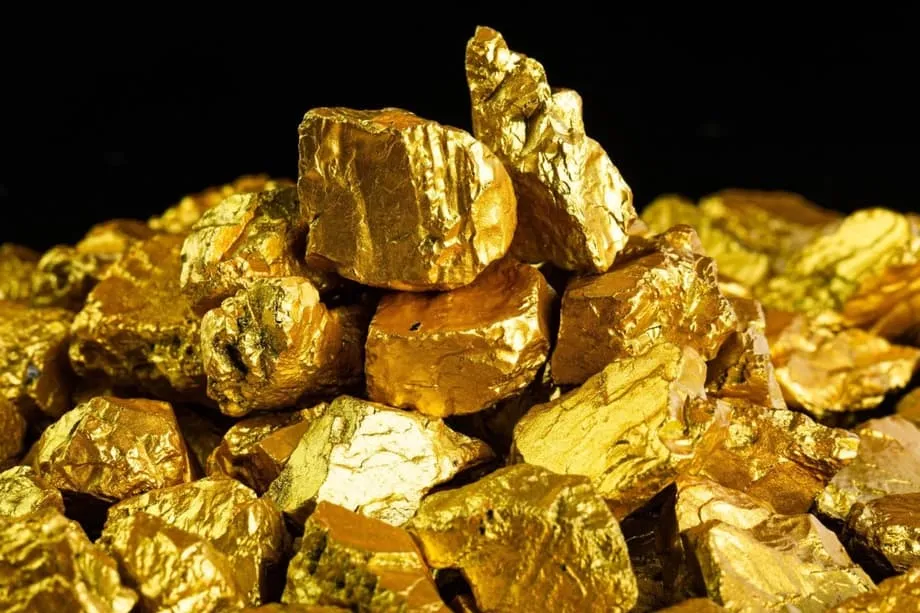
A new gold belt takes shape in Xinjiang
A gold belt emerging in the West Kunlun Mountains near the western edge of Xinjiang could contain more than 1,000 tonnes of gold, according to early assessments by Chinese geological teams. The discovery adds to major announcements in Liaoning and Hunan, bringing the number of findings described as being in the thousand tonne class to three in less than a year.
Contents
- A new gold belt takes shape in Xinjiang
- Why a gold belt is different from a mine
- The mountain building processes behind the discovery
- How modern surveys narrow the search
- Liaoning and Hunan complete the discovery sequence
- A national exploration push reaches beyond gold
- Why Xinjiang's transport links matter
- What must happen before West Kunlun can produce gold
- Water, waste and local planning are part of the project
- What the discovery means for gold supply and prices
- The geological and economic risks still to resolve
- At a Glance
He Fubao, a senior engineer with the Kashgar Geological Team, and collaborators described the finding in a peer reviewed paper dated November 4, 2025, in Acta Geoscientica Sinica. As of November 15, the emerging belt offered a potentially large addition to China's mineral resources, while still requiring substantial exploration before its economically recoverable gold could be established.
He described the stage reached by the geological work in a statement about the belt's developing outline:
The outline of a thousand-tonne-scale gold belt in West Kunlun, Xinjiang, is now taking shape.
Single deposits containing a few hundred tonnes of gold are already considered very large by industry standards. West Kunlun is attracting attention because it may contain several deposits whose combined gold content exceeds 1,000 tonnes. A belt of that scale is rare in modern exploration.
For years, many analysts estimated that about 3,000 tonnes of gold remained unmined in China, roughly a quarter of the remaining endowment estimated for Russia or Australia. The succession of large discoveries could prompt an upward revision as more geological data becomes available.
The central task now is to turn promising geological outlines into more precise estimates. Drilling must establish where the gold lies, how consistently it occurs and how much could be recovered at a cost that makes mining worthwhile.
Why a gold belt is different from a mine
West Kunlun's proposed gold belt is a broad geological corridor, rather than one enormous mine. A belt contains combinations of rock types, geological ages, heat sources, structures and fluids that have allowed gold to accumulate repeatedly along a trend.
Faults and folded rocks can provide routes for fluids carrying dissolved metals. Over millions of years, those fluids can leave gold in several places along the same corridor. The thousand tonne estimate therefore concerns the potential combined content of multiple deposits, once exploration confirms their size.
Geologists also distinguish between resources and reserves. Resources describe known and inferred mineralization, including gold that may be too difficult or expensive to extract. Reserves are the portion that can be mined profitably with current technology and costs. A discovery generally requires extensive work before a reserve figure is confirmed.
Grade is another essential measure. It describes the amount of gold in each tonne of ore, the rock that a mine would extract and process. A large deposit with a low grade can be viable when it is close to the surface, has good infrastructure and can be processed efficiently.
A richer vein may still be too small or complicated to support a lasting operation. Exploration must therefore establish how grade changes through a deposit, whether mineralized zones continue between drill holes and what share of the gold a processing plant could recover.
The mountain building processes behind the discovery
West Kunlun lies within a complex network of ancient mountain building zones around Xinjiang. Collisions between pieces of the Earth's crust joined those pieces together, drove pulses of magma and fractured the surrounding rocks.
Those conditions favor orogenic gold systems, which form in connection with mountain building. Hot fluids carrying metals rise through faults and leave gold behind when pressure and chemical conditions change. Repeated movement through an extensive fault system can create a series of deposits over a long distance.
Xinjiang contains several productive mineral trends, including the Tianshan in the north and the Kunlun in the south. Research in the western Tianshan has identified the Yili ancient continent, a deep block of crust, as a structure that guided the formation of mineral systems.
Studies of nearby basins, including Tulasu, connect strong gravity and magnetic anomalies with clusters of epithermal gold deposits. Epithermal deposits form relatively near the surface from hot fluids. The same research links copper concentrations to rifts and ancient faults.
These geological settings show how buried crustal blocks and large structures can create repeated opportunities for metals to collect. Gold formed near the surface and gold deposited along deeper faults arise in different settings, but both can be found by tracing the structures and fluid pathways that shaped the rocks.
How modern surveys narrow the search
Geological teams use gravity and aeromagnetic surveys to identify variations in rock density and magnetism. Those variations can point to hidden structures beneath the surface, helping researchers decide where closer investigation is worthwhile.
Satellite observations and spectroscopy in the field add another layer of information. Spectroscopy measures how materials interact with light, allowing geologists to identify minerals produced when hot fluids alter the surrounding rock.
A study in northwest China showed how short wave infrared data, known as SWIR, can detect subtle changes in the chemistry of white mica. Near ore bodies, the study found shorter wavelengths in the absorption feature associated with aluminum and hydroxyl, described as Al OH.
Field teams can use portable spectrometers to scan rock chips and look for alteration patterns similar to those around known deposits. When those mineral signals coincide with promising geophysical anomalies and favorable structures, drill rigs can investigate the targets directly.
Drilling supplies the physical evidence needed to test what surveys suggest. It also allows teams to refine the shape of mineralized zones and assess their continuity, moving the work from a broad exploration target toward a measured resource.
Liaoning and Hunan complete the discovery sequence
Liaoning began the 2025 sequence of major gold announcements. Officials reported that the Dadonggou area contains an estimated 1,444 tonnes of gold, with an average grade near 0.56 grams per tonne of ore. The contained metal figure is very large even though the average concentration is modest.
Authorities said Dadonggou had passed an initial economic review, allowing it to move toward more detailed study. Its precise location has not been fully disclosed. The combination of size and low grade makes processing efficiency and the cost of moving large quantities of rock central to its development prospects.
Teams in Hunan, in central China, reported another discovery in the thousand tonne class. Details about its grade and mine plans remained sparse, a common feature of announcements at this stage of exploration.
The sequence leading to the West Kunlun announcement is:
- 2021: The China Geological Survey and provincial teams began stepping up a nationwide program to map and rank domestic resources more rigorously.
- 2025: Officials announced the Dadonggou discovery in Liaoning, followed by a separate discovery in Hunan, both in the thousand tonne class.
- November 4, 2025: He Fubao and collaborators described the emerging West Kunlun belt in Acta Geoscientica Sinica.
- November 15, 2025: West Kunlun's early assessments pointed to potential contained gold exceeding 1,000 tonnes, with further exploration needed.
The discoveries suggest that prospective Chinese belts still contain large mineral endowments in places where exploration was limited or where improved methods can investigate deeper and with greater precision.
A national exploration push reaches beyond gold
The China Geological Survey and provincial teams have expanded their resource mapping efforts since 2021. Official briefings say the Ministry of Natural Resources has assessed the quantity, distribution and development status of 163 minerals with confirmed reserves.
During the current planning period, China reported 10 large oilfields and 19 large gas fields. Authorities also said more than 150 mineral deposits had been identified. The exploration effort has brought renewed activity to older resource bases while opening new ones.
Lithium discoveries provide another measure of the program's reach. A newly mapped Asian Lithium Belt extends roughly 2,800 kilometers across western and southwestern regions. It has helped raise China's share of global lithium reserves to about 16.5 percent, from 6 percent earlier in the decade.
That change amounts to an increase of 10.5 percentage points, with the newer share about 2.75 times the earlier figure. Exploration teams have also reported more than 20 million tonnes of additional copper reserves in recent years, with potential resources considerably larger.
Investment in geological exploration has risen. Larger budgets, improved datasets and faster use of remote sensing, geophysics and advanced logging of drill cores have supported the search. Core logging means examining and recording the cylinders of rock brought up by drilling, which reveal the materials and structures underground.
Environmental policy has developed alongside exploration. Official accounts describe thousands of projects designated as green mines, which follow stricter environmental standards, and more than 1,000 projects achieving that status in recent years. The program covers areas such as waste management, rehabilitation and emissions control.
Why Xinjiang's transport links matter
Xinjiang occupies a central position on overland trade routes connecting China with Central Asia and markets farther west. Roads, railways and border crossings have been upgraded through infrastructure projects connecting neighboring countries.
Large mines need these transport networks long before they sell any metal. Drills, explosives, fuel and processing chemicals must reach construction and operating sites. Later, mines need routes for shipping concentrates or doré bars, partly refined bars containing gold and other metals.
Urumqi provides a regional industrial and logistics hub. Khorgos, in the Ili area, is an active border node that adds capacity for trade and the movement of equipment. Such connections could help support major mining projects as they progress beyond exploration.
Resource security is also part of China's broader effort to improve connections for trade and industry. More complete mapping of domestic deposits can reduce exposure to supply disruptions for metals used in finance, manufacturing and technology.
Gold is valued by households and supports the financial system. Lithium and copper are important to supply chains for the energy transition. Xinjiang's geology offers potential for all three, while its location connects projects with markets across Eurasia.
International technical exchanges and sporting events held in the region in 2025 also reflect growing engagement and confidence in its infrastructure and links with neighboring economies. Those connections will matter if new mineral discoveries become operating mines.
What must happen before West Kunlun can produce gold
West Kunlun requires more drilling at closer intervals to establish the size and shape of its mineralized zones. Geologists will need to build three dimensional models and estimate resources under industry standards.
Laboratory tests must determine which processing methods work and how much gold they recover. Engineers then need to compare options for electricity, water supplies, haul roads and tailings, the material left after ore processing.
Projects that remain economically attractive can move into formal preliminary studies and then detailed studies suitable for financing decisions. These stages bring geological estimates together with construction costs, operating costs and proposed mine designs.
West Kunlun's remote mountain setting adds practical difficulty. Winter weather, altitude and short field seasons can slow drilling and surveying. The work from discovery to development can take years, and no production date has been given.
Dadonggou offers a limited guide to how studies may progress: its initial economic assessment has already been completed. Where infrastructure is favorable and the ore appears straightforward to process, investigation can advance relatively quickly. West Kunlun's remoteness could extend its schedule.
The national focus on resource security may support faster data collection and permitting if the geological results remain promising. The pace will still depend on the deposit's characteristics and the engineering work needed to develop it.
Water, waste and local planning are part of the project
West Kunlun is a high, dry environment, making water management a central concern for any operation that crushes, grinds and processes ore. Studies of groundwater, surface flows and ecosystems must come before a detailed mine design.
Environmental and social planning will need to proceed alongside geological work. Tailings storage, water recycling and the handling of cyanide used in gold processing must meet strict standards. Waste handling, land rehabilitation and emissions controls are also covered by the green mine program.
Remote sites require particular attention to worker training and emergency response. Roads, power lines and camps can add to construction costs at high altitude, while the distance from established services complicates the practical work of building and operating a mine.
Companies and regulators must also address community concerns. New projects in sensitive regions face closer scrutiny of environmental plans, and stakeholders will expect clear arrangements before major construction begins.
What the discovery means for gold supply and prices
China produced 377.24 tonnes of gold in 2024, a small increase from the previous year, while consumption reached 985.31 tonnes. Consumption exceeded domestic production by 608.07 tonnes and was about 2.6 times as large.
Demand for gold bars and coins rose by more than 24 percent, reflecting a shift among savers toward physical gold. Those figures help explain the domestic interest in expanding the country's gold resources.
A belt potentially containing more than 1,000 tonnes represents gold spread across rock underground. Mine production would be delivered over time, after exploration, design, financing and construction. New mines usually require many years to reach steady production.
Gold prices in 2025 were shaped much more by investment and central bank demand than by newly discovered mine supply. Officials and industry accounts described record prices driven by buying during uncertainty and by currency movements.
West Kunlun's immediate importance therefore lies in China's longer term resource outlook. A successful development could add domestic production capacity, while its annual output would depend on the eventual mine design and recoverable reserves.
The geological and economic risks still to resolve
Further drilling may identify faults that interrupt mineralized zones, displaced sections of ore or changes in grade. Each can alter estimates of the deposit's size and the amount of gold that can be recovered economically.
Processing tests may find refractory ore, in which gold is locked inside sulfide minerals. Extracting that gold can require more complicated and expensive treatment than processing ore where the metal is easier to release.
Even favorable geology must be matched by workable costs for roads, power, water and camps. Early estimates change as these geological and engineering details become clearer, which is why further exploration and feasibility work are central to the West Kunlun project.
If the belt delivers the scale suggested by its early results, it could change estimates of China's total gold endowment. Together with Liaoning and Hunan, it shows how sustained exploration budgets and better data can reveal large mineral systems in a country with an established mining industry.
At a Glance
- The emerging West Kunlun gold belt in Xinjiang could contain more than 1,000 tonnes of gold across multiple deposits.
- He Fubao of the Kashgar Geological Team and collaborators described the belt in a paper dated November 4, 2025.
- The announcement follows discoveries in Liaoning and Hunan in the thousand tonne class.
- Liaoning's Dadonggou discovery contains an estimated 1,444 tonnes of gold at an average grade near 0.56 grams per tonne.
- Earlier estimates put China's remaining unmined gold near 3,000 tonnes, a figure that could rise as new data arrives.
- The Ministry of Natural Resources has assessed 163 minerals with confirmed reserves during a broader exploration push.
- A lithium belt extending about 2,800 kilometers helped raise China's share of global lithium reserves from 6 percent to 16.5 percent.
- Exploration teams have reported more than 20 million tonnes of additional copper reserves in recent years.
- China produced 377.24 tonnes of gold and consumed 985.31 tonnes in 2024; demand for bars and coins increased by more than 24 percent.
- West Kunlun needs further drilling, processing tests, engineering studies and environmental planning before mine development can proceed.