A Lower Tariff Still Leaves a Heavy Bill
Japan's biggest carmakers face a lasting increase in the cost of selling vehicles in the United States, even after Washington lowered its tariff on Japanese automobiles from 27.5 percent to 15 percent. By November 10, 2025, the immediate threat of the higher rate had eased, but manufacturers were still adjusting prices, production plans and parts purchases to protect their profits in their most important export market.
Contents
- A Lower Tariff Still Leaves a Heavy Bill
- How the 15 Percent Rule Works
- What Japan Committed Beyond Cars
- Profits Face Pressure Across the Industry
- Why Showroom Prices Have Moved Slowly
- Which Vehicles Move Closer to US Buyers
- Steel and Parts Add Another Layer of Cost
- US Jobs and Detroit Face Competing Pressures
- Trade Rules Are Clearer, but Disputes Continue
- Electric Vehicles and Automation Shape the Response
- What American Buyers Can Expect
- Key Points
The stakes are large. Japan exported about 1.37 million vehicles to the United States in a recent year, worth roughly 5 trillion yen, or about $40 billion. Cars and light trucks shipped to the US represent around 30 percent of Japan's total vehicle exports. A tariff charged across that trade affects factories, suppliers, investment budgets and the prices American buyers eventually pay.
The reduction forms part of a broader agreement that includes a Japanese commitment to invest $550 billion in US projects and buy more American goods. Washington has presented the arrangement as a lasting framework. For manufacturers planning vehicles and factories years in advance, that gives them a clearer figure to work with, while leaving a substantial cost to absorb.
A tariff is a tax collected when goods enter a country. The business importing a vehicle faces the charge first, then must decide how much to recover through prices and how much to absorb through lower profit. Japanese manufacturers have already warned of losses measured in billions of dollars, and some have reduced certain US prices to defend sales despite the added cost.
The central business problem is therefore larger than a change at the border. Carmakers must decide which vehicles to keep exporting, which to build closer to American customers and which expenses they can reduce without weakening their products.
How the 15 Percent Rule Works
The White House's executive order sets out the framework for most Japanese imports and gives automobiles and auto parts their own provisions. Where an existing US tariff is below 15 percent, an additional duty brings the total to 15 percent. Where the existing rate is already 15 percent or higher, no extra reciprocal duty applies.
Japanese passenger vehicles previously faced a combined tariff of 27.5 percent. The new total of 15 percent cuts that charge by 12.5 percentage points. Manufacturers welcomed the reduction, although it still leaves a higher tariff baseline than before the increases this year.
Japan had pressed Washington to clarify whether the new 15 percent charge would be added to existing tariffs. The final formula addresses that concern. For products covered by this rule, the additional charge fills the gap up to 15 percent when the existing rate is lower. Products already above that threshold retain their existing rate without another reciprocal charge.
The timing requires attention because different parts of the agreement follow different implementation steps. Key provisions apply retroactively from August 7, 2025, while the automobile changes take effect after publication by the relevant US agencies. Agencies were directed to issue the notices and rules needed to administer the agreement and subsequent updates.
For importers, those details determine when the lower rate applies at US ports and when eligible duties paid at higher rates can be adjusted. The framework took formal shape in early September, following the announcement during the summer.
- July 2025: President Donald Trump announced the trade framework, including the lower automobile tariff and Japanese investment commitments.
- August 7, 2025: The date from which key tariff provisions apply retroactively.
- Early September 2025: The executive order formalized the framework, with automobile implementation tied to agency publication.
- November 10, 2025: Carmakers were assessing earnings pressure, pricing choices and production changes under the new arrangement.
What Japan Committed Beyond Cars
Japan's $550 billion investment commitment is one part of a package covering agriculture, aircraft, defense equipment and other industries. The agreement also removes tariffs on commercial airplanes and parts and provides Japan with the lowest tariff rates among US partners on chips and generic pharmaceuticals.
Tokyo is set to increase procurement of US grown rice by 75 percent and buy more American corn, soybeans, fertilizer and bioethanol. Japan also plans to acquire 100 Boeing aircraft and expand purchases of US defense equipment.
Trade between the countries was close to $230 billion in 2024, with Japan recording a surplus of about $70 billion. The tariff, procurement and investment commitments are intended to rebalance that relationship while preserving a strong alliance.
US Commerce Secretary Howard Lutnick's department framed the package as support for American industry and greater certainty for manufacturers. The secretary described it as a historic agreement and praised Japan's investment pledge.
President Donald Trump, speaking to reporters when the framework was announced in July, presented it as beneficial to both countries:
It is a great deal for everybody. I always say it has to be great for everybody. It is a great deal.
For carmakers, the broad agreement provides the political setting for the tariff reduction. Their operating decisions still depend on the cost of each vehicle, where its parts originate and whether moving production makes financial sense.
Profits Face Pressure Across the Industry
Japan's seven largest automakers face an estimated combined operating profit reduction of 2.7 trillion yen in the current fiscal year, according to estimates tracking the sector. The wider earnings pressure is measured in tens of billions of dollars. Operating profit is the money left from a company's main business after operating expenses, before other financial items.
Mazda faces among the largest proportional effects because it relies heavily on vehicles made in Japan for its US sales. Toyota's much greater size makes its absolute tariff bill the largest. Exposure depends on both how many vehicles a company sells and how much of its American business depends on imports.
Honda's operating profit for the first quarter fell by about half from a year earlier as tariffs and currency movements worked against it. Even so, Honda raised its forecast for the full year after setting out measures to limit the damage, including increased North American production of key models and adding new energy vehicles in the United States.
Toyota has flagged tariff costs running into several billion dollars for the year. Its response includes increasing sales volumes, reducing costs and earning more across its value chain, the linked activities through which vehicles and related services generate income.
Toyota explained its approach in a statement accompanying its financial guidance:
Despite the impact of US tariffs, we have continued to build upon our improvement efforts such as increasing sales volume, improving costs, and expanding value chain profits.
Investors initially welcomed the prospect of a 15 percent tariff. Japanese automotive shares rose when the lower rate was first signaled, reflecting relief that 27.5 percent would not become permanent. Some gains later faded as companies described earnings pressure, pricing decisions and cautious expectations for import volumes.
Why Showroom Prices Have Moved Slowly
Japanese manufacturers have two immediate ways to handle a tariff: charge customers more or accept less profit. Early pricing decisions show that many tried to hold US sticker prices steady, while some reduced certain prices to protect showroom traffic and market share.
Companies have sought savings elsewhere and adjusted their product mix, meaning the balance of cheaper and more expensive vehicles they sell. Selling a different combination of models can help recover income without applying the same price increase to every vehicle.
Analysts expect list prices to move upward as trading conditions stabilize, with a more visible effect in 2026 than in 2025. Delaying increases can support sales in the meantime, but leaves manufacturers carrying more of the tariff bill through their own finances, factory planning and purchasing decisions.
Studies conducted when broader automobile tariffs were first discussed suggested that costs could rise by several thousand dollars per vehicle, depending on the model and its content. Companies have so far kept increases modest to avoid weakening demand. No single price increase has been set across Japanese brands or models.
Which Vehicles Move Closer to US Buyers
Toyota, Honda, Subaru and Nissan are adjusting production plans as they weigh the cost of importing vehicles against the expense of building them nearer American customers. Locating assembly in the US can reduce exposure to duties on finished vehicles, although imported components can still add costs.
Toyota is expanding US capacity for high volume models such as the RAV4. Honda is moving more Civic hybrid and CRV production to Ohio. Subaru has limited import exposure and may rely more heavily on its Indiana factory.
Nissan is reshaping its North American operations, reducing production in Mexico and focusing US output on more profitable crossovers and SUVs. Across the industry, the attraction of local production is strongest for vehicles selling in volumes large enough to support the investment.
Models with smaller sales face a different calculation. Building them in North America may be too costly, leaving manufacturers to consider higher prices, reduced availability or a narrower choice of versions. Some vehicles depend on production at a single Japanese factory to make special trims and powertrains economical.
Those decisions reach beyond the final assembly line. Some automakers are asking suppliers to establish an additional US source for components, even where the immediate cost per part is higher. Buying from more than one location can reduce exposure to tariff changes and shipping delays, but factories and supplier networks take time to reorganize.
Steel and Parts Add Another Layer of Cost
US tariffs of 50 percent on many steel product grades remain a separate source of pressure. The treatment of metals and manufactured components can be more complicated than the headline rate on a completed Japanese vehicle.
In some cases, the portion of a part that is not metal can face the 15 percent reciprocal rate, while its metal content carries a separate duty of 50 percent. Manufacturers therefore need to examine what a component contains as well as where it was made.
That calculation affects purchasing decisions for stamped body panels, structural components and specialty bar products. The automotive industry is one of the largest users of flat steel in the United States. Changes in where manufacturers buy materials can shift demand for galvanized steel, which has a protective zinc coating, and cold rolled coil, steel processed into thin, smooth sheets.
The United States-Mexico-Canada Agreement, or USMCA, continues to provide relief for vehicles and parts that meet its regional content requirements. Those rules consider how much qualifying production and content comes from North America. Manufacturers are organizing parts flows carefully to meet them, although many components cannot be relocated quickly.
Building more vehicles in the United States consequently changes the tariff calculation rather than removing every cost pressure. Metals, imported parts, supplier capacity and the cost of new production all remain part of the decision.
US Jobs and Detroit Face Competing Pressures
Higher US production by foreign owned carmakers can support American factory employment while increasing competition for domestic manufacturers. Toyota, Honda, BMW, Volkswagen and other companies expanding output at US plants compete in vehicle segments where the Detroit Three already face pressure on profit margins.
Several European brands have reassigned future models toward American factories, and Japanese manufacturers are making similar changes for selected vehicles with strong sales. More local production can benefit workers and suppliers, while making it harder for competing brands to raise prices.
US automakers also face tariff costs. Duties on components from Asia and on finished vehicles moving within and beyond North America have reduced earnings at major American companies. General Motors has identified tariff related pressure on operating profit.
Manufacturers are trying to increase qualifying North American sourcing while keeping costs under control. Where possible, assembly programs in Mexico and Canada that meet USMCA rules help preserve access to the American market at lower tariff cost. Expensive steel and aluminum make that balance more difficult.
The result is a shared industry challenge. Japanese brands must protect their US business while considering investment at home, and American brands must compete with foreign owned factories operating inside the United States while managing their own international supply chains.
Trade Rules Are Clearer, but Disputes Continue
Japan's government spent months seeking clarity from Washington about both the timing of the agreement and the way tariffs would be calculated. Written confirmation that the new rate would not simply be added to existing duties was a central concern.
Political criticism in Tokyo also focused on the handling of the negotiations and the absence of an early written joint statement. That criticism eased after US agencies published firm implementation language and businesses gained a working timeline. Japan still faces the task of managing the cost burden while protecting investment at home.
US courts have been considering challenges to the president's tariff authority. Some rulings criticized the broad use of emergency powers for reciprocal tariffs, while the measures remained in effect pending appeal. The administration has defended its actions as necessary for national security and rebuilding critical supply chains.
Separate investigations concerning chips and commercial vehicles had not produced new tariffs by November 10. Negotiations with the European Union and South Korea were proceeding on separate tracks. The Japanese framework gives manufacturers more certainty about one major trading relationship, while other trade and materials issues continue.
Electric Vehicles and Automation Shape the Response
Japanese automakers must address tariffs while financing the shift to electric vehicles. Chinese manufacturers lead on cost and production efficiency in battery powered cars, while the United States is trying to catch up on labor costs, battery materials and charging infrastructure.
Many Japanese brands still depend heavily on profitable gasoline and hybrid vehicles in the US to pay for their electric vehicle transition. They are expanding their electric vehicle strategies while also developing platforms, software and supply networks. Tariff pressure makes the income from their established business more valuable to those plans.
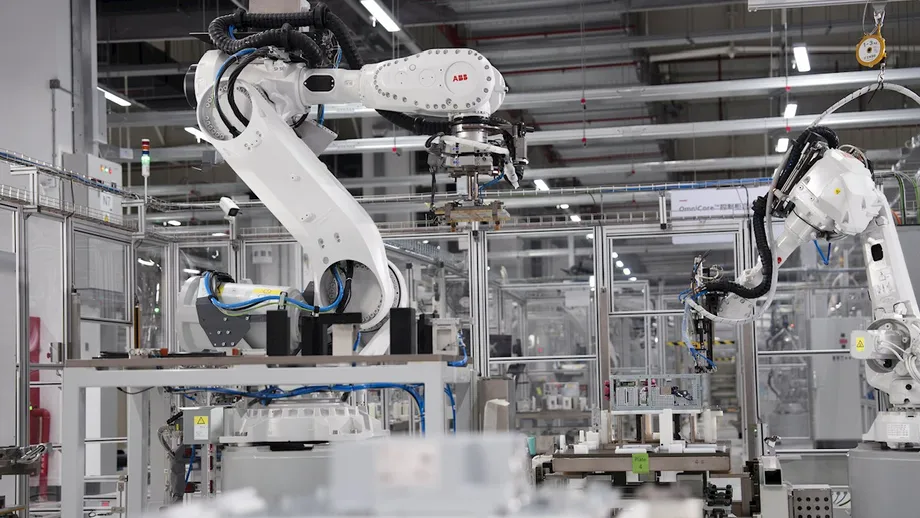
Automation offers one way to improve factory productivity. Japanese automakers already operate some of the world's most automated plants, and the sector installs thousands of industrial robots each year. Its robot density, a measure of robot use relative to the workforce, is high compared with other countries.
Further automation can help offset rising wages and logistics costs and maintain quality when production increases at new US locations. Border duties are still charged regardless of factory efficiency, so better production methods help protect margins at the plant and model level.
Tariffs on critical minerals and processed materials could also encourage US projects supplying graphite and rare earths, potentially broadening domestic supply networks for electric vehicle components over time. Building that capacity will take time, and China will remain a dominant supplier for many inputs. Manufacturers and suppliers are dividing orders among regions to spread risk and learn how to expand new sources.
What American Buyers Can Expect
US shoppers are likely to encounter a combination of gradual price increases on imported models and more vehicles assembled domestically by foreign brands. Imported models with smaller sales volumes face particular pressure because moving their production may be uneconomical.
More US content could shorten delivery times for some vehicles. At the same time, manufacturers may narrow the selection of trims and powertrains offered on cars made in Japan as they focus on versions that justify continued imports.
Replacement parts and servicing could also become more expensive where metal duties increase component costs. The effect will depend on the materials in a part and where it is produced, just as it does for the components used in new vehicles.
The reduction from 27.5 percent to 15 percent gives manufacturers meaningful relief and a clearer basis for pricing and investment. Their next decisions will determine how much of the remaining bill reaches customers, how much comes out of profits and how quickly production shifts within North America.
Key Points
- The US reduced its tariff on Japanese automobiles from 27.5 percent to 15 percent, leaving a higher baseline than before this year's increases.
- The framework includes $550 billion in Japanese investment commitments, more US agricultural purchases, 100 Boeing aircraft and expanded defense procurement.
- Key provisions apply retroactively from August 7, 2025. Automobile changes follow agency publication.
- The tariff formula brings lower existing rates up to 15 percent and adds no reciprocal duty where existing rates are already 15 percent or higher.
- Japan's seven largest automakers face an estimated combined operating profit reduction of 2.7 trillion yen in the current fiscal year.
- Manufacturers are adjusting prices, increasing selected North American production and reorganizing parts supply.
- Steel tariffs of 50 percent on many grades add pressure, while qualifying North American trade can receive USMCA relief.
- American buyers may see higher import prices, more locally assembled vehicles and fewer choices for some models.
- Automation and sourcing changes can help protect profits as manufacturers continue funding electric vehicle development.