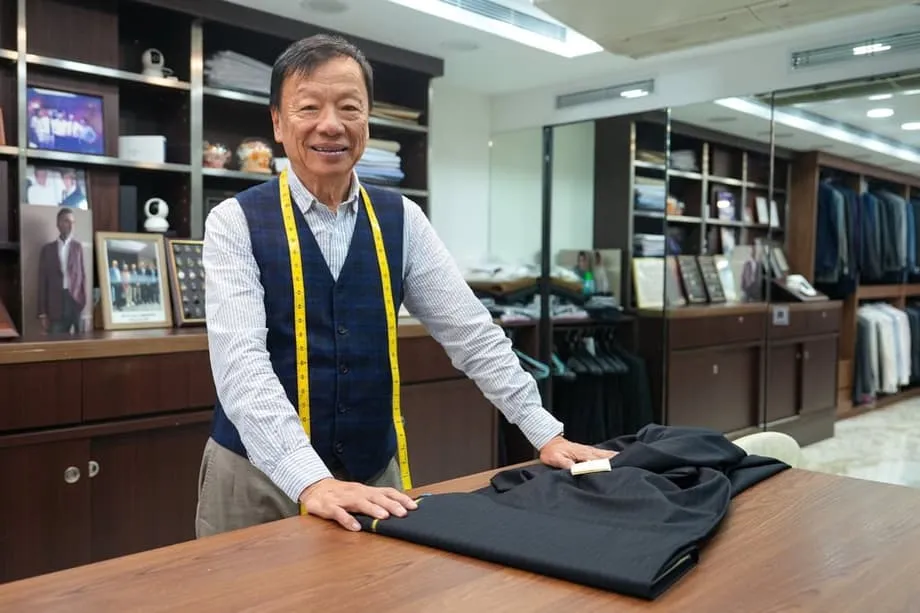
A master tailor prepares to close in Sheung Wan
Benny Woo, the 77-year-old Hong Kong tailor whose clients included tycoon Li Ka shing and Cantopop star Andy Lau, is closing his street level shop in Sheung Wan. His decision captures a problem that lower rent alone cannot solve: fewer customers need the suits that once supported a thriving trade.
Contents
- A master tailor prepares to close in Sheung Wan
- When tailoring paid more than policing
- How Shanghai and Canton shaped the craft
- The appeal of speed, service and familiar faces
- Why the old market began to shrink
- Retail figures show the wider squeeze
- Luxury shopping loses some of its pull
- The pandemic changed the everyday suit
- Retiring masters leave a training gap
- What customers get from different kinds of tailoring
- New products and new ways to sustain the craft
- What to Know
Hong Kong tailoring built its international reputation on skilled workmanship, competitive prices and quick service. Bankers traveled to the city for fittings, sailors carried away duffel bags of jackets, and celebrities fitted appointments between film premieres and banquets. A suit made in Hong Kong became a calling card for the city itself.
Woo has watched that market change across decades. Since the pandemic, relaxed office dress codes, remote work and weaker foot traffic have reduced demand. Managers at international companies once needed suits for ordinary working days. Many now dress more casually, leaving experienced tailors with fewer repeat orders.
Woo, a veteran of the craft, described why the economics of his shop no longer work:
Business used to be great. Managerial staff at big international companies would always wear suits. That is no longer the case after the pandemic. Even if my rent drops by tens of thousands of dollars, I still would not survive.
His departure comes as Hong Kong retailers face changing shopping habits among residents and visitors. For tailoring, those pressures arrive alongside another concern: aging craftspeople are retiring, while fewer young people are learning the skills needed to replace them. The trade must find customers for what it can make today while keeping the knowledge that built its name.
When tailoring paid more than policing
Woo arrived in Hong Kong from Shanghai as a child and learned tailoring from his father. His apprenticeship led to independent work in the 1960s, when orders were plentiful and a skilled tailor could earn much more than workers in many other occupations.
Recalling that period, Woo explained how readily jobs and customers could be found:
It was so easy. If you resigned in the morning, you could start working somewhere else by the afternoon. Back then, a police officer made about HK$200 a month, while I could earn up to HK$1,000. American tourists would order more than a dozen suits at a time because prices here were far lower.
The figures in his recollection show the attraction of the trade. His earnings could reach five times the roughly HK$200 monthly salary he recalled for a police officer. Visitors buying more than a dozen suits in one order also gave workshops a volume of work very different from a customer purchasing a single outfit for a special occasion.
Hong Kong's expanding economy and institutions under colonial rule supported formal dressing. Travelers supplied another large market, seeking clothes that combined value with fast completion. Those conditions made tailoring a promising career and helped sustain dense clusters of shops.
How Shanghai and Canton shaped the craft
Hong Kong's reputation rested on a deep pool of cutters and coat makers drawn from local families and Shanghai. Tailoring schools and European influences had helped establish high technical standards in Shanghai. After 1949, Shanghainese masters who settled in Hong Kong brought that experience into contact with Cantonese methods.
The Shanghainese tradition, often associated with the Red Gang of master cutters, focused on formal training, pattern work, structure and finishing. Cantonese shops, including businesses serving local customers and visiting servicemen, stressed quick turnaround and competitive prices. Together, the traditions produced a craft capable of meeting tight deadlines while delivering elegant clothes.
Hong Kong jackets often used clean lines and lightweight canvases suited to the city's climate. Canvas is the internal layer that helps a jacket hold its shape. Efficient cutting and flexibility allowed customers to request English roped shoulders, with a more pronounced shoulder line, or softer shaping inspired by Italian tailoring.
By the 1960s, hundreds of shops operated in Tsim Sha Tsui, Wanchai and Central. An estimate from that era put the number in Tsim Sha Tsui alone at roughly 500, while estimates of employment across the trade ran into many thousands. In August 1966, Hong Kong was described as having surpassed London's Savile Row as a center for bespoke suits.
The main stages of that rise, and the pressures that followed, span several decades:
- After 1949, Shanghainese master tailors resettled in Hong Kong and combined their skills with Cantonese traditions.
- By the late 1950s and 1960s, shops were taking measurements at hotel appointments in North America and Europe.
- In August 1966, Hong Kong was described as surpassing Savile Row as a bespoke tailoring center.
- From the 1980s onward, better ready to wear clothing, rising production costs and changing tastes weakened the traditional business model.
- In 2020, the shift to remote work accelerated the move away from everyday office suits.
- By November 9, 2025, Woo was preparing to close his Sheung Wan shop.
The appeal of speed, service and familiar faces
Hong Kong tailors offered travelers a practical advantage: a suit could be ready in days. Some businesses advertised a suit completed in 24 hours, although proper bespoke work required multiple fittings. Prices were lower than those associated with Savile Row or Italian tailoring, while workmanship was often strong.
Tourists and diplomats shared small fitting rooms with local officials and movie stars. Established houses served presidents, prime ministers and international entertainers. Sam's Tailor built its brand around that history, welcoming foreign leaders and athletes among its customers.
Ascot Chang developed a reputation for shirts, particularly precise collars and details finished by hand. Across the trade, owners with decades of experience worked alongside seasoned coat makers who understood how to shape a lapel and balance a jacket.
A traveler might attend an initial fitting, return the next day for adjustments and leave with a suit wrapped in tissue paper. For customers who returned regularly, shops retained measurements and patterns so that subsequent orders could be shipped directly. Those relationships sometimes continued across generations.
Shops also took their services abroad. From the late 1950s and 1960s, traveling tailors carried fabric swatch books to hotel suites in North America and Europe, measured customers there and sent completed garments by mail. These visits, often called trunk shows, brought Hong Kong tailoring to professional clients who did not need to visit the city themselves.
Why the old market began to shrink
Ready to wear suits improved in quality, offered more sizes and became easier to buy as international brands expanded. Clothing imported in standard sizes, once relatively uncommon, became familiar in Hong Kong malls and airports. Some customers preferred a brand label and a quick alteration to the appointments involved in bespoke tailoring.
Production costs rose as well. To keep prices competitive, some businesses moved parts of their production to factories in mainland China or Southeast Asia. That changed how customers viewed the special value of a suit sold as a Hong Kong product.
Office culture was already moving away from strict formality before the pandemic. Finance, technology and creative workplaces relaxed their rules, and casual Fridays increasingly became business casual on ordinary weekdays. Younger professionals often chose separate jackets and trousers, knit polo shirts and sneakers rather than a matching suit.
Women's growing participation in the workforce presented another potential market, but fewer Hong Kong tailoring businesses developed a full custom service for womenswear. Many remained concentrated on menswear, leaving part of the changing customer base unserved.
Mainland Chinese visitors brought substantial shopping traffic for years, yet their choices widened. Purchases were increasingly spread between Shenzhen, Hainan, Japan and trips to Europe, influenced by exchange rates and price differences. As shopping dispersed, fewer customers walked into the side streets and retail arcades where tailors had long operated.
Retail figures show the wider squeeze
Hong Kong's retail downturn has added pressure to specialty businesses already adjusting to weaker demand. Government figures showed retail sales by value falling 6.9 percent in September 2024 compared with a year earlier. By April 2025, the city had recorded 14 consecutive months of declining retail sales, with apparel falling again.
Clothing and footwear were among the weaker categories during repeated declines in 2024 and 2025. Rising rents and an uneven tourism recovery made conditions harder for shops dependent on discretionary purchases, meaning spending that customers can postpone or avoid.
Mainland visitor arrivals recovered, but many travelers came for the day and spent less than before. Hong Kong residents also crossed the border to shop, taking advantage of exchange rates. More people arriving in the city therefore did not automatically translate into the same pattern of purchases that retailers once relied on.
A Hong Kong government spokesman, addressing the retail downturn, said changing spending habits would continue to affect businesses:
The near term performance of the retail sector would continue to be affected by the change in consumption patterns of residents and visitors.
The spokesman also pointed to tourism promotion and large events as measures intended to support sentiment. No exact closing date was given for Woo's shop. His comments nevertheless make the central business problem plain: even a substantial rent reduction would leave him without enough demand.
Luxury shopping loses some of its pull
Hong Kong's luxury market supplied part of the visitor spending that supported bespoke tailoring. Its difficulties have therefore mattered beyond the large brands themselves. During the protest period, jeweler Chow Tai Fook announced that it would close multiple stores in prime districts, citing difficult conditions and plans to prioritize expansion in mainland China.
Several international brands have since reduced their exposure to long leases in Hong Kong and tested temporary shops instead of large permanent stores. When major retailers reduce their presence, smaller businesses nearby can lose passing customers who once moved between flagship stores, side streets and shopping arcades.
Luxury spending also slowed in China and other major markets during 2024 and 2025. Large groups reported weaker revenue from fashion and leather goods, while rising prices and cooler consumer confidence weighed on purchases.
Tailors operate in that same discretionary market, even when their businesses are much smaller. A traveler reconsidering an expensive shopping trip or a professional delaying a new wardrobe can leave a workshop with fewer commissions. Currency movements also continue to influence where Chinese consumers choose to shop.
The pandemic changed the everyday suit
Remote work expanded sharply in 2020, and returning to the office did not restore every old clothing habit. Video calls replaced some meetings held in person. Many employers adopted flexible rules that distinguish days spent with clients from days spent on internal work.
Technology companies had already moved toward casual clothing, while creative industries had never uniformly required ties and structured jackets. The pandemic accelerated those changes. Fewer professionals now need to buy three or four suits a year to maintain a regular office rotation.
A suit for a wedding or another special occasion still has a market. Occasional purchases, however, provide a different flow of work from the repeated orders that once supported large groups of neighboring shops. Traditional bespoke businesses remain heavily dependent on suits, even when they can also make casual clothes.
Travelers have more ways to buy custom clothing, too. Some research online and order made to measure garments through platforms that ship internationally. Others arrange commissions with Italian or Japanese houses during their travels. Hong Kong retains its advantages in price and speed, but it now competes with a wider range of destinations and ordering methods.
Retiring masters leave a training gap
Many experienced cutters and coat makers are well past middle age. Learning to become a competent bespoke tailor takes years, and reaching mastery can require a decade. One tailor estimated that fewer than 50 highly experienced masters still worked full time in Hong Kong.
Apprenticeships once offered teenagers, often learning from relatives, a route into steady work. As factories and workshops moved across the border and pay improved in other occupations, a career in a small tailoring shop became less attractive to many young people.
The work demands precision, patience and considerable labor. A stable order book gives a workshop time and income to train newcomers. In an unsettled market, training budgets shrink, making it harder to replace the people who retire.
Some family businesses continue to maintain local production. Empire Tailors keeps its workrooms in Hong Kong with a small team of veteran artisans. Ascot Chang has built an international customer base through its focus on shirts and adjustments to details, including a distinctive collar shape suited to local preferences.
Those businesses show how inherited skills can be combined with changing products and customers. They remain exceptions rather than evidence of a broad recovery across the trade.
What customers get from different kinds of tailoring
Hong Kong still offers a wide range of custom clothing, from straightforward business suits to jackets with canvases padded by hand and carefully worked buttonholes. Some shops keep the entire process in local workrooms and charge more for craftsmanship comparable to European houses. Others outsource parts of construction that were once completed by hand on their premises.
Bespoke tailoring starts with a unique pattern drawn for the individual customer. The garment develops through several fittings and often includes canvases padded by hand and sleeves set by hand. A basted fitting uses temporary stitching so that the tailor can adjust the shape before completing the garment.
Made to measure starts with an existing base pattern, which is changed to suit the customer's measurements and preferences. It normally requires fewer fittings and more machine work, reducing the price. Ready to wear, also called off the rack, consists of garments produced in standard sizes and altered where necessary.
Hong Kong shops work across all three categories, although the city's international reputation rests mainly on bespoke and made to measure. For a traveler, made to measure with at least one fitting can balance speed, cost and improved fit. Customers seeking the most precise result may prefer full bespoke, with careful handwork and multiple fittings.
Quality differences help explain why customers disagree about whether Hong Kong tailoring remains a bargain. Research, recommendations and repeat orders help people find a business they trust. An explanation of construction, materials and the time required allows a shop to match its service to the customer's budget.
Traveling tailors still visit hotels in the United States and Europe, then finish and ship garments within weeks. For busy professionals who care more about fit than a logo, that combination of convenience and personal service remains attractive.
New products and new ways to sustain the craft
Casual clothing offers one possible route for workshops whose customers no longer wear suits daily. Unstructured jackets, wool or cotton chore coats and trousers with drawstrings can use the same careful cutting while fitting newer dress codes. Custom shirts remain an entry point because customers who seldom wear suits may still want a precise fit around the neck and shoulders.
Made to measure denim and outerwear are emerging niches that also draw on the city's technical skills. Shops can combine such products with appointments abroad, events in their stores and hotel partnerships that make a fitting part of a visitor's experience.
Digital appointment systems and detailed online measurement guides can make repeat ordering easier. Some houses are investing in training that pairs older masters with younger cutters. Industry groups have also begun presenting Hong Kong again as a fashion and textiles trade hub, creating opportunities for manufacturers, designers and tailors to meet and seek business.
Possible policy support includes grants for heritage crafts, vocational training and help with workspace costs for shops keeping production in Hong Kong. Tourism campaigns featuring crafts and workshops could spread visitor activity beyond malls. Stable income, professional respect and room for creativity would make apprenticeships more attractive.
Uneven luxury demand in China and changing exchange rates will still shape the market. Hong Kong's remaining strengths are practical: technical skill, quick turnaround and service that reaches customers wherever they live. Keeping the craft viable means applying those strengths to clothing people need now while giving younger workers a reason to learn.
What to Know
- Benny Woo, 77, is closing his Sheung Wan shop as weaker suit demand makes the business difficult to sustain.
- Hong Kong tailoring grew through the combination of Shanghainese and Cantonese skills, competitive prices and fast service.
- Tsim Sha Tsui was estimated to have roughly 500 tailor shops in the 1960s.
- Relaxed office dress, better ready to wear clothing and changing tourism patterns reduced the traditional market.
- Retail sales fell 6.9 percent in September 2024 compared with a year earlier, and April 2025 marked a 14th consecutive monthly decline.
- Aging masters and fewer apprentices threaten the transfer of skills that can take a decade to master.
- Local workshops, international appointments and custom shirts remain strengths, while casual tailoring and training offer possible routes to adaptation.