Nine trade offices face a new export brief
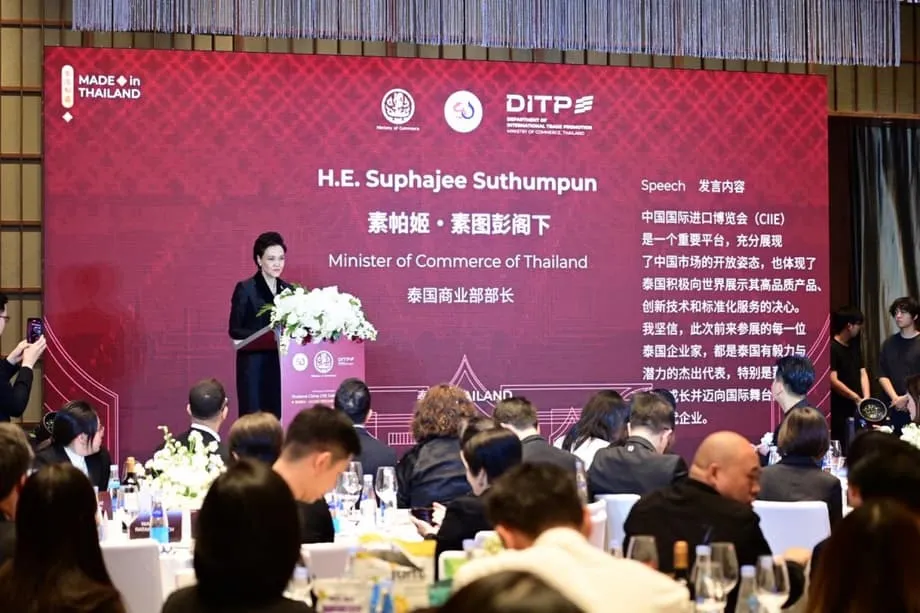
Thailand is reshaping its approach to China as Beijing sets out economic priorities centered on green growth, innovation and higher household incomes. Commerce Minister Suphajee Suthumpun has instructed Thailand's nine trade offices in China to study the 15th National Economic and Social Development Plan and develop export strategies that match its priorities.
Contents
- Nine trade offices face a new export brief
- How Beijing's priorities shape the opportunity
- Food, pet care and wellness lead the product push
- Sustainable goods and creative content need credible partners
- Why provincial strategies matter
- The trade deficit puts pressure on Thailand
- US tariffs and European requirements complicate the strategy
- Rail routes offer another way into inland China
- Trade agreements and digital capacity support the export effort
- Milestones and practical priorities for businesses
- Key Points
China's ambition to expand its middle income population from roughly 400 million to 800 million gives the initiative particular weight. That would double the number of people in this income group, potentially changing demand in the world's second largest consumer market. Thai officials want businesses to compete through quality and innovation as that market develops.
The instructions cover agricultural goods, consumer products, animal feed, health foods and digital products such as games and animation. Trade officers are also being asked to move beyond introducing sellers to buyers and explore joint ventures with Chinese partners. These arrangements could support joint development, production in China and faster approval of products.
China remains Thailand's largest trading partner. Thai fruit, processed food, wellness products and creative content already have recognition among Chinese buyers. The government's goal is to turn that appeal into sustained growth in exports that command higher prices and fit China's policy direction.
As of November 9, 2025, the strategy also sits alongside a substantial trade imbalance, uncertainty over US tariffs and changing European trade requirements. Thailand is trying to expand its Chinese customer base while strengthening production, design and services at home, so that rising trade produces more benefits for its own economy.
How Beijing's priorities shape the opportunity
China's five year plans guide central and provincial spending, tax incentives, product standards and market access rules. For Thai businesses, studying the plan means identifying where policy support and customer demand may meet, then preparing products that satisfy the relevant requirements.
The latest plan gives prominence to green manufacturing, the energy transition, advanced technology and greater household consumption. Those priorities overlap with Thai strengths in premium agricultural produce, prepared foods, health and beauty products, and digital content.
Food producers face an opportunity tied to quality and safety. Traceable supply chains allow buyers to follow a product from its source to the shop. Certified farms and reliable refrigerated transport help maintain quality and meet the expectations of distributors and consumers.
Thai exporters of rice, durian, mango and mangosteen need dependable seasonal planning, rapid transport and compliance with Chinese labeling and pesticide rules. Processed foods, condiments and prepared meals can appeal to consumers seeking convenient products with authentic Thai flavors.
Green consumption also puts packaging and materials under closer scrutiny. Biodegradable or recycled packaging, organic cosmetics and natural home decor fit both the policy direction and changing consumer preferences. Businesses need evidence to support environmental claims rather than relying on a product's appearance or branding.
China's emphasis on domestic innovation creates opportunities for collaboration in services and content. Thai games, films and animation can enter through joint production or licensing arrangements that meet local content rules while drawing on Thai creative talent. The practical challenge is to connect those strengths with Chinese partners able to handle distribution, approvals and local demand.
Food, pet care and wellness lead the product push
Trade officers in Beijing, Hong Kong, Shanghai, Guangzhou, Qingdao, Xiamen, Chengdu, Kunming and Nanning have identified five priority groups: agriculture and food; pets and pet care; health, wellness and beauty; sustainable goods; and innovation and digital content.
Agriculture and food include rice, premium tropical fruit, processed foods, prepared meals and sauces. Reliable harvest quality and faster refrigerated routes into inland cities are central to growth. Branding must also distinguish Thai products from competing suppliers.
Seasonal supply agreements and testing how long products remain usable can help food companies reduce waste and obtain better prices. Geographical indication certification, which identifies products associated with a particular place, and food safety audits can help build distributor trust on major platforms and in modern retail stores.
China's expanding urban pet ownership offers another market. Owners are willing to pay for premium food and treatments, giving Thai pet food and care producers an opening based on recipe quality, clear labeling and stable ingredient supplies. Partnerships with specialist retailers and veterinarians, supported by social platform content, can build recognition faster than general online listings alone.
Health, wellness and beauty products include bird's nest products, plant protein, coconut water and spa items, alongside wellness services. These draw on Thailand's reputation for natural ingredients and hospitality. Producers need to meet Chinese registration standards, document sourcing and avoid exaggerated health claims.
Beauty brands can compete through clean beauty trends and testing for skin sensitivity. Wellness providers can explore joint ventures with Chinese operators to adapt service menus to local preferences and manage licensing requirements. Product appeal and regulatory preparation need to develop together.
Sustainable goods and creative content need credible partners
Biodegradable packaging, organic cosmetics, recycled clothing, natural home decor and eco tourism form the sustainable goods group. These products and services target consumers seeking choices with a lower environmental impact.
Life cycle assessments examine environmental effects across a product's life, from materials and production to use and disposal. Together with independent certification and traceability through QR codes, they can support sustainability claims, reduce the risk of greenwashing complaints and improve placement on major retail platforms.
Thai intellectual property in films, games and animation is attracting interest from Chinese studios and platforms. Intellectual property covers ownership rights in creative work, making agreements about its use and earnings central to a successful partnership.
Games still require approvals, and content rules are strict. Joint development with established Chinese publishers or production agreements with local studios can speed market entry and reduce regulatory risk. Clear revenue sharing arrangements and protection of intellectual property are essential for lasting commercial success.
Why provincial strategies matter
China's provinces differ in income levels, retail channels, consumer preferences and regulatory practices. A strategy that succeeds in Guangdong may fail in Sichuan. Thai trade officers are being asked to map customers, retail partners and local rules city by city, then guide businesses toward suitable sales channels and alliances.
Cross border ecommerce offers a relatively fast way to test demand through major platforms and specialist stores. General trade entry, involving full registration for the domestic market, can be useful for cosmetics and some foods because it opens access to physical retail and reduces marketing obstacles.
Wellness and beauty products often benefit from personal contact and demonstrations. Local distributors that can organize sampling, live commerce and influencer campaigns may gain better results than an approach based entirely on online sales.
Joint ventures or contract manufacturing in China can shorten the time needed to reach customers. Local production may help meet content rules, simplify customs procedures and reduce logistics costs while retaining Thai brand identity.
Thailand's nine trade offices provide support with product registration, checks on prospective distributors and provincial outreach. They can also help businesses prepare for inspections, laboratory testing and digital compliance, including data rules affecting ecommerce operations. Accurate regulatory work and timely execution can determine whether a product reaches store shelves.
Companies still need to adapt products and prices to each city cluster. After sales support, straightforward returns and dependable repair networks also matter to Chinese consumers. A broader mix of ecommerce, distributor partnerships and physical retail gives businesses more ways to reach customers where each channel suits the product.
The trade deficit puts pressure on Thailand
Thailand recorded a record trade deficit with China of about $19.23 billion from January to April 2025, according to the Trade Policy and Strategy Office. Imports reached $31.56 billion, while exports totaled $12.33 billion. A trade deficit means the value of goods bought from a partner exceeds the value sold to it.
Those figures put imports at about 2.6 times exports during the four months. Electronics and machinery dominated the increase as companies stocked up on production inputs amid uncertainty about changes in global tariffs.
April alone brought $8.82 billion in imports from China against $3.55 billion in exports to China. Electrical machinery and parts, general machinery, home appliances, computers and related parts featured in the import surge. Manufacturers need these goods when demand or policy changes prompt a rush to secure components.
Thai fruit exports fell at the same time because of weather problems. That weakness shows how agricultural sales depend on the ability to supply goods, even when a market offers opportunities. Better marketing cannot replace a harvest lost or disrupted by unfavorable conditions.
Economists have warned that a rising share of exports comes from goods passing through Thailand with little domestic value added. Domestic value added is the work and production performed within the country, rather than the value of imported goods simply moving onward. A limited Thai contribution restricts job creation and weakens the connection between export figures and factory output at home.
The Commerce Ministry's push for joint ventures, improved products and better use of trade preferences aims to anchor more production, design and services in Thailand. Growing sales to China is one part of the effort; increasing the Thai work behind those sales is another.
Authorities are also weighing support for domestic producers facing intense competition from inexpensive imports. A value added tax on imported parcels of small value has been discussed as online shopping expands. Any such measure needs careful design to protect smaller businesses while considering consumer costs and international rules.
US tariffs and European requirements complicate the strategy
Thailand must manage its growing commercial engagement with China alongside tougher positions from the United States and European Union. New US tariffs have been applied to Thai goods, with some rates discussed as high as 36 percent.
The government has formed a US Trade Policy Committee to negotiate tariff relief, review rules of origin and work on regional value content. Rules of origin determine where a product qualifies as being made. Regional value content measures how much of its value comes from within a specified region.
Thai authorities have also ordered studies of how potential US measures could affect electronics, agriculture and other major export categories. These sectors must plan for changes in market access while keeping records that explain where their goods and components come from.
The European Commission recently imposed anti dumping duties on epoxy resins from several sources, including Thailand. Such duties are a trade defense tool used when authorities find imports priced unfairly under the applicable rules. The action signals that buyers in advanced economies are prepared to use legal measures against pricing they consider unfair.
Thai exporters need to track costs, document market pricing and prepare to cooperate with investigators if their sector becomes involved in a case. Brussels is also reshaping trade defense practice and moving toward deeper digital and environmental standards in trade agreements.
Thailand is working to conclude a free trade agreement with the European Union. The agreement would set stronger rules for services, investment, procurement and sustainable production. Market access benefits would come alongside more demanding regulatory requirements across many sectors.
Advanced economies are paying closer attention to goods made by Chinese companies operating in ASEAN or routed through the region. Thai firms connected to Chinese suppliers or investors therefore need sound origin records, border documentation and factory audits. Evidence of labor standards and environmental practices also helps maintain access to major markets.
Rail routes offer another way into inland China
Malaysia's investment in the Perlis Inland Port near the Thai border, together with improvements to rail links with Thailand, aims to expand overland trade capacity between ASEAN and China. An inland port connects cargo handling away from the coast with the wider transport network.
Thailand is adding a second track to the Hat Yai to Padang Besar railway to increase freight capacity. Malaysia is aligning inland rail with the East Coast Rail Link, which will connect its eastern and western coasts and improve connections toward the Thai border.
These projects complement the China Laos Railway and services such as the ASEAN Express between Selangor and Chongqing. The service has demonstrated deliveries in eight days along the route through Malaysia, Thailand, Laos and China.
More predictable rail routes can reduce reliance on sea lanes exposed to congestion or geopolitical risk. For Thai exporters of fresh fruit, chilled foods, electronics and spare parts, additional rail options create more ways to organize deliveries around speed to inland Chinese cities.
Fresh produce needs both timely transport and reliable temperature control. The value of faster routes therefore lies in how well they connect harvest schedules, refrigerated logistics and distribution. For manufactured goods, dependable delivery can help businesses respond when customers need components or replacement parts quickly.
Trade agreements and digital capacity support the export effort
Thailand's negotiators are pursuing several agreements to expand market access and reduce export costs. ASEAN has completed upgrades to the ASEAN China Free Trade Area and the ASEAN Trade in Goods Agreement.
Thailand is also advancing talks with South Korea and the European Union and participating in the ASEAN Canada process. Agreements with Sri Lanka and the European Free Trade Association are among those moving through approval steps.
The ASEAN Digital Economy Framework Agreement is targeted for completion in 2025. It aims to establish common ground on artificial intelligence, financial technology, cybersecurity and measures against fraud. Those subjects matter to Thai businesses selling digital products and services, transferring data across borders or operating ecommerce businesses serving China and other markets.
About 60 percent of Thailand's trade is already with free trade agreement partners. The Commerce Ministry plans more outreach to help exporters use lower tariffs, streamlined customs and rules that reduce administrative burdens. Faster use of digital certificates of origin and a better grasp of rules for individual products can save time and money.
A certificate of origin documents where goods qualify as originating, helping customs authorities determine whether preferential tariffs apply. Businesses need to understand the requirements for their own products to obtain the benefits available under an agreement.
Thailand is also developing digital capabilities at home. Industry events and business matching programs are showcasing software, cybersecurity tools, ecommerce platforms and artificial intelligence applications that can improve production and marketing.
China's focus on domestic innovation and secure technology gives that effort a commercial purpose. A stronger Thai digital sector can support joint development with Chinese businesses and the export of services across borders, alongside physical goods.
Milestones and practical priorities for businesses
Thailand's strategy brings together export promotion, transport investment, negotiations and compliance work. The main dates and periods in the trade picture are:
- January to April 2025: Thailand imported $31.56 billion from China and exported $12.33 billion, producing a deficit of about $19.23 billion.
- April 2025: Imports from China reached $8.82 billion, while exports to China totaled $3.55 billion.
- November 9, 2025: Thailand's revised China strategy centers on studying Beijing's new plan and developing approaches suited to provincial markets.
- 2025: The ASEAN Digital Economy Framework Agreement is targeted for completion during the year.
No specific completion dates were given for the ambition to expand China's middle income population, the provincial export strategies or the transport projects. Businesses need milestones and budgets for their own entry plans while monitoring policy and commercial developments.
Thai companies can prepare by keeping records for origin requirements, laboratory tests and supplier audits. Buyers may also seek evidence on environmental and labor practices. Sustainability claims need certifications and material tracking rather than vague promotional language that could prompt complaints.
Partner selection deserves equal attention. Businesses need to check payment reliability and manage currency and credit risks, using hedging where appropriate to limit exposure to exchange rate changes. Agreements should set clear responsibilities, especially when production, creative rights or customer service are shared.
China offers a large market, but access depends on consistent quality, compliance and marketing suited to local consumers. Companies also need contingency plans for changes in US and EU tariff policy, with the ability to adjust sourcing and transport routes. Thailand's recalibration seeks to connect those practical requirements with opportunities in food, wellness, sustainable products and digital content.
Key Points
- Commerce Minister Suphajee Suthumpun has directed nine Thai trade offices to align export strategies with China's 15th National Economic and Social Development Plan.
- China aims to expand its middle income population from roughly 400 million to 800 million.
- Five priority groups cover food and agriculture, pet care, health and beauty, sustainable goods, and innovation and digital content.
- Thailand's trade deficit with China reached about $19.23 billion from January to April 2025, with imports about 2.6 times exports.
- Provincial market research, local partnerships, product registration and reliable customer service are central to market entry.
- US tariff pressures and European trade defenses increase the need for accurate origin, pricing and production records.
- Rail improvements and the Perlis Inland Port aim to expand overland trade, while the ASEAN Express has demonstrated deliveries in eight days between Selangor and Chongqing.
- Trade agreement upgrades and stronger digital capabilities could help Thai businesses reduce costs and expand sales.