More than 60,000 booked seats sit empty each month
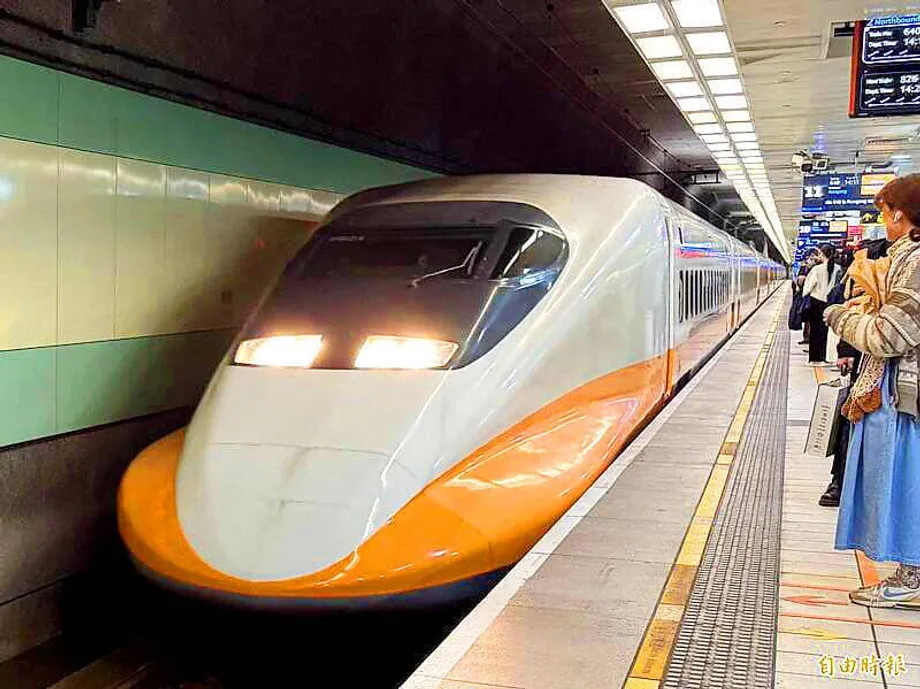
Taiwan High Speed Rail Corp (THSR) will end a longstanding boarding courtesy on November 10, 2025, requiring passengers with reserved seats to exchange their tickets before taking an earlier train on the same day. The change targets an imbalance across its north to south corridor: some trains carry crowds of standing passengers while seats booked on later departures go unused.
Contents
- More than 60,000 booked seats sit empty each month
- How the early boarding courtesy worked
- What passengers must do from November 10
- Checks will apply at stations and on trains
- Which tickets are affected?
- How to complete an exchange
- Why rising demand makes the change urgent
- Planning a journey on busy days
- More controls are planned for nonreserved travel
- Quiet travel guidance accompanies the ticket changes
- What to Know
THSR says more than 60,000 reserved seats are left unoccupied each month despite being booked. Passengers who take an earlier service without changing their reservation leave their original seat tied to a journey they no longer intend to make. Other travelers cannot buy that seat, while the passenger who left early adds to demand in the earlier train's nonreserved cars.
Busy weekends and holidays have made the problem more visible. Earlier services can be crowded with standing travelers, even as reserved cars on the original departures leave with empty seats. The company says this affects travel quality, safety and the availability of seats for people who need them.
THSR carried 78.25 million passengers in 2024 and expects the total to exceed 80 million in 2025. That would mean more than 1.75 million additional passenger journeys compared with 2024. With demand climbing, the operator is tightening how reservations are used while preparing other measures to manage crowds.
The November 10 requirement restores the practical meaning of a reserved ticket: it books a particular seat on a particular departure. Passengers who want to leave earlier will need to change that booking first, rather than use it to enter the nonreserved cars of another train.
How the early boarding courtesy worked
Until the change takes effect, passengers whose plans change at the last minute can present a reserved ticket, board an earlier train and travel in its nonreserved cars. They do not take a reserved seat on that earlier departure, but their reservation on the later train remains locked and cannot be resold.
THSR originally allowed this flexibility as an occasional exception for emergencies and unexpected delays in reaching the station. Over time, it became a shortcut used by hundreds of passengers each day.
Automatic ticket gates also allow entry up to one hour before the departure time printed on a ticket. That window makes it possible for a passenger booked on a later service to reach the platform while earlier trains are still departing.
The gate timing will remain unchanged. From November 10, however, entering the station before a booked departure will no longer mean a passenger with a reserved seat can board an earlier train without exchanging the ticket.
What passengers must do from November 10
Reserved seat holders who want to take an earlier service must exchange their ticket before boarding. The replacement ticket will show the new train number and seat assignment, allowing the passenger to travel under the updated reservation.
A reserved ticket that has not been exchanged will be valid only for the date, train and route section printed on it. THSR's Passenger Transportation Contract already sets out those conditions. The new requirement brings everyday boarding practice back into line with that contract.
THSR will provide designated ticket exchange windows at stations. Passengers with electronic tickets can change reservations through the T Express app or online booking, while station staff can help those who need assistance.
The one hour gate entry window gives travelers time to complete an exchange at the station or on their phone before approaching the platform. An earlier departure still depends on availability, so arriving early does not guarantee a seat on the service a passenger wants.
Checks will apply at stations and on trains
Station staff will no longer manually wave passengers holding reserved tickets through to earlier trains. Train crews will also check tickets onboard to see whether the reservation matches the train and seat being used.
A passenger whose ticket does not match may be asked to move and could be directed back to the concourse to complete an exchange. The concourse is the station area where passengers can reach ticket counters and other services before returning to the platform.
THSR expects the exchange process to reduce congestion in nonreserved cars. Changing a booking allows the passenger to use an available reservation on the new departure and releases the seat they no longer need on the original train for sale again.
The aim is to make better use of existing space. A seat can be physically empty but still unavailable to another customer when the booking system treats it as reserved. Completing an exchange updates that system to reflect the passenger's actual journey.
Which tickets are affected?
The rule applies to reserved seat tickets, including standard reservations, early bird fares and group seats. Passengers using these products must exchange their reservation if they want to depart earlier.
Nonreserved tickets are unaffected by the November 10 change. They remain valid for any train on the date and route section shown, with passengers using the designated nonreserved carriages. Unlike a reserved ticket, a nonreserved ticket does not guarantee a seat.
Many commuters also use stored value cards at the gates to enter the nonreserved cars. That practice will continue, although THSR expects to tighten capacity rules during the busiest periods in 2026.
Passengers facing medical situations or family emergencies can approach station help points or service counters. Staff can expedite an exchange when seats are available or advise on alternatives when the earlier service is full.
Families and groups also need to consider the seating arrangement on the replacement service. THSR advises traveling together in reserved cars to avoid becoming separated in crowded nonreserved carriages.
How to complete an exchange
Station counters and digital booking channels provide the main ways to change a ticket. THSR advises allowing a few extra minutes, particularly on weekends and holidays when more people may be seeking an earlier departure.
At a station, passengers should use the designated ticket change window. Staff will check whether the requested service has seats available and whether the ticket's fare conditions allow the change.
- Bring the ticket and provide identification if requested.
- Ask to exchange it for the desired earlier departure.
- Confirm the new train number, carriage and seat after staff check availability and fare conditions.
- Collect the reprinted ticket, pass through the gates and board the new train.
Passengers using the T Express app or website can open their booking, select the change or exchange option, choose a new departure and confirm the seat offered. After completing the exchange, they should display the updated QR code at the gates and keep a screenshot in case connectivity becomes a problem at the platform.
Some discounted tickets have stricter deadlines. For an early bird fare, any change must be completed no later than 30 minutes before departure. Passengers should also carry the identification number printed on the ticket for inspection. Refunds and changes remain subject to the Passenger Transportation Contract.
Why rising demand makes the change urgent
THSR links the policy to both unused reservations and growing passenger numbers. The more than 60,000 booked seats left empty each month represent space that other travelers could use if the original passengers changed their reservations before leaving.
Nonreserved cars face the opposite problem. Travelers may stand for long stretches between major cities such as Taipei, Taichung and Kaohsiung Zuoying, especially when earlier services attract passengers originally booked on later trains.
THSR says exceptions allowing standing passengers beyond the usual nonreserved carriages occur on about 8 percent of all services. During peak periods, that proportion rises to around 20 percent. In practical terms, that is about one service in five during busy periods, compared with roughly eight in every 100 across all services.
The company says clearer rules are needed to balance comfort, safety and fairness as passenger totals rise. Requiring exchanges addresses the mismatch between an occupied train and an unused reservation elsewhere, while the planned crowd measures focus on demand that exceeds the usual nonreserved space.
Planning a journey on busy days
Weekend and holiday departures fill quickly. Travelers with flexible schedules can consider less crowded times, such as mid morning or early afternoon, rather than departures at the beginning or end of a long weekend.
Passengers who need a guaranteed seat should book once their schedule is firm. Those seeking greater flexibility can consider a nonreserved ticket for a short journey where standing is acceptable, while remembering that access is to the designated nonreserved cars.
Major stations such as Taipei, Banqiao, Taichung, Tainan and Zuoying may require extra time to change a booking or consider alternatives if the desired train is full. Arriving early is especially useful for a family or group that needs seats together.
The timetable for the changes runs across several years, with the immediate ticket rule followed by proposed crowd measures and additional trains:
- Late September 2025: THSR introduced quiet travel guidance for passengers.
- November 10, 2025: Reserved seat holders must exchange their tickets before boarding an earlier service.
- 2026: THSR plans to pilot restrictions on nonreserved access during peak hours.
- 2028: The company expects to add 12 new train sets.
More controls are planned for nonreserved travel
THSR is preparing further crowd management measures for the busiest days. It plans to pilot restrictions on nonreserved access during peak hours in 2026 and may designate some services as nonreserved trains during peak periods to balance demand.
Three or four carriages are normally set aside for nonreserved passengers. At busy times, staff sometimes allow passengers to stand in additional cars to protect safety on platforms. THSR intends to curb that flexibility under the new rules so passenger movement stays orderly and trains avoid delays.
No specific start date in 2026 was given for the pilot. The November ticket exchange requirement is the immediate change for reserved seat holders, while the proposed nonreserved measures concern how crowds will be handled during future peak periods.
THSR is also testing deeper discounts to encourage travel outside peak times on selected dates. These include limited offers of 50 percent off during consecutive holiday weekends. Alongside those efforts, the expected addition of 12 train sets in 2028 is intended to relieve pressure over the medium term.
The operator is using ticket rules, crowd controls and fare discounts as interim measures while demand grows and before the additional trains arrive.
Quiet travel guidance accompanies the ticket changes
THSR's ticket exchange requirement arrives alongside quiet travel guidance introduced in late September. Passengers are asked to keep phones on silent, use headphones for music and video, and move to vestibules for phone calls. Vestibules are the spaces near carriage doors, away from the main seating area.
Train crews promote the guidance through messages on seat backs, platform screens and onboard announcements. Passengers who persistently breach the rules can be asked to leave the train.
Transport officials say the guidance targets behavior passengers can control, such as loud phone calls and devices playing sound without headphones. Babies and children are not its target.
Staff will assist parents and passengers with special needs and ask nearby travelers to be patient. Together with the reservation changes, the quiet travel guidance forms part of THSR's effort to improve the experience of traveling on increasingly busy services.
What to Know
- From November 10, 2025, reserved seat holders must exchange their ticket before taking an earlier train on the same day.
- THSR says more than 60,000 booked seats go unoccupied each month, while earlier services can be crowded with standing passengers.
- Exchanges are available at designated station windows and through T Express or online booking for electronic tickets.
- Automatic gates will continue to allow entry one hour before the departure time printed on the ticket.
- Early bird ticket changes must be completed no later than 30 minutes before departure.
- Nonreserved tickets and access using stored value cards are unaffected by the November change.
- THSR carried 78.25 million passengers in 2024 and expects more than 80 million in 2025.
- Restrictions on nonreserved access are planned for a pilot in 2026, with 12 additional train sets expected in 2028.
- Quiet travel guidance asks passengers to silence phones, use headphones and make calls in vestibules, with assistance for parents and travelers with special needs.