A century of connecting Tokyo's many centers
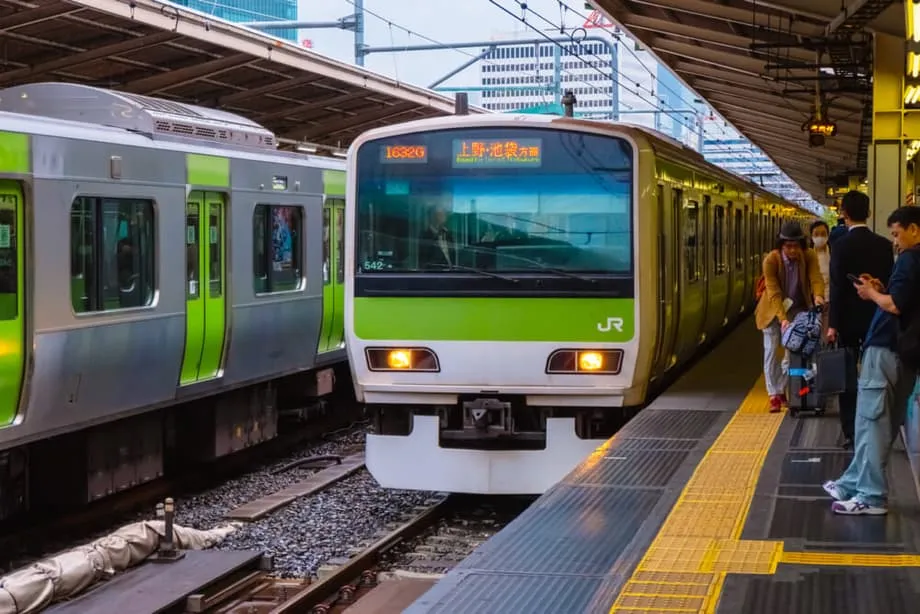
Tokyo's Yamanote Line marked 100 years as a complete railway loop on November 1, 2025, celebrating the elevated connection between Ueno and Tokyo Stations that closed the circle in 1925. Its 34.5 kilometer route now connects 30 stations, including Shinjuku, Shibuya, Ikebukuro, Ueno, Tokyo and Shinagawa, linking many of the capital's busiest districts.
Contents
- A century of connecting Tokyo's many centers
- How a freight route became a passenger loop
- Why the stations became centers in their own right
- One circuit, many different daily journeys
- How railway land became valuable city space
- Stations expand above and beneath the railway
- Takanawa Gateway gives the loop a new district
- Automation, accessibility and the nightly maintenance window
- What the century shows about building around rail
- Key Points
The anniversary celebrated more than a railway milestone. The loop helped determine where offices, shops, universities and entertainment districts developed, and how people move between them. Tokyo has several centers rather than a single dominant downtown. The Yamanote connects those centers while giving each station area a role in the city's daily life.
On the anniversary, crowds gathered for a commemorative train that departed from Ikebukuro and completed the circuit in about an hour. Families rode in carriages wrapped in a retro design recalling earlier periods of the line's history. Tokyo resident Asuka Watanabe, traveling with her toddler, said the hour seemed to fly by for children and adults alike. Kazuki Fujimoto, who came from Machida with his young son, found the classic appearance nostalgic and enjoyed sharing the green line with him.
Satoshi Okuhara, a chief curator at the Railway Museum in Saitama who has studied the railway's history and public meaning, described its influence on Tokyo's development:
The Yamanote line is not just a means of transportation; it has influenced the way the city is organized. It has been a symbol of Tokyo's development in the past and will remain so in the future.
Trains traveling in both directions every few minutes give the circle a steady rhythm. That service carries commuters, students, shoppers and visitors, while supporting the businesses and cultural destinations that have gathered around its stations.
How a freight route became a passenger loop
The Yamanote's beginnings lay in a gap between Japan's early railway routes. The country's first railway opened between Yokohama and Tokyo's Shimbashi Station in 1872. By 1883, the Takasaki Line was carrying goods from Gunma to Ueno, but the two routes lacked a direct connection.
The Shinagawa Line opened between Shinagawa and Akabane in 1885 to bridge that gap. Its initial purpose was freight transport, helping raw silk and other exports reach Yokohama's port from the interior. The route that became a symbol of urban commuting therefore began by moving goods.
- 1872: Japan's first railway opened between Yokohama and Shimbashi.
- 1883: The Takasaki Line carried goods from Gunma to Ueno.
- 1885: The Shinagawa Line opened between Shinagawa and Akabane, connecting the earlier routes.
- 1909: The expanding line received the Yamanote name.
- 1923: The Great Kanto Earthquake cleared the way for elevated construction through dense city blocks.
- 1925: Completion of the elevated section between Ueno and Tokyo closed the loop.
- 2020: Takanawa Gateway opened as the line's thirtieth station.
- November 1, 2025: The completed loop reached its centennial.
The Yamanote name refers to the hilly districts on Tokyo's western side through which the railway ran. Shinagawa Station still displays the zero kilometer post marking its former starting point. Railway insiders recognize that some stretches belong to other mainlines, but passengers experience one continuous circuit. Clockwise trains use the outer track, while counterclockwise trains use the inner track.
Passenger transport became the line's dominant role as residents moved toward western suburbs and commuted through Shinjuku, Shibuya and Ikebukuro. A single remaining railroad crossing between Tabata and Komagome preserves a trace of an earlier railway landscape.
Why the stations became centers in their own right
Private railways extending into Tokyo's suburbs built their city terminals on the Yamanote loop. Shinjuku, Shibuya, Ikebukuro and Ueno became major junctions, bringing together passengers from a much wider area. Department stores, office towers, hotels and cultural venues developed around those flows of people.
Tokyo's political and symbolic core surrounds the Imperial Palace, where commercial activity is limited. Investment and urban activity consequently spread toward the station districts around the ring. This helped create a polycentric city, meaning a city with several important centers rather than one main business district.
Tokyo's planning framework recognizes multiple subcenters, many based around Yamanote stations. Relaxed planning rules, particularly from the 1990s onward, encouraged taller buildings and developments combining different uses. Stations became anchors for additional office space, shopping concourses and public areas.
Research using a node place ridership model for Tokyo helps explain the pattern. In that model, node value describes a station's connections and level of train service. Place value describes the surrounding land use. A station with many useful connections and frequent trains has a strong node value; its nearby homes, workplaces and shops contribute to its place value.
The study found that node value's effect on ridership was roughly five times that of place value. Japan Railway stations, including Yamanote stops, also showed better coordination between their network role and passenger numbers than many subway or private railway stations. Frequent service and useful connections draw riders, making activity around the station more viable.
Tokyo's government also invested heavily in subway expansion inside the loop to relieve crowding. Those additional routes made transfers at Yamanote hubs more attractive. The circle's strength therefore comes partly from the railways crossing it and the destinations accessible through them.
One circuit, many different daily journeys
Yamanote trains arrive every two to three minutes during peak periods. A full circuit takes about 60 minutes, giving newcomers a quick view of neighborhoods with very different identities. Nippori and Shinjuku are only minutes apart by train, yet Nippori evokes old downtown Tokyo while Shinjuku represents the modern western side of the city.
Shinjuku, often described as the world's busiest station, handles enormous passenger flows. Uguisudani is a much quieter stop with far fewer boardings. Both belong to the same ring, allowing the railway to serve major commercial centers and smaller neighborhood destinations.
Commuters and students transfer at the loop's stations to private railways and subways reaching Chiba, Saitama, Kanagawa and beyond. The Yamanote acts like a sorting wheel: passengers arriving from different directions use it to reach another hub, another connecting line or their final destination.
Leisure journeys follow the same network. The line carries visitors to museums in Ueno, boutique shopping in Harajuku, government and business districts around Tokyo Station, and nightlife in Shibuya and Shinagawa. Its value comes from serving many kinds of trips throughout the day.
Elevated railway sections also support activity at street level. Between Ueno and Okachimachi, spaces beneath the tracks contain stalls, eateries and places to spend the evening. Using these strips for businesses makes productive use of scarce urban land and brings people into streets alongside the railway.
Some spaces beneath the tracks are less successful than others. Developers and railway operators nevertheless see opportunities for small shops, studios and social services in land already connected to frequent trains. Their aim is to attract visitors and keep the surrounding streets active.
How railway land became valuable city space
Living near the Yamanote brings convenience and prestige. Access to jobs, universities and cultural destinations has long supported higher land values around certain stations. Dense commercial districts alternate with residential pockets, producing a pattern of commuting, shopping and leisure along the ring.
The privatization of Japanese National Railways in 1987 gave JR East a new setting for developing stations as urban hubs. Former railway land at large sites such as Shiodome became business, retail and cultural districts. Smaller parcels near Yamanote stations accommodated shops and offices, sometimes with new plazas or pedestrian decks above the tracks.
At Ebisu and Meguro, JR East built complexes over the railway that combine transport, shopping and workplaces across several levels. Shinagawa's upgrades improved circulation, created new public areas and strengthened its gateway role, with connections to the Shinkansen and the airport monorail.
Private railways west of the ring developed dense networks of branch lines and communities. To the east, waterways and reclaimed land limited earlier expansion, although redevelopment has progressed there in recent decades. Tokyo's geography and its railway network together shaped where growth occurred.
Many journeys across the metropolis still begin or end at a Yamanote hub. That helps explain why proximity to the line remains important to property decisions and daily routines. The loop influences development, while the people and businesses arriving around its stations create further demand for transport.
Stations expand above and beneath the railway
Yamanote stations have become urban centers providing much more than train platforms. Over the past three decades, ticket gates and concourses have grown into shopping streets containing food halls, bookstores and services. The boundary between a station and its surrounding district has become less distinct.
Building above tracks at selected sites creates usable floor space without requiring a larger plot at street level. Decks support offices, hotels and clinics while allowing efficient transfers below. Where a station's footprint cannot expand, operators have created pedestrian routes and small plazas to ease congestion and improve safety.
Spaces under viaducts have also acquired new uses. Alongside izakaya, or Japanese pubs, and boutiques, some corridors contain family services, shared work rooms and fitness studios. Narrow plots that once functioned mainly as railway margins have become part of everyday neighborhood life.
Noise and vibration make property beneath a railway challenging, and location affects whether a business succeeds. Even with those constraints, operators and developers are finding uses for these spaces in areas where land is scarce and expensive. The work links the railway's physical structure to the needs of the streets around it.
Takanawa Gateway gives the loop a new district
Takanawa Gateway Station opened in 2020 between Shinagawa and Tamachi, becoming the Yamanote's thirtieth stop. Around the station, Takanawa Gateway City began a partial opening in March 2025 on a site of 9.5 hectares formerly used as a rail depot.
The development adds offices, retail, an international convention center and a hotel. Cultural facilities and public spaces are designed to accommodate events. KDDI and other companies will relocate offices there, bringing thousands of workers into the district.
Takanawa Gateway City also serves as a showcase for transport technology. Demonstrations include autonomous mobility vehicles moving through pedestrian plazas and service robots powered by hydrogen for deliveries and security. Visitors can see prototypes of ticketing systems, including gates using QR codes, and a gallery tracing Tokyo's growth around its railways.
The district is minutes from Haneda Airport. Urban air mobility is part of its longer term vision. Recycling and resource recovery programs include producing biogas from food waste, turning discarded material into a source of usable energy.
JR East president Yoichi Kise, introducing the latest station area projects during the centennial, described the railway's role in everyday travel and tourism:
It is valuable as a commuting tool and a tourism resource. We are proud of the century behind us and focused on the innovations that will keep this line vital for the next one.
The new district continues an established Yamanote pattern: a railway station anchors workplaces, shops, visitor destinations and public space. Its technology demonstrations add another role, providing a setting for testing services that may become part of future urban travel.
Automation, accessibility and the nightly maintenance window
JR East plans to introduce operation with a driver but no conductor on the Yamanote Line around 2030, supported by safety monitors and advanced train control. By about 2035, the goal is automatic operation without a licensed driver aboard. These are approximate targets rather than exact introduction dates.
Automatic train operation uses signaling and equipment aboard the train to manage speed, stopping and the distance between services. On a railway where trains arrive every few minutes, precise control helps maintain the timetable. Automation can also help address future labor shortages while preserving safety and punctuality.
Stations continue to add elevators, platform screen doors and guidance for passengers with disabilities. These changes address different parts of a journey, from reaching a platform to boarding a train. Contactless fare systems such as Suica are already standard, while experiments with digital ticketing aim to shorten queues and simplify transfers.
JR East is also investing in more efficient trains and station facilities. Measures include LED lighting and better management of heating and cooling, alongside efforts to reduce waste. The resource recovery programs at Takanawa Gateway City extend that work into a new station district.
Yamanote trains generally begin running around 4:30 a.m. and finish just after 1 a.m. The overnight pause leaves a short maintenance window in which crews inspect infrastructure, renew rails and test equipment. These repeated tasks, refined over decades, sustain the reliability of a railway carrying frequent services through central Tokyo.
What the century shows about building around rail
The Yamanote's success rests on its place within a much larger network. The ring connects almost every major destination in central Tokyo, while private railways and subways extend deep into the suburbs. Frequent trains make those connections useful throughout the day, and station districts supply reasons to travel.
Tokyo's acceptance of several urban centers spreads jobs and activity across the city rather than concentrating demand in a single core. The ridership research connects this pattern to accessibility: stations with strong network connections can support busy districts combining homes, workplaces, shops and services.
Through services, which allow journeys to continue across connected routes, can make transfers easier and trips faster. For other large cities, the useful lesson is the coordination of railway investment with changes around stations. A circle gains its value from the destinations and wider routes it connects.
The Yamanote has adapted from a freight corridor to a passenger railway through disaster, reconstruction and rapid growth after the war. Its centennial finds it adapting again, with new districts, changing station spaces and plans for automated trains. The enduring principle is practical: bring people where they need to go, and allow each station to become a center in its own right.
Key Points
- The Yamanote marked 100 years as a complete loop on November 1, 2025, following completion of the Ueno to Tokyo elevated section in 1925.
- The circuit covers 34.5 kilometers, serves 30 stations and takes about an hour to travel.
- Its origins lie in the Shinagawa to Akabane freight connection opened in 1885 to help exports reach Yokohama.
- Suburban railway terminals helped Shinjuku, Shibuya, Ikebukuro and Ueno grow into major urban centers.
- A Tokyo ridership study found that network accessibility and service had roughly five times the effect of surrounding land use.
- JR East has developed railway land, station concourses and spaces above and beneath tracks for businesses, services and public areas.
- Takanawa Gateway opened in 2020, and its surrounding development began a partial opening in March 2025.
- JR East targets operation with a driver but no conductor around 2030 and automatic operation without a licensed driver aboard by about 2035.
- Accessibility improvements, energy savings and overnight maintenance support the line's daily operation.