Tokyo reaches its highest position since 2004
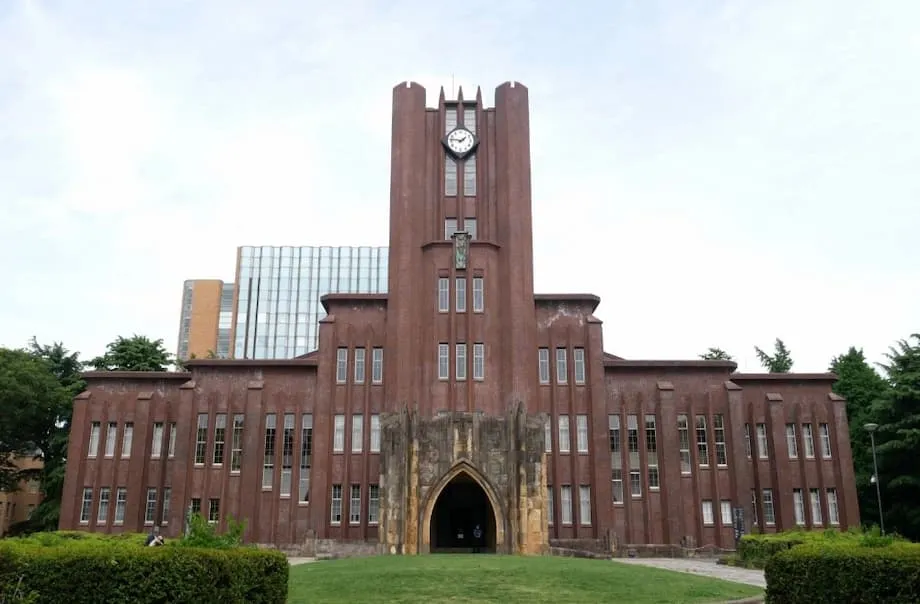
The University of Tokyo has climbed to 26th in the latest Times Higher Education World University Rankings, its best result since the table began in 2004. The university has risen for three consecutive years and remains the only Japanese institution among the world's top 50.
Contents
- Tokyo reaches its highest position since 2004
- What the global ranking measures
- Tokyo's strengths extend across subjects
- Why Tohoku leads the Japanese table
- Why other rankings put Tokyo elsewhere
- Science and medicine anchor the research profile
- Asian universities strengthen their positions
- Research investment and international recruitment
- What the result means for students and employers
- Key Points
Japan's other leading universities moved in different directions. Kyoto University fell to 61st from 55th, while Tohoku University rose to 103rd and Osaka University advanced to 151st. Tokyo's result puts it 35 places ahead of Kyoto, the next Japanese institution in the table.
The University of Oxford retained first place for the tenth consecutive year. Universities from the United Kingdom and the United States continued to dominate the top 10, even as institutions elsewhere in Asia strengthened their positions.
China placed five universities in the global top 40, a record, while Hong Kong achieved a record six in the top 200. South Korea had four universities in the top 100, also a record. India ranked second worldwide for the number of institutions listed, behind the United States.
For students, these positions can carry consequences beyond university prestige. In Japan, a university's Times Higher Education ranking can contribute points toward the Highly Skilled Professional visa category. Eligible applicants who meet the broader requirements can gain a shorter route to permanent residency.
The results also show why a university's position needs context. Tokyo leads Japan in the global table, but Tohoku University ranks first in the national table, which places greater weight on teaching and the student experience. Different measures produce different answers about where an institution stands.
What the global ranking measures
Times Higher Education uses 18 indicators grouped into five areas: teaching, research environment, research quality, industry links and international outlook. The model combines numerical information with a large survey of academic reputation.
Research quality includes citation impact and measures of research excellence. A citation occurs when one academic paper refers to another. Citation measures help assess how widely research influences subsequent work, alongside other indicators of its quality.
The research environment category considers research income and productivity. Teaching assesses resources and the learning atmosphere. Student survey responses also feature in national tables, whose approach differs from that of the global ranking.
Industry measures cover the transfer of university knowledge into practical use, including income from industry and patents. International outlook considers the proportions of international staff and students, along with collaboration across national borders.
No single measure determines a university's final position. Higher citation impact, better ratios of staff to students, stronger doctoral training, more international collaboration and closer industry partnerships can combine to improve performance across several categories.
The University of Tokyo's rise over three years suggests improvements across a range of measures rather than a single temporary jump. The information accompanying its result does not identify how much each indicator contributed to its latest position.
Tokyo's strengths extend across subjects
The University of Tokyo's Times Higher Education subject profile shows competitive results across a broad range of disciplines. Business and economics sits around the global top 30, medical and health subjects in the high 20s, engineering in the low 30s, life sciences around 30th and physical sciences in the mid 20s.
Computer science and social sciences also occupy competitive international bands. Arts and humanities ranks below those subjects but remains within the world's top 100. Together, these results reflect the university's breadth as a comprehensive research institution.
The university's profile gives a ratio of about 10 students for each member of staff and an international student share of around 18 percent, close to one student in five. Both staffing and international participation feature in assessments of university performance.
Tokyo has added degree options taught in English in recent years and expanded partnerships with leading universities worldwide. Those changes support recruitment and international research collaboration, activities reflected in the international outlook and research environment categories.
Tokyo's concentration of businesses and government research agencies also supports university funding and the transfer of research into practical applications. Industry partnerships contribute to the measures covering research income and knowledge transfer.
Across East Asia, improvements in university performance have been linked to greater research investment, the expansion of doctoral education and more selective academic hiring. Japan's leading national universities have pursued similar steps, though their pace and priorities vary.
Why Tohoku leads the Japanese table
Tohoku University ranked first in the Times Higher Education Japan University Rankings in 2025 for the fifth consecutive year. The University of Tokyo placed third, despite being Japan's highest institution in the global table.
The Tokyo Institute of Technology ranked second in the national table. It is now part of the Institute of Science Tokyo following its merger with Tokyo Medical and Dental University.
The national ranking concentrates on teaching and the student experience. The global table puts substantial weight on research strength and citation impact. A university can therefore lead on measures of the learning environment while another performs better when assessed for its international research profile.
The merger that created the Institute of Science Tokyo represents another approach to strengthening a university: bringing complementary academic and research capabilities together. It reflects efforts to sharpen research focus and improve measures of student experience used in the national table.
The dates behind the current picture span more than two decades:
- 2004: The Times Higher Education world ranking began, providing the starting point for the University of Tokyo's record result.
- May 2024: International student numbers in Japan were about 21 percent higher than a year earlier.
- 2025: Tohoku University led the Japanese national table for a fifth consecutive year, while the latest global results put the University of Tokyo at a record 26th.
Why other rankings put Tokyo elsewhere
The University of Tokyo is joint 36th in the QS World University Rankings 2026. In the US News Best Global Universities listing, it ranks 84th worldwide, 14th in Asia and first in Japan.
The Center for World University Rankings also places Tokyo among the world's leading institutions. Its assessment considers education quality, alumni outcomes, faculty standing and research performance.
QS gives greater weight to global academic and employer reputation, alongside ratios of faculty to students and international participation. US News focuses heavily on research output and citation impact adjusted for differences between academic fields.
Adjusting citations by field helps account for different publishing habits. Researchers in some disciplines publish and cite papers more frequently than those in others, so comparisons need to account for those patterns.
Times Higher Education combines teaching, the research environment and research quality with industry links and international outlook. A university with particularly influential research in selected subjects may perform better in one system, while an institution with strengths spread across many measures may rise in another.
For applicants and researchers, comparing several rankings and checking subject tables gives a fuller picture than relying on a single position. Tokyo's range from 26th in Times Higher Education to 84th in US News reflects the different questions those assessments ask.
Science and medicine anchor the research profile
The University of Tokyo ranks within the global top 10 for physics and space science in the US News subject tables. Plant and animal science, molecular biology and genetics, and chemistry also have strong positions.
Engineering, chemistry and life sciences contribute consistent international performances, while medical and health fields continue to advance. The university's research centres cover subjects ranging from atmospheric and ocean science to advanced studies on Asia and spatial information science.
That breadth matters in rankings that measure both the amount of research produced and its influence. It also helps attract industry partnerships, which support funded projects and the movement of discoveries into technologies or other practical uses.
The University of Tokyo Hospital connects clinical work with research, alongside partners on the Kashiwa and Hongo campuses. Those links allow medical treatment and biomedical investigation to operate together at scale.
A recent Brand Finance study of academic medical centres placed the hospital third worldwide for research strength and within the top 25 in its combined assessment. Independent assessments drawing on surveys of thousands of healthcare professionals also place it among the world's most capable academic medical centres for research.
The hospital's standing reflects the university's emphasis on biomedical science and extensive research associated with its hospitals. Its visibility also contributes to perceptions of Tokyo's strengths in medicine, public health and biomedical engineering.
Asian universities strengthen their positions
China's five universities in the global top 40 are led by Tsinghua University and Peking University. Their presence forms part of a broader expansion in Asia's share of highly ranked institutions over the past decade.
Hong Kong's record six universities in the top 200 came as several campuses improved on measures associated with research intensity, doctoral training and staffing. Recent gains were linked to higher ratios of doctoral degrees to bachelor's degrees and better ratios of staff to students.
A higher proportion of doctoral degrees reflects a university's concentration on advanced research training. More staff relative to students can also signal greater capacity for supervision and student support. Both help explain why changes inside an institution can affect its ranking.
South Korea's record four institutions in the top 100 and India's position as the second largest contributor of universities to the table show different parts of Asia's growth. South Korea increased its presence near the top, while India's expansion is visible in the number of institutions included.
The United States still anchors the highest reaches of the ranking, though the number of American institutions in the upper bands has edged down over recent editions. Intensifying competition from Asian universities, changing patterns of research collaboration and methodological changes that distribute recognition more widely have been cited as contributing factors.
The United Kingdom retains a strong presence in the top 10, led by Oxford's decade in first place. Japan's leading universities have broadly held their positions within this more crowded field, with Tokyo's latest result showing that sustained improvements can still produce gains.
Research investment and international recruitment
Governments and universities across East and Southeast Asia have invested in research facilities, doctoral education and academic hiring. Publication output and citation influence have grown, particularly in engineering, physical sciences, computer science and medical research.
Many campuses have expanded partnerships abroad and programmes taught in English to recruit talent and increase collaboration. Regional leaders have generally improved measures such as doctoral output, research income per scholar and staffing relative to student numbers.
Japan's national universities often perform strongly on resources and research outcomes, but face difficulties on measures of the international environment. Many have smaller proportions of international faculty and students than institutions in Hong Kong, Singapore and parts of Europe.
The University of Tokyo has sought to change that balance through more exchanges and additional degree options taught in English. Its international student share of around 18 percent indicates progress in recruiting beyond Japan.
Japan's shrinking domestic student population makes international recruitment more important. Funding pressures and intense competition for leading researchers across Asia add to the demands on universities seeking to improve their standing.
Increasing doctoral completion, publishing research that attracts substantial citations, securing industry partners and welcoming more international scholars are central to those efforts. Tokyo's record result suggests that sustained work across these areas is taking effect, although universities differ in their resources and priorities.
What the result means for students and employers
Japan's Highly Skilled Professional visa system gives rankings a practical role in some graduates' plans. Graduation from a highly ranked institution can contribute points, while eligibility and access to a shorter route to permanent residency depend on meeting the wider criteria.
Employers also use international rankings as a quick indication of research capacity and the concentration of talent, particularly in science and technology. For graduates, a university's international visibility can therefore matter alongside the content of their degree.
Tokyo ranks as the world's second best student city in recent QS assessments. The city scores highly for desirability and employer attitudes, while offering relative affordability for many international students.
International student numbers across Japan rose by about 21 percent as of May 2024, reflecting a wider shift in study abroad patterns toward Asia. Tokyo's reputation for safety, transport and job opportunities adds to the appeal of studying at the university.
Applicants still need to look closely at the course they would actually take. Subject strength, access to laboratories, academic supervision, teaching language, internship opportunities and support services all shape daily university life.
The University of Tokyo combines a broad liberal arts foundation in the first two undergraduate years with later specialisation. Selected programmes also provide routes taught in English, giving applicants different options according to their academic aims and language needs.
Tokyo's 26th place brings together a strong research portfolio, international recognition and the advantages of its location. For a prospective student, the useful next step is to connect those institutional strengths with the particular department, laboratory or programme they hope to join.
Key Points
- The University of Tokyo rose to a record 26th in the Times Higher Education World University Rankings after three consecutive years of gains.
- Tokyo is Japan's only university in the global top 50. Kyoto ranks 61st, Tohoku 103rd and Osaka 151st.
- Oxford retained first place for a tenth consecutive year, with British and American institutions dominating the top 10.
- China has a record five universities in the top 40, Hong Kong six in the top 200 and South Korea four in the top 100. India ranks second for the number of institutions listed.
- Tohoku leads the 2025 Japanese national table for a fifth consecutive year, followed by the Tokyo Institute of Technology, now part of the Institute of Science Tokyo, and the University of Tokyo.
- The global Times Higher Education ranking uses 18 indicators across teaching, research environment, research quality, industry and international outlook.
- Tokyo ranks joint 36th in QS 2026 and 84th worldwide in US News, where it is 14th in Asia and first in Japan.
- Tokyo's strengths include physics, space science, engineering, chemistry, life sciences and medicine. Its hospital ranks third for research strength in a recent Brand Finance assessment.
- University rankings can contribute points toward Japan's Highly Skilled Professional visa, subject to the wider eligibility requirements.
- Tokyo ranks second among student cities in recent QS assessments, while international student numbers in Japan rose by about 21 percent as of May 2024.