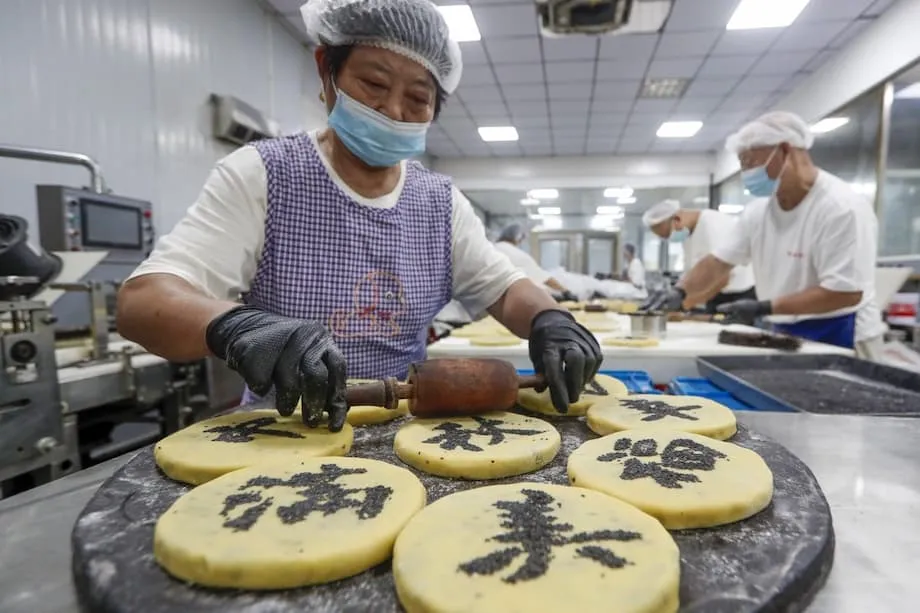
A cherished gift meets a tighter budget
A Guangzhou consulting firm's allowance for Mid Autumn gifts has fallen to 140 yuan per employee, a 40 percent cut from last year. Across China, retailers and corporate buyers describe smaller orders and slower mooncake sales as households watch their spending and companies reduce costs.
Contents
- A cherished gift meets a tighter budget
- Why households and companies are spending less
- A shorter window for seasonal sellers
- Lavish packaging loses its appeal
- Smaller assortments challenge luxury novelties
- Travel and meals compete for the holiday yuan
- What families are sharing when they share a mooncake
- New recipes balance novelty with lighter portions
- Overseas celebrations keep the tradition lively
- Food safety travels with the gift
- What sellers must get right
- Key Points
The slowdown comes on the eve of the Mid Autumn Festival on October 6, 2025. This year's celebration coincides with the National Day holiday, creating an eight day break that usually encourages spending on leisure. Yet the longer holiday has not translated into the same appetite for premium pastry boxes. Many shoppers are choosing value over elaborate gifts.
Mooncakes are dense pastries associated with reunion, shared among relatives, friends and colleagues during one of the calendar's most sentimental occasions. The tradition remains strong, but the money attached to it is shrinking. Buyers are choosing simpler assortments, fewer boxes and recipes with less sugar. Retailers describe a quieter rush before the festival and fewer orders from businesses buying in bulk.
Luxury sets once helped gift givers signal generosity and status through ornate packaging and expensive ingredients. This season, modest bundles are more attractive to people balancing the wish to give with the need to protect their budgets. The change reaches beyond bakeries: mooncakes are a discretionary purchase, something people can reduce without giving up an essential expense.
China's gift economy is consequently becoming more practical and sensitive to price. Families still want to mark the occasion, and employers still value the custom, but both are reconsidering how much a suitable gift should cost.
Why households and companies are spending less
Chinese consumers have become increasingly focused on value through 2025. A prolonged property slump has weighed on household wealth, while conditions in parts of the job market remain uneven. Families facing that uncertainty are more careful about purchases that can be postponed, reduced or replaced.
Holiday giving is changing within those limits. Some buyers select less expensive products or simpler packaging. Others seek discounts through group buying channels and community commerce platforms, where shoppers can find offers or coordinate purchases. The impulse to exchange gifts remains, but people are looking for cheaper ways to do it.
Companies face similar choices. Mid Autumn gifts traditionally go to employees, clients and business partners. Procurement teams, the people responsible for buying those gifts, are reviewing both the amount spent on each person and the number of recipients.
Some businesses have replaced premium pastry assortments with practical care packs or electronic gift cards that allow recipients to choose their own treats. Others continue buying mooncakes but select a cheaper range or reduce the number in each box.
Grace Qiu, an administrative manager at a corporate consulting firm in Guangzhou, described how business difficulties had affected an employee benefit her company considers important:
This year's per person budget is only 140 yuan, a 40 percent drop from last year, even though Mid Autumn gifts are one of our most important employee benefits. The industry is extremely sluggish. We lost our biggest client and then had to lay off a third of our staff since the start of the year.
Qiu's experience connects the spending figures with decisions inside a workplace. A company with fewer employees and a smaller allowance for each gift has less reason to place a large order for premium boxes. Similar purchasing decisions affect distributors, bakeries, packaging printers and delivery businesses.
A shorter window for seasonal sellers
Small and medium sized vendors depend on the festival as a crucial period for revenue. A weak season can hurt; a second can force difficult decisions about which products to keep and how much stock to prepare. Fewer corporate orders matter because a single business purchase can cover many recipients.
The sequence behind this year's festival brings together pressure that has built over months and a holiday that concentrates spending into a short period:
- Since the start of 2025, Qiu's company has lost its biggest client and laid off a third of its staff.
- Through 2025, consumers have become more focused on value as property weakness and uneven job conditions weigh on budgets.
- By October 5, retailers and corporate buyers describe a calmer rush before the festival, smaller orders and reduced interest in premium gift sets.
- On October 6, the Mid Autumn Festival falls within an eight day break combining the festival and National Day holidays.
Retailers must therefore serve customers who still want seasonal gifts while keeping prices within reach. Flexible box sizes and a dependable delivery service become as important as a striking new flavor.
Lavish packaging loses its appeal
China's push against lavish gifting and wasteful packaging has also reshaped the market over several years. Regulators have imposed limits on excessive packaging and increased oversight of deluxe sets sold through hotels and other prestige venues. Companies have adjusted to those standards while trying to avoid any appearance of inappropriate gift giving.
Budget pressure and regulatory scrutiny now point buyers in a similar direction: restrained products rather than displays of extravagance. Packaging is becoming simpler and lighter, often using recyclable materials. Heavy wooden chests and ornate tins have lost some of their appeal.
Practicality matters after the gift has been opened. Buyers complain less about boxes that are attractive but awkward to carry or difficult to reuse, while shoppers increasingly prefer compact designs that are easy to store and leave less waste after the holiday.
Reusable packaging still has a place when it serves a purpose. A limited design that can become useful home storage may appeal more than a bulky display box. For sellers, the challenge is to make the product feel suitable for giving without making the packaging a large part of the purchase.
Smaller assortments challenge luxury novelties
Mooncake counters offer a wide range, from truffle infused custards to plain lotus paste and from elaborate gift chests to small combination sets. Sales this season are moving toward the middle and lower price ranges. Retailers describe greater interest in compact assortments, recipes with less sugar and boxes combining a few traditional mooncakes with lighter pastries.
Novel flavors still attract attention, but shoppers compare prices more carefully and are passing over some of the most expensive creations. Ice cream mooncakes, once a sensation during the luxury gifting wave, face particular pressure. Some distributors describe steep declines in orders as buyers treat them as a novelty rather than an essential festival purchase.
Traditional baked mooncakes remain the dependable core of the market, especially in smaller formats that suit modest budgets. Bakeries drawing on Chinese, Taiwanese and Southeast Asian traditions are offering sets that mix large and small cakes or combine familiar recipes with additions such as lava custard.
Tea focused assortments, smaller seasonal pastries and products with less sugar give customers more ways to keep the custom without spending heavily. A small box containing two classics and one modern flavor can fit current priorities better than a large chest filled with unfamiliar varieties.
Travel and meals compete for the holiday yuan
The eight day holiday creates another claim on household budgets: time together away from home. Families are booking trains, flights and hotels, arranging trips across generations or meeting for restaurant meals. Money spent on those plans can leave less for expensive gift boxes.
Experiences are taking a larger place in the holiday mix. A shared trip or a lantern walk can feel more rewarding than an impressive pastry box left on a shelf. The shift helps explain how travel and dining can attract spending while premium gifts sell more slowly during the same break.
Lantern fairs, neighborhood light displays and gatherings to admire the moon bring people into public celebrations. Visitors spend on food stalls and small treats rather than necessarily choosing expensive gifts. Shopping centers combine festival promotions and discounts with entertainment.
Restaurants and cafes are adapting by including mooncakes in dining packages. A set meal may come with a simple box, or a reservation deposit may include a complimentary pastry. Lighter packaging keeps attention on the meal itself, allowing families to combine a familiar tradition with the experience they have chosen to buy.
What families are sharing when they share a mooncake
Mooncakes are traditionally eaten with family and friends on the night of the full harvest moon. Their round shape represents unity and completeness. Salted duck egg yolks, found in many varieties, have golden centers that evoke the moon.
The custom can be simple: exchange a box, cut the cakes into portions, share them and admire the moon together. That ritual connects generations across the Pearl River Delta, the Yangtze basin, northern Chinese cities and communities throughout the Chinese diaspora.
Regional differences help explain why mixed boxes remain popular with both gift givers and people tasting mooncakes for the first time. Cantonese styles commonly contain lotus seed paste or red bean paste, sometimes with one, two or more egg yolks. Mixed nuts and ham is another traditional filling.
Suzhou and Shanghai styles use flaky pastry and may be sweet or savory. Taiwanese bakeries often sell pastries with mung bean paste and flaky crusts alongside mooncakes during the season. Pork floss, jujube dates, black sesame and matcha also have established followings. Each region brings different preferences for texture and sweetness.
New recipes balance novelty with lighter portions
Modern bakers refresh their selections each year. Custard mooncakes, including versions with flowing centers, have attracted younger customers. Snow skin mooncakes use a soft exterior resembling mochi, the chewy rice confection, and offer a chilled alternative to the traditional baked crust.
Tea based creams, tropical fruits and layered fillings add contrasting tastes and textures. Recipes using less sugar or oil respond to health concerns. The appeal depends on balance: a small slice should feel satisfying rather than heavy.
Those preferences connect innovation with the move toward smaller purchases. A customer may still want an unusual filling, but in a compact assortment rather than a large luxury set. Variety gives sellers room to be creative while keeping the total price accessible.
Temperature also matters for some newer styles. Custard and snow skin products make reliable handling and delivery especially important. For buyers sending gifts to relatives in different places, freshness and a clear delivery window can matter as much as the flavor printed on the box.
Overseas celebrations keep the tradition lively
Mainland China's more cautious spending contrasts with lively festival activity across diaspora communities. In Sydney's Chinatown, merchants assemble Australia's largest mooncake selection, with traditional lotus and red bean varieties alongside lava custard and espresso green tea combinations.
Daniel Trinh, a second generation owner at Thai Kee in Sydney Chinatown, spends weeks tasting brands and selecting flavors for established customers and newcomers. He described the qualities he looks for and the different tastes of his customers:
What makes a good mooncake? One that is visually exciting and interesting taste wise. Lotus is still the most popular flavor, and it is the one I recommend to first time mooncake eaters. Younger customers also seek playful fillings like lava custard that they can share with friends.
New York City's cultural institutions, tea houses and community groups are hosting workshops, tea tastings and family festivals. Lantern making, shadow puppetry and mooncake baking classes bring the celebration into classrooms and galleries.
Los Angeles bakeries, from established Chinatown shops to modern Taiwanese patisseries, sell classic and snow skin styles. Some keep mooncakes available throughout the year, reflecting interest that extends beyond the holiday itself.
Singapore's shopping centers host mooncake fairs featuring dozens of brands, including traditional bakeries and coffee chains introducing new flavors. Promotions pair pastries with tea sets or small keepsakes. Durian snow skin mooncakes reflect Southeast Asian tastes, while smaller portions and recipes with less sugar echo the wider preference for moderation.
Food safety travels with the gift
Festival pastries can create problems at borders when they contain restricted ingredients. Authorities in Taiwan, one of the few places in Asia free of major swine diseases, warn travelers against bringing in pork products around Mid Autumn.
Some pastries contain meat fillings, making the contents of a gift box important for anyone carrying it across a border. Restricted products can lead to fines and confiscation. Disease control and food safety are therefore part of the practical planning around seasonal gifts.
Strong rules and testing regimes have become part of the festival period as authorities address the movement of food during a busy time for gifting. Buyers must consider what is inside a pastry as well as its appearance, taste and price.
Environmental concerns are another part of the purchasing decision. The effort to reduce packaging waste has encouraged slimmer boxes and recyclable materials, bringing regulatory goals closer to shoppers' preference for gifts that are easier to carry, store and dispose of.
What sellers must get right
Brands face a season in which accessible prices, taste, texture and freshness carry more weight than a glossy presentation. Creativity still has room, but the price must suit a cautious customer. Familiar recipes in modest assortments offer a dependable starting point.
Digital channels help both families and businesses compare their choices. Buyers use mini programs and social commerce to check sets, order ahead and arrange deliveries to relatives living far away. Gift codes and electronic vouchers give senders flexibility when they do not have a recipient's current address.
Service reliability is part of the product. Clear delivery windows and temperature control are especially valuable for custard and snow skin varieties. An attractive box has less appeal if the buyer is uncertain about when it will arrive or whether its contents will stay fresh.
Retailers can also combine mooncakes with tea, coffee or small bites to keep bundles affordable. Tasting counters help newcomers choose a filling, while incentives for early orders can spread demand across several weeks instead of concentrating it into a few days.
China's cautious customers are still spending on meaning and quality. The task for bakeries and retailers is to preserve the pleasure of giving and sharing while matching the budgets that households and companies have in 2025.
Key Points
- China's mooncake sellers describe slower sales, smaller orders and less demand for premium gifts before the October 6 festival.
- Grace Qiu's Guangzhou employer has cut its gift allowance to 140 yuan per employee, down 40 percent from last year.
- Property weakness, uneven job conditions and company cost reductions are encouraging cheaper purchases.
- Packaging rules and scrutiny of lavish gifting are reinforcing demand for simpler boxes.
- The eight day holiday is drawing spending toward travel, restaurant meals and shared activities.
- Smaller assortments and traditional baked mooncakes are holding up better than some expensive novelties.
- Diaspora celebrations remain lively in Sydney, New York, Los Angeles and Singapore.
- Freshness, reliable delivery and restrictions on meat products remain practical concerns for gift buyers.