A birthplace remembered across generations
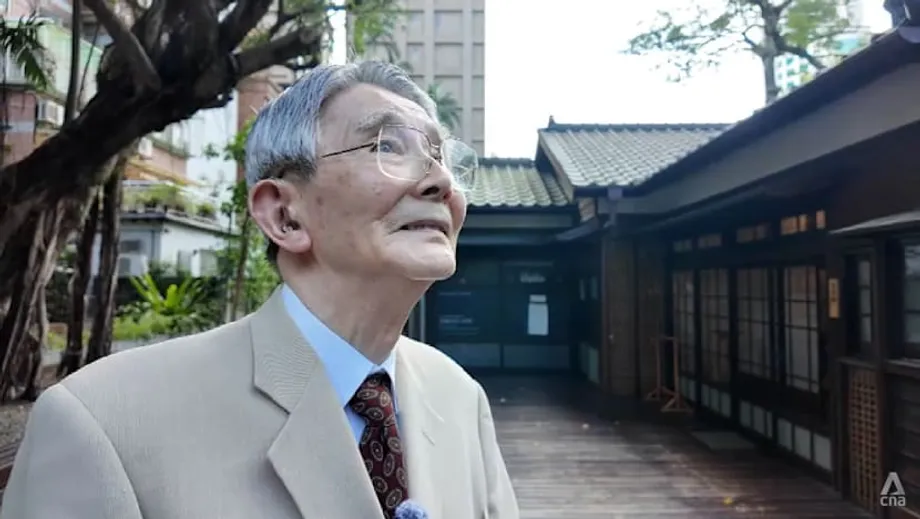
Hisashi Niimoto, 93, remembers a Taipei shaped by railways and sugar, then shaken by bombs. His grandfather arrived in Taiwan in 1896 to help build the island's rail network. Nearly 130 years later, Niimoto belongs to a dwindling generation whose memories connect Taiwan's Japanese colonial past with the cities, families and debates it left behind.
Contents
- A birthplace remembered across generations
- Who were the Wansei?
- How colonial rule reshaped Taiwan
- Schools, sugar and a changing city
- The war reaches Taipei
- From colony to another government
- Taiwanese who served in Japanese uniform
- A memorial for those who never came home
- Saving homes with more than one history
- Films and art revisit a contested past
- What the last witnesses pass down
- The Bottom Line
These witnesses are known as Wansei, people of Japanese descent born in Taiwan during Japanese rule. The last survivors are now in their 80s, 90s and beyond. Niimoto was among an estimated 200,000 Wansei repatriated after Japan's surrender, leaving the island with few possessions and a lasting attachment to their birthplace.
Taiwan was Japan's first overseas colony from 1895 to 1945. Taipei, then called Taihoku, became its colonial capital. One in three residents was Japanese. The Presidential Office Building, broad boulevards and surviving clusters of wooden houses still recall that period, when Japanese was the language of schooling and state firms dominated sugar, camphor and other important industries.
Japanese rule also brought forced assimilation, police control and violent suppression of resistance. World War II brought Allied air raids. After Japan's defeat, the Republic of China took control, the Kuomintang government requisitioned former colonial property, and people fleeing the mainland later moved into homes that Japanese families had left behind.
Niimoto, speaking from Tokyo, described his connection to the island through the lives of his grandfather and father:
Taiwan is where my grandfather and father lived. It is my birthplace.
His words express the personal loss that runs through Wansei memories. Taiwanese who lived under the same government carried different experiences, including opportunities in education, restrictions on language, military service and the grief of relatives who never returned.
Who were the Wansei?
Wansei is a Japanese term for people of Japanese descent born in colonial Taiwan. They included children of settlers and people from mixed families. Their birthplace was Taiwan, even though their families belonged to the population associated with Japanese rule.
By 1945, roughly half a million Japanese settlers lived on the island. Colonial categories separated them from Han Chinese, described as hontojin, and Indigenous peoples, described as banjin. These labels reflected an administration that formally divided the people it governed.
Surveys late in the war suggested that many Japanese residents wanted to stay. Between 1945 and 1949, however, almost all were sent to Japan through organized repatriation. Families often left hurriedly, without their assets and carrying only what they could take with them.
Japan felt unfamiliar to many Wansei. They spoke with accents shaped by Taiwan and were treated as outsiders in a country devastated by war. Some had benefited from greater access to colonial education, which later helped them build careers, but that advantage did not spare them a difficult beginning.
Wansei networks, memoirs and reunions helped families maintain their connections to Taiwan. Elderly survivors continued visiting when their health allowed, describing the island as a beloved birthplace or a second home. Age is steadily narrowing those opportunities.
How colonial rule reshaped Taiwan
Japan acquired Taiwan after defeating the Qing in the First Sino Japanese War. Japanese officials and engineers directed the island's development as a model colony, with Taipei at the center of government.
Armed resistance in the early years was put down by 1902. Strong police rule followed, alongside campaigns to turn local people into loyal imperial subjects. The Tapani incident of 1915 became another example of repression: thousands were killed and many were arrested during the crackdown on the uprising.
The colonial government promoted public health and sanitation while redesigning urban districts, expanding railways and improving ports. Those changes served military and economic aims as well as everyday needs. The infrastructure that helped people travel and cities grow also supported the colonial state's control of the island.
Schools, sugar and a changing city
Schools taught in Japanese and promoted loyalty to the emperor. Primary education for Taiwanese was initially limited and became compulsory only near the end of the war. Language policies encouraged families to move away from Minnan, Hakka and Indigenous languages toward Japanese.
Young Taiwanese adopted Japanese names, and some came to identify deeply with the empire. Others resisted its demands or used literature and cultural activity to express a Taiwanese identity. Education could open opportunities while also asking children to change how they spoke and understood themselves.
Railways, dams and roads transformed production and movement. Rail lines carried sugar cane quickly from fields to mills, supporting a sugar boom that connected Taiwan to markets across Asia. Niimoto's family history, tied to both railways and sugar, reflected two closely connected parts of this economy.
Japanese corporate groups and state monopolies dominated the extraction and processing of sugar, camphor, salt and other goods. A monopoly meant that control of a trade rested with a single authorized operator, limiting who could produce or sell it.
Taipei changed alongside the economy. Government offices, schools and Japanese style houses appeared in planned neighborhoods. In an area now within Zhongzheng district, civil servants lived in streamlined wooden residences. Pockets of these buildings survive across the city, preserving traces of the colonial capital within modern Taipei.
The war reaches Taipei
Allied bombers targeted Taiwan's cities and infrastructure during World War II, striking government buildings and railway hubs. Districts were reduced to craters as the war disrupted daily routines.
Niimoto was a teenager when a major air raid struck Taipei on May 31, 1945. He and his classmates were working across the Danshui River when alarms sounded and explosions shook the city. A bomb weighing 500 kilograms landed near their shelter, leaving a deep crater. He later recalled that the earth seemed to turn upside down.
Lessons about honoring military service continued to influence him even as Japan's position worsened. After the raid, Niimoto told his teacher that he wanted to become a soldier. He was assigned to a bicycle messenger unit, still too young for combat. Japan surrendered soon afterward.
Susumu Ito was four when his family joined the convoys taking Japanese residents away after the wartime raids. He remembered soldiers loyal to Chiang Kai shek watching residents as they prepared to leave, and the tense journey to board a ship in 1947. His family departed with little and an uncertain future.
Ito, a Wansei recalling the atmosphere around his childhood home, described a bicycle journey with his father:
My father tried to take me to church by bicycle. Along the main road, there were soldiers of Chiang Kai shek. They were watching the area. It was tense.
Niimoto retained a gentler memory of departure: yokan sweets tucked into a bag for the voyage. A familiar taste survived alongside memories of bombing, separation and the loss of home.
From colony to another government
Taiwan's transition after 1945 changed who governed the island and who occupied its buildings. Japanese officials and families were ordered out. The new authorities took over the homes and public facilities they left behind.
Some neighborhoods of Japanese style houses stood empty for a time. In 1949, the civil war on the mainland drove more than a million people to Taiwan. Vacant homes became shelter for refugees, military officers and bureaucrats, adding another layer of family histories to buildings erected under colonial rule.
The main dates show how quickly war, departure and new arrivals changed the island:
- 1895: Taiwan became Japan's first overseas colony after Japan's victory over the Qing.
- 1896: Niimoto's grandfather arrived to help build Taiwan's railways.
- 1915: The Tapani uprising was met with a violent crackdown.
- May 31, 1945: A major Allied air raid struck Taipei.
- 1945 to 1949: Almost all Japanese residents were repatriated.
- 1947: Ito's family left Taiwan; Masao Go returned to Japan after Soviet captivity.
- 1949: More than a million people arrived in Taiwan from the mainland.
- 1987: Martial law ended, allowing previously suppressed historical subjects to return to public discussion.
Many former Japanese homes were later abandoned or demolished as their occupants died and Taipei rebuilt. Their changing use connected colonial administration, displacement from Taiwan and displacement to Taiwan within the same streets.
Taiwanese who served in Japanese uniform
More than 200,000 Taiwanese served in the Japanese military, according to records cited in accounts of the period. An estimated 30,000 never returned. For some, service expressed a sense of belonging to Japan. Others understood it as duty or necessity in a war they had not chosen.
Lu Rong mao, who also used the Japanese name Shigeo Miyakawa, remembered colonial officials helping poor families. Those experiences contributed to his belief that he should serve the empire.
Yang Fu cheng enlisted in 1943 and worked on supplies in Singapore. He said he was treated like any other Japanese soldier. He remembered bonds of trust in uniform, including a commander who entrusted him with keys to a vault.
Yang, a Taiwanese veteran of the Japanese military, explained how citizenship and wartime duty shaped his decision:
I thought that for a Japanese citizen, if Japan is at war, then I should participate. I immediately changed my name to be in Japanese.
Yang returned to a Taiwan governed by different authorities. He lived through the February 28 Incident and the White Terror, spending seven years in prison during the long period of martial law. The White Terror refers here to the political repression that marked that era.
His experience connects two periods often remembered separately: service under Japan and persecution after Japan's departure. The identity he had formed in colonial schools and military life was challenged by the political order that followed.
A memorial for those who never came home
Masao Go, 98, was among the youngest Taiwanese to enter a Japanese military training school in 1944. He wanted to become a suicide pilot, a route closed to eldest sons. After Japan surrendered, Soviet forces captured him and sent him to a labor camp in what is now Kazakhstan.
Japan's health ministry estimates that 37,000 soldiers from the Japanese army were forced to work there and around 1,500 died. Go returned to Japan in 1947, carrying grief for Taiwanese comrades and questions about those who had disappeared.
Go searched for memorials to Taiwanese who had died in Japanese service and found little. In 2024, he asked Eikan Mizutani, chief resident abbot of Zen Mazan Shinsyouji Temple in Yokohama, to erect a cenotaph. Mizutani agreed, and the monument opened in spring 2025.
A cenotaph is a memorial to people whose remains are elsewhere or have not been recovered. For Go, it provided a place to remember Taiwanese whose service and deaths had received little public recognition.
Mizutani said Japanese classrooms taught little about Taiwanese soldiers. The abbot described that gap as a reason to build the monument:
It was not taught in Japanese education. So I was even more motivated to build the cenotaph. I want the general public to know about Taiwanese soldiers.
The memorial brings together Go's search for a place to mourn and Mizutani's wish for a wider public to learn about these soldiers. Their story is part of the colonial legacy alongside railways, schools and surviving homes.
Saving homes with more than one history
Conservation advocates, including researchers at Academia Sinica, have cataloged Japanese era buildings and pressed to protect surviving clusters. Preservation efforts have gained traction only recently, after years in which many houses deteriorated or disappeared.
In Taipei's old Showacho quarter, around 50 Japanese style houses remain. Built during the Showa period, they housed colonial officials in orderly wooden compounds. After the Pacific War, the Kuomintang assigned many empty properties to officers, civil servants and civilians fleeing the mainland.
Those successive occupants left a complicated property legacy. Buildings often fell into disrepair after their residents died, while development pressure threatened the remaining structures. Renovation now seeks to give some of them lasting uses as cafes, cultural spaces or community hubs.
In some cases, a bidding system supports restoration, with tenants paying rent to help maintain the property. Niimoto's former Taipei home lay in ruins for years before reopening as a cafe. Ito returned to find one family home demolished despite petitions. Another was approved for preservation but remains empty and decaying.
Huang Chih huei, a scholar who has worked for two decades to conserve colonial era houses, argues that these buildings belong to public history as well as family memory. He sees them as evidence of Taipei's development from a colonial capital into a modern city:
It is not just about family history. It is about Taiwan, Taipei's history until today. It is one page that cannot be omitted.
The surviving homes retain careful carpentry and designs suited to the climate. Conservationists frame their preservation as a way to keep the record of how Taipei grew, how families lived under successive governments, and how different people helped shape the city.
Films and art revisit a contested past
The end of martial law in 1987 opened public discussion of subjects suppressed for decades, including Japanese colonial history, Indigenous experiences and the period stretching from empire to the White Terror. Filmmakers and writers have explored those histories through stories of resistance, affection, work and loss.
Wei Te sheng's Warriors of the Rainbow: Seediq Bale centers an Indigenous uprising against Japanese rule. It explores the Seediq worldview, including the principle of gaya, to confront the loss of dignity under occupation. Other films portray child laborers in naval arsenals or use satire and tragedy to depict everyday life near the empire's end.
Cape No. 7 prompted debate over its nostalgic treatment of a Japanese teacher's relationship with a Taiwanese woman. KANO celebrated a baseball team formed under colonial rule with players from different ethnic backgrounds, attracting appreciation for its depiction of teamwork across language and origin.
Documentaries such as Wansei Back Home follow aging Wansei returning to childhood neighborhoods. Their journeys bring affection for familiar places into contact with the upheaval that removed them. Some cultural works face accusations of romanticizing Japanese rule; others focus on exploitation, discrimination and violence.
Painting also preserves this blended history. Lin Yu shan, a master of ink wash painting who grew up under Japanese rule, combined Japanese training, Western techniques and local subjects in a distinct Taiwanese style. Wansei painter Tateishi Tetsuomi recorded Indigenous arts and customs through portraits and village scenes.
Much of Tateishi's work was lost during repatriation. That loss forms another part of the displacement story: families were scattered, and works recording a cultural world were scattered or destroyed with them.
What the last witnesses pass down
Niimoto's sweets, Ito's tense bicycle journey, Yang's trusted responsibility and Go's missing comrades offer different ways into the same period. Personal memories help explain why some Taiwanese families remember teachers and doctors warmly while others recall oppression and loss.
Many older Taiwanese educated in Japanese remember order and improvements in public health. They also remember restrictions on language and strict police control. Affection for particular people or places can exist alongside painful memories of the government under which they lived.
Academic interpretations address how these memories changed. Some connect democratization with new opportunities to reconsider history and debate whether colonial buildings should be preserved or removed. Others argue that the trauma of the White Terror softened memories of Japanese rule by comparison. Another concern is that nostalgia can push the suffering inflicted by imperial rule out of public attention.
As of September 11, 2025, the remaining Wansei and Taiwanese witnesses are passing on accounts that younger generations cannot recover through direct experience. Their words, the homes that survive and the memorials being built give families and communities concrete places to begin that conversation.
The Bottom Line
- Japan ruled Taiwan from 1895 to 1945, expanding infrastructure and schooling while imposing assimilation, police control and repression.
- Wansei were people of Japanese descent born in colonial Taiwan. An estimated 200,000 were repatriated after Japan's surrender.
- Almost all Japanese residents left between 1945 and 1949. More than a million people arrived from the mainland in 1949.
- More than 200,000 Taiwanese served in Japan's military, and an estimated 30,000 never returned.
- A cenotaph remembering Taiwanese soldiers opened at a Yokohama temple in spring 2025.
- Around 50 Japanese style houses remain in Taipei's old Showacho quarter, while other homes face decay or demolition.
- Films, paintings, memoirs and surviving witnesses preserve memories ranging from attachment and opportunity to resistance, displacement and grief.