Singapore takes the spotlight between testing and racing
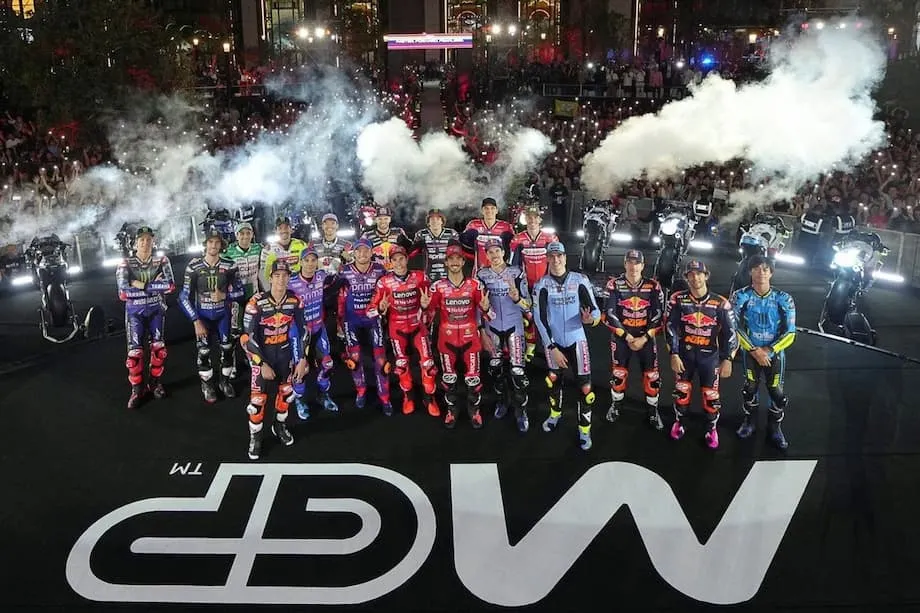
Singapore will host MotoGP's collective season launch on 6 to 7 February 2026, bringing all 11 teams together shortly after the championship's first official preseason test in Malaysia. Dorna selected the city state ahead of Kuala Lumpur and Melbourne, placing the presentation between essential work on the bikes at Sepang and the opening race at Buriram in Thailand on 1 March.
Contents
- Singapore takes the spotlight between testing and racing
- Why Singapore won over Kuala Lumpur and Melbourne
- A city accustomed to combining sport and entertainment
- How the February schedule fits together
- What teams need to learn at Sepang
- The second test affects both budgets and development
- Liberty Media brings a shared promotional moment
- Southeast Asia stays central to the opening month
- Moving the equipment and managing the costs
- What to Know
The event will be MotoGP's second collective season launch, following the inaugural edition in Bangkok in 2025. It will also be the first under Liberty Media, which recently acquired Dorna. Liberty staged a collective Formula 1 launch in London this year, and MotoGP's Singapore event will give its teams a similar shared stage before the racing begins.
Meetings in Barcelona settled key parts of the February plan. Organizers acknowledged that Singapore would require slightly more complicated logistics than Kuala Lumpur, but would be far more manageable than Melbourne. Selected team equipment is expected to leave Malaysia by road on 5 February, with some trucks making an approximately four hour journey to Singapore to prepare for the showcase the following day.
The launch therefore has two jobs: presenting the riders, bikes and partners to a worldwide audience, and fitting into a busy month of testing without placing excessive demands on teams. As of 9 September 2025, the second preseason test's location and timing remain unconfirmed. Options under discussion include going straight to Buriram after the launch or moving that test approximately ten days later.
Why Singapore won over Kuala Lumpur and Melbourne
Kuala Lumpur offered the easiest transport plan. Its proximity to Sepang would have kept journeys short for trucks, staff and hospitality equipment. For teams moving directly from testing to a public presentation, it was the simplest of the three candidates.
Melbourne offered the prospect of a spectacular event in a strong sports market. Its distance from the testing programme, however, would have placed greater demands on freight arrangements and the time available between sessions. Taking show equipment there would probably have required a full air freight operation or sending materials by sea well in advance.
Singapore offered a middle option: a prominent setting for an international presentation with workable road and air connections from Sepang. Its venues, airport and hotel network, together with its experience of hosting large events throughout the year, support the media production and fan activities required for a collective launch.
Bangkok's inaugural event showed how bringing riders, motorcycles and partners together could create a concentrated moment of attention before competitive action began. Singapore adds a futuristic skyline, a compact city layout and a setting familiar to international broadcasters and sponsors already working in the region.
A city accustomed to combining sport and entertainment
Singapore's annual Formula 1 weekend combines racing with concert stages, areas for brands and carefully managed street closures. That experience is relevant to a MotoGP presentation that must accommodate live production, television coverage and large crowds.
A city centre setting and polished staging are expected for the launch. Riders and executives will need to move between media appointments, appearances for fans and commitments to commercial partners. Quick access between those activities will matter alongside the appearance of the event itself.
Singapore's appeal is therefore practical as well as visual. A compact event layout can help keep participants moving through a demanding schedule, while established transport and accommodation networks make it easier to bring teams and production staff into the city.
The choice still comes with extra work compared with Kuala Lumpur. Teams must move selected equipment across from Malaysia and prepare for a showcase immediately after the first official test. The organizers' preference accepts that additional complexity in return for Singapore's international profile and event infrastructure.
How the February schedule fits together
Sepang will host the first running of the 2026 preseason, beginning with a shakedown for test riders and rookies before the official test on 2 to 4 February. The programme then moves to Singapore for the collective launch, before teams head to a second test once its arrangements are settled.
The planned sequence links technical preparation in Malaysia with the public presentation in Singapore and the opening race in Thailand. The main dates and decisions are:
- Before 2 February: Sepang hosts the shakedown for test riders and rookies.
- 2 to 4 February: The first official preseason test takes place at Sepang.
- 5 February: Some trucks are expected to take selected equipment from Malaysia to Singapore.
- 6 to 7 February: Singapore hosts the collective MotoGP season launch.
- After the launch: The second preseason test is under discussion, with an immediate move to Buriram or a date approximately ten days later among the options.
- 1 March: Buriram hosts the season opener in Thailand.
The 2026 championship calendar comprises 22 Grands Prix across five continents. Thailand's opening round begins a season with a worldwide travel programme, making the decisions about February's movements especially relevant to teams managing equipment, people and budgets. The official 2026 calendar carries the schedule and any updates.
Sending the paddock directly to Thailand after Singapore would create a simpler eastward movement of freight and keep work progressing continuously. Placing the second test roughly a week and a half later would instead give crews a pause during a crowded month, with time to work at their bases before returning to the track.
What teams need to learn at Sepang
The Sepang shakedown is reserved for test riders and rookies. Its purpose is to check reliability and establish a basic level of performance before the main race riders arrive for the official test. Manufacturers use this early running to try new engine specifications, aerodynamic packages and electronics settings.
Aerodynamic packages are the parts that shape how air moves around a motorcycle. Electronics maps are settings that govern how its electronic systems respond. Along with the engine and gearbox, they influence how a bike behaves and how consistently a rider can use its performance.
Engineers have a narrow window to respond if the shakedown exposes a problem with a gearbox ratio, a cooling arrangement or an aerodynamic component. They may need to redesign a part and get the replacement to Malaysia in time for the official sessions on 2 to 4 February.
The official test will focus on speed over a race distance, tyre evaluation and refining the configuration teams intend to use in March. Running quickly for a single lap is only part of that work. Teams also need to understand how their motorcycles perform through longer runs and how their choices affect the tyres.
A later second test would give factories more time to study the Sepang results and manufacture revised parts. The cost is a smaller gap between that final test and the opening race, leaving less time to respond to anything learned during the last sessions.
The second test affects both budgets and development
Buriram is central to the planning because it will host the opening race on 1 March. Going there directly after the Singapore launch would keep bikes and spare parts moving through the region on a tight route, helping teams predict freight costs and limit transport risk.
A later test could ease travel spending for smaller teams and give staff a breather. Crews would gain time to refurbish engines, rebuild gearboxes and carry out wind tunnel or simulator checks at their bases. Those checks help teams assess changes away from the circuit before returning to track testing.
Neither schedule removes the pressure of preparing motorcycles for the first race. A later date offers more time to process the Sepang data before testing again, but squeezes the period available for final updates afterward. If the test falls close to the race weekend, factories may have to settle their setup choices sooner than they would prefer.
Weather and freight delays also enter the calculation. Rain could reduce useful running at the second test, while a delayed shipment could leave less time to work with revised components. A later schedule can also mean a longer period away from base for travelling staff.
Crew chiefs will prepare for both possibilities. Their planning includes how to use the available tyres, how much running to put on each engine and when to assemble the bikes. Those schedules must be ready to accelerate or stretch once the final test arrangements are chosen.
Liberty Media brings a shared promotional moment
Liberty Media's arrival adds an emphasis on storytelling around a central launch, a sharper broadcast presentation and a stronger presence on social media. Singapore will be the first MotoGP collective season launch held under the new ownership, following Liberty's Formula 1 presentation in London this year.
Putting all 11 teams on one stage gives broadcasters a concentrated package of material for audiences around the world. It also creates images for commercial partners and a single occasion on which riders and teams can set expectations for the season.
Teams will still be able to hold their own unveilings or release their own content. The collective event brings those individual campaigns into a common moment, giving the championship another opportunity to reach people beyond its existing audience.
Singapore's established event infrastructure supports that approach. Television production, media appointments, fan appearances and partner activities all need to operate together. The launch's value will depend on fitting those commitments around the engineering programme already underway in Malaysia.
Southeast Asia stays central to the opening month
Thailand, Malaysia and Indonesia have become strong parts of MotoGP's audience, with packed grandstands at their races. Many motorcycle manufacturers sell the majority of their road bikes in Southeast Asia, making direct contact with fans and dealers especially valuable.
A Singapore launch keeps the championship's early promotional attention in the region. Its time zone suits Asian audiences while still allowing television windows that work for Europe, where much of the paddock is based.
Commercial partners can also organize activities across several nearby markets within a relatively short travel radius. Malaysia hosts the first official test, Singapore stages the launch and Thailand opens the racing season, giving the early programme a clear regional focus.
The combination connects three different parts of MotoGP's business: developing the motorcycles, presenting the championship and racing in front of spectators. Teams must make each part work without allowing the demands of the public showcase to consume the time needed for technical preparation.
Moving the equipment and managing the costs
Teams plan to send selected equipment by truck from Sepang to Singapore after the official test. Some vehicles are scheduled for an approximately four hour journey on 5 February, leaving a short setup period before the launch begins on 6 February.
The rest of the freight will remain in Malaysia for shipment to the second test once its destination is settled. Singapore's port and airport provide options for urgent transport, including flying in a part overnight if necessary.
Singapore is a simpler undertaking than Melbourne, where the likely need for a full air freight operation or advance sea freight would add complexity. It is slightly more demanding than Kuala Lumpur, with Sepang just outside that city and a shorter journey available for teams and their equipment.
Venue and staffing costs in Singapore are higher than in many alternative locations. Teams, particularly those with smaller budgets, will therefore need to control how many people they send to the event. The second test's timing adds another budget decision, because a pause may ease spending while also changing how long staff remain away.
February's heat, humidity and chance of rain must also be considered if parts of the presentation take place outdoors. Organizers will prepare covered spaces and flexible staging. The practical task is to deliver a polished event while preserving the time, money and personnel teams need for Sepang, the second test and the first race.
What to Know
- Singapore will host MotoGP's collective season launch on 6 to 7 February 2026, with all 11 teams involved.
- Dorna chose Singapore ahead of Kuala Lumpur and Melbourne after key planning meetings in Barcelona.
- Sepang hosts a shakedown for test riders and rookies before the official test on 2 to 4 February.
- Selected equipment will travel to Singapore by road, with some trucks scheduled to leave on 5 February for an approximately four hour journey.
- The second test's location and timing remain undecided, with an immediate move to Buriram or a date approximately ten days later under discussion.
- Thailand opens the season at Buriram on 1 March, beginning a calendar of 22 Grands Prix across five continents.
- The Singapore event follows Bangkok's inaugural collective launch in 2025 and will be the first under Liberty Media's ownership.
- Teams must balance the launch's commercial commitments with testing, freight costs, staffing and the time available for final motorcycle updates.