Rail Journeys Could End With a Flight to Koiwai Farm
East Japan Railway Company, known as JR East, plans to launch commercial flying car services in Iwate Prefecture by fiscal year 2028, pairing its railway network with electric aircraft for hotel transfers and sightseeing. The first proposed journeys would connect Morioka Station on the Tohoku Shinkansen line with a hotel scheduled to open at Koiwai Farm in Shizukuishi in 2026.
Contents
- Rail Journeys Could End With a Flight to Koiwai Farm
- What Passengers Would Fly In
- Why JR East Is Starting in Iwate
- A Railway Company Looks Beyond the Station
- Tokyo Landing Sites Form Part of the Wider Plan
- The Dates Behind JR East's Transport Plans
- Aircraft Need More Than a Landing Pad
- Battery Limits, Weather and Passenger Confidence
- Japan Joins an International Push Toward 2028
- What the Iwate Project Would Change
- Key Points
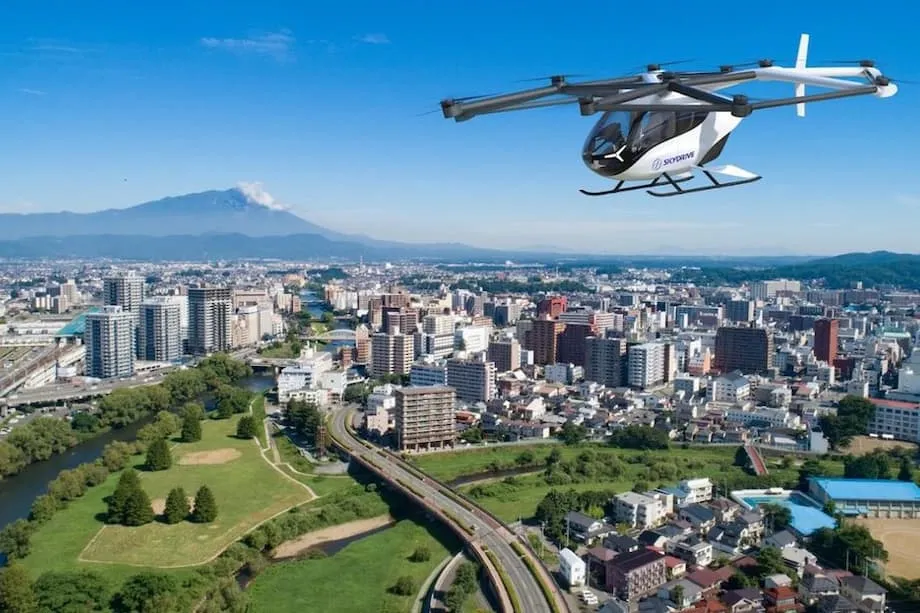
JR East has partnered with Japanese aircraft developer SkyDrive to use its SD-05, which carries a pilot and two passengers. Alongside shuttle transfers, the railway company plans aerial sightseeing tours of Koiwai Farm and Mount Iwate, linking the region's visitor attractions with a new form of transport.
The project addresses a familiar problem for railway passengers: reaching a destination after leaving the station. A fast train can cover the longest part of a journey, yet the final connection to a rural hotel or attraction can still be difficult. JR East describes that connection as secondary transportation and wants flying cars to become one way of providing it.
As of August 30, 2025, the Iwate operation is a planned service with a target launch year. Ticket prices, flight frequency and an exact opening date have not been announced. Aircraft development, landing facilities and aviation rules remain central to turning the proposal into a service that passengers can book.
The ambition extends beyond a single sightseeing route. JR East is also considering how aircraft could connect with major developments in Tokyo, while pursuing railway automation to respond to Japan's aging population and shrinking workforce.
What Passengers Would Fly In
SkyDrive's SD-05 is an electric vertical takeoff and landing aircraft, usually shortened to eVTOL. The term describes an aircraft powered by electric motors that can rise from and return to a landing pad vertically, without using a conventional airplane runway.
The phrase flying car is a popular name for this emerging transport category. The planned JR East service would carry passengers through the air in a compact aircraft, with a pilot responsible for the flight and two seats available for travelers.
Vertical takeoff and landing allows these aircraft to use small landing pads, making them suited to places where a runway would be impractical. Their compact size and relatively limited infrastructure requirements are part of their appeal for both urban areas and regional destinations.
Electric motors are intended to make eVTOL aircraft quieter and more environmentally friendly than conventional rotorcraft. SkyDrive's battery powered design produces no emissions at the point of use. The aircraft is also designed to be safer and more affordable to operate than helicopters, with multiple electric rotors providing redundancy and stability. Redundancy means having several components available to support the aircraft's operation.
SkyDrive, founded in 2018, has developed its technology with support from major Japanese companies and government agencies. Its partnership with JR East would provide a setting for demonstrating passenger services and gathering operating data to guide further development.
Why JR East Is Starting in Iwate
Iwate Prefecture, in Japan's Tohoku region, combines major visitor attractions with the transport difficulties found in many rural areas. Koiwai Farm and Mount Iwate provide the scenery for the proposed flights, while population decline, aging residents and limited connections beyond major stations shape the wider regional challenge.
Morioka Station would serve as the railway gateway for the initial shuttle proposal. Travelers arriving on the Tohoku Shinkansen could continue by air to the planned Koiwai Farm hotel in Shizukuishi. Sightseeing flights would offer a different service, taking visitors above the farm and Mount Iwate.
JR East's hotel, scheduled to open in 2026, is closely connected to the transport plan. The company wants to combine high speed rail, luxury accommodation and aerial tours in a single travel experience. Better connections could make the destination more convenient for visitors, while the flights themselves would become another reason to travel there.
Tourism is therefore the starting point for a broader regional ambition. JR East hopes the service can attract visitors, support local economic activity and demonstrate an approach that other parts of Japan, and potentially other countries, could use. Improving residents' quality of life is part of that wider vision, while the initial operations focus on transfers and sightseeing.
A Railway Company Looks Beyond the Station
JR East formalized its partnership with SkyDrive in May. The agreement brings together a railway operator seeking better connections beyond its stations and an aircraft developer seeking a practical platform for its technology.
At an event in Tokyo, JR East President Yoichi Kise explained why the company sees a role for flying cars alongside its trains:
We aim to create new forms of mobility through land-based railways and flying cars as a means of addressing the regional challenge of developing secondary transportation beyond train stations.
Kise's statement places the aircraft within JR East's existing transport business. The idea is to extend the reach of the railway: passengers would use a train for one part of a journey and an aircraft for a connection that is harder to make on the ground.
For travelers, the practical value would depend on how those parts fit together. A station transfer, a flight and arrival at a hotel need to function as connected stages of the same journey. JR East's plan seeks to make destinations beyond the rail network more accessible while creating new tourism experiences.
Japan's advanced railway network gives the company an established foundation for that approach. The proposed addition of aircraft would expand the range of transport available around it, particularly where rail or road connections leave visitors with limited options.
Tokyo Landing Sites Form Part of the Wider Plan
Takanawa Gateway City in Tokyo is another part of JR East's air mobility vision. The development is set to open fully in 2026, and the company is working on landing sites there as part of its effort to connect flying cars with major transport hubs.
Such landing sites are sometimes called vertiports. They provide places for aircraft that take off and land vertically to operate. A passenger service also needs supporting facilities, including charging equipment and arrangements for safe aircraft movements.
JR East wants passengers to be able to transfer smoothly between high speed trains and eVTOL flights, reaching places that are poorly served by rail or road. The Iwate proposal and the Tokyo development show how the company is considering that connection in both regional tourism and a major urban setting.
The approach belongs to a wider shift toward multimodal transport. In simple terms, that means connecting different ways of traveling, such as trains, buses, autonomous vehicles and aircraft, so they work together. JR East's investment in smart city developments and services using data supports the same goal of more efficient and flexible journeys.
The Dates Behind JR East's Transport Plans
JR East's aircraft proposal sits alongside several projects with different schedules. The hotel and Tokyo development are due before the targeted Iwate flight launch, while railway automation is planned to advance over a longer period.
- 2018: SkyDrive was founded.
- May 2025: JR East formalized its partnership with SkyDrive.
- 2026: JR East plans to open its hotel at Koiwai Farm, and Takanawa Gateway City is set to open fully.
- 2028: JR East plans to begin incremental automation of its shinkansen operations.
- Fiscal year 2028: JR East targets the launch of commercial flying car services in Iwate Prefecture.
- Mid-2030s: JR East plans to introduce driverless shinkansen.
The railway automation program and the aircraft project reflect the same pressure on transport providers: Japan's population is aging, and its workforce is declining. JR East is looking to new technology both to operate its established network and to develop additional ways of moving people.
The initial SD-05 service would still use a pilot. Autonomous systems are a broader technical issue for the emerging air mobility sector, while JR East's first proposed passenger flights are built around the aircraft's pilot and two passenger configuration.
Aircraft Need More Than a Landing Pad
Commercial operations require aircraft, landing sites, charging stations, air traffic management and safety procedures to work together. Small landing pads can reduce the space required compared with a runway, but each location still needs infrastructure and operating arrangements.
JR East is incorporating landing sites into developments such as Takanawa Gateway City and working with regulators on aviation standards. Coordinating these tasks matters because the service would connect a new type of aircraft with existing railway stations, tourism facilities and surrounding communities.
Japan's Civil Aviation Bureau is developing guidelines for eVTOL operations, drawing on international practices and working with industry participants. Its work focuses on safety, noise, environmental effects and the integration of new air services into existing transport networks.
Air traffic management concerns how aircraft movements are organized so flights can operate safely. For eVTOL services, that is one part of a larger operating system that also includes charging, landing procedures and reliable connections with transport on the ground.
Government, aircraft developers and transport operators therefore have different but connected jobs. The aircraft must be ready to carry passengers, the facilities must support regular use, and the rules must provide a basis for safe commercial operations.
Battery Limits, Weather and Passenger Confidence
Battery capacity and flight range remain technical challenges for the sector. An electric aircraft must carry the energy it needs for a journey, making battery performance central to the distances and services it can offer.
Weather resilience is another concern. Aircraft intended for regular passenger journeys need to operate reliably within their approved conditions. The wider development of advanced air mobility also involves work on dependable autonomous systems, alongside the piloted aircraft proposed for JR East's initial service.
Public acceptance will depend on safety, affordability and convenience. A flight that saves time must also fit the traveler's budget and connect usefully with the rest of the journey. Noise and environmental effects matter to the communities around landing sites as well as to passengers.
JR East and SkyDrive see opportunities beyond the initial tourism routes. Electric aircraft could shorten journeys in areas with limited ground transport, bypass road congestion and open new sightseeing experiences. Their potential uses also include disaster response and medical transport in emergencies.
Those possibilities explain the interest in advanced air mobility, while the Iwate project gives the companies a more focused starting point. Shuttle transfers and sightseeing would allow them to test how the technology works as a passenger service and collect information for future development.
Japan Joins an International Push Toward 2028
The United Kingdom also expects flying taxis to be operating by 2028, supported by government and industry investment in infrastructure and regulation. Its Civil Aviation Authority is investing in research and regulatory work intended to support their introduction.
Companies including Vertical Aerospace and Joby Aviation are developing aircraft capable of carrying several passengers at speeds above 150 mph. Their proposed services promise journeys three times faster than travel by car, illustrating why developers see a market for short flights that avoid congestion on the ground.
Companies in the United States, Germany, China and South Korea are also developing eVTOL aircraft and planning projects in major cities. Japan's effort combines its technology sector, densely populated urban areas and extensive public transport network with a need to maintain connections in regions facing population decline.
JR East's focus gives its proposal a particular shape: the aircraft would complement railway travel and link it with tourism investment. Rather than beginning solely with flights across a large city, the company plans to use Iwate's farm, mountain scenery and new hotel as the basis for its first services.
What the Iwate Project Would Change
For visitors to Koiwai Farm, the proposal could add two experiences: an air transfer after a shinkansen journey and a sightseeing flight over the surrounding landscape. For JR East, it would extend the company's role from operating the railway to organizing another stage of the trip.
Iwate would become an early setting for testing how electric aircraft can support tourism and regional connections. SkyDrive would gain a passenger service platform for its SD-05, while JR East could assess how flights fit alongside accommodation, stations and other transport.
The company's wider strategy brings together driverless train plans, urban development, services using data and new aircraft. Each addresses a different part of the task of keeping travel convenient as Japan's population and workforce change.
The immediate objective remains specific: commercial shuttle and sightseeing flights in Iwate by fiscal year 2028. Delivering that service would require the aircraft, facilities, operating rules and passenger experience to come together around the proposed Morioka Station and Koiwai Farm connection.
Key Points
- JR East plans commercial flying car services in Iwate Prefecture by fiscal year 2028.
- SkyDrive's SD-05 would carry a pilot and two passengers.
- Initial plans include transfers between Morioka Station and a Koiwai Farm hotel, plus sightseeing around the farm and Mount Iwate.
- The hotel is scheduled to open in 2026, when Takanawa Gateway City is also set to open fully.
- JR East is developing landing infrastructure and pursuing closer connections between rail and air travel.
- Battery performance, weather, regulation, infrastructure and passenger confidence remain key challenges.
- The company also plans incremental shinkansen automation from 2028 and driverless bullet trains by the mid-2030s.