Cooler Holidays Gain Ground Across Asia
Hokkaido offers summer temperatures of 18°C to 25°C, Vietnam's mountain city of Da Lat ranges from 16°C to 24°C, and northern Chinese destinations are drawing visitors looking for relief from hotter places. Across Asia, the search for a more comfortable holiday is changing how destinations attract tourists and how businesses prepare for the summer season.
Contents
- Cooler Holidays Gain Ground Across Asia
- Heat Is Disrupting Familiar Holiday Plans
- Hokkaido and Da Lat Offer Natural Relief
- China Turns Cooler Regions and Ice Into Attractions
- Singapore Builds Comfort Into a Tropical City
- Japanese Resorts Expand Beyond the Ski Season
- Cities Combine Traditional Cooling With New Technology
- Changing Preferences Take Time to Become New Habits
- More Visitors Bring Pressure as Well as Income
- Comfort, Health and Travel Choices Become Connected
- Key Points
As of August 25, 2025, the growing interest in these trips has become known as the coolcation: a vacation chosen for its milder temperatures. Record heatwaves, wildfires and oppressive humidity are encouraging travelers to reconsider where they go, when they travel and how much time they spend outdoors.
Asia's response extends beyond promoting mountains and northern regions. Sapporo is using stored snow to cool public spaces during summer. Harbin is drawing on its snowmaking technology for indoor ice attractions. Singapore, despite its tropical climate, is investing in greenery, shade and cooling systems that make urban visits more comfortable.
The change reaches into the economics of tourism. A study in China found that domestic tourism revenue falls by 6% for every 1°C increase in temperature. Destinations dependent on summer visitors face pressure to protect their appeal, while places with cooler climates see opportunities to attract new business.
Coolcations are becoming part of a wider rethink of tourism as the climate warms. Their growth brings practical questions for destinations: how to welcome more visitors, protect local environments and make travel more comfortable without placing further pressure on the places people come to enjoy.
Heat Is Disrupting Familiar Holiday Plans
Europe's major landmarks have already faced interruptions during heatwaves. The Acropolis in Athens and the Eiffel Tower in Paris have been forced to close when conditions became too hot. Such closures turn extreme weather into an immediate concern for tourists who have planned their holidays around particular attractions.
Japan's oppressive humidity and soaring temperatures have reduced visitor numbers at major attractions, including Tokyo Disney Resort. In the United States, theme park operator Six Flags has reported substantial financial losses linked to extreme weather. The effects reach both travelers deciding whether to visit and businesses depending on their spending.
A European Commission study projects that northern coastal regions of Europe could see tourism demand rise by more than 5% during summer and early autumn. Parts of southern Europe could lose nearly 10% of their summer tourists. Those projections describe a geographical shift, with more demand moving toward places where temperatures are easier to tolerate.
Asia's varied geography gives travelers a range of alternatives, from Hokkaido's mountains to Vietnam's highlands and Singapore's urban green spaces. The region's coolcation appeal rests on both naturally milder climates and efforts to make warmer destinations more comfortable.
Hokkaido and Da Lat Offer Natural Relief
Hokkaido, Japan's northernmost island, combines summer temperatures of 18°C to 25°C with lavender fields, national parks and mountains capped with snow. Those attractions give visitors reasons to travel beyond simply escaping heat, while its milder summer climate makes outdoor activities more appealing.
Sapporo, widely known for its winter ice festival, is also using stored snow to cool public spaces in summer. Snow associated with the city's winter identity becomes a resource during the warmer months, helping extend its appeal across the year.
Da Lat, in Vietnam, draws visitors with a mountain climate that brings summer temperatures of 16°C to 24°C. Known as the City of Eternal Spring, it also offers French colonial charm. For travelers leaving the heat and humidity of the lowlands, its cooler conditions are a central attraction.
The two destinations illustrate why coolcations can change the geography of summer tourism. Travelers can seek familiar holiday activities, such as sightseeing and time in nature, in places where the weather is more comfortable. Interest is also growing in Taiwan's highlands, mountainous regions of South Korea and the Himalayan foothills of India and Nepal.
China Turns Cooler Regions and Ice Into Attractions
Qinghai and Inner Mongolia are among the Chinese destinations attracting travelers seeking relief from summer heat. Their grasslands, cool lakes and cultural experiences form part of the appeal of northern routes, with average summer temperatures across the destinations described ranging from 15°C to 27°C.
Harbin is taking a different approach alongside its reputation for winter tourism. The city has used snowmaking technology to create indoor ice parks, allowing visitors to experience cold surroundings even during the hottest months.
Harbin's Ice and Snow World, described as the world's largest winter theme park, now operates in summer as well. Its chilled environment allows tourists to see ice sculptures and take part in winter activities while outdoor temperatures are high. Artificial cooling extends access to an experience traditionally associated with a colder season.
Chinese travel agencies are offering routes to northern destinations such as Harbin and Inner Mongolia. Government support for the development of routes designed around escaping heat is also helping destinations respond to changing demand.
The revenue finding from China gives those efforts an economic context: a 1°C temperature increase was associated with a 6% fall in domestic tourism revenue. For businesses in places known for summer travel, adapting to hotter conditions is becoming a matter of maintaining income as well as visitor comfort.
Singapore Builds Comfort Into a Tropical City
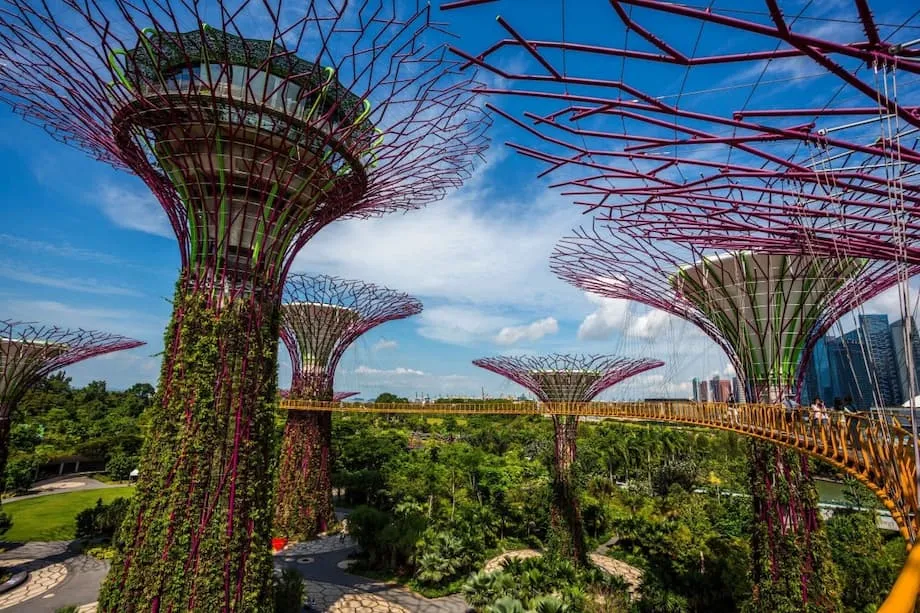
Singapore's role in the coolcation trend rests on urban cooling rather than a naturally cool summer climate. Its Supertrees, vertical gardens, green roofs and energy efficient cooling technologies are part of an effort to make a tropical city more comfortable for residents and visitors.
Gardens by the Bay and Singapore's extensive green spaces provide shaded places where tourists can take a break from the heat. The Supertrees and vertical gardens also help cool their surroundings and filter the air, giving these prominent attractions a practical role alongside their visual appeal.
Porous pavements, shaded walkways and advanced air conditioning systems form other parts of the city's approach. Together, these measures address the conditions visitors encounter as they move between attractions, rather than relying solely on cooler indoor spaces.
Singapore shows how a destination can respond to demand for relief from heat through the design of streets, buildings and public spaces. Its urban greening efforts are setting new standards for tropical cities seeking to become more livable and more attractive to travelers concerned about the climate.
Japanese Resorts Expand Beyond the Ski Season
Japanese ski destinations such as Hakuba and Karuizawa are reinventing themselves as summer destinations. Hiking, mountain biking and water sports give travelers reasons to visit during the green season, when the focus moves from winter recreation to outdoor activities in warmer months.
Operators are promoting hisho, a Japanese term for escaping the heat. Higher altitude locations can remain comfortable in July and August, allowing resorts to market their mountain settings as summer retreats as well as winter destinations.
JR East has partnered with weather services to promote trips aimed at escaping heat. The Hoshino Resort group encourages stays at hotels above 800 meters in elevation. These campaigns turn a destination's altitude and climate into practical considerations when travelers choose where to stay.
Tourism boards and travel agencies are also actively promoting coolcation packages. For resorts, attracting visitors outside the ski season creates another period of demand. For travelers, it expands the choice of places where outdoor holidays can remain comfortable during summer.
Cities Combine Traditional Cooling With New Technology
Abu Dhabi's Masdar City combines traditional approaches to cooling with modern technology. Narrow streets, wind tunnels, ancient wind towers and solar panels are used alongside cooling powered by solar energy to create cooler local conditions.
A microclimate is the climate of a small area, such as a street or courtyard. Masdar City's approach focuses on those immediate surroundings, using the shape of the city and its cooling systems to make public spaces more comfortable.
Copenhagen is another model influencing how Asian destinations think about adaptation. Its programs reward environmentally friendly travel choices, encourage longer stays and support investment in green infrastructure. The aim is to connect tourism activity with measures that help the destination cope with environmental pressures.
Copenhagen's Cloudburst Management Plan uses parks and public squares as natural cooling hubs. Paris has created more than 800 cool islands, including parks, pools and shaded spaces. These approaches are being studied and replicated around the world.
Cities are also expanding urban forests and developing attractions centered on water to help tourists cope with heat. Across these examples, public spaces become part of tourism planning because the comfort of the journey between attractions matters alongside the attractions themselves.
Changing Preferences Take Time to Become New Habits
Travel industry surveys suggest that climate is already influencing holiday decisions. According to the Virtuoso Travel Network, nearly half of luxury travel clients are changing their plans because of climate change. A European Travel Commission survey found that 74% of respondents are adapting their travel to avoid extreme temperatures.
Scandinavia has seen a surge in summer bookings, with some regions of Sweden recording an increase of 263% compared with the previous year. The figure adds to the evidence that cooler places can attract stronger interest as travelers reassess summer conditions.
Travel patterns may nevertheless take years or even decades to shift fully. Many people still prefer warm, sunny destinations. Southern Europe, Southeast Asia and other established holiday regions continue to attract millions of visitors each year.
The growing interest in cooler trips exists alongside that continuing demand. Destinations are responding by changing their summer activities, promoting different seasons and investing in comfort, while travelers make individual decisions about the weather they are willing to experience.
More Visitors Bring Pressure as Well as Income
Previously quiet destinations can face overcrowding when their cooler climate becomes a stronger selling point. More visitors can strain local infrastructure and fragile ecosystems, making the management of tourism part of the adaptation challenge.
Norway has introduced a 3% tourism tax to help manage the influx and fund sustainable development. The measure reflects the need to pay for the services and environmental protection that growing visitor numbers require.
Careful planning, community involvement and a commitment to sustainability are central to managing that growth. Cooler destinations need to consider how tourism affects the people who live there, as well as the experience of arriving visitors.
Investment interest is also moving toward less developed regions and sustainable infrastructure. Investors are focusing on destinations with hotels that hold environmental certification, hybrid hospitality models and conservation efforts led by local communities.
These investments reflect the changing needs of the tourism industry. Regions that adapt through sustainable approaches can become more attractive to travelers and investors, while protecting the natural surroundings and local character that help draw visitors in the first place.
Comfort, Health and Travel Choices Become Connected
Heatwaves can be deadly, especially for vulnerable people. Wildfires, droughts and water shortages are also becoming more common in traditional vacation destinations. Choosing a cooler trip therefore involves health and safety as well as a preference for pleasant weather.
Tourism itself contributes substantially to global greenhouse gas emissions, particularly through air travel. The industry is now dealing with the effects of climate change while also considering how its own activity contributes to warming.
Travelers are being encouraged to consider the sustainability of a destination alongside its temperature. Choosing accommodation with environmentally friendly practices, supporting local communities and visiting during shoulder seasons can help reduce environmental pressures and support the resilience of destinations.
Shoulder seasons are the periods between the busiest travel season and the quietest one. Traveling during these periods offers another way to rethink a holiday's timing, alongside choosing higher altitudes, northern regions or cities with more shade and cooling infrastructure.
Asia's response brings together natural advantages and practical adaptation. Hokkaido and Da Lat offer milder conditions; Japanese mountain resorts are expanding summer activities; Harbin is extending winter experiences into warmer months; and Singapore is improving comfort within a tropical setting. Each approach changes what travelers can do and when they can do it.
Key Points
- Coolcations are holidays chosen for milder temperatures as heatwaves, humidity and other climate pressures affect travel.
- Hokkaido offers summer temperatures of 18°C to 25°C, while Da Lat's summer range is 16°C to 24°C.
- Sapporo uses stored snow for summer cooling, Harbin offers indoor ice attractions, and Singapore invests in greenery, shade and cooling systems.
- Japanese resorts including Hakuba and Karuizawa are attracting summer visitors with hiking, mountain biking and water sports.
- A study in China found a 6% decline in domestic tourism revenue for every 1°C temperature increase.
- A European Travel Commission survey found that 74% of respondents are adapting their travel to avoid extreme temperatures.
- Growing demand creates opportunities for cooler destinations but also puts pressure on infrastructure, ecosystems and local communities.
- Established warm destinations still attract millions of visitors, and a broader shift in travel patterns may take years or decades.