A Small Train With a Journey Across Five Provinces
Thailand's Blue Jasmine is scheduled to begin its inaugural journey on 16 November 2025, carrying just 37 guests on a nine-day itinerary linking Bangkok, Ayutthaya, Uthai Thani, Chiang Mai and Sukhothai before returning to the capital. The first departure runs through 24 November, with packages starting at 195,000 Thai baht per person.
Contents
- A Small Train With a Journey Across Five Provinces
- What Guests Will Find Aboard
- Dining Moves Between Carriages and Local Tables
- Bangkok and Ayutthaya Open the Journey
- Uthai Thani Brings River Life and Temple Visits
- Chiang Mai Combines Mountains, Temples and Conservation
- Sukhothai Pairs Ancient Ruins With Living Crafts
- The Return to Bangkok and the Journey at a Glance
- What the Fare Covers and When Trains Depart
- How the Train Fits Thailand's Tourism Strategy
- A Thai Route in a Growing Luxury Rail Market
- Key Points
Operated by DTH Travel in partnership with the State Railway of Thailand, the service combines restored Japanese sleeper carriages from the 1960s with boutique hotel stays, guided excursions and meals built around Thai ingredients and cooking traditions. Its ten carriages blend classic Thai and European design, bringing the atmosphere of vintage rail travel into a journey with contemporary comforts.
The route is built around slow travel: spending time in places along the way rather than treating the journey simply as transport between two cities. Guests will visit temple ruins, join craft workshops, eat beside rivers and travel through landscapes viewed from panoramic windows.
The project also reflects Thailand's push toward tourism that brings greater spending while limiting its impact on destinations. Small groups, longer stays and purchases from local businesses are central to that ambition. For passengers, the practical result is a holiday divided between the train, hotels and excursions, rather than nine days spent entirely aboard.
As of 22 August 2025, the November launch remains ahead. Further departures are planned for selected months in 2026, placing the Blue Jasmine in a growing international market for luxury rail journeys that make the travelling itself a central part of the holiday.
What Guests Will Find Aboard
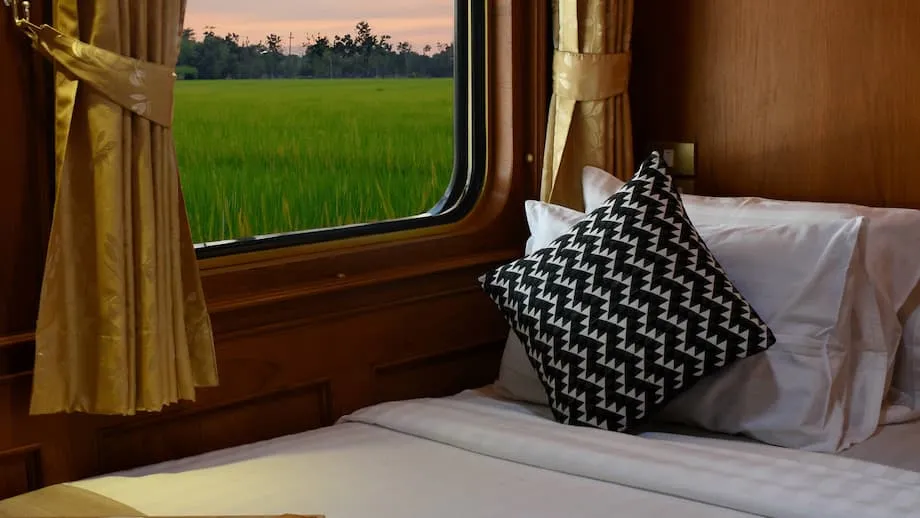
The Blue Jasmine's interiors use navy and gold accents, plush furnishings and wide windows to create the feel of a boutique hotel on rails. Wraparound views, comfortable lounges and private cabins are intended to keep the passing countryside at the centre of the experience.
Accommodation comes in three categories: Classic, Premium and Premium Suite. Cabins have double beds and wide windows, while bathroom arrangements vary by category, with shared facilities or private bathrooms. Features across the accommodation include open-air balconies and private butler service for the highest suite category.
The Panorama Lounge serves as the train's social hub. Passengers can meet over craft cocktails, read or watch the scenery unfold. With only 37 guests, the service is designed around personal attention and a setting in which travellers can get to know one another during the journey.
Wi-Fi is available throughout the train. A hospitality team with decades of experience in Thailand will provide service, with an emphasis on comfort and a relaxed atmosphere rather than showy displays of luxury.
Dining Moves Between Carriages and Local Tables
Meals are a substantial part of the itinerary, both aboard and at destinations. Chefs will prepare menus combining Thai culinary traditions with international tastes, using fresh ingredients sourced locally. Dining takes place in the train's dining cars or private suites, as well as at restaurants and outdoor venues along the route.
The programme ranges from lunch beside a lotus pond in Ayutthaya to a meal on a traditional rice barge in Uthai Thani. Mountain picnics, garden barbecues and meals made with ingredients from local farms add different settings to the journey.
Live music and traditional performances accompany some meals. Near Chiang Mai, a mountaintop restaurant pairs food from local farms with classical music and sunset views. In Sukhothai, evening dining includes gardens and traditional dance performances under the stars.
Bangkok and Ayutthaya Open the Journey
Day one begins in Bangkok, where guests check into a centrally located hotel. A welcome dinner and briefing introduce the tour manager and fellow passengers, setting out the journey before boarding takes place the following day.
On day two, a private ceremony at Bangkok's historic Hua Lamphong Station marks the start of the rail portion of the holiday. The train then heads north toward Ayutthaya, the former capital of Siam and a UNESCO World Heritage site.
Ayutthaya's programme combines a lunch beside a lotus pond with a tuk-tuk tour of temple ruins. The stop introduces one of the itinerary's recurring themes: travelling between historic places, then leaving the train to explore them at a slower pace.
The opening days also show how the holiday is arranged. Hotel stays, rail journeys, transfers and guided visits form a single package, with different parts of the trip taking place away from the carriages.
Uthai Thani Brings River Life and Temple Visits
Day three takes guests to Uthai Thani, a province known for quiet riverscapes and ornate temples. At sunrise, passengers are scheduled to join a traditional almsgiving ceremony beside the Sakae Krang River, offering food to monks.
Visits to the Crystal Temple and Golden Temple follow. Their shimmering and mirrored interiors provide a different architectural experience from Ayutthaya's ancient ruins, while introducing another part of Thailand's spiritual heritage.
Lunch is served aboard a traditional rice barge as it travels along the river. Guests then return to the train for sunset drinks and their first overnight stay aboard.
The combination of a riverside ceremony, temple visits and a meal afloat gives Uthai Thani a full place in the itinerary. It also carries spending beyond the best known destinations by bringing a small group of visitors to local activities and services.
Chiang Mai Combines Mountains, Temples and Conservation
Days four and five focus on Chiang Mai, where mountain scenery accompanies visits to the city's cultural sites. Guests will explore ancient temples within the old city walls and dine at selected local restaurants.
A visit to an ethical elephant sanctuary is also included. The programme describes opportunities to learn about conservation and responsible care while interacting with rescued elephants.
The sanctuary visit sits alongside the itinerary's cultural activities rather than replacing them. Temples, local dining and time in the surrounding mountain landscape make up the wider Chiang Mai stay.
One evening centres on a mountaintop restaurant serving food made with ingredients from local farms. Live classical music and sunset views accompany the meal, making the setting part of the experience as well as the food.
Sukhothai Pairs Ancient Ruins With Living Crafts
Days six and seven take the journey to Sukhothai, described in the itinerary as Thailand's first capital and recognised as another UNESCO World Heritage site. Guests can explore the ancient ruins by bicycle or shuttle, giving them a choice of how to move between the historic structures.
A pottery workshop provides time to make and paint a personal souvenir with guidance from local artisans. The activity brings visitors into direct contact with a craft process, adding something practical to the programme of sightseeing.
A visit to a goldsmith's atelier introduces traditional Thai jewellery making. Silk weaving demonstrations and workshops also feature among the journey's cultural activities, extending the focus on skills passed through local craft traditions.
Garden barbecue dinners and traditional dance performances complete the Sukhothai programme. Across these two days, the itinerary connects the remains of an early capital with crafts and performances that visitors can encounter in the present.
The Return to Bangkok and the Journey at a Glance
Days eight and nine bring guests back to Bangkok. A cruise along the Chao Phraya River offers a different view of the capital before a farewell gala dinner at an elegant riverside venue.
The holiday ends after a final breakfast. Guests can also choose an optional beach extension to Thailand's coastal destinations, continuing beyond the scheduled rail itinerary.
The nine-day programme follows this sequence:
- Day 1: Arrive in Bangkok, check into a central hotel and attend the welcome dinner and briefing.
- Day 2: Board after a private ceremony at Hua Lamphong Station, then visit Ayutthaya for lunch and a tuk-tuk tour.
- Day 3: Join riverside almsgiving in Uthai Thani, visit temples, eat aboard a rice barge and spend the first night on the train.
- Days 4 and 5: Explore Chiang Mai, visit an elephant sanctuary and dine in local and mountain settings.
- Days 6 and 7: Visit Sukhothai's ruins, take part in pottery activities and learn about traditional goldsmithing.
- Days 8 and 9: Return to Bangkok for a river cruise, farewell dinner and final breakfast, with an optional coastal extension.
What the Fare Covers and When Trains Depart
Packages start at 195,000 baht per person, about £4,436, for a Classic cabin shared by two people. Premium Suites cost up to 310,000 baht per person, about £7,052.
The package covers train travel, boutique hotel accommodation, most meals, guided excursions and all transfers. Although presented as an all-inclusive holiday, its stated meal provision is most meals, a detail travellers should keep in mind when considering the total cost.
The inaugural departure is scheduled for 16 to 24 November 2025. Further journeys are planned for January, February, March, July, November and December 2026. Exact departure dates for those months have not been given.
Capacity is limited to 37 guests on each journey, and demand is described as high. Early booking is recommended for travellers seeking one of the selected departures or a particular cabin category.
How the Train Fits Thailand's Tourism Strategy
The Blue Jasmine is being positioned as part of Thailand's shift from mass tourism toward experiences that generate greater value for destinations and local businesses. As the country rebounds from global travel disruptions, the project puts longer visits, cultural activities and local spending at the centre of its appeal.
Mrs. Chiravadee Khunsub, Deputy Governor for International Marketing at the Tourism Authority of Thailand (TAT), described the project's role in that strategy:
The Blue Jasmine is designed to support high-value tourism and foster engagement with local operators. It aligns with our vision of elevating quality tourism and creating deeper emotional connections through transformative travel.
Local operators feature throughout the programme, from artisans guiding pottery workshops to restaurants, river services and cultural performers. The intention is to direct spending into the communities along the route while giving visitors more time to learn about the places they visit.
Heritage restoration is another part of the project. Japanese sleeper carriages dating from the 1960s have been restored for a new role, combining older railway equipment with contemporary accommodation and hospitality.
The wider ambition links cultural preservation, care for natural heritage and tourism with a lower impact on destinations. The small passenger group and the emphasis on community activities are central features of that approach.
A Thai Route in a Growing Luxury Rail Market
The Blue Jasmine enters a market that includes the Britannic Explorer in the United Kingdom and the Venice Simplon-Orient-Express in Europe. These journeys appeal to travellers seeking scenery, relaxation, adventure and cultural encounters alongside the comforts associated with a boutique hotel.
Thailand's version gives that model a route through its own heritage sites, rivers, mountain surroundings and craft traditions. Its defining combination is restored railway carriages, a group of 37 passengers and substantial time spent away from the train.
The project is intended to compete with celebrated international rail experiences while retaining a specifically Thai identity. Its emphasis on hospitality, food and activities with local operators makes the stops as important as the carriage interiors.
A successful launch could encourage similar initiatives across Southeast Asia. For the Blue Jasmine itself, the first scheduled test of that ambition is the journey beginning in Bangkok on 16 November 2025.
Key Points
- The Blue Jasmine's inaugural nine-day journey is scheduled for 16 to 24 November 2025.
- DTH Travel operates the service in partnership with the State Railway of Thailand.
- Ten restored carriages accommodate 37 guests in Classic, Premium and Premium Suite cabins.
- The route links Bangkok, Ayutthaya, Uthai Thani, Chiang Mai and Sukhothai before returning to Bangkok.
- Activities include temple visits, riverside almsgiving, craft workshops, an elephant sanctuary visit and meals featuring local ingredients.
- Prices range from 195,000 baht per person for a Classic cabin shared by two people to 310,000 baht for a Premium Suite.
- The package includes rail travel, hotel stays, most meals, guided excursions and transfers.
- Further departures are planned in January, February, March, July, November and December 2026.